

What Is Axillary Web Syndrome? Symptoms, Causes and Care

A new cord beneath your arm can feel alarming, especially during recovery from breast or lymph node surgery. If you’re asking, “what is axillary web syndrome?”, it’s a condition also called cording. It can cause a rope-like line beneath the skin, tightness and restricted shoulder or arm movement. A cord-like change does not confirm the cause, so start by discussing it with your treating team.
This guide explains how a cord may look and feel, why axillary web syndrome can develop after surgery, and which symptoms warrant prompt medical attention. It also outlines how your treating team and a physiotherapist experienced in cancer rehabilitation can guide movement and recovery. Therapeutic support, including oncology massage or manual lymphatic drainage where appropriate, may complement that care plan, but does not replace medical assessment. The aim is to help you describe what you’ve noticed and understand possible next steps without assuming every new symptom has the same explanation.
Table of Contents
What is axillary web syndrome, and what might the cord feel like?
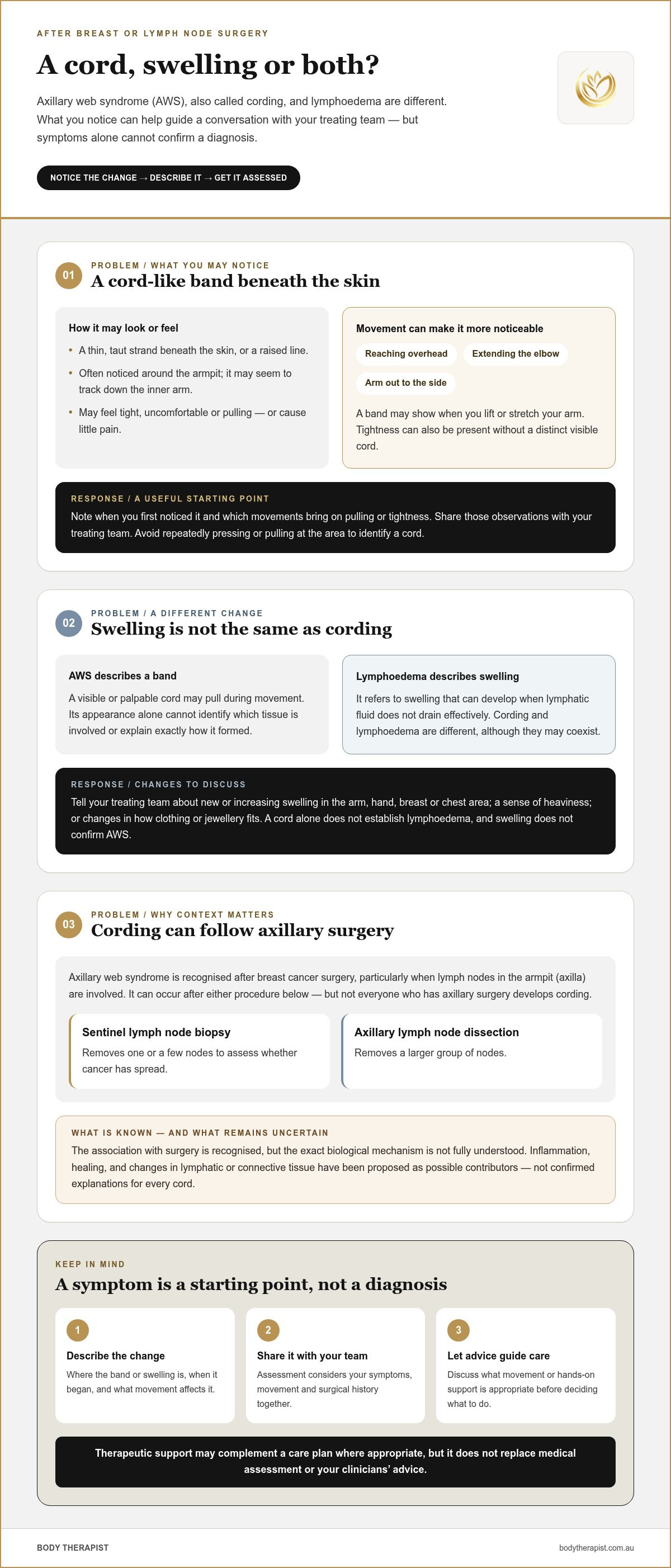
Axillary web syndrome (AWS), also called cording, is a condition in which one or more cord-like bands can be seen or felt beneath the skin. They usually appear around the armpit and may extend along the inner arm. AWS can develop after breast or lymph node surgery, but noticing a cord does not confirm that AWS is the cause.
If you’re wondering what is axillary web syndrome, the key feature is a palpable or visible band that may feel tight when you move your arm. Some people notice discomfort or pulling; others have little pain. The cord’s appearance, position and effect on movement can vary. Describing what you’ve noticed can help your treating team assess it, but it cannot replace a clinical assessment.
What does axillary cording look or feel like?
A cord may feel like a thin, taut strand beneath the skin or appear as a raised line when you lift or stretch your arm. It may be most noticeable in the armpit or seem to track down the inner upper arm. Reaching overhead, extending the elbow or moving the arm out to the side may bring on pulling or tightness. Both the sensation and the degree of movement restriction vary between people.
For example, you might notice a line when reaching for something on a high shelf, even if your arm feels comfortable at rest. You may also feel tightness without seeing a distinct band. Share these observations with your treating team. Avoid repeatedly pressing or pulling at the area to identify the cord; a clinician can assess the change in the context of your surgery and recovery.
Who can develop axillary web syndrome?
AWS is recognised after breast cancer surgery, particularly when the procedure involves lymph nodes in the axilla. A sentinel lymph node biopsy removes one or a few nodes to assess whether cancer has spread; an axillary lymph node dissection removes a larger group. Cording can occur after either procedure, but not everyone who has axillary surgery develops it.
The timing and experience can vary. A cord may become noticeable during recovery, while other people may have different symptoms or none. If you’ve had breast or lymph node surgery and notice a new band, tightness or reduced shoulder movement, note when it began and which movements affect it. These details give your treating team a useful starting point for assessment without assuming the symptom has a particular cause.
Why can axillary web syndrome develop after breast or lymph node surgery?
The armpit, or axilla, is a small but anatomically busy area beneath the shoulder joint. It contains lymph nodes and vessels, which form part of the lymphatic system. This network carries fluid from body tissues and supports immune function. Breast and lymph node surgery may affect structures in or near the axilla, which helps explain why cording is associated with some post-operative recoveries.
What is axillary web syndrome in relation to surgery? The association is recognised, particularly after breast cancer procedures involving axillary lymph nodes, but the exact biological mechanism is not fully understood. Inflammation, healing and changes in lymphatic or connective tissue have been proposed as possible contributors. These are explanations under consideration, not proof that every cord is a blocked or damaged lymphatic vessel.
How the axilla and lymphatic system relate to cording
Lymphatic vessels carry fluid through tissues towards lymph nodes, including those in the axilla. Surgery in this area can alter local tissues as they heal. A cord may involve lymphatic or connective tissue, but its appearance alone cannot identify the structure involved or explain precisely how it formed. Clinical assessment considers the cord alongside your surgical history, symptoms and arm movement.
The association with surgery is clearer than the proposed mechanism: axillary web syndrome can occur after breast cancer surgery, including sentinel lymph node biopsy or axillary lymph node dissection, while the precise tissue changes behind cording remain uncertain. A sentinel biopsy removes one or a few nodes for examination; a dissection removes a larger group. Neither procedure means cording will inevitably develop.
Is axillary web syndrome the same as lymphoedema?
No. Cording describes a palpable or visible band that may pull during movement. Lymphoedema refers to swelling that can develop when lymphatic fluid doesn’t drain effectively. The conditions are different, although they may coexist, and swelling after surgery can have more than one explanation. A cord alone does not establish lymphoedema, and swelling does not confirm axillary web syndrome.
Changes to discuss with your treating team include new or increasing swelling in the arm, hand, breast or chest area, a sense of heaviness, or changes in how clothing or jewellery fits. These signs need to be interpreted in context, rather than used for self-diagnosis. A lymphoedema management guide can provide background on understanding and managing swelling, but it cannot determine what is causing an individual symptom.
If you notice a cord or swelling after surgery, share the change with your treating team before deciding what hands-on care or movement is appropriate. Body Therapist provides manual lymphatic drainage and lymphoedema therapy as support alongside medical assessment and your clinicians’ advice.
Is axillary web syndrome dangerous, or could another problem explain the symptoms?
Axillary web syndrome is not generally considered dangerous in itself, and a new cord does not automatically mean cancer has returned. Still, a change after surgery deserves attention. A cord-like band can have more than one explanation, and a clinician can assess it in light of your history and symptoms. This article offers general information, not personal medical advice or a diagnosis.
Describe what you’ve noticed without trying to label it. Is there a visible or palpable line, swelling, a skin change or difficulty moving your arm? When did it begin, and is it improving, staying the same or worsening? These details can help your treating team decide what assessment or follow-up is appropriate.
Which symptoms should prompt medical review?
Contact your treating team about a new, worsening or unexplained change after surgery. Seek prompt clinical advice if you notice spreading redness or warmth, fever, sudden marked swelling, or a rapid change in pain or movement. These signs do not establish a particular cause, but they should not be assumed to be cording or managed by waiting for a suspected cord to settle.
Swelling in the arm, hand, breast or chest area is also worth discussing, especially if it is new or increasing. Note when it began and whether it is changing. If you feel unwell or symptoms are progressing, tell the clinician you contact that you’ve recently had surgery and describe the change clearly.
What else can cause arm tightness or swelling?
Post-operative stiffness can limit shoulder movement, while lymphoedema may cause swelling when lymphatic fluid doesn’t drain effectively. Other changes during recovery may also lead to discomfort or restricted movement. These symptoms can overlap: tightness does not prove there is a cord, and swelling alone does not identify its cause. Comparing symptoms at home cannot reliably distinguish them.
Assessment brings the details together. A clinician may consider the operation you had, when symptoms started, how they have changed, where you feel them and which movements are affected, alongside examination findings. Mention any skin changes, warmth, fever or swelling, even if the cord-like sensation is your main concern. This fuller picture helps guide appropriate next steps without relying on self-diagnosis.
If you’re searching for “what is axillary web syndrome” because a new symptom has appeared, use the information as a starting point for a conversation, not as confirmation of what’s happening. Don’t force a stretch, massage a tender area or begin a new treatment based only on an online description. Follow your treating team’s guidance, which takes your surgery and current recovery into account.
What should you do after noticing a possible axillary cord?
A new cord or change in arm movement is a reason to check in with your treating team, not to diagnose or treat it yourself. Start by noting what you’ve noticed and contacting the clinician involved in your post-operative care. Then follow their advice about assessment, movement and any further support.
Record the change: note when you first noticed it, where it is, whether it is visible or tender, and which movements feel restricted.
Contact your treating team: share your surgical and treatment history, and mention any swelling, skin changes or other symptoms.
Follow individual guidance: ask what movement or exercise is appropriate for your recovery stage and symptoms.
Don’t pull hard on a cord, try to “snap” it, or use forceful self-massage or aggressive stretching. These actions may irritate sensitive or healing tissues. Until you’ve received guidance, avoid repeatedly testing your range or pushing through sharp or increasing discomfort.
How clinicians assess suspected axillary web syndrome
A clinician guides the assessment, which may include discussing your symptoms and examining the area and your movement. There isn’t a single home check that can confirm the cause. Before an appointment, note when the change began, where you feel it, which movements affect it, and details of relevant surgery and treatment. This gives your treating team useful context for deciding on next steps.
For example, explain whether reaching overhead feels different from reaching across your body, or whether the sensation is present at rest. Mention whether the cord, tightness or swelling is changing. These details describe your experience but do not establish a diagnosis. If symptoms worsen while you’re waiting for advice, contact your treating team again and explain what has changed.
Movement and recovery: proceed with individual guidance
Follow the exercise plan provided by your treating clinicians, as recommendations depend on your surgery, healing and symptoms. Gentle, comfortable movement may be more appropriate than forcing a restricted range. Stop and seek advice if an activity causes sharp pain, increased swelling or a notable worsening of symptoms. Don’t add stretches or hands-on techniques simply because they’re suggested for someone else.
If swelling is also a concern, describe where it occurs and whether it is new or changing. Information about signs of lymphatic changes may help you prepare questions, but it cannot replace advice based on your individual circumstances. The same applies if you’re looking up “what is axillary web syndrome”: general information is a starting point, not a personalised recovery plan.
Once your treating team has guided your next steps, learn about therapeutic support alongside your clinical care. Body Therapist provides manual lymphatic drainage, lymphoedema therapy and oncology massage as complementary support, with care shaped around individual needs and your treating team’s advice.
How can therapeutic support fit into an axillary web syndrome care plan?
Hands-on therapeutic support may be considered as one part of a broader recovery plan, but it does not diagnose axillary web syndrome or replace assessment by your treating team. Suitability depends on your surgery and treatment history, stage of recovery, current symptoms and clinical advice. If a cord or restricted movement is new or changing, discuss it with your clinicians before arranging supportive care.
This distinction matters. A therapy session should not be presented as a way to “break”, release or cure a cord. Support should be individualised, responsive to your comfort and consistent with guidance from the clinicians overseeing your recovery. If their recommendations change, share that information before proceeding with hands-on care.
Where manual lymphatic drainage or oncology massage may fit
Manual lymphatic drainage, lymphoedema therapy and oncology massage may be considered as supportive options within a clinician-guided plan, depending on your needs. They are not standalone ways to diagnose a cord. If lymphatic concerns are also part of your recovery, your treating team can help clarify how supportive care might fit alongside their recommendations.
At Body Therapist, these services are provided with attention to individual treatment history, comfort and clinical guidance. The appropriate approach can differ between people, particularly during recovery from surgery or cancer treatment. Discuss areas of concern, sensitivity or movement restriction before care begins, and communicate if your comfort or symptoms change. You can also read about how oncology massage and cancer support may fit within a wider supportive-care context.
A coordinated next step for ongoing symptoms
If symptoms persist, change or affect daily activities, raise them with your treating team and follow their advice before arranging hands-on support. It may help to share which movements are difficult, what you’ve already been advised to do and whether you’ve noticed swelling or other changes. This gives everyone involved a clearer picture of your needs and helps keep supportive care aligned with your recovery plan.
Lee Carnegie leads Body Therapist’s practice and is a qualified remedial massage and dynamic movement therapist. The focus is on tailored, clinically informed support, not replacing medical assessment or promising a particular outcome. Your treating team’s guidance remains central; therapeutic care can complement it where appropriate.
For information about this support, explore Body Therapist’s therapeutic care.
Take your next step with confidence
Knowing what is axillary web syndrome can help you describe a change, but you don’t have to work out its cause alone. If a cord, tightness or movement difficulty is concerning you, start with a clear conversation with your treating team. Share what you’ve noticed and ask what approach is appropriate for your recovery.
Once you have clinical guidance, consider whether complementary therapeutic support fits your needs. A coordinated plan keeps your care centred on your treatment history, comfort and current advice, without rushing movement or expecting a particular outcome.
Body Therapist offers therapeutic care that can complement clinician-guided recovery. Explore Body Therapist’s therapeutic care to learn about support options relevant to your needs.
Recovery is individual. With informed guidance and a considered next step, you can move forward with greater clarity and confidence.
Frequently Asked Questions
Is axillary web syndrome common after breast cancer surgery?
Axillary web syndrome is a recognised possible complication after breast cancer surgery, including procedures involving lymph nodes in the armpit. Whether it develops varies with individual circumstances and the operation performed; not everyone experiences cording. If you’re preparing for surgery or recovering, ask your treating team which changes to report and how your surgical history may shape follow-up. General information can’t predict whether it will affect you personally.
Can axillary web syndrome happen without a visible cord?
Yes, you may feel pulling, tightness or restricted movement without clearly seeing a band. These symptoms alone can’t confirm axillary web syndrome, as other post-treatment changes may feel similar. If the sensation is new, persistent or concerning, discuss it with your treating team, especially after breast or armpit surgery. Describe which movements bring it on and whether it affects tasks such as dressing or reaching overhead.
How long does axillary web syndrome usually last?
There isn’t one duration that applies to everyone. Symptoms can change over time, and their course may depend on personal circumstances, surgery and recovery. Don’t assume a cord or movement restriction will resolve by a particular date, with or without support. If it persists, worsens or continues to affect everyday activities, tell your treating team. They can consider your individual recovery and advise whether further assessment or support is appropriate.
Can axillary web syndrome come back after it improves?
Symptoms can change over time, but a returning cord-like feeling doesn’t by itself show that axillary web syndrome has recurred. Tightness or reduced movement may have another explanation, so avoid assuming it’s the same issue as before. Arrange a review with your treating team if symptoms return, particularly if you also notice swelling or another new change. Explain what improved, what has reappeared and when you first noticed it.
Can you exercise with axillary web syndrome?
Movement advice depends on your surgical recovery, symptoms and treating clinician’s plan. Follow the exercises prescribed for you, and don’t force a painful movement or copy an online routine that may not suit your circumstances. For instance, if raising your arm causes sharp discomfort or symptoms worsen afterwards, pause that activity and seek guidance. Your treating clinician or an appropriately qualified practitioner can help adapt activity to your individual needs.
Does axillary web syndrome mean I have lymphoedema?
No. Cording and lymphoedema are different conditions, although they can occur in the same person. A cord alone doesn’t establish lymphoedema; swelling or a sense of heaviness also needs appropriate assessment. If you notice changes in your arm, hand, breast or chest, tell your treating team where they occur and when they began. Share your relevant surgery and treatment history rather than relying on self-diagnosis.
Can massage break up an axillary cord?
Don’t use forceful massage as a self-treatment to try to break or release a cord. Hands-on approaches need careful consideration, and their suitability depends on your circumstances; massage shouldn’t be presented as a cure. Before arranging manual therapy, discuss it with your treating team, particularly during post-operative recovery. Ask what type of support, if any, fits your care plan, and stop any activity that causes pain or increased symptoms.


Comments