

How to Get Rid of Bra Fat Without Surgery: A Practical Guide

What if a bra-line bulge isn’t simply stubborn fat? If you’re researching how to get rid of bra fat without surgery, start by considering what may be shaping the area. Localised fat can contribute, but so can skin laxity, breast or chest tissue extending towards the underarm, a bra that presses into the skin, and posture.
It’s understandable to want a clear solution, especially when advice about spot reduction and non-surgical treatments can conflict. Targeted exercises can strengthen back muscles, but they can’t make the body lose fat from one specific area. A better-fitting bra and posture adjustments may improve comfort or appearance. Non-surgical treatments may also be worth discussing if your concern is localised fullness or skin firmness.
This guide covers common contributors to bra-line fullness, practical steps to consider and ways to set realistic expectations. It also explains how ultrasonic fat cavitation and radiofrequency (RF) skin tightening may fit into an individualised treatment conversation, including considerations around comfort and suitability. The aim is to match the approach to your concern, not promise a particular body shape.
Table of Contents
What Does 'Bra Fat' Mean, and What Can Cause a Bra-Line Bulge?
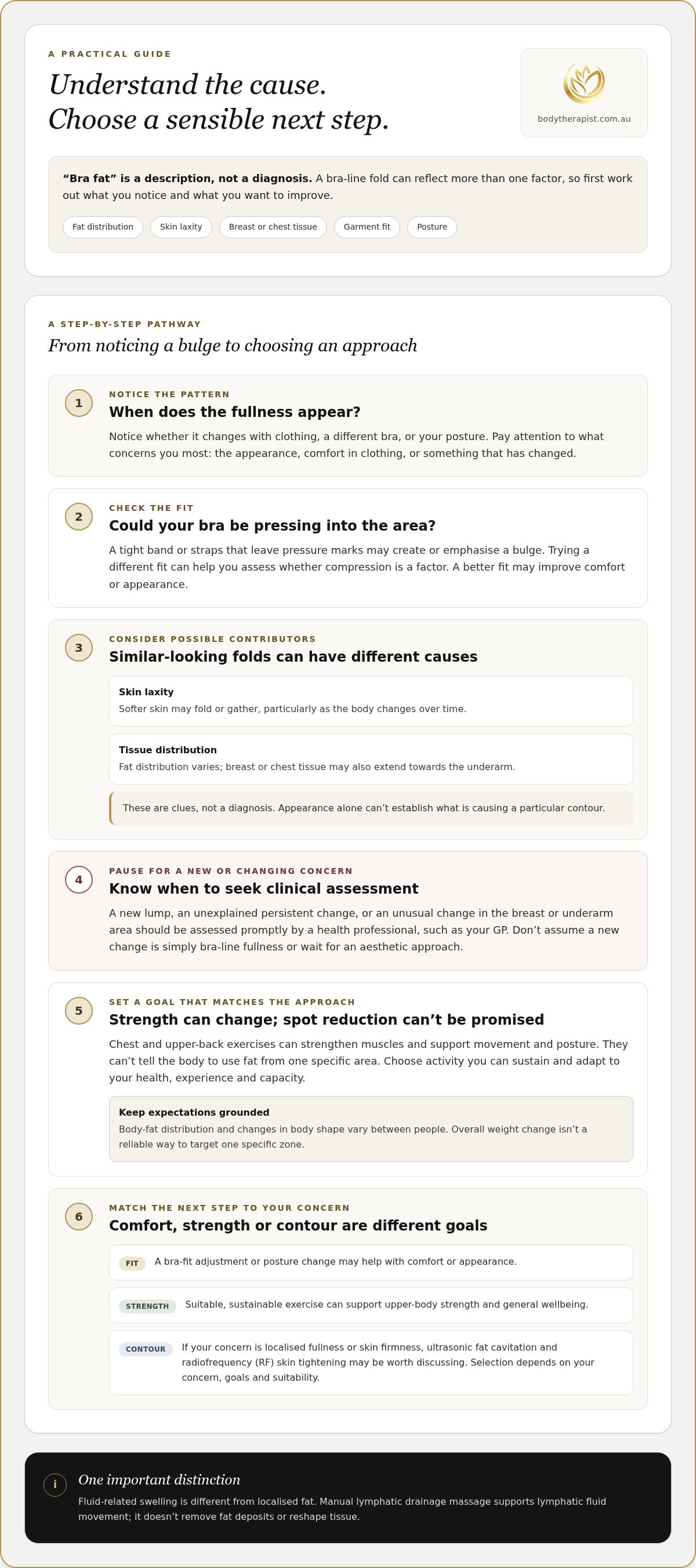
“Bra fat” is a colloquial description of fullness or a fold near the bra line, not a medical diagnosis. More than one factor can contribute to the appearance. Treating it as a single problem can lead to unrealistic expectations about what exercise, garment changes or body-contouring can achieve.
Possible contributors include:
Fat distribution: The body stores fat in different patterns, influenced by factors such as genetics and overall body composition. A localised area may remain noticeable even when other parts of the body change.
Skin laxity: Skin with less firmness can fold or gather, particularly as the body changes over time.
Breast or chest tissue: Tissue may extend towards the underarm area. For anatomical context, see Breast anatomy and fat distribution.
Garment fit and posture: A tight band or strap can press into tissue, while slouching may deepen folds around the back.
These factors can look similar in a mirror, so appearance alone can’t establish what’s causing a particular contour. Start by noticing when the fullness appears, whether it changes with clothing and what you most want to improve. This helps you decide how to get rid of bra fat without surgery, or whether the concern is better approached as a fit, comfort or health issue.
How can you tell whether the concern is fit, skin, or tissue distribution?
Notice whether the bulge changes when you wear a different bra. A band that digs in or straps that leave pressure marks may be creating or emphasising the bulge. Adjusting the fit can help you assess whether compression is a factor. Softer folds may relate to skin laxity, while tissue distribution can remain visible without a tight garment. These are clues, not a diagnosis. Pay attention to changes and to what concerns you personally.
When should a new breast or underarm change be assessed?
A new lump, an unexplained persistent change, or an unusual change in the breast or underarm area should be assessed promptly by a health professional, such as your GP. Don’t assume a new change is simply bra-line fullness or wait for an aesthetic approach to address it. A familiar contour concern without new symptoms is different from a new or changing finding, which calls for clinical assessment.
Fluid-related swelling is also distinct from localised fat. Manual lymphatic drainage massage supports lymphatic fluid movement; it doesn’t remove fat deposits or reshape tissue. If swelling is the concern, a clinical guide to manual lymphatic drainage massage explains its role. Clarifying whether the issue is fit, tissue, skin or swelling helps keep next steps appropriate and expectations grounded.
Why Spot Reduction Is Not a Reliable Way to Change Bra-Line Fat
Working the muscles beneath a particular area doesn’t tell the body to use fat from directly above them. Exercise can strengthen muscle, while changes in body fat occur across the body rather than in a zone selected by a particular movement. If you’re weighing up how to get rid of bra fat without surgery, an exercise plan may support strength and general wellbeing, but it can’t promise a change in one specific contour.
Chest exercises work the pectoral muscles, while many pulling movements engage the upper-back muscles. With consistent, suitable training, those muscles can become stronger and better able to support movement and posture. The fat and other tissues overlying them are separate, so developing muscle doesn’t selectively remove them. Muscle development may subtly affect the shape beneath the skin, but that isn’t the same as localised fat reduction.
What can exercise change around the upper body?
Strengthening the chest and upper back can support upper-body function, including pushing, pulling and maintaining a comfortable position during daily activities. Choose movement you can sustain and adapt to your health, experience and capacity. A balanced programme of resistance exercise, walking or another activity you enjoy is more practical than repeatedly training one area in the hope it will lose fat. If exercise causes pain or you’re managing a health concern, seek individual guidance before changing your routine.
Why does body-fat distribution vary between people?
People don’t store or lose fat in identical patterns. Genetics, overall body composition and individual tissue distribution all influence body contours, and no single factor explains every person’s bra-line fullness. Even with similar routines, two people may notice different changes in the same area.
Weight change can alter body shape, but where changes appear first and how noticeable they are varies from person to person. Changing overall body weight isn’t a reliable way to target one specific zone, and there’s no need to set a particular weight or adopt a restrictive diet to address an appearance concern. If you’re making broader health changes, choose a sustainable approach that suits your needs rather than chasing a localised result.
Be clear about your goal. You might want to improve upper-body strength, feel more comfortable in clothing or explore whether a contouring approach suits your concern. Those aims are different, and exercise may support some more directly than others. If you’re considering a professional option, explore non-surgical body-contouring options as part of a discussion about your goals and suitability, not as a substitute for exercise or a guaranteed outcome.
Non-Surgical Ways to Improve Bra-Line Appearance: What Each Can Address
Different concerns call for different approaches. A garment adjustment may reduce pressure and improve comfort, while general health habits support overall wellbeing. Professional body-contouring treatments have a different purpose and may suit particular aesthetic concerns, but they can’t address every cause of bra-line fullness or guarantee a specific result.
What should you know about ultrasonic fat cavitation?
Ultrasonic fat cavitation is a non-invasive body-sculpting service that uses ultrasound technology as part of an aesthetic treatment. It isn’t surgical fat removal or a medical treatment for a health condition. A consultation should clarify what you’d like to address and whether the approach is suitable for you. Individual responses vary, so don’t rely on promises of a particular measurement, weight change or body shape.
When might RF skin tightening be considered?
RF skin tightening is a separate aesthetic treatment that may be discussed when the concern relates to skin appearance or firmness. It isn’t a substitute for a fat-focused approach, and neither the degree nor duration of any change can be guaranteed. Discuss your concern and goals first so the treatment conversation reflects what you want to improve and what’s appropriate for you.
If you’re researching how to get rid of bra fat without surgery, match the approach to the concern. A pressure mark, a skin-appearance concern, localised fullness and fluid-related swelling aren’t the same issue. Clarify which matters to you, then weigh the potential role and limits of each option before deciding.
How to Choose a Sensible Bra-Fat Plan Without Surgery
A useful plan starts with your concern, not a promise to remove “bra fat”. Decide what you want to change: pressure from clothing, skin appearance, localised fullness or comfort. Then match your goal to an approach, consider its limits and establish whether it’s suitable for you. This measured process helps you consider how to get rid of bra fat without surgery without expecting one treatment to change every part of your contour.
Use these steps to organise your thinking:
Identify the main concern. Note whether the area looks different with another bra, or whether skin appearance or fullness is your priority.
Clarify your goal. Be specific, such as wanting a smoother appearance under clothing or greater comfort, rather than assuming a particular amount of fat loss.
Compare approaches. A bra-fit adjustment, sustainable health habits and professional body-contouring serve different purposes. Consider what each could reasonably address and what it can’t.
Assess suitability. Before an aesthetic treatment, discuss relevant health history and any factors that may affect whether it’s appropriate. A qualified practitioner should consider suitability rather than making assumptions based on appearance alone.
What should you clarify before considering a treatment?
Write down what matters most: fit, skin laxity or localised fullness. Consider what change would feel worthwhile in everyday life, how you’ll judge it and whether comfort matters as much as appearance. Be prepared to discuss your health history with the practitioner, as individual circumstances can affect treatment suitability. A clear goal makes it easier to discuss options and limitations.
If you’ve noticed a new lump, unexplained persistent change, pain or another unusual symptom, pause aesthetic planning and seek medical assessment. A body-contouring discussion isn’t a substitute for clinical evaluation of a new or changing concern. Once any health issue has been assessed, consider routine appearance or comfort goals separately.
How can you compare options without relying on dramatic claims?
Check whether the proposed approach matches your concern. A garment adjustment may help with compression, while a professional aesthetic treatment should be discussed in relation to its intended focus and your individual suitability. Treat claims of guaranteed or rapid transformation as a reason to ask for a clearer explanation of likely outcomes, limitations and risks. Realistic expectations matter.
For self-care, consider whether a bra fitting or a sustainable movement routine aligns with your goal. Body Therapist offers ultrasonic fat cavitation and RF skin tightening as options to discuss in an individualised treatment conversation. You can learn how clinical body-contouring options differ, then decide whether a discussion about your concern and goals would be useful.
There’s no need to rush. A sensible plan addresses your actual concern, respects your health and capacity, and measures success by a realistic change in comfort or appearance, not a guaranteed body-shape result.
How Body Therapist Approaches Non-Surgical Body Contouring
Body Therapist offers ultrasonic fat cavitation and RF skin tightening. These treatments have different aesthetic focuses, so don’t assume one option suits every bra-line concern. A useful discussion starts with what you’d like to address, what change would feel meaningful and whether a treatment is appropriate for you.
Body Therapist is operated by Lee Carnegie, a qualified remedial massage and dynamic movement therapist. Lee’s background informs an individualised approach, with your concern and goals guiding the conversation rather than a promise of a particular body shape. If you’re researching how to get rid of bra fat without surgery, this distinction helps keep expectations grounded.
What happens when discussing a non-surgical treatment plan?
A goal-led discussion gives you space to describe the area that concerns you and the change you hope to see. The practitioner considers your expectations and relevant health history when discussing suitability and an appropriate modality. This helps distinguish an aesthetic goal from a concern that may need medical assessment. Individual responses and results can vary, so the discussion should focus on realistic possibilities rather than guaranteed measurements or outcomes.
To prepare, it can help to think through:
Your main concern: Is your priority localised fullness, skin appearance or how the area sits under clothing?
Your preferred outcome: Describe a practical appearance or comfort goal without assuming a specific amount of fat loss is achievable.
Your relevant health history: Share information that could help the practitioner consider whether an aesthetic treatment is suitable.
Your questions: Ask what the proposed modality is intended to address and what limitations should inform your decision.
How can you take the next step with confidence?
Keep the distinction clear: ultrasonic fat cavitation is offered as a non-invasive body-sculpting service, while RF skin tightening is an aesthetic treatment focused on skin firmness. They aren’t interchangeable, and the right conversation depends on the concern you want to address. Choosing based on that concern, rather than a promised result, makes for a more considered decision.
You don’t need to commit to a treatment simply because you’re exploring options. Take time to understand its intended focus, discuss suitability and decide whether it aligns with your expectations. A measured plan leaves room to reassess what matters to you and avoids treating every bra-line contour as the same issue.
If you’d like to explore these options further, Explore Body Therapist’s non-surgical body-contouring services.
Take the Next Step at Your Own Pace
Choosing how to get rid of bra fat without surgery doesn’t have to mean pursuing a dramatic transformation. Start by deciding what would make a difference to you, whether that’s feeling more comfortable in clothing or exploring an aesthetic change. Take time to weigh the options and understand suitability, likely outcomes and limitations before deciding.
If you’re considering professional body-contouring, Body Therapist discusses treatment options in relation to your concern and goals. The practice is operated by Lee Carnegie, a qualified remedial massage and dynamic movement therapist. You can ask about what each option is intended to address before deciding whether it suits your needs.
Explore Body Therapist’s non-surgical body-contouring services and take the next step towards discussing your goals: Explore Body Therapist’s non-surgical body-contouring services.
An informed choice that feels right for you is a practical place to start. Take it one considered step at a time.
Frequently Asked Questions
Can non-surgical body-contouring results last if my weight changes?
Results may change if your weight changes, so they can’t be assumed to stay the same. Changes in body composition may affect the treated area and surrounding contours differently for each person. If you’re considering how to get rid of bra fat without surgery, discuss how weight fluctuation could affect your expectations before choosing a treatment. Don’t assume a particular result is permanent or guaranteed.
Can ultrasonic cavitation and RF skin tightening be combined?
They may be discussed as options within an individualised plan, but combining them isn’t automatically suitable or necessary. The decision depends on your concern, goals, health history and suitability. Ask what each modality is intended to address, why a combination might be considered in your situation and what limitations apply. A combined approach isn’t a promise of a better or lasting result.
Does bra-line fullness always change when someone loses weight?
No. Weight loss can change body shape, but the amount of change at the bra line varies. Someone may notice changes around their waist before seeing a difference in upper-back fullness, while another person may experience a different pattern. Skin, breast or chest tissue and garment fit can also affect the visible contour, so weight change alone may not resolve every concern.
What should I wear to a body-contouring appointment?
Choose clothing that’s comfortable and easy to adjust so the area being discussed can be accessed if needed. A loose top and separate bottoms may be practical for an appointment focused on the back or bra line. Wear what helps you feel at ease and follow any appointment-specific preparation instructions you’ve received. You can also bring or wear a bra that reflects the fit concern you want to discuss.
Can exercise and non-surgical body contouring be part of the same plan?
Yes, they can have different roles in a broader plan. Exercise can support strength, movement and general health, while professional body-contouring addresses an aesthetic concern. Neither should be treated as a substitute for the other, and targeted exercise can’t guarantee a localised change. Keep activity suitable for your health and capacity, and discuss how an aesthetic option fits your goals and circumstances.
How can I tell whether a bra-line change needs medical attention?
Arrange prompt assessment with a health professional, such as your GP, if you notice a new lump, an unexplained persistent change, pain or another unusual breast or underarm change. Don’t assume a new finding is caused by clothing or ordinary fullness, and don’t use an aesthetic appointment instead of medical assessment. A familiar appearance concern without new symptoms can be considered separately from a new or changing symptom.


Comments