

What Does Cupping Do for Knots? A Clinical Guide

Can suction erase a muscle knot, or does it mainly change how the area feels? If you’re wondering what does cupping do for knots, the distinction matters: a tender, tight spot may be associated with myofascial pain, but it isn’t necessarily a lump that can simply be suctioned away.
It’s understandable to look for a treatment that eases discomfort and helps you move more freely. Cupping uses negative pressure to lift the skin and underlying tissues. Some people report changes in pain or tightness afterwards, but those effects aren’t guaranteed, and current evidence can’t establish that cupping removes a knot or works better for everyone. Circular marks can occur after treatment, but they don’t prove it has worked.
This guide explains what people mean by a muscle knot, how cupping might affect a tight or tender area, and what remains uncertain about its effects on pain, stiffness and movement. You’ll also learn what to consider when comparing cupping with other approaches, and how an individual assessment can help determine whether myofascial silicone cupping may suit your goals.
Table of Contents
What does cupping do for knots, and what is a muscle knot?
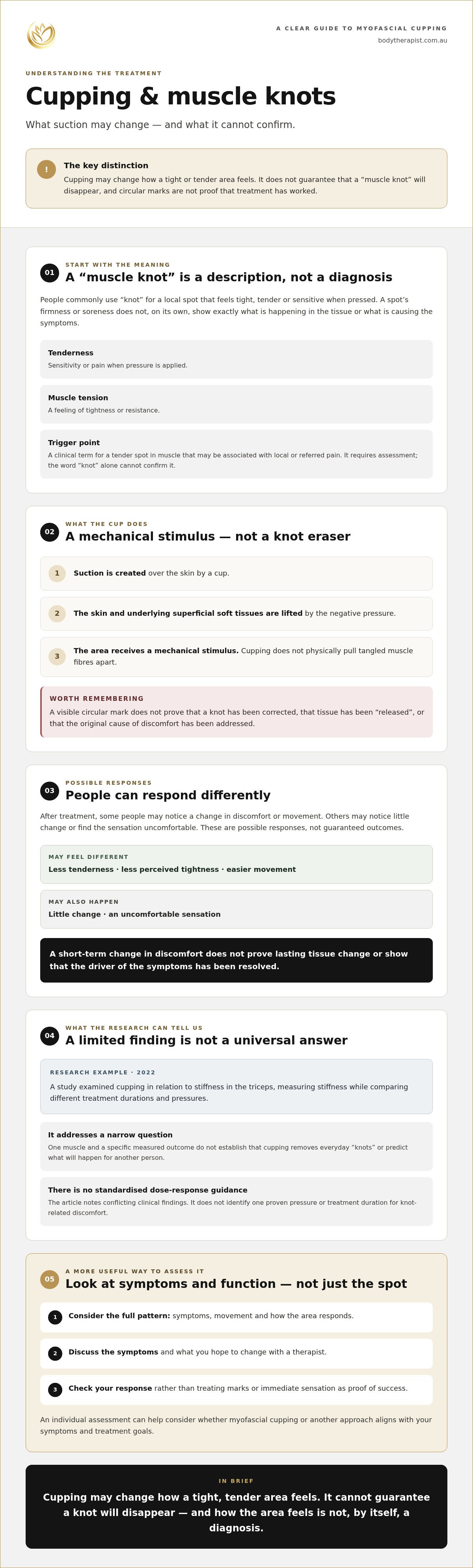
Cupping may change how a tight, tender area feels, but it can’t guarantee that a muscle knot will disappear. If you’re asking what does cupping do for knots, the key distinction is that suction applies a mechanical stimulus to the skin and underlying soft tissues. It doesn’t physically pull tangled muscle fibres apart. Changes in discomfort or movement vary from person to person.
“Muscle knot” is a familiar description, not a precise diagnosis. A spot that feels firm or sore can have different contributing factors, so its texture under your fingers doesn’t confirm exactly what’s happening in the tissue.
What people mean when they describe a muscle knot
People often use the term for a local area that feels tight, tender or sensitive when pressed. These sensations are related, but they aren’t interchangeable: tenderness describes sensitivity or pain with pressure, while muscle tension describes a feeling of tightness or resistance. A trigger point is a clinical term for a tender spot in muscle that may be associated with local or referred pain. It requires assessment and can’t be confirmed by the word “knot” alone.
Symptoms may relate to muscle, fascia, changes in how an area is being loaded, or other factors. A palpable spot doesn’t mean the muscle fibres are literally knotted or tangled. How the area feels is useful information, but it doesn’t establish the cause.
What cupping involves at a basic level
Cupping uses a cup to create suction over the skin, lifting it and applying a mechanical stimulus to superficial soft tissues. Myofascial cupping does not pull a knot apart or necessarily correct what is contributing to discomfort. A general overview of Cupping therapy describes its use and proposed mechanisms, but those descriptions don’t show what will happen for a particular person.
The cup may feel like pulling or pressure, and the response can differ between people. Visible marks after cupping don’t prove that a knot has been corrected, that tissue has been “released”, or that treatment has worked. To consider whether cupping is suitable, look at symptoms and function, not just how the area looks or feels immediately afterwards.
How might cupping affect tight muscles and knot-related discomfort?
Cupping applies suction to the skin and superficial soft tissues. It creates a mechanical stimulus rather than a force that dissolves or pulls apart a knot. Some people may notice a change in tenderness, perceived tightness or ease of movement after treatment. Others may notice little change or find the sensation uncomfortable. These responses vary, and they don’t establish that cupping will help every sore or tight area.
A short-term change in discomfort may affect how an area feels, but it doesn’t prove lasting change to the tissue or resolve whatever is driving the symptoms. If a spot feels less sensitive afterwards, that can be useful to note. It doesn’t identify why the spot became sore or mean the cause has been removed.
What research on cupping and muscle stiffness can tell us
A 2022 study examined cupping in relation to stiffness in the triceps, measuring muscle stiffness while comparing different treatment durations and pressures. This is a narrow research question about one muscle and a specific measured outcome. It doesn’t establish that cupping removes everyday “knots”, and findings about the triceps can’t automatically be applied to other muscles, symptoms or people.
Duration and pressure matter because different applications may produce different responses. Study design matters too: how stiffness is measured, who takes part and what the comparison treatment involves can all affect how results should be interpreted. The supplied study notes conflicting clinical findings and no standardised dose-response guidance. In practical terms, it doesn’t define one proven pressure or treatment duration for knot-related discomfort.
Why a knot may feel different after treatment
After cupping, someone might report less tenderness with pressure, a less tight feeling or easier movement. These are possible changes in symptoms, not predictable outcomes. A different sensation afterwards doesn’t show whether the change came from suction, the context of treatment or another influence. It also shouldn’t be taken as proof of a specific biological mechanism.
That distinction helps answer what does cupping do for knots: it may change a person’s experience of local discomfort, but that doesn’t confirm or remove the original driver. Symptoms can be influenced by factors such as activity and loading, and may return or persist. Track which movements feel easier, whether tenderness changes and how long any change lasts. These observations are more useful than judging treatment by a visible mark.
If you’re considering myofascial silicone cupping, an individual discussion can help relate it to your symptoms and goals rather than treating it as an automatic solution. You can read about myofascial silicone cupping as one possible part of an individually considered approach.
Cupping for knots versus massage or dry needling: what is the difference?
Cupping, remedial massage and dry needling use different methods to address musculoskeletal symptoms. None can guarantee knot removal or pain relief. The right option depends on your symptoms, preferences and an individual assessment, rather than the name given to a tender spot.
How cupping differs from remedial massage
The main difference is the type of contact: cupping uses suction, while remedial massage involves hands-on pressure and may include movement-based techniques. Neither method is automatically more effective. A practitioner may consider one approach or discuss how techniques could fit within a broader plan, based on your symptoms and goals. For more context, read this clinical massage therapy guide.
How cupping differs from dry needling
Dry needling involves fine needles; cupping applies suction through a cup. These are distinct methods, not interchangeable treatments, and neither should be presented as physically removing a knot or guaranteeing relief. If you’re weighing up options, ask why a particular method is being suggested, what response to monitor and what alternatives may be appropriate. This clinical guide to dry needling explores that modality in more detail.
So, what does cupping do for knots compared with these approaches? It offers a different form of physical input. The choice should be guided by your symptoms and a practitioner’s assessment, not an assumption that one technique suits every tight or tender area.
What should you expect from cupping for a muscle knot?
A considered cupping session starts with a conversation, not automatic suction over the sore spot. The aim is to understand your symptoms, check whether the approach is suitable and agree on how you’ll assess your response. Cupping is optional, and you should be able to ask questions or request a change at any point.
Discuss your symptoms. Describe where you feel discomfort, when it began and what affects it.
Assess suitability. The practitioner considers your health history, current symptoms and any relevant skin concerns.
Agree on an approach. Talk through the treatment area, expected sensations, goals and how to pause or adjust the technique.
Monitor your response. Notice how the area feels during and afterwards, including whether any movement or activity feels different.
Suction may feel like pulling or pressure, and the sensation varies between people. You shouldn’t feel that you have to tolerate it. If it becomes painful or concerning, tell the practitioner straight away so they can pause, adjust or stop.
Temporary circular marks can occur after cupping. Their presence, size or colour isn’t a measure of effectiveness and doesn’t show that the cause of your discomfort has been addressed. Focus instead on how your symptoms and function respond, and share any concerns with the practitioner.
Questions to discuss before a cupping session
Ask what the practitioner thinks may be contributing to the tender or tight area, and why cupping is being considered. Share relevant health history, current symptoms, medicines and skin concerns before treatment. It’s also useful to agree on what you hope to change, what sensations to expect and how to stop or adjust the technique if needed.
When to seek assessment instead of treating a knot yourself
Repeated self-treatment may not be the right response to persistent, worsening or unexplained symptoms. Seek prompt medical advice for sudden severe pain, marked weakness, numbness or significant swelling. If you have a health condition or skin issue that could affect treatment suitability, check with a qualified health professional before proceeding.
If you’re considering myofascial silicone cupping, you can discuss cupping suitability with Body Therapist as part of an individual treatment conversation.
Can a therapist assess whether cupping is right for your knots?
Yes. A practitioner can discuss what you’re experiencing and whether myofascial cupping is a reasonable option to consider. That conversation isn’t a promise that suction will remove a knot. It helps connect your symptoms, movement and treatment goals with an approach that can be adjusted to you.
Assessment may include questions about when the discomfort began, what activities affect it, where tenderness occurs and whether particular movements feel limited. Your practitioner can also ask what you’d like to achieve, such as finding a more comfortable range of movement or understanding which activities aggravate the area. The term “knot” alone isn’t enough to determine the right treatment.
How an individualised treatment plan may be considered
A practitioner may consider your symptom history, movement, tenderness, activity demands and response to previous approaches. Together, these details can guide a discussion about suitable options, rather than assuming cupping is appropriate for every tight or sore area. The plan may be reviewed as you go, based on what you notice and whether the approach remains comfortable and relevant to your goals.
Body Therapist offers myofascial silicone cupping as one possible tool within an individually considered treatment approach. Therapist Lee Carnegie combines myotherapy, kinetic release and functional mobility techniques. The options discussed still depend on your circumstances and assessment.
What to ask a myofascial cupping practitioner
Before deciding, ask why cupping is being considered for your symptoms and what outcome is realistic. You can also ask what alternatives may suit, what temporary effects to expect, how you’ll communicate if you want the treatment adjusted, and how your response will be reviewed. Clear answers help you make an informed choice without treating any one modality as essential.
What factors might be contributing to this area’s tenderness or tightness?
Why might cupping be appropriate, and what other options could be considered?
What changes should I monitor, and when will we review whether the approach is useful?
For anyone asking what does cupping do for knots, the practical answer depends on the person: treatment may be considered, but its effects aren’t guaranteed. If symptoms persist and you’d like to explore whether cupping or another approach fits your goals, you can discuss your treatment options with Body Therapist.
Choose your next step with confidence
So, what does cupping do for knots? It applies suction to the skin and underlying soft tissues, and may change how a tight or tender area feels. Responses vary, and cupping can’t guarantee that a knot will disappear or address what’s contributing to your symptoms.
“Muscle knot” is a useful everyday description, but it isn’t a diagnosis by itself. Cupping, remedial massage and dry needling use different approaches, so the right option depends on your symptoms, movement, health history and goals. An individual assessment can help clarify whether cupping is suitable, what response to monitor and whether another approach may be more appropriate.
Body Therapist offers myofascial silicone cupping as one possible part of an individually considered treatment approach. Qualified therapist Lee Carnegie combines remedial massage and dynamic movement expertise, with treatment choices guided by your needs rather than a promise of knot removal.
If you’d like to explore professional myofascial cupping and treatment options, discuss your options with Body Therapist. A thoughtful conversation can help you take a confident next step towards understanding your symptoms and choosing care that feels right for you.
Frequently Asked Questions
What does cupping do for muscle knots?
Cupping may temporarily change how a tight or tender area feels, but it can’t guarantee knot removal. Suction places a mechanical stimulus on the skin and underlying soft tissues; it doesn’t prove that muscle tissue has been released or that the cause of discomfort has changed. If you’re asking what does cupping do for knots, the practical answer is that responses vary. A practitioner can help assess whether it may suit your symptoms and goals.
Can cupping break up a muscle knot?
No, cupping shouldn’t be described as breaking up or physically pulling apart a muscle knot. Suction lifts the skin and applies a mechanical stimulus to superficial soft tissues, but that doesn’t demonstrate that tissue has been broken up or that the source of discomfort has been corrected. A spot that feels different afterwards indicates a change in sensation, not proof of structural change. Discuss realistic expectations with a practitioner before treatment.
Does cupping hurt, and will it leave marks?
Cupping may feel like pulling or pressure, and the sensation varies between people. If it feels painful or concerning, tell the practitioner so they can pause, adjust or stop. Temporary circular marks may also appear after treatment. Their presence or colour doesn’t show that cupping has worked, a knot has been removed, or the underlying cause has changed. Ask what sensations and possible temporary effects to expect before beginning.
How long do the effects of cupping for knots last?
There’s no set duration that applies to everyone. Some people may notice a temporary change in tenderness or perceived tightness, while others may experience little change. A lasting benefit can’t be promised, and an immediate difference doesn’t establish that the cause of symptoms has been addressed. If you try cupping, note what changes, which activities feel different and whether the response lasts, then discuss those observations with your practitioner.
Is cupping better than remedial massage for tight muscles?
Neither is universally better. Cupping uses suction on the skin and underlying soft tissues, while remedial massage uses hands-on pressure and may include movement-based techniques. They offer different forms of physical input, and suitability depends on your symptoms, preferences and treatment goals. A practitioner can discuss the rationale for either option and what response to monitor. The aim is an informed choice, not a promise that one method will remove a knot.
Can I try cupping at home for a muscle knot?
Use caution with self-treatment. It can be difficult to judge the source of discomfort, choose an appropriate approach or assess your response without professional guidance. Avoid repeatedly applying suction to an area that becomes painful or concerning, and don’t treat visible marks as evidence that the problem is improving. If symptoms persist, worsen or are unexplained, seek advice from a qualified health professional about assessment and suitable options.
When should I get a muscle knot checked by a health professional?
Arrange an assessment if discomfort is persistent, worsening or unexplained, rather than assuming it’s simply a muscle knot. Seek prompt medical advice for sudden severe pain, marked weakness, numbness or significant swelling. These symptoms need appropriate assessment, not repeated cupping or other self-treatment. A health professional can consider your symptom history and movement, and help determine whether a treatment such as cupping is suitable or whether another response is needed.


Comments