

Signs Your Lymphatic System Is Blocked: What Symptoms Can, and Cannot, Tell You

A swollen arm or leg can be a sign of lymphatic dysfunction, but it doesn’t prove your lymphatic system is blocked. If you’ve searched for signs your lymphatic system is blocked, it’s understandable to feel concerned. Swelling, heaviness or tightness can be unsettling, and online symptom lists don’t always explain what else might be behind them.
This article explains which changes may be associated with impaired lymphatic flow, why symptoms alone can’t confirm the cause, and when to seek medical assessment. Sudden or rapidly worsening swelling, particularly with pain, redness or warmth, needs prompt medical attention.
We’ll look at common signs, other possible explanations and the role of clinical lymphatic support. Manual lymphatic drainage may form part of an individualised care plan, but it can’t diagnose a condition or independently clear a blockage. Knowing the difference can help you choose a safe next step.
Table of Contents
What does “blocked lymphatic system” mean, and what signs might you notice?
Which symptoms can accompany lymphatic dysfunction, and what else could cause them?
Does swelling mean your lymphatic system is blocked? Common misconceptions explained
What should you do if you notice possible lymphatic symptoms?
How clinical lymphatic support can fit into an individual care plan
What does “blocked lymphatic system” mean, and what signs might you notice?
Swelling can occur with lymphatic problems, but it has many possible causes. “Blocked lymphatic system” is a common search phrase, not a diagnosis that can be made from symptoms alone. Lymphoedema is one condition involving a build-up of fluid in body tissues when lymphatic drainage is impaired. The cause and appropriate next steps depend on a person’s history and clinical assessment.
How the lymphatic system moves fluid around the body
Lymph is fluid collected from body tissues that travels through lymphatic vessels and lymph nodes before returning to the bloodstream. The vessels form a transport network, while nodes filter lymph and support immune activity. Together, these functions help maintain fluid balance and contribute to the body’s defences against infection. However, not every episode of swelling reflects a problem with lymph flow. You can read a general overview of Lymphedema for more background on the condition.
Possible signs of impaired lymphatic drainage
Possible symptoms include swelling that persists or gradually changes, often affecting an area such as an arm or leg. Some people also describe heaviness, tightness, aching or reduced ease of movement in the affected area. These experiences can occur with lymphatic dysfunction, but none is conclusive on its own. Swelling may have other explanations, and a feeling of heaviness doesn’t identify the cause.
Swelling: may affect part of a limb or a broader area. Its presence alone doesn’t prove lymphatic obstruction.
Heaviness or tightness: can accompany swelling, but these sensations aren’t specific to lymphatic conditions.
Skin or tissue changes: the affected area may feel or look different over time. These changes aren’t inevitable and need to be considered in context.
Movement changes: swelling or tightness may make movement less comfortable, although reduced movement can have other causes.
You can’t confirm the signs your lymphatic system is blocked by matching a symptom to an online list. A clinician considers where the change is, when it began, how long it has lasted and whether it is progressing, along with relevant medical history and other symptoms. This context matters: a new change in one area may call for a different assessment from swelling that has been present for some time or occurs alongside other changes.
Which symptoms can accompany lymphatic dysfunction, and what else could cause them?
Swelling linked with lymphatic dysfunction can be localised, such as in one arm or leg, or affect a broader area. Neither pattern proves that lymph flow is obstructed. The signs your lymphatic system is blocked are not a checklist for self-diagnosis: similar changes can arise from different conditions, so consider the pattern alongside your health history and any other symptoms.
Swelling, heaviness and tightness: what these sensations can indicate
A short-lived change after an injury or a period of reduced movement may settle, while swelling that persists, worsens or repeatedly returns deserves closer attention. Some people with lymphatic problems report heaviness, tightness, aching or reduced ease of movement. These sensations can affect comfort and daily activities, but they aren’t diagnostic criteria.
One-sided swelling may have different explanations from swelling across a larger area. Appearance alone can’t reliably identify the cause. Timing, location and associated changes all matter. A clinician can assess the pattern and decide whether further investigation is needed.
Persistent unexplained swelling deserves medical assessment because it can have different causes. This is particularly relevant if it’s new, changing or accompanied by other symptoms. Seek urgent medical care for sudden swelling with severe pain, redness or warmth, or if swelling occurs with chest pain or difficulty breathing.
Why similar symptoms may have different causes
Lymphatic dysfunction is one possibility, but swelling may also occur with an injury, infection, a venous condition, some medicines or other health issues. The lymphatic system has a role in fluid balance and immune function, but that doesn’t mean every fluid-related change comes from it.
Recent illness, an operation, an injury, new medication and relevant health history can help a clinician interpret what’s happening. For example, swelling after surgery needs to be considered in light of the procedure and recovery, rather than attributed to lymphatic impairment from appearance alone. Don’t stop prescribed medication without medical advice.
If lymphatic support is appropriate after assessment, manual lymphatic drainage massage may be considered as part of an individual care plan. It isn’t a substitute for finding out what’s causing the swelling.
Does swelling mean your lymphatic system is blocked? Common misconceptions explained
No. Swelling alone doesn’t confirm that your lymphatic system is blocked. It can be concerning, but the same symptom may have different causes. “Blocked” is a search phrase, not a diagnosis you can establish from appearance or sensation. Lymphoedema is a clinical condition involving a build-up of fluid in tissues when lymphatic drainage is impaired. Identifying the cause of swelling requires appropriate assessment.
“I have swelling, so my lymphatic system must be blocked”
That conclusion skips important context. A clinician may consider when the swelling began, whether it affects one area or several, how it has changed, your medical history and examination findings. Past surgery, illness, injury and other health factors can help guide an assessment. Persistent or changing swelling shouldn’t be ignored, but it doesn’t automatically mean lymphoedema.
You can’t confirm the signs your lymphatic system is blocked by matching symptoms to a list. For a medical overview of how symptoms and causes are considered, see Lymphedema symptoms and causes.
Lymphatic drainage massage is not a diagnostic test
Manual lymphatic drainage is a specialised, light-touch therapy. It may be considered as supportive care when appropriate, but it can’t diagnose lymphoedema, determine why swelling has developed or replace medical assessment. Treatment decisions should follow an appropriate assessment and relevant medical guidance, including consideration of whether the technique is suitable for the individual.
Manual lymphatic drainage may fit within a broader, individualised care plan when lymphatic support is appropriate. It doesn’t confirm a diagnosis or explain what caused the swelling. The first step is understanding the symptom, not assuming its cause.
What should you do if you notice possible lymphatic symptoms?
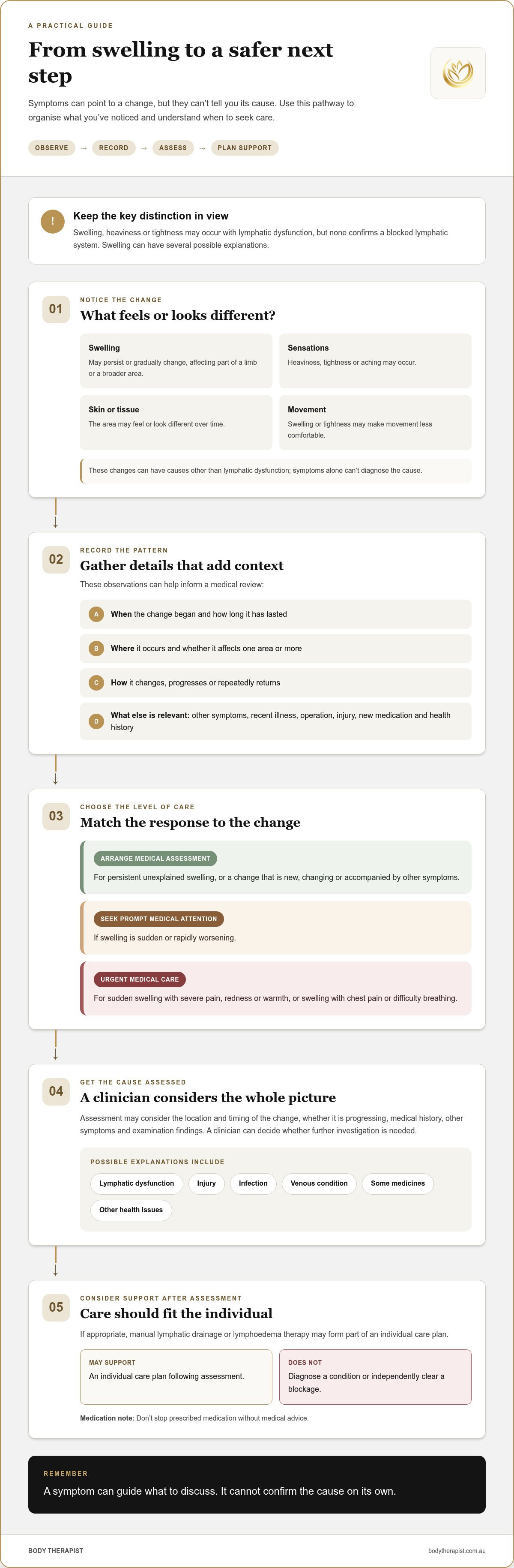
If you notice swelling or another change that concerns you, take a measured approach: record what you’ve noticed and arrange medical review if it persists or changes. Then follow the advice that fits your circumstances. The signs your lymphatic system is blocked can’t be confirmed at home, and keeping a symptom record should support a health assessment, not delay one.
Preparing for a health assessment
A few practical details can help your treating clinician understand the pattern. Note when the swelling or sensation began, which area is affected, whether it is changing, and anything that seems to make it better or worse. Include relevant recent illness, injury or surgery, as well as your medical history and medicines, including any recent changes.
You don’t need to measure, press or repeatedly test the area to work out what’s causing it. If symptoms are persistent or progressing, book a medical review rather than waiting to collect more observations. Bring your notes if useful, but don’t worry if you can’t answer every question. Your clinician can assess the change and decide whether further investigation or care is appropriate.
When symptoms need prompt or urgent attention
Seek timely medical advice for swelling that is new and painful, comes on suddenly or is rapidly worsening. The urgency depends on the full picture, including other symptoms and your health history. Don’t assume a sudden change is lymphatic, and don’t try to manage concerning or worsening swelling with massage instead of seeking assessment.
Call Triple Zero (000) in Australia for an emergency, including chest pain, difficulty breathing or other severe, sudden symptoms. These warning signs need urgent assessment, not a routine appointment or a massage treatment.
Once a clinician has assessed the symptoms, follow their individual advice about suitable next steps. If lymphatic support is considered appropriate, manual lymphatic drainage may form part of a broader care plan. It isn’t a way to diagnose the cause or independently resolve a medical condition. For supportive care after assessment, explore manual lymphatic drainage massage as one option within your care plan.
How clinical lymphatic support can fit into an individual care plan
Manual lymphatic support is best considered after symptoms have been appropriately assessed, not as a way to confirm what is causing them. Even if you’ve noticed signs your lymphatic system is blocked, treatment can’t establish a diagnosis or independently resolve an underlying medical condition. Body Therapist provides manual lymphatic drainage and lymphoedema therapy as specialised supportive services that may form part of an individual care plan.
What manual lymphatic support may involve
Manual lymphatic drainage uses gentle, purpose-directed touch. The approach and areas addressed depend on the person’s presentation, comfort and relevant clinical guidance. A practitioner considers the individual’s circumstances when planning supportive treatment. The technique isn’t a forceful massage intended to push fluid through the body.
There’s no guaranteed result, and suitability can vary. Treatment shouldn’t be described as a detox, a cure or a way to clear a blockage. Its role is supportive, within care that may involve other recommendations from the treating health team.
Why individual assessment and coordinated care matter
New or unexplained swelling should be assessed medically before hands-on lymphatic therapy is considered. This helps clarify possible causes and whether a particular approach is appropriate. If you already have a diagnosis or care plan, sharing relevant guidance with your therapist can help keep supportive treatment aligned with your broader care.
That distinction matters. A therapist can provide supportive care, but manual techniques don’t replace medical diagnosis, investigations or advice from your treating clinician. If symptoms are changing or remain unexplained, prioritise medical review rather than relying on massage alone.
It’s reasonable to ask how a technique will be adapted to your needs, what its supportive role is and how it fits alongside your existing care. A tailored discussion can help you understand the options without assuming a cause or expecting a particular outcome.
If you’re exploring supportive care after appropriate assessment, learn about clinical lymphatic care at Body Therapist.
Take the next step with confidence
The key takeaway is that swelling, heaviness or tightness may be associated with lymphatic dysfunction, but symptoms alone can’t confirm a blockage. The signs your lymphatic system is blocked are not a substitute for diagnosis. Note how symptoms begin and change, and seek medical assessment for persistent or unexplained swelling. Sudden severe symptoms, chest pain or difficulty breathing need urgent attention.
After assessment, lymphatic support may be considered as part of an individual care plan. Body Therapist offers manual lymphatic drainage massage and lymphoedema therapy as supportive care, not as a way to diagnose, cure or clear a blockage. The practice is operated by Lee Carnegie, a qualified remedial massage and dynamic movement therapist.
If you’re exploring supportive care following appropriate medical assessment, explore Body Therapist’s clinical lymphatic care. Book an appointment to discuss how lymphatic support may fit into your care plan. You don’t have to work it out alone.
Frequently Asked Questions
Is swelling a sign that your lymphatic system is blocked?
Swelling can occur when lymphatic drainage is impaired, but it doesn’t confirm a blockage by itself. Other conditions can also cause swelling. Consider when it began, whether it’s persisting or changing, and whether you’ve noticed other symptoms. If swelling is persistent or unexplained, arrange an assessment with a health professional. They can consider your symptoms and history and advise whether further assessment or care is appropriate.
What are the common signs of lymphatic system problems?
Possible signs include persistent swelling, heaviness or tightness, and changes in movement or skin. These are also among the signs your lymphatic system is blocked that people may search for, but they’re not specific to lymphatic conditions and can’t establish a diagnosis. The affected area, when symptoms began, how long they’ve lasted and your health history all matter. Seek medical advice if symptoms persist, worsen or concern you.
Can a blocked lymphatic system cause swelling in one area?
Lymphatic problems may be associated with swelling in a particular area, but local swelling doesn’t prove that a lymphatic vessel is blocked. Injury, infection and other health issues can also cause swelling. A health professional can interpret the pattern alongside when it began, whether it’s changing, any accompanying symptoms and your medical history. If the swelling is persistent or unexplained, arrange an assessment rather than trying to identify the cause yourself.
How do you know whether swelling is lymphoedema?
You can’t confirm lymphoedema from a symptom checklist alone. A clinician will consider your symptoms, medical history and examination findings, and may recommend further assessment if appropriate. Swelling has several possible causes, so avoid assuming it’s lymphoedema or starting treatment based only on online information. Arrange medical advice about persistent or unexplained changes. An assessment can help clarify what may be contributing and guide suitable next steps.
Can lymphatic drainage massage clear a blockage?
No. Manual lymphatic drainage is a specialised supportive therapy, not a diagnostic test or a guaranteed way to clear an obstruction. Whether it’s appropriate depends on your circumstances and relevant clinical guidance. If swelling is new or unexplained, seek medical assessment rather than relying on massage to identify or resolve its cause. Where suitable, manual lymphatic support may be considered as part of a broader care plan, alongside advice from your treating health professional.
When should I seek medical help for possible lymphatic symptoms?
Arrange medical advice for swelling that persists, is unexplained or is getting worse, particularly if other changes are present. Sudden severe symptoms, chest pain or difficulty breathing may require emergency care. In Australia, call Triple Zero (000) for an emergency. Don’t rely on massage or self-care alone to investigate a new symptom. If you’re unsure how urgently to seek help, contact a health professional for advice about your situation.


Comments