

RF Skin Tightening for Jowls: Non-Surgical Jawline Lift

Updated: Sep 10
What if the secret to a sharper profile wasn't found in a surgeon's scalpel, but in the precise thermal stimulation of your own skin's architecture? It's frustrating to catch a glimpse of your profile in a photo and notice a loss of definition that wasn't there a few years ago. You want to address that subtle sagging along the jawline, yet the thought of invasive surgery or the "over-filled" look of certain injectables feels daunting. We understand that you're looking for a way to look like yourself, only more refreshed and contoured.
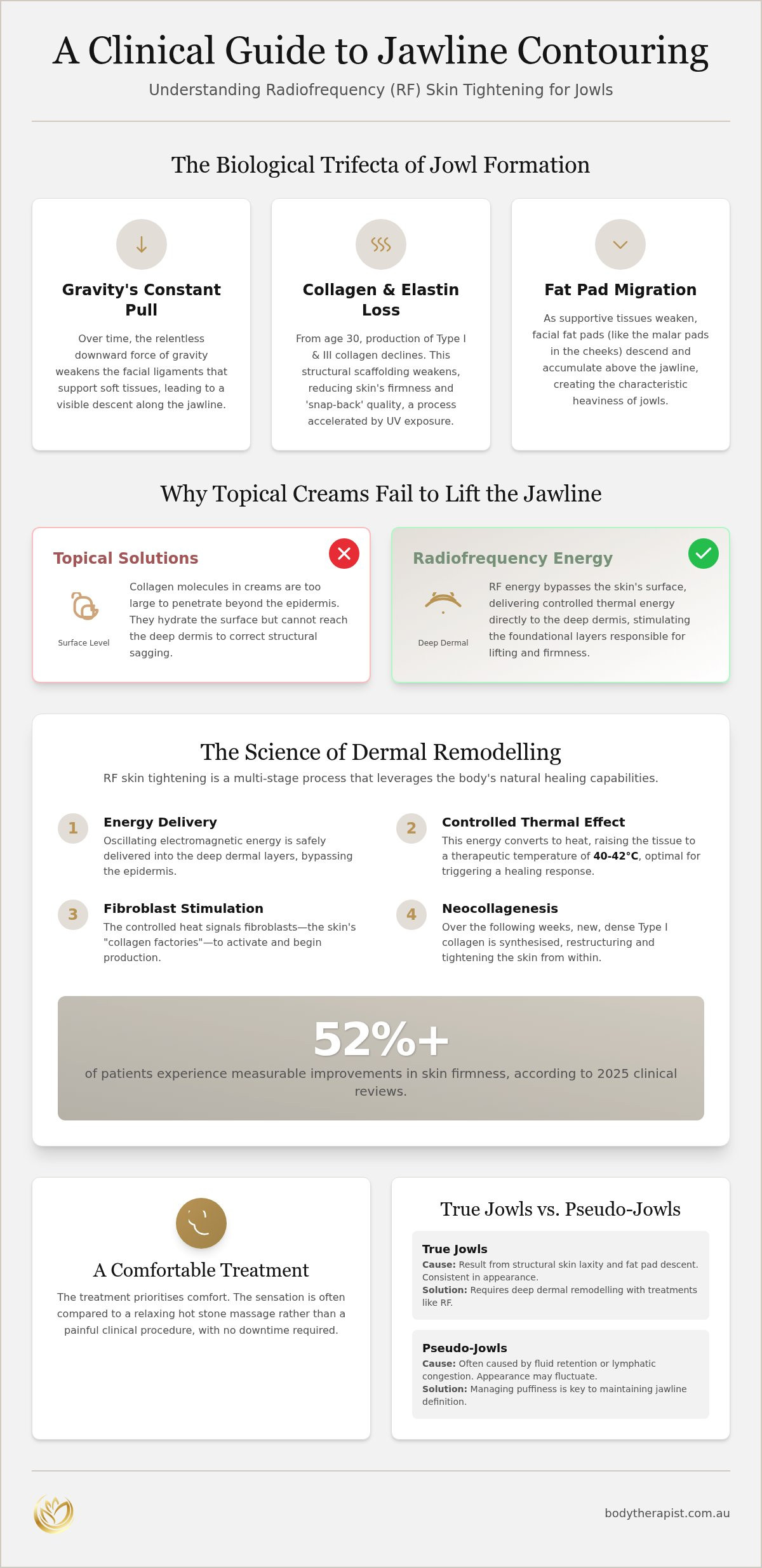
In this article, you'll discover how clinical-grade RF skin tightening for face jowls provides a sophisticated, non-surgical alternative by targeting the biological root causes of laxity. We'll examine the anatomical processes that lead to jowl formation and explain how radiofrequency energy triggers a dermal restructuring process. By the end of this guide, you'll have a clear understanding of the science behind collagen contraction and why 2025 clinical reviews show that over 52% of patients experience measurable improvements in skin firmness. We'll help you navigate the journey toward a more defined jawline with confidence and clinical clarity.
Table of Contents
Understanding the Anatomy of Facial Jowls and Skin Laxity
Jowls are not merely a sign of chronological age; they represent a complex anatomical shift in the lower third of the face. While many people use the term to describe any general heaviness, clinical jowls specifically refer to the descent of skin and soft tissue below the mandibular border. This creates a visible disruption in the once-continuous line of the jaw, often resulting in a square or "heavy" facial silhouette. Understanding this structural change is the first step in determining if RF skin tightening for face jowls is the appropriate clinical intervention for your concerns.
It's vital to distinguish between "true jowls" and "pseudo-jowls" before committing to a treatment plan. True jowls result from structural laxity and the migration of the malar fat pads. In contrast, pseudo-jowls are often caused by fluid stagnation or chronic puffiness that mimics the appearance of sagging. If your jawline definition fluctuates significantly from morning to night, you might be experiencing lymphatic congestion rather than permanent tissue descent. Addressing true jowls requires a focus on the underlying dermal architecture rather than just the skin's surface.
The Biological Causes of Jowl Formation
After the age of 30, the body's natural production of Type I and Type III collagen decreases at a steady rate. Collagen provides the essential scaffolding for our features, while elastin fibres provide the "snap-back" quality that keeps the jawline taut. In the Australian climate, high UV exposure accelerates this degradation through a process called solar elastosis. This dermal thinning, combined with the constant downward pull of gravity, weakens the ligaments that hold facial fat pads in place. As these fat pads migrate toward the jawline, they accumulate above the mandible, creating the characteristic sagging associated with jowl formation.
Why Topical Creams Fail to Lift the Jawline
Many individuals invest heavily in "lifting" creams, yet the biological reality is that most topical collagen molecules are far too large to penetrate the skin's basement membrane. While these products are excellent for hydrating the epidermis and softening fine lines, they cannot reach the deep dermis where structural lifting occurs. Jowls are a deep-tissue issue involving the displacement of fat and the stretching of the dermal-fascial layers. To effect real change, we must bypass the surface and stimulate the underlying tissues. The Science of Radiofrequency (RF) Skin Tightening demonstrates that controlled thermal energy is required to reach the depths that creams simply cannot access. Effective rejuvenation requires a shift from superficial hydration to the targeted, energy-based stimulation of the dermis to trigger genuine structural remodelling.
The Science of Radiofrequency (RF) Skin Tightening
Radiofrequency technology operates by delivering oscillating electromagnetic energy into the deep dermal layers. Unlike many laser treatments that target pigment, RF energy is "colour-blind," making it a safe and effective option for all skin types on the Fitzpatrick scale. This energy converts to thermal heat upon meeting resistance in the tissue. By maintaining a precise therapeutic temperature, we induce a controlled thermal injury that signals the body to initiate its natural healing cascade. When performing RF skin tightening for face jowls, the primary objective is to reach the exact depth where structural change occurs without compromising the surface epidermis. Modern clinical devices allow for real-time monitoring to ensure the tissue reaches the 40 to 42-degree Celsius range required for protein denaturation.
While traditional laser treatments are often the gold standard for surface-level concerns, boutique wellness centres like Ammonite Laser Spa demonstrate how advanced clinical technology can be used to address deeper structural laxity.
Clinical research, such as the data found in this Understanding the Anatomy of Facial Jowls and Skin Laxity review, confirms that radiofrequency is a foundational tool in non-surgical rejuvenation. The process relies on the body's ability to repair itself under specific thermal stress. If you are curious about how this technology might work for your specific profile, exploring our RF skin tightening services can provide a clearer picture of the results possible through professional application.
Collagen Remodelling and Elastin Stimulation
The heat applied during a session stimulates fibroblasts, which are the specialised cells responsible for producing our skin's structural proteins. This thermal stimulus induces "neocollagenesis," the synthesis of fresh Type I collagen. While some initial tightening is visible, the most significant biological work happens over a 21-day cycle as the skin's internal "scaffolding" is reinforced. This new collagen is more organised and resilient than the aged fibres it replaces, leading to a visible improvement in the skin's thickness and "snap-back" quality over several months.
The Thermal Effect on Subcutaneous Tissue
Heat causes immediate contraction of existing collagen fibres. The triple-helix structure of the collagen protein tightens instantly when exposed to the correct temperature, which explains the "instant lift" many clients notice immediately post-treatment. It is vital, however, to distinguish this skin contraction from adipocytolysis, or fat melting. In the lower face, preserving fat volume is often essential for a youthful appearance. Professional RF skin tightening for face jowls focuses on tightening the dermal envelope rather than reducing the fat pads that provide necessary facial structure. Precision is paramount; our therapists use methodical techniques to ensure the heat remains focused on the dermis, avoiding the deeper layers where unwanted volume loss could occur.
RF Skin Tightening vs. Surgical Facelifts and Fillers
Choosing a path for facial rejuvenation depends on the degree of tissue descent and your tolerance for clinical intervention. While surgical options offer dramatic repositioning, non-surgical RF skin tightening for face jowls serves as a powerful modality for those with mild-to-moderate laxity. It isn't just about avoiding a scalpel; it's about choosing the biological mechanism that best suits your current anatomical state. We view this as a strategic decision based on your skin's unique regenerative capacity.
Comparing RF to the Traditional Surgical Facelift
A traditional facelift involves the mechanical lifting and repositioning of the deeper facial tissues. This requires significant downtime, often spanning several weeks, and carries inherent risks associated with general anaesthesia and potential scarring. In contrast, an RF session typically takes about 45 minutes. There is no recovery period; you can return to your daily routine immediately. The fundamental difference lies in "lifting" versus "tightening". Surgery moves tissue to a new location, whereas RF contracts the existing dermal envelope to create a firmer, more contoured silhouette. For many, the cost-benefit analysis of multiple non-invasive sessions far outweighs the risks of a single major operation. This focus on non-invasive safety is a hallmark of premium aesthetic clinics like Devotion Beautique, which prioritise patient education and gentle yet effective skin solutions.
RF vs. Dermal Fillers for Jawline Definition
Dermal fillers are frequently used to mask jowls by adding volume to the pre-jowl sulcus or the chin. However, adding volume to an already heavy lower face can sometimes backfire. If fillers are used incorrectly, they can make the jowl area look even heavier or lead to a "puffy" appearance that lacks natural definition. Fillers address the shadows, but they don't address the skin's structural failure. This is why RF skin tightening is often a more logical first step. It improves the quality of the skin itself, rather than just camouflaging the descent with more weight. By tightening the actual dermal tissue, we achieve a result that looks like you, just more refreshed.
There is a "tipping point" where the skin's elasticity is too far gone for energy-based devices alone. If the jowl is severe and the skin has lost its ability to respond to thermal stress, a surgical consult may be the only viable route. However, for many individuals, RF acts as a vital "pre-juvenation" tool. By initiating collagen synthesis in your 30s or 40s, you effectively maintain the skin's "snap-back" quality, potentially delaying the need for invasive surgery by years. A series of RF sessions represents a cumulative investment in your skin's biological resilience.
What to Expect During Your RF Jowl Treatment
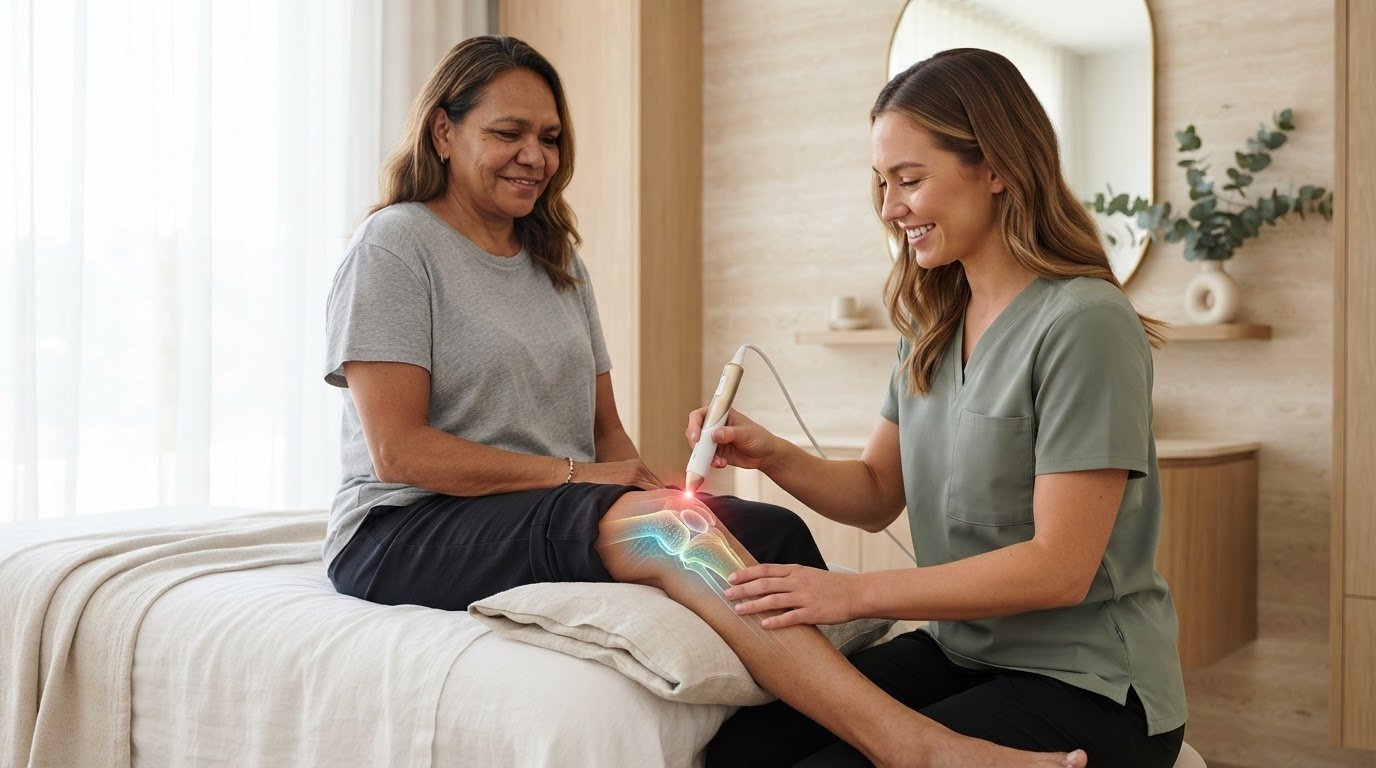
Approaching a clinical jowl lift requires a shift in expectation from traditional "beauty" treatments to a methodical, anatomical procedure. The experience is designed to be comfortable and controlled, prioritising safety while reaching the thermal thresholds necessary for dermal change. During the application of RF skin tightening for face jowls, you'll feel a deep, buildable warmth that many clients compare to a hot stone massage rather than a painful clinical "zap". This heat is essential for the protein denaturation we discussed earlier, yet it remains well within the limits of comfort for the surface skin.
Immediately after your session, you'll likely notice a mild erythema, which is a temporary pinkish flush caused by increased blood flow and thermal stimulation. This usually subsides within an hour or two. While a subtle "instant lift" is common due to immediate collagen fibre contraction, the true transformation is a gradual process. Noticeable, lasting improvements in the jawline typically emerge between the third and fourth treatments as the new collagen matures and the skin's structural density increases.
The Consultation and Anatomical Assessment
Before the first device contact, our therapists perform a detailed anatomical assessment to check skin thickness, elasticity, and the specific "vector" of the lift required. We don't apply a one-size-fits-all approach; instead, we identify where the tissue has migrated and how to best direct the energy to counteract that descent. Our team's extensive clinical massage therapy background allows us to assess facial tension and muscle health, ensuring the RF energy is applied to a receptive environment. This assessment ensures that RF skin tightening for face jowls is targeted exactly where your unique facial structure needs it most.
Treatment Duration and Frequency
Achieving a significant non-surgical lift is a cumulative process. We typically recommend a series of 6 to 10 sessions, spaced approximately one to two weeks apart. This interval is critical because it allows the fibroblast response to peak before the next stimulus is introduced. To ensure you get the most out of every appointment, it's helpful to understand how to prepare for remedial massage and aesthetic sessions, such as maintaining high hydration levels to improve the skin's conductivity. To begin your journey toward a more contoured profile, you can book your initial RF assessment with our clinical team to develop a personalised treatment plan.
Maximising Jowl Results with a Clinical Approach
Achieving a defined jawline requires more than just focusing on the skin's surface. While RF skin tightening for face jowls is highly effective at restructuring the dermis, the longevity of your results depends on managing the underlying fluid dynamics of the face. Chronic facial puffiness acts like a constant weight, pulling on the skin and gradually stretching the very collagen fibres we've worked to tighten. By addressing fluid retention, we ensure that the dermal envelope isn't under unnecessary mechanical stress. This holistic perspective is what separates a standard beauty treatment from a results-oriented clinical intervention.
The Role of Lymphatic Health in Facial Contouring
Our clinical approach often integrates manual lymphatic drainage massage to reduce the physical weight of the jowls. This synergy is crucial. While radiofrequency tightens the dermal scaffolding, MLD de-puffs the area by clearing stagnant interstitial fluid. If you notice persistent morning swelling or a heavy feeling in your lower face, these are clear signs your body needs clinical support for its lymphatic system. Combining these modalities creates a sharper, more sustainable contour than either treatment could achieve in isolation. It's a precise way to ensure your jawline looks as defined as possible.
Maintaining Your Lift: Longevity and Follow-up
Collagen is a living protein, not a permanent fixture. To maintain the structural integrity of your jawline, we recommend maintenance sessions every 3 to 6 months. This top-up approach keeps the fibroblast cells active and ensures that the rate of new collagen synthesis keeps pace with natural age-related degradation. In Australia, protecting these results from UV damage is non-negotiable. Sunlight is the primary cause of dermal thinning. Using a high-SPF broad-spectrum sunscreen daily is your best tool for preserving the fresh collagen created during your RF skin tightening for face jowls sessions. A results-oriented mindset involves looking at facial ageing as a manageable process that requires consistent, evidence-based care.
Restoring Your Profile with Clinical Precision
Reclaiming a defined jawline is a biological process that requires more than superficial care. By understanding how radiofrequency targets the deep dermis to trigger neocollagenesis, you're now equipped to make an informed decision about your aesthetic journey. We've explored how addressing both the skin's structural integrity and the underlying fluid dynamics provides a far more sustainable result than standalone treatments. Whether you're looking to prevent early laxity or address established sagging, RF skin tightening for face jowls offers a sophisticated, non-surgical pathway to profile restoration.
Our approach at Body Therapist is rooted in evidence-based treatment protocols and a deep understanding of functional anatomy. As a specialist in non-surgical contouring, our qualified clinical therapists focus on creating natural-looking results that respect your unique facial features. If you're ready to address sagging and regain confidence in your profile, book your clinical RF skin tightening consultation at Body Therapist. We're dedicated to supporting your journey toward a firmer, more contoured jawline. You deserve a profile that reflects how you feel.
Frequently Asked Questions
Is RF skin tightening permanent for jowls?
Results are long-lasting but not permanent because the biological ageing process is continuous. While the new collagen created during your sessions is structurally sound and resilient, your skin remains subject to gravity and natural protein degradation over time. Most clients find that periodic maintenance sessions every 3 to 6 months are necessary to sustain the lifted appearance and dermal density of the jawline.
How many RF sessions are needed to see a lift in the jawline?
Most individuals require a series of 6 to 10 sessions to achieve a visible, clinical-grade lift. While some immediate contraction of existing collagen fibres occurs, the significant restructuring of the dermis happens cumulatively as each session builds upon the last. Spacing these appointments one to two weeks apart ensures the fibroblast response remains active throughout the entire treatment programme for optimal results.
Does RF skin tightening hurt?
Clinical RF skin tightening for face jowls is generally a comfortable experience that feels like a deep, hot stone massage. Unlike older technologies or certain high-intensity treatments, modern radiofrequency devices allow for precise temperature control that reaches the therapeutic threshold without causing pain. Most clients find the steady, buildable warmth quite relaxing rather than distressing or sharp.
Can RF skin tightening cause facial fat loss?
RF can cause fat loss if applied at incorrect depths or temperatures, but professional protocols for jowl tightening specifically target the dermis to avoid this. In the lower face, preserving volume is usually essential for a youthful, healthy contour. Our therapists use methodical techniques to focus energy on the skin's architecture rather than the underlying subcutaneous fat pads, ensuring the dermal envelope tightens without losing necessary volume.
What is the difference between RF and HIFU for jowls?
RF uses electromagnetic energy to heat the dermal layers for tightening, while HIFU uses focused ultrasound to target the deeper SMAS layer. RF is often preferred for improving overall skin texture and tightening the "envelope" of the skin, making it a highly effective tool for general laxity. Many clients find RF to be a more comfortable and predictable entry point for rejuvenation with less risk of post-treatment soreness.
Is there any downtime after an RF jowl treatment?
There is zero downtime associated with this procedure, which makes it an ideal "lunchtime" treatment for busy individuals. You might experience a mild pinkish flush or erythema for about an hour after the session, but this is simply a normal physiological response to the thermal stimulus. You can apply makeup and return to your usual social or professional activities immediately after leaving the clinic.
Who is the ideal candidate for non-surgical jowl tightening?
The ideal candidate is someone with mild-to-moderate skin laxity who wants to avoid the risks and recovery time of invasive surgery. It is particularly effective for those noticing the early signs of jowl formation or a subtle softening of their jawline definition. Candidates should have realistic expectations and be prepared to commit to a full series of treatments to achieve a significant biological outcome.
Can I combine RF with other facial treatments?
Yes, combining RF skin tightening for face jowls with other modalities like manual lymphatic drainage can significantly enhance your final profile. Clearing stagnant fluid reduces the physical weight on the jowls, allowing the newly tightened skin to sit more cleanly against the mandibular border. We often integrate these treatments to address both the structural and fluid-related causes of facial sagging simultaneously.


Comments