

Cold laser therapy: wavelengths, session length and frequency

Light used therapeutically doesn’t have to feel hot to affect tissue. Cold laser therapy for inflammation uses low-intensity red or near-infrared light, commonly at wavelengths between 600 and 1,000 nanometres, and may support cellular responses linked with healing and reduced swelling.
If you’re considering this treatment, it’s reasonable to want clear information about how it works and what a session involves. Cold laser therapy is non-invasive, but its effects and treatment approach depend on the tissue being treated and the condition involved.
This guide explains how light may affect inflammation and tissue repair, which conditions it’s used for, and what to expect. It also covers common wavelengths, session length and treatment frequency, so you can understand the approach before discussing whether it suits your needs.
Table of Contents
What’s cold laser therapy?
Cold laser therapy, also called low-level laser therapy (LLLT), applies low-intensity light to tissue without cutting or burning the skin. A practitioner places a light-emitting probe over a target, such as an arthritic knee or strained muscle, to deliver light to the affected area.
In Australia, choose a practitioner with relevant clinical training and experience treating your condition. Ask how they assess pain and function, and how they track changes over treatment.
Evidence focuses mainly on pain relief and function in musculoskeletal conditions. A clinical-trial review reported significant pain reduction in 90% of trials examining knee, back and temporomandibular joint (TMJ) pain. That figure describes the proportion of trials, not the proportion of people who improved.
For knee osteoarthritis, seven trials reported clinically meaningful short-term pain relief, with benefits lasting up to 3 weeks. This offers a defined timeframe for interpreting the findings: the reported relief was short-term, not evidence of a lasting cure. A review of fibromyalgia treatment included 325 patients across nine clinical trials, but the number of participants alone doesn’t establish how well treatment works for every person.
Cold laser therapy is used for arthritis, muscle strains and joint pain. For arthritis, the aim is to reduce pain and improve movement. For a muscle strain, treatment targets the injured tissue and its recovery. Chronic pain and conditions such as fibromyalgia involve different patterns, so evidence for one condition should not automatically be applied to another.
The proposed effect on pain involves reducing nerve irritation and interrupting pain signals. This is different from repairing the underlying cause. For example, someone with knee pain may feel less discomfort but still need care to address joint function and movement. In comprehensive musculoskeletal practice, such as at The Orthopaedic & Sports Medicine Institute, clinical evaluations look beyond temporary pain relief to address underlying mechanics and joint stability. Pain relief and improved function are related but distinct outcomes, so track both when assessing progress.
For inflammation, the treatment is intended to support tissue repair and reduce swelling, rather than numb the area like an anaesthetic. The term “cold” refers to the low-intensity light, not an ice-based treatment. A PubMed search displayed 12,631 results, according to the National Library of Medicine. Search-result volume indicates breadth of indexed material, not proof that every study supports the same outcome. The condition studied, treatment method and outcome measured all matter when interpreting evidence.
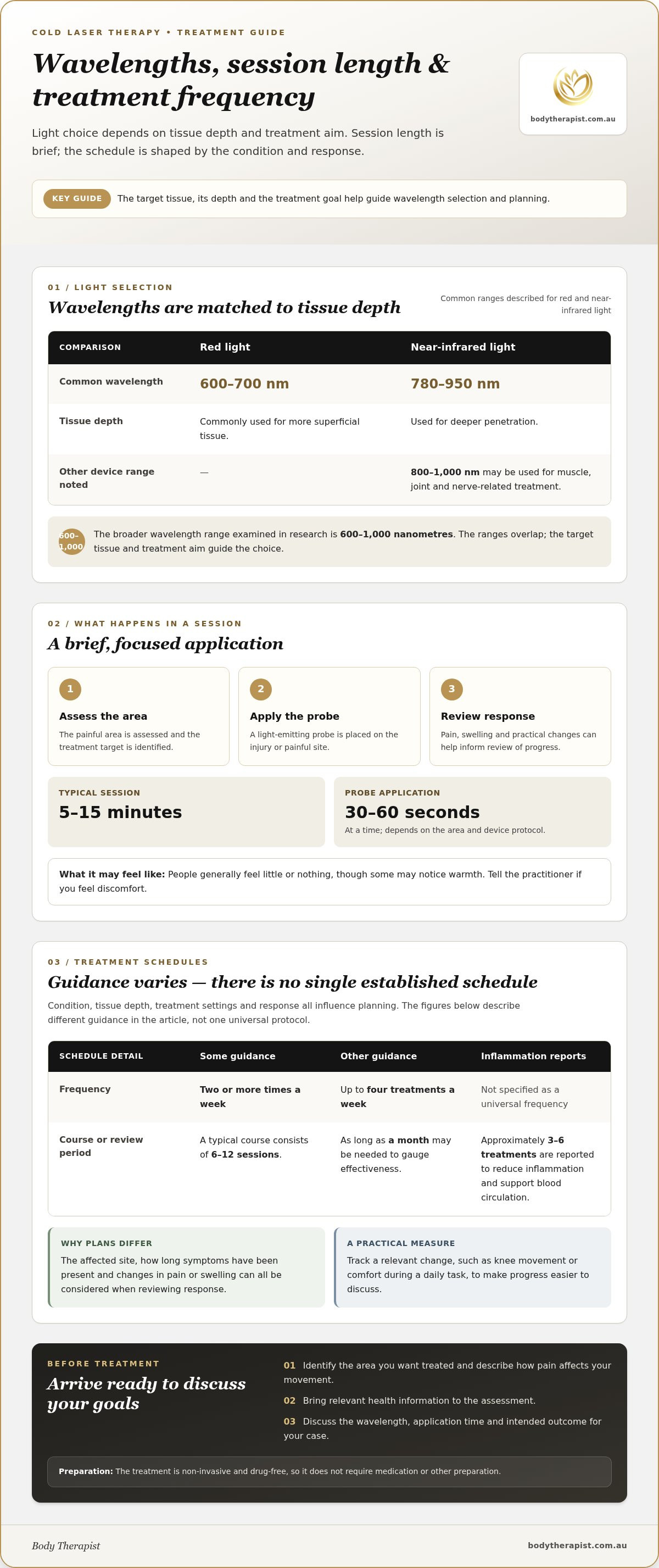
Treatment wavelengths, duration and frequency
Treatment typically starts with an assessment of the painful area, followed by a session in which a light probe is applied to the target tissue. Cold laser therapy is non-invasive and drug-free, so it does not require medication or other preparation. People generally feel little or nothing during treatment, although some may notice warmth. Tell the practitioner if you feel discomfort.
Wavelength selection relates to tissue depth. Red light between 600 and 700 nanometres is commonly used for more superficial tissue, while 780 to 950 nanometres is used for deeper penetration. Devices may also use 800 to 1,000 nanometres for muscle, joint and nerve-related treatment. These ranges overlap with the broader 600 to 1,000 nanometre range examined in research. The target tissue and treatment aim guide the choice.
A session typically lasts 5 to 15 minutes. The probe may be applied to an injury or painful site for 30 to 60 seconds at a time, with duration depending on the area treated and the device protocol. This is a brief, focused application rather than a procedure involving an incision or medication.
There’s no single established treatment schedule. Some guidance recommends sessions two or more times a week, and a typical course consists of 6 to 12 sessions. Other guidance describes up to four treatments a week, with as long as a month needed to gauge effectiveness. These schedules differ because condition, tissue depth, treatment settings and response all influence planning.
Reports describe approximately 3 to 6 treatments to reduce inflammation and support blood circulation. That figure is not a universal protocol. A practitioner considers the affected site, duration of symptoms and changes in pain or swelling when reviewing response. Tracking a practical measure, such as knee movement or comfort during a daily task, can make changes across sessions easier to discuss.
Prepare by identifying the area you want treated and describing how pain affects your movement. An assessment helps establish the treatment target and plan; bring relevant health information to that discussion. The practitioner can explain the wavelength, application time and intended outcome for your case. For a clearer picture of treatment planning, consider how each session will relate to your movement goals and symptom changes.
Conditions treated, including arthritis and tendon injuries
Cold laser therapy is used for musculoskeletal concerns where pain, swelling or restricted movement affects daily activities. Common examples include arthritis, muscle strains, joint pain and tendon injuries. Treatment targets the affected tissue, with the aim of supporting recovery and easing symptoms. The condition, tissue and treatment goal guide how the light is applied.
For osteoarthritis, research has examined pain and movement in affected joints. Seven trials reported clinically meaningful short-term pain relief for knee osteoarthritis, lasting up to 3 weeks. In rheumatoid arthritis trials, patients experienced a 70% reduction in pain in the treated hand and almost 30 minutes less morning stiffness in that hand. These outcomes describe specific studies, not a standard result for every joint.
Tendon injuries need a different focus from joint arthritis. A review included 80 patients with Achilles tendonitis, while research on chronic tendinopathies reported reduced healing time by 70%. These findings relate to tendon conditions, not every sprain or injury. For a muscle strain or sprain, the practitioner considers the injured site, symptoms and movement limits when deciding whether light therapy fits the treatment plan.
Cold laser therapy is also considered for pain and inflammation involving soft tissue. Studies have examined lymphoedema, with some reporting improvement 12 months after treatment. Gum disease and oral inflammation are also listed among dental applications. These examples do not establish cold laser therapy as a treatment for every skin condition; the tissue and diagnosis matter. For a skin concern, the relevant question is whether the condition and treatment site have been assessed clinically.
How does it compare with physiotherapy, anti-inflammatory medicines and other treatments? It uses light rather than medication, and it can be combined with physiotherapy to address inflammation and swelling. Physiotherapy also works on movement and function, while medicines act through their own mechanisms, so these approaches aren't interchangeable.
What inflammation-related conditions may it help treat? Common examples include arthritis, tendon conditions, muscle strains and painful joints. Research also examines lymphoedema and oral inflammation, but these involve different tissues and treatment goals. Notably, therapeutic light is also widely used in veterinary medicine to relieve inflammation and joint discomfort in pets, with facilities like Animal Hospital of Sullivan County offering comprehensive care to aid companion animals.
Before treatment, identify the symptoms that matter most, such as morning stiffness, swelling or difficulty walking. Link the target tissue to a functional measure, such as knee movement or grip during an everyday task. Cold laser therapy should not be applied to carcinomas or cancerous lesions. For home use, avoid directing it at the eyes or thyroid.
How light may stimulate cellular healing
Low-level laser therapy uses low-intensity light to prompt cellular responses associated with tissue repair. Proposed effects include changes in cellular energy, circulation and the production of structural proteins.
Wound healing and tissue repair
Wound healing is the body’s process of repairing damaged tissue and forming replacement tissue. This distinction helps separate support for repair from a claim that light closes a wound or treats its cause.
Low-level laser therapy is described as stimulating cellular energy production and increasing blood flow. Circulation can deliver oxygen and nutrients to affected tissue, while collagen production and new tissue formation support repair. Damaged tissue needs these biological resources to rebuild. This does not mean every wound responds in the same way or that light replaces wound care.
For a localised soft-tissue injury, a clinician would focus on the injured site and the intended outcome. The light is applied to the target area, with the proposed response occurring at a cellular level. Supporting tissue repair is different from removing the original cause of an injury.
Collagen is a structural protein involved in tissue formation and repair, including in connective tissues such as ligaments and tendons. Low-level laser therapy has also been described as supporting muscle recovery. Because these tissues have different roles, an outcome in one type of injury does not prove the same outcome for another.
Tissue healing and recovery
Tissue healing is the repair response in affected structures; recovery is the return towards useful function. The distinction connects a biological process with changes you can notice, such as easier movement after a muscle injury.
Light may stimulate cells and support tissue repair through several linked responses. Cellular energy production is part of the proposed mechanism, while increased circulation can bring oxygen and nutrients to the treated area. Collagen and new tissue formation contribute to structural repair, and effects on nerve function and repair may be relevant to nerve-related symptoms.
These responses describe possible pathways, not a guaranteed sequence for every condition. Tendons, muscles and nerves have different functions, so treatment needs to match the tissue being addressed. A treatment plan should consider the affected area and functional goal, rather than treating “healing” as one uniform outcome.
For a muscle injury, useful recovery measures might include comfort during movement or the ability to perform a daily task. The relevant measure may differ for tendon or ligament concerns. Tracking the same activity over time gives a clearer picture than judging recovery by a single sensation after treatment. Separating cellular repair from practical function keeps expectations grounded in the tissue and task involved.
Low-level laser therapy and inflammation
Low-level laser therapy (LLLT) is used to influence inflammation and swelling through light exposure at the affected tissue. The central idea is cellular: light may support anti-inflammatory responses, while changes in circulation and fluid movement may also affect local swelling.
What does scientific evidence say about cold laser therapy for inflammation? Research reports reduced inflammation within 2 hours after low-level laser therapy, and describes anti-inflammatory cellular responses. Other findings concern pain and movement in specific conditions, so evidence for one outcome, such as knee pain relief, doesn’t automatically establish the same effect for every inflamed tissue.
Inflammation is part of the body’s response to tissue irritation or injury. Excessive or persistent inflammation can contribute to pain, swelling and restricted movement around joints. LLLT aims to influence this response, not simply mask discomfort. A swollen joint and an irritated tendon involve different structures, so treatment needs to target the relevant area.
Circulation and lymphatic fluid movement are also relevant. Increased circulation can deliver oxygen and nutrients to affected tissue, while lymphatic drainage helps move excess fluid. These processes may help explain why low-level laser therapy is used alongside physical therapy for swelling. They are distinct mechanisms, not evidence that light alone resolves every cause of inflammation.
The key is to distinguish symptom changes from tissue recovery. Reduced pain may make movement easier, but does not by itself show that an injury has healed. Record a functional measure, such as joint movement or comfort during a daily task, and compare it over treatment. This gives discussions a concrete focus beyond a general impression of feeling better.
Side effects and safety precautions also deserve attention. Treatment is generally described as non-invasive, and people may feel no sensation beyond warmth. Low-level laser therapy should not be used over carcinomas or cancerous lesions. For home use, avoid directing it at the eyes or thyroid; low-frequency pulsed visible light below 30 Hz might trigger seizures in people with photosensitive epilepsy.
Discuss LLLT with a doctor or licensed practitioner before treatment, particularly if you have a cancerous lesion, photosensitive epilepsy or an existing inflammatory condition. They can consider the target tissue, symptoms and treatment aim alongside other care. This context matters because reducing inflammation is not the same as diagnosing or treating its underlying cause.
Discuss your treatment options if you’re considering a light-based approach as part of care for pain or swelling.
Body Therapist: Manual Lymphatic Drainage Massage
Body Therapist offers Manual Lymphatic Drainage Massage for people seeking hands-on support with lymphatic concerns and swelling. Unlike low-level laser therapy, this manual treatment uses gentle, rhythmic techniques to support lymph movement. It may be relevant when swelling or lymphoedema is the main concern, rather than pain or tissue recovery alone.
For lymphoedema-related needs, Body Therapist also provides Lymphedema Therapy. Remedial Massage and Oncology Massage address other therapeutic needs. The right approach depends on the concern being addressed; these services do not replace diagnosis or medical care.
If you’d like to discuss whether Manual Lymphatic Drainage Massage suits your needs, contact Body Therapist.
Choose a next step that fits your goals
Deciding whether cold laser therapy for inflammation belongs in your care plan starts with identifying your main concern: pain, restricted movement or swelling. Your response depends on the condition and treatment approach, so discuss your goals and relevant health history with a qualified practitioner before proceeding.
For support with lymphatic swelling, Body Therapist offers Manual Lymphatic Drainage Massage and Lymphedema Therapy. Remedial Massage may suit other musculoskeletal concerns. These hands-on services address different needs from light-based treatment, so identify the concern you want help with and discuss an appropriate approach.
A clear conversation can help you understand which option aligns with your needs and what to expect from care. Contact Body Therapist to discuss treatment and take a considered next step towards your wellbeing.
Frequently Asked Questions
Are there any side effects?
Most people feel little or no sensation during treatment, apart from possible warmth. Protecting the eyes matters because the light is directed at tissue, not towards the face. Cold laser therapy shouldn’t be applied over carcinomas or cancerous lesions. For home use, avoid the eyes and thyroid; low-frequency pulsed visible light below 30 Hz might trigger seizures in people with photosensitive epilepsy. Discuss relevant health concerns with a doctor or practitioner beforehand.
How does LLLT work?
LLLT delivers low-intensity light to a selected tissue area, where it may influence cellular activity. Proposed responses include changes in cellular energy production and circulation that support the body’s repair processes. For example, a practitioner may target a painful tendon rather than a whole limb. The treatment aim and tissue involved guide its application, while symptom tracking helps distinguish changes in discomfort from improvements in everyday function.
How many treatments will I need?
A typical course contains 6-12 sessions, with treatment frequency shaped by the condition, target tissue and response. Some schedules use two or more appointments a week, while other guidance allows up to four weekly treatments. A practical way to review progress is to choose a repeatable task, such as walking or bending a sore joint, and note whether it becomes easier across the course.
What are the potential benefits of LLLT for arthritis?
For arthritis, potential benefits include short-term pain relief and easier joint movement. Research on knee osteoarthritis reported meaningful short-term relief, while studies of rheumatoid arthritis measured pain and morning stiffness in treated hands. These are distinct outcomes: reduced pain may make movement more comfortable, but does not by itself show that joint disease has changed. Track function, such as grip or walking comfort, alongside symptoms.
Who Is a Candidate?
LLLT may be considered for localised musculoskeletal concerns, such as joint pain, a muscle strain or tendon symptoms. Suitability depends on the target area, diagnosis, symptoms and treatment goal. A practitioner should assess the condition and relevant health history before treatment. People with cancerous lesions or photosensitive epilepsy need particular caution. Discuss treatment with a doctor or licensed practitioner.
What is cold laser therapy (photobiomodulation) and how does it reduce inflammation?
Photobiomodulation is another term for using low-intensity light to influence biological activity in tissue. In cold laser therapy for inflammation, the proposed effect involves cellular anti-inflammatory responses, while circulation and lymphatic fluid movement may also be relevant to swelling. This describes a potential mechanism, not a diagnosis or a replacement for care addressing the cause. An inflamed joint and an injured tendon, for example, require different clinical assessments.
What laser or light wavelengths and treatment doses are used for inflammation?
Commonly used wavelengths range from 600 to 1,000 nanometres, with red light used for superficial tissue and near-infrared light for deeper targets. Research has examined radiation values of 3-10 J/cm2. Wavelength and dose describe different treatment parameters: wavelength identifies the light, while dose describes energy delivered over an area. The treatment target and tissue depth inform the settings selected for an application.
How many cold laser therapy sessions are typically needed, and how long does each session take?
A typical course is 6-12 sessions, and an individual appointment commonly lasts 5-15 minutes. The number and spacing of visits depend on the condition and how symptoms and function change during treatment. A focused treatment for one painful area may differ from a plan covering several tissues. Keep a simple record of daily activities affected by symptoms, so progress can be reviewed consistently with the practitioner.


Comments