

Cording After Breast Cancer Surgery: Signs and Treatment

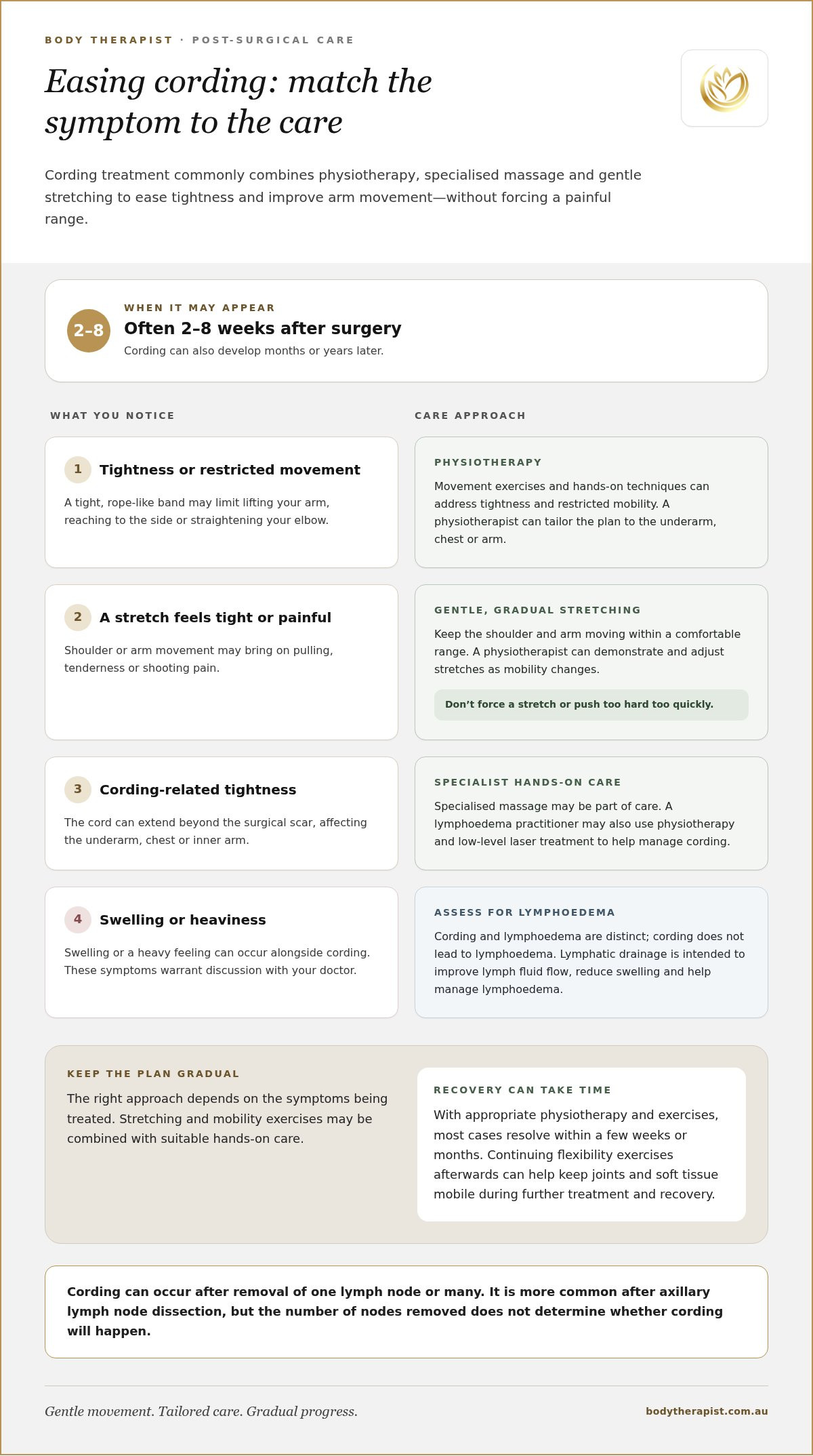
A tight, rope-like cord after breast cancer surgery can restrict movement, but it isn’t a sign that the cancer has returned. Cording treatment after breast cancer surgery commonly involves physiotherapy, specialised massage and gentle stretching to ease tightness and improve arm movement. It most often develops 2-8 weeks after surgery, though it can appear months or years later.
If you’ve noticed pain when raising your arm or a visible band beneath the skin, it’s understandable to wonder what’s happening and what to do next. Cording, also called axillary web syndrome, can affect the underarm, chest or inner arm. A healthcare provider can assess it with a physical examination.
This article explains what cording is, when it may develop and how to recognise its signs. You’ll also learn about treatment approaches, why gentle movement matters, and when swelling or heaviness should prompt a discussion with your doctor.
Table of Contents
How is cording treated?
A cording treatment after breast cancer surgery plan commonly combines physiotherapy, specialised massage and stretching. The aim is to ease tightness and improve arm and shoulder movement without forcing a painful range.
Physiotherapy and lymphoedema therapy
Physiotherapy uses movement exercises and hands-on techniques to address cording-related tightness and restricted mobility. A physiotherapist can adapt the plan to affected areas, such as the underarm, chest or arm. Massage, physiotherapy and low-level laser treatment by a lymphoedema practitioner may also help manage cording. With appropriate physiotherapy and exercises, most cases resolve within a few weeks or months.
Exercises and stretches for cording
Recommended exercises focus on gentle, gradual stretching and keeping the shoulder and arm moving. A physiotherapist can demonstrate movements within your comfortable range, then adjust them as your mobility changes. Don’t force a stretch or push too hard too quickly, as this may cause more harm than good. After cording resolves, continuing flexibility exercises can help keep joints and soft tissue mobile during further treatment and recovery.
Cording after lymph node removal
Cording can develop after breast cancer surgery that removes lymph nodes. It is more common after axillary lymph node dissection, which removes many nodes, but can also occur after removal of a single lymph node. The number removed affects the likelihood of cording, but doesn’t determine whether it will happen. Knowing which procedure you had can help explain a possible tight band and inform assessment.
Cording and lymphoedema are distinct conditions. Cording does not lead to lymphoedema, but people who have had axillary lymph node surgery have some risk of developing it, whether or not cording occurs. Lymphoedema may cause swelling or a feeling of heaviness. If either appears alongside a cord, speak with your doctor so they can assess whether lymphoedema is also present.
Lymphatic drainage is a massage therapy intended to improve lymph fluid flow, reduce swelling and help manage lymphoedema. It addresses fluid-related symptoms, while cording treatment focuses on tightness and movement. A physiotherapist may apply a warm, moist heat pad to the cords for a short time. The right cording treatment after breast cancer surgery may combine suitable approaches with stretching and mobility exercises, based on the symptoms being treated.
What is cording in breast cancer?
Cording is a tight, rope-like band beneath the skin that can limit arm movement. Its position and tension may help explain symptoms, but a healthcare provider must assess the condition.
Tight cords and restricted movement
The cord may feel like a narrow strand beneath the skin, most often near the underarm. It can also appear across the chest or track down the inner arm towards the hand. Some people see one thick cord; others notice tightness without an obvious band. The location matters because tension can extend beyond the surgical scar and restrict movement at more than one point.
For example, raising your arm can stretch a band running from the underarm towards the wrist. This may cause a pulling sensation through the arm, even when the surgical scar itself isn’t painful. Cording can develop along lymphatic vessels beyond the scar, rather than being scar tissue confined to the operation site. This helps explain why the tight line may become noticeable away from the incision.
Pain and arm or shoulder movement
Cording can cause tenderness, shooting pain during a stretch, and tightness around the shoulder or arm. You might find it difficult to lift your arm overhead, reach out to the side, or fully straighten your elbow. These movement changes can affect everyday actions, such as reaching for a cupboard shelf or putting on a top.
Notice which movement brings on the pulling sensation and where you feel it. For instance, raising your arm may reveal a visible band along the inner arm, while extending your elbow may increase tightness near the underarm. Pain and restricted movement can occur together, but symptoms vary. A physical examination of the underarm and painful areas can support diagnosis.
Possible complications
Restricted movement can persist when cording symptoms linger. If your arm and shoulder remain difficult to move, nearby tissues may tighten or contract, and frozen shoulder can develop. That’s why ongoing stiffness deserves attention rather than being dismissed as ordinary post-surgical discomfort.
Cording after breast cancer surgery isn’t a sign that cancer has returned. It also doesn’t lead to lymphoedema, although swelling or heaviness can occur alongside cording and should be discussed with a doctor. Tracking changes in movement, tenderness and swelling gives your breast care team useful details. Note which action causes pain, such as reaching overhead, to help describe the restriction.
Recognising symptoms and seeking help
Cording symptoms most often begin 2-8 weeks after breast cancer surgery, though they can appear months or years later. Signs include a visible cord, arm tightness, tenderness, shoulder stiffness or shooting pain when stretching or lifting the arm. If these symptoms develop, contact your doctor or a physiotherapist specialising in breast cancer rehabilitation for assessment.
Seek prompt medical attention for symptoms that feel severe or urgent. Cording may cause pain that prevents arm and shoulder movement; a doctor can assess this and may prescribe pain relief. Sudden swelling or heaviness also warrants discussion with your doctor, who can assess whether lymphoedema is present. For information about support during post-surgical recovery, explore the available therapeutic care.
Axillary web syndrome and cording
Axillary web syndrome is the clinical name often used for cording. Knowing the term can help you describe your symptoms and seek an appropriate assessment.
The name for cording
Axillary web syndrome describes tight, cord-like tissue that can develop after breast cancer surgery. “Cording” refers to the visible or palpable bands beneath the skin. The cord may form near the underarm, then extend along the inner arm towards the hand, or appear across the chest.
These bands develop along lymphatic vessels beyond the surgical scar, rather than being scar tissue confined to the incision. Damage to the lymphatic and venous systems is thought to contribute. The appearance varies: one person may see a distinct line when lifting their arm, while another mainly feels pulling or tightness during movement.
Axillary web syndrome most often follows breast cancer surgery, particularly procedures involving lymph node removal. It can also occur without breast cancer after other surgery, infection or trauma affecting the lymphatic system. The name describes a pattern of symptoms, not a cancer diagnosis or a sign that breast cancer has returned.
Onset and recovery also vary. Symptoms commonly appear several days to several weeks after surgery, but can emerge many months later. Cording may resolve on its own within 3-4 months after onset, while treatment can support movement and symptom relief. Axillary web syndrome usually resolves after a few therapy sessions or within a few months.
Symptoms of axillary web syndrome
A visible cord is one recognised sign, but symptoms can also include tightness, tenderness and pain. Stretching or raising your arm may trigger a shooting sensation along the band. The cord can extend from the underarm down the inner arm, sometimes reaching the hand, or affect the chest instead of, or as well as, the arm.
Movement changes can make ordinary tasks harder. For example, reaching overhead may stretch the tissue and increase pulling, while straightening your elbow can expose a tight line along the arm. Shoulder stiffness may also develop. Not everyone sees a cord clearly, so pain and restricted movement still matter when describing symptoms.
The number of lymph nodes removed affects the likelihood of axillary web syndrome. It is less common after sentinel lymph node biopsy, which removes 1 to 3 lymph nodes, than after axillary lymph node dissection. Studies found that 6-72% of women developed cording after axillary lymph node dissection. This broad range reflects differing study findings, not an individual prediction.
If symptoms affect your arm or shoulder, ask your doctor about a referral to a professional specialising in breast cancer rehabilitation. A physical examination can assess the underarm and painful areas. Cording rarely returns after improvement, but limited movement can sometimes persist for many months or longer, so changes in function are worth raising during clinical follow-up.
When cording may develop
Cording most often appears 2-8 weeks after breast cancer surgery, commonly around two weeks. It may resolve without treatment within 3-4 months after onset, although appropriate physiotherapy and exercises can support recovery.
Cording isn’t limited to the first weeks after an operation. It may become noticeable within a few days, several weeks or months after surgery, and can sometimes appear months or years later. A new tight band still deserves attention, even if your initial recovery seemed straightforward.
Axillary web syndrome can emerge at different times because surgery may affect the lymphatic and venous systems. The number of lymph nodes removed is one factor: cording is more common after axillary lymph node dissection, which removes many nodes, than after sentinel lymph node biopsy, which removes a few. A sentinel biopsy usually removes two nodes, but cording can still occur after removal of a single node.
Published research describes a broad onset window, rather than one exact date that applies to everyone. Symptoms most often begin days or weeks after surgery, but a later appearance doesn’t rule out cording. Keep track of when you first notice a visible line, pulling sensation or arm restriction. For example, note whether tightness appears while reaching overhead or straightening your elbow.
The location can also affect what you notice first. A cord may form in the underarm, extend down the inner arm towards the hand, or appear across the chest. It can develop in the chest instead of, or as well as, the inner arm on the treated side. The visible band may become apparent during a particular movement, rather than while your arm is resting.
Most cases settle within a few weeks or months with appropriate physiotherapy and exercises. Cording may also resolve on its own, while therapy can help relieve pain and restricted movement. Axillary web syndrome often resolves after a few therapy sessions or within a few months, though physical therapy can take several months to produce noticeable improvement.
After cording resolves, continuing stretching and flexibility exercises helps keep joints and soft tissue mobile during further treatment and recovery. If tightness or restricted movement persists, tell your doctor when symptoms began, which areas are affected, and which movements bring them on. This timeline helps guide assessment, whether symptoms started shortly after surgery or much later.
Checking for cording
A healthcare provider can diagnose cording through a physical examination of the underarm and painful areas. At home, notice changes rather than trying to confirm the condition yourself. A visible line, pulling sensation or reduced shoulder movement can help you describe what has changed since surgery.
Use a mirror to look at the armpit, chest and inner arm on the affected side. Cording may show as a raised, rope-like line beneath the skin, but it isn’t always visible. Some people mainly notice tightness when they lift an arm or stretch the elbow. A cord may also extend towards the hand, so note where you see or feel symptoms.
Move gently and observe what changes. For example, slowly raise your arm only as far as feels comfortable, then notice whether a line becomes more visible or tightness increases. You can also note whether straightening your elbow creates pulling along the inner arm. Don’t force a stretch, press hard on the tissue or try to remove or break a cord yourself.
Keep a clear record for your medical appointment. Note when you first noticed the change, which area is affected, and what movement brings on pain or tightness. Include whether symptoms are improving, staying similar or becoming more limiting. If you’ve had lymph node surgery, mention the procedure and any new swelling or heaviness, as these details help guide the assessment.
A clinician’s examination is more reliable than appearance alone. They can assess the underarm and painful areas, observe your range of motion, and consider whether your symptoms fit cording or another post-surgical issue. Tell them if reaching overhead, extending your elbow or moving your shoulder causes pain. These practical examples help the healthcare provider consider your symptoms alongside the physical findings.
Contact your doctor if a new cord, persistent tightness or restricted movement develops after breast cancer surgery. Also raise swelling or heaviness in your arm, chest or hand, as these symptoms may need assessment for lymphoedema. A doctor can assess your symptoms and determine the appropriate next step. Keep your notes handy, especially if the location or effect of symptoms changes between appointments.
For movement restriction or tightness that needs hands-on support, explore post-surgical therapy options as part of your recovery care.
Body Therapist: Manual Lymphatic Drainage Massage
Body Therapist offers Manual Lymphatic Drainage Massage for lymphatic support after breast cancer surgery. This gentle massage aims to support lymph fluid flow, reduce swelling and help manage lymphoedema. It isn’t a substitute for medical assessment or physiotherapy focused on cording, but may be relevant if swelling or heaviness is also present.
Lymphedema Therapy may also support people managing lymphoedema. If you notice swelling, heaviness or tightness, discuss these symptoms with your doctor and ask what care fits your recovery. For cording-related pain or restricted movement, follow the treatment plan recommended by your healthcare team.
Contact Body Therapist to discuss Manual Lymphatic Drainage Massage or Lymphedema Therapy.
Take the next step in your recovery
Recovery can involve more than easing a tight cord. It can also mean finding ways to move more comfortably and address swelling or muscle tension as your needs change. The right cording treatment after breast cancer surgery depends on the symptoms you want support with and the guidance of your healthcare team.
Body Therapist offers Manual Lymphatic Drainage Massage and Lymphedema Therapy for lymphatic support, as well as Remedial & Lymphatic Massage for muscle tension. These services can complement your recovery plan, while your doctor or breast cancer rehabilitation physiotherapist remains the right person to assess cording and guide its clinical management.
Consider what you’d like help with, such as swelling, heaviness or discomfort, and discuss it with your healthcare team. For a conversation about supportive massage options, contact Body Therapist. Each considered step can help you move forward with greater confidence and care.
Frequently Asked Questions
How can I take care of myself while recovering?
Keep your affected arm moving gently and follow the exercises your physiotherapist has shown you. Avoid forcing a stretch or repeatedly testing a painful movement. Note which daily tasks feel restricted, such as dressing or reaching for a light object, then share those details at your next appointment. If swelling or heaviness appears, contact your doctor so they can assess whether lymphoedema may be involved.
How painful is cording?
Cording discomfort varies: some people mainly feel pulling or tightness, while others experience tenderness or shooting pain during a stretch. Pain may become noticeable when lifting the arm or straightening the elbow, and can limit those movements. If discomfort prevents you moving your arm or shoulder, tell your doctor. They can assess the cause and consider pain relief where appropriate, rather than expecting you to push through it.
What is cording (axillary web syndrome)?
Cording, also called axillary web syndrome, describes tight bands beneath the skin that can become noticeable after surgery. These bands may be felt or seen as a line, often near the underarm. The term describes a physical pattern, not a diagnosis of cancer recurrence. If you notice a new band or movement restriction, describe its location and how it feels to your healthcare provider.
What are the early signs of cording?
Early signs can include a thin, visible line beneath the skin, a pulling sensation, or tightness when moving your arm. You might first notice it while reaching overhead or extending your elbow. Tenderness and shoulder stiffness can also occur. A cord isn’t always easy to see, so changes in movement matter too. Record which action brings on symptoms and mention that example during an assessment.
What causes cording?
Cording is thought to develop when breast cancer surgery affects lymphatic and venous systems around the underarm. It can occur after lymph node removal, including removal of a single node, and is more common after axillary lymph node dissection than sentinel node biopsy. The number of nodes removed affects the likelihood, but doesn’t determine whether an individual will develop cording. A clinician can assess symptoms and their possible connection to surgery.
What is axillary web syndrome (cording) after breast cancer surgery?
Axillary web syndrome is the clinical term commonly used for cording after breast cancer surgery. The bands can extend beyond the surgical scar, along the inner arm towards the hand, or appear across the chest. This helps explain why tightness may be felt away from the incision. The condition can restrict movement, so tell your doctor if reaching, dressing or another everyday task becomes difficult.
Which treatments help cording after breast cancer surgery?
Treatment may include physiotherapy, gentle stretching and specialised massage to ease tightness and support arm movement. A physiotherapist can tailor exercises to your range of motion and symptoms. A warm, moist heat pad may be applied to the cords for a short time. If pain is stopping movement, your doctor can assess whether pain medication is appropriate. Treatment approaches depend on the symptoms being addressed, including any separate swelling.
Can physiotherapy or manual therapy safely treat cording?
Physiotherapy and specialised manual techniques are commonly used to manage cording, with the therapist adapting the approach to your symptoms and movement. Gentle techniques matter: trying to force a stretch or break a cord yourself can aggravate the area. Tell the practitioner about your surgery, pain and any swelling before treatment. A healthcare provider can assess the underarm and painful areas and help guide suitable care.


Comments