

Postpartum massage benefits for swelling and muscle tension

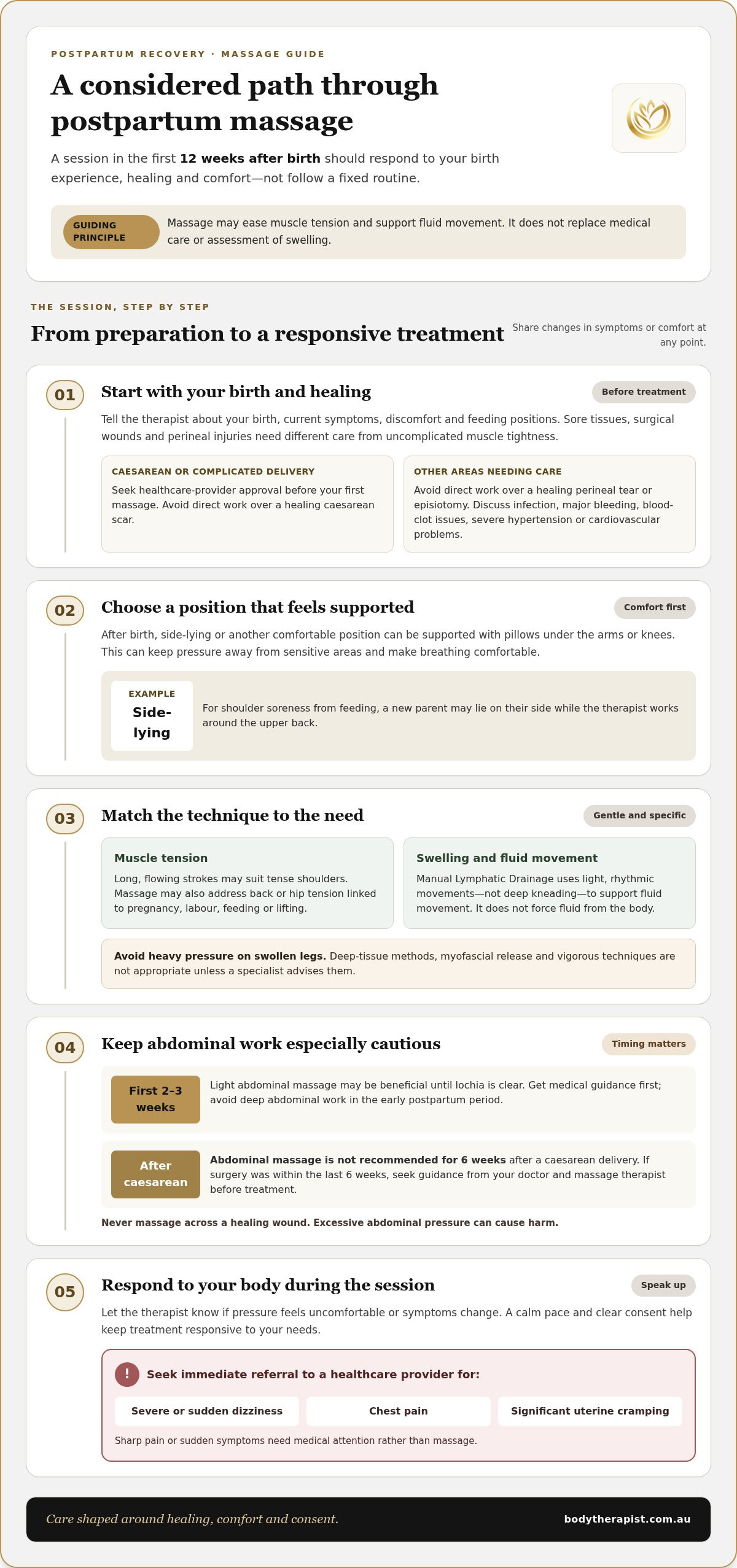
Postpartum massage isn’t a one-size-fits-all treatment: it’s a massage received within the first 12 weeks after giving birth, adapted to your birth experience and healing. Postpartum massage for recovery may help ease muscle soreness and tension, while gentle lymphatic techniques may support fluid movement and reduce swelling. The approach and timing matter, particularly if you’re recovering from a caesarean or another complication.
It’s understandable to want relief from heavy, swollen legs, an aching back or tight shoulders while adjusting to life with a newborn. This guide explains what postpartum massage for recovery involves, what a session may feel like and how massage, including lymphatic drainage, may support your recovery. You’ll also learn how a therapist can adapt pressure and positioning around discomfort and healing, and when to seek medical guidance before massage. The aim is to give you a clear, realistic picture of how treatment may help without suggesting massage replaces medical care.
Table of Contents
What can I expect in a massage after childbirth?
A postpartum session should reflect your birth, healing and comfort, rather than follow a fixed routine. Massage may ease muscle tension. Physiotherapy or pelvic floor therapy addresses movement and pelvic floor function, while massage may involve gentle flowing strokes and lymphatic drainage. The therapist can avoid healing wounds and unsuitable abdominal pressure.
Massage safety across birth types
Massage safety after vaginal or caesarean birth depends on healing, symptoms and the areas treated. Sore tissues, surgical wounds and perineal injuries need different care from uncomplicated muscle tightness.
After a caesarean or complicated delivery, seek approval from a healthcare provider before your first massage. Avoid direct work over a healing caesarean scar, perineal tear or episiotomy. The approach also needs to account for infection, major bleeding, a blood clot issue, severe hypertension or cardiovascular problems. Tell the therapist about your birth and current symptoms before treatment.
Positioning during pregnancy and after birth
Supported positioning can keep pressure away from sensitive areas and make breathing comfortable. This matters because pregnancy discomfort, abdominal tenderness and feeding-related aches may make standard face-down positioning unsuitable.
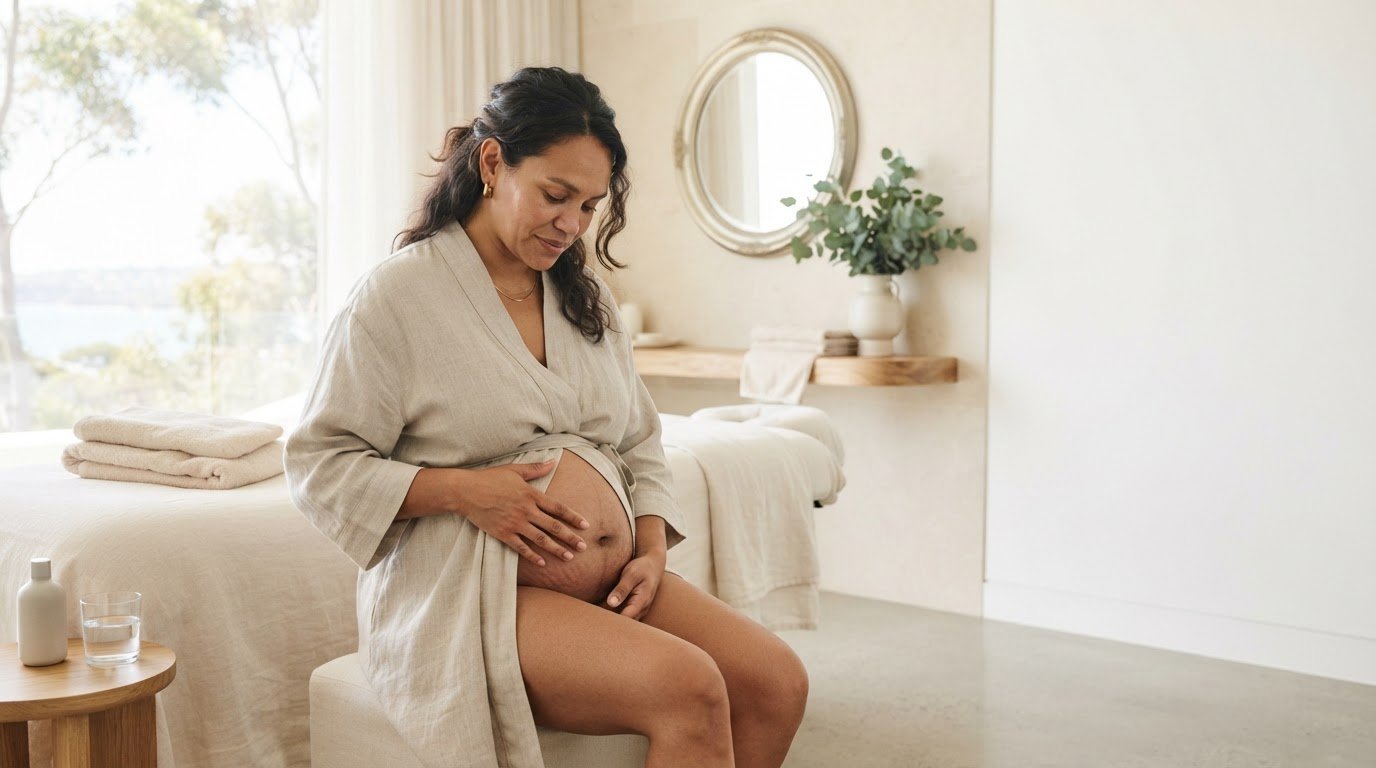
During pregnancy, side-lying with pillows and bolsters can support the abdomen and maternal blood flow, particularly in the second and third trimesters. After birth, side-lying or another comfortable position can be supported with pillows under the arms or knees. For example, a new parent with shoulder soreness from feeding can lie on their side while the therapist works around the upper back.
Support after caesarean birth
After a caesarean birth, massage can focus on comfortable areas without pressing on the healing incision. Abdominal tissues need time to heal, and discomfort can affect movement, rest and caring for a newborn.
Abdominal massage is not recommended for 6 weeks after a caesarean delivery. After surgery within the last 6 weeks, seek guidance from your doctor and massage therapist before treatment. Once healing has progressed and a healthcare provider has approved massage, the session can address other areas, such as a tense neck or back, while leaving the scar untouched.
Abdominal massage after birth
Abdominal massage involves light contact around the belly, but timing and pressure depend on birth-related healing. The uterus is contracting after birth, while the abdomen may also be tender or affected by surgery.
Light abdominal massage may be beneficial for up to 2 or 3 weeks after birth, until lochia is clear. Avoid deep abdominal work in the early postpartum period, especially after a caesarean. If considering abdominal massage at home or during a session, get medical guidance first, as excessive pressure can cause harm. Massage should never cross a healing wound.
A first session may begin with a discussion of your birth, discomfort and feeding positions, then adapt pressure to your response. For example, long, flowing strokes may suit tense shoulders, while gentle lymphatic drainage may be considered for swelling. Deep-tissue methods, myofascial release and vigorous techniques are not appropriate unless a specialist advises them.
During treatment, speak up if the pressure feels uncomfortable or your symptoms change. Severe or sudden dizziness, chest pain or significant uterine cramping calls for immediate referral to a healthcare provider. Emotional strain can accompany hormonal and physical changes, so a calm pace and clear consent help keep the session responsive to your needs.
Massage for swelling, muscle soreness and tension
After birth, swelling and muscle discomfort can occur alongside the physical demands of caring for a newborn. Alongside practical postpartum essentials from Ninja Mama, massage may support circulation, encourage lymphatic drainage and ease tension in areas such as the back, shoulders and hips.
Circulation and fluid movement
Circulation moves blood through the body, while lymphatic pathways help return excess fluid from tissues. This is relevant when swelling makes the legs or feet feel heavy during recovery.
Gentle, long flowing strokes may support circulation and relax tight muscles. For example, a therapist can use light pressure around an area of swelling rather than press firmly into it. Heavy pressure on swollen legs should be avoided because of the potential risk of clotting. A session can also address tension in the lower back or hips, where pregnancy and labour may leave muscles sore.
Lymphatic drainage and swelling
Lymphatic drainage uses gentle, specific movements to encourage fluid flow through the lymphatic system. This may be relevant when postpartum swelling is linked to fluid collecting in tissues.
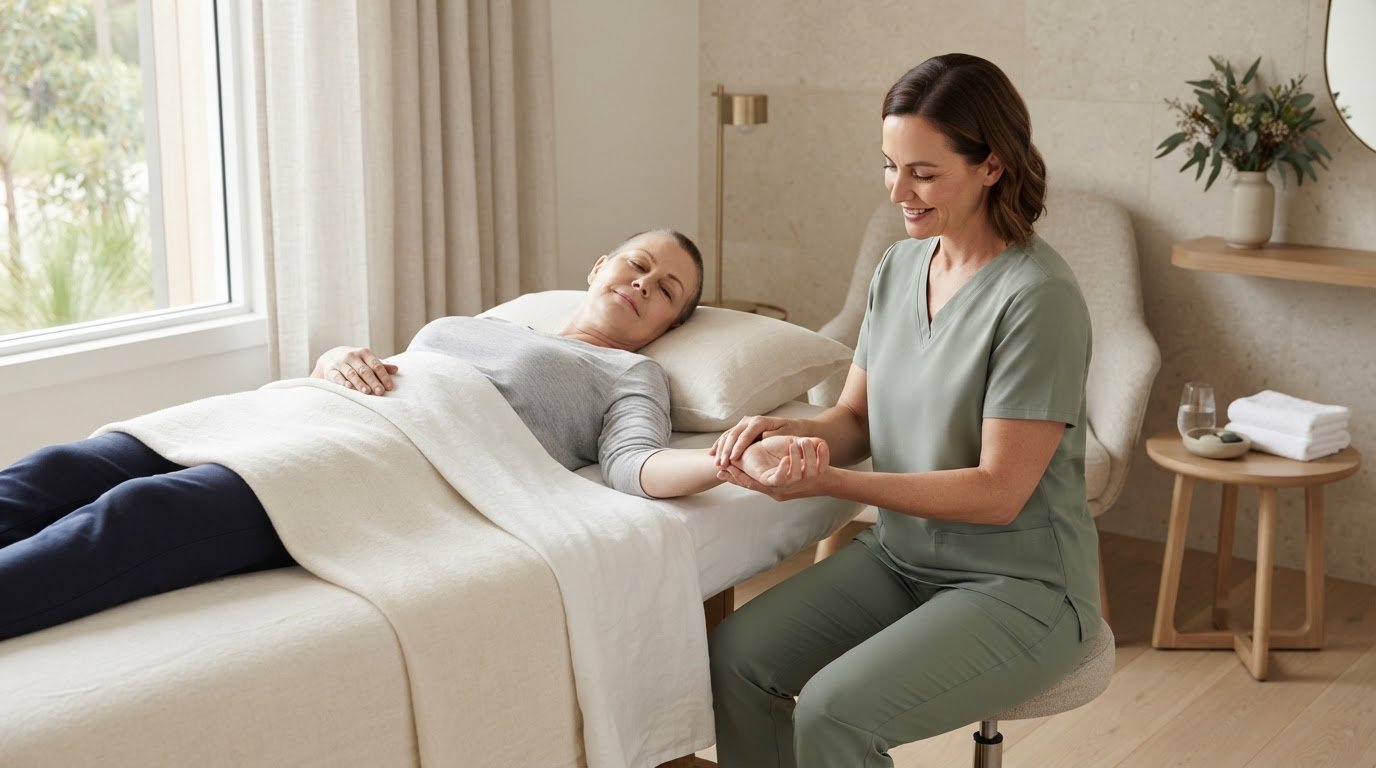
Manual Lymphatic Drainage Massage uses light, rhythmic techniques rather than deep kneading. The therapist directs treatment to areas suited to your needs and avoids forceful pressure on swollen legs. For instance, a gentle approach may be considered when swelling feels uncomfortable, while sharp pain or sudden symptoms need medical attention rather than massage. Treatment aims to support fluid movement, not force fluid from the body.
Swelling and fluid balance
Fluid balance depends on how fluid moves between the bloodstream and body tissues. When that movement changes, swelling can become more noticeable in the legs, feet or hands.
Massage may support circulation and lymphatic drainage, but it doesn’t replace an assessment of the cause of swelling. Notice where swelling appears and whether it changes during the day. These details can help shape a suitable session. For example, a therapist may choose gentle work around an affected area and address tight shoulders separately. This measured approach prioritises comfort during healing rather than using strong pressure to pursue a quick change.
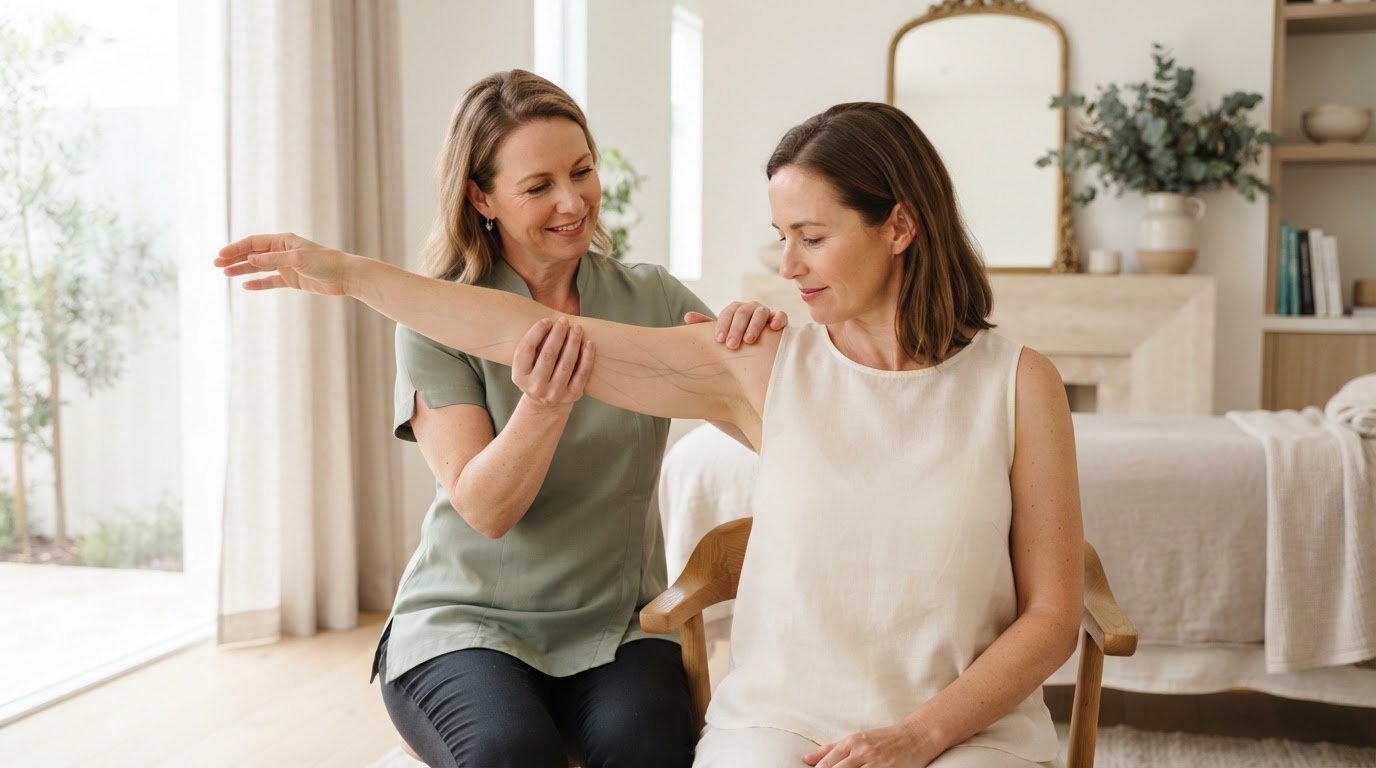
Muscle soreness can also follow repeated feeding and lifting positions. A rounded posture while feeding, for example, can load the neck and shoulders; long strokes and targeted, comfortable pressure may help relax those muscles. Massage may also ease discomfort around the back and hips after pregnancy and labour. A calmer session can support relaxation and reduce anxiety, but it should remain responsive to your comfort and the areas that feel sore.
If swelling is your main concern, explore how Manual Lymphatic Drainage Massage uses gentle techniques to support fluid movement. Heavy pressure on swollen legs is not appropriate, and massage is not a substitute for care of a suspected clot.
What Is Postpartum Massage?
Postpartum massage is a full-body massage received within the first 12 weeks after giving birth. It adapts massage therapy to physical changes after pregnancy and birth, including muscle tension, tenderness and swelling. The aim is to support comfort and relaxation through considered touch, rather than apply one fixed routine. For example, a session can focus on a tight upper back while avoiding sensitive abdominal areas.
There isn’t one start day that suits every mother. Some women may begin within the first few weeks after birth, depending on their circumstances and healing. Vaginal or caesarean birth, perineal soreness and ongoing discomfort can all affect when massage feels appropriate. Before booking, discuss your recovery and symptoms with a healthcare provider, especially after a complicated birth or surgery.
Massage can help ease physical tension, but it has a different role from medical or rehabilitation care. Gentle strokes may relax muscles and provide relief, while physiotherapy or pelvic floor therapy focuses on function, strength and movement. For example, massage may address shoulders tightened by feeding, while a physiotherapist can assess movement and prescribe rehabilitation exercises. These approaches can complement one another, but massage doesn’t replace clinical assessment.
During the postpartum period, a session may use light effleurage, Swedish-style strokes or lymphatic drainage. The therapist adjusts pressure and position to your comfort and can work around areas that remain tender. A mother who feels tension after carrying her newborn might prefer side-lying with pillows rather than lying face-down. Clear communication helps the therapist adapt the session if discomfort changes.
Massage isn’t guaranteed to release every symptom or accelerate healing. Its practical value may lie in relaxation, reduced muscle tension and dedicated time for physical care. Emotional wellbeing matters too: quiet, comfortable treatment may ease stress while you adjust to feeding and newborn care. Massage doesn’t treat postpartum depression or other medical conditions, so symptoms affecting daily life need appropriate clinical support.
There is no exact recommended frequency for postpartum massage. Your needs, comfort, birth experience and response to treatment help determine whether another session is useful. For instance, a mother seeking relief from shoulder tension may reassess after one session, while ongoing discomfort calls for broader consideration of recovery. A set appointment schedule isn’t essential; the aim is to respond to how your body feels.
In Australia, choose a therapist with formal training and accreditation in prenatal and postnatal massage. Before treatment, explain your birth experience, healing concerns and any abdominal or pelvic discomfort, then agree on suitable pressure and positioning. A qualified therapist should adapt the session to those details, including avoiding particular areas when needed. This preparation helps make massage more relevant to your postpartum needs.
Potential benefits of postpartum massage
After childbirth, massage may offer more than temporary muscle relief: it can support relaxation and emotional wellbeing during physical adjustment. The effects depend on the techniques used and the areas treated.
General postpartum massage benefits
Postpartum massage may ease muscle tension and discomfort while creating time for physical relaxation. For example, gentle work across the shoulders can address tightness associated with feeding and lifting a newborn.
Relaxation matters during a period of interrupted sleep and changing routines. A calm massage setting may help reduce anxiety and support emotional wellbeing, but massage isn’t treatment for depression or other mental health conditions. If low mood or distress affects daily life, seek appropriate health support.
Massage may also support circulation and lymphatic drainage, encouraging fluid movement when swelling is present. It can focus on one area, such as a sore back, rather than apply the same routine across the whole body. These potential benefits are supportive, not a replacement for medical assessment or rehabilitation.
Benefits of postpartum belly massage
Gentle postpartum belly massage may support comfort and digestion, with abdominal touch adapted to healing and sensitivity. Postpartum massage is not the same as clinical uterine fundal massage.
Medical professionals perform fundal massage after birth to help the uterus contract towards its usual size. A massage therapist’s abdominal work has a different purpose and should never imitate that clinical procedure. Any touch should remain light and stop if it causes discomfort.
Light abdominal pressure may support digestion, which can feel slow for a few days after birth. It may also support the uterus as it contracts after childbirth. These are potential benefits, not reasons to press firmly or work over a healing caesarean scar, perineal tear or episiotomy.
If you’re considering abdominal massage, first discuss tenderness, birth-related healing and the intended treatment area with a healthcare provider. The therapist can then adapt the session, including avoiding the abdomen if it remains sensitive. This helps distinguish gentle, comfort-focused touch from treatment that needs medical supervision.
Massage benefits are best understood as targeted support: gentle work may relax tense muscles, while light abdominal techniques may help with comfort and digestion. The right focus can change as recovery progresses, so the session should respond to current symptoms rather than pursue a fixed outcome.
Lymphatic drainage massage
Lymphatic drainage massage uses gentle, rhythmic techniques to encourage lymph movement through the body. After childbirth, it may help ease swelling without the heavy pressure associated with conventional deep-tissue work. Understanding this difference can help you decide whether a light, fluid-focused approach may suit your recovery needs.
The lymphatic system returns excess fluid from tissues to circulation. When fluid collects, areas such as the legs or feet can feel swollen or heavy. Gentle massage may support lymphatic drainage and circulation, but it doesn’t force fluid out or address every cause of swelling. Treatment relies on measured touch, not force.
These techniques differ from Remedial Massage. A remedial session may target tight muscles with more localised pressure, while lymphatic drainage uses light, flowing movements. For example, a therapist might choose a gentle approach around swollen tissue and address shoulder tension separately. Pressure should remain comfortable, especially around sensitive or healing areas.
A session begins with a conversation about your birth, current swelling and any discomfort. Tell the therapist whether swelling affects one area or several, and whether feeding or lifting creates muscle tension elsewhere. These details help shape the treatment focus and positioning. A new parent with heavy-feeling feet and a sore shoulder may need different techniques for each concern.
Heavy pressure on swollen legs should be avoided because of the potential risk of clotting. Deep vein thrombosis is a blood clot issue, not a problem to treat with massage. Sudden or severe swelling, pain or other concerning symptoms need medical assessment rather than massage. Lymphatic techniques may support comfort, but they aren’t emergency care or a substitute for diagnosis.
Postpartum swelling can have different causes, so the treatment approach should reflect the affected area and your recovery. Gentle, long strokes may encourage circulation and relaxation, while pressure stays away from painful or healing tissue. For instance, a therapist can adapt your position for comfort without compressing a tender abdomen. Share any symptom changes before treatment begins.
Manual Lymphatic Drainage Massage is a specialised option for fluid-focused care. Its defining feature is a light touch intended to encourage lymphatic movement, rather than deep kneading into muscle. It may suit cases where swelling is the main concern. Muscle soreness or persistent swelling may call for a different assessment and treatment focus.
Use the distinction as a practical guide: choose gentle lymphatic techniques for fluid movement, not strong pressure on swollen limbs. For postpartum swelling support, explore lymphatic drainage massage options.
Body Therapist: Manual Lymphatic Drainage Massage
Body Therapist offers Manual Lymphatic Drainage Massage for people seeking gentle, fluid-focused support after childbirth. This approach uses light, rhythmic techniques to encourage lymphatic movement and may suit recovery when swelling is a concern. The treatment focus differs from Remedial Massage, which addresses muscle soreness and tension, and Lymphedema Therapy, which supports people managing lymphedema.
Consider this service when fluid-related swelling is your main massage concern, and share your birth experience, symptoms and healing needs before treatment. Massage isn’t a substitute for medical assessment, particularly when swelling is sudden, painful or accompanied by other concerning symptoms. A healthcare provider can assess these symptoms.
For information about Manual Lymphatic Drainage Massage, contact Body Therapist.
Choose a recovery focus that fits your needs
Start by identifying what you want support with: fluid-related swelling, muscle tension or both. That distinction helps shape a conversation about postpartum massage for recovery and keeps your priorities at the centre of care. Note which areas feel uncomfortable, which movements or daily tasks aggravate them, and whether symptoms are changing.
Body Therapist offers Manual Lymphatic Drainage Massage, Lymphedema Therapy and Remedial Massage. These services address different concerns, from lymphatic fluid movement to muscle soreness and lymphedema support. The right approach depends on your symptoms and recovery needs, so share those details when discussing treatment.
If you’d like to explore a suitable next step, contact Body Therapist. Taking time to understand your needs is a considered way to support your recovery.
Frequently Asked Questions
What Is Prenatal and Postnatal Massage?
Prenatal massage is adapted for pregnancy, while postnatal massage is tailored to the body after childbirth. Prenatal sessions can use side-lying positions and supportive pillows, particularly later in pregnancy. After birth, a therapist can adjust pressure and positioning around feeding-related shoulder tension, abdominal tenderness or other discomfort. Both approaches adapt touch to the person’s stage and physical needs rather than apply the same routine to everyone.
Why do they massage your stomach after birth?
Medical professionals may perform uterine fundal massage after birth to help the uterus contract towards its usual size. This differs from abdominal massage during a regular massage appointment. Gentle abdominal touch may be considered for comfort or digestion, but it shouldn’t be confused with clinical fundal massage. If you’re considering belly massage, describe your birth and healing to a healthcare provider, especially if you have tenderness or a surgical wound.
What are the benefits of postpartum massage for recovery?
Potential benefits include relaxation, less muscle tension, support for circulation and relief from some postpartum discomfort. The focus can be specific: a session might address a tight back after repeated feeding and lifting, rather than treat the whole body uniformly. Massage can support physical comfort and emotional wellbeing, but it doesn’t treat postpartum depression or replace rehabilitation. The best focus depends on your symptoms and which activities feel difficult.
When can you safely start postpartum massage after vaginal birth or caesarean?
After a vaginal birth, some women may start within the first few weeks, depending on their circumstances and healing. Gentle belly massage may begin the day after birth, but abdominal work should be discussed with a healthcare provider first. After a caesarean, abdominal massage isn’t recommended for 6 weeks; massage may begin once healing has progressed and a healthcare provider has approved it. Birth complications also affect timing.
Can postpartum massage help with swelling, muscle soreness, back pain, or breastfeeding discomfort?
Massage may support circulation and lymphatic drainage, and ease muscle tension in the back, shoulders and hips. For example, gentle strokes may help relax a shoulder tightened by feeding posture. Light lymphatic techniques may suit cases where swelling is the concern. Massage doesn’t establish the cause of swelling or pain, and heavy pressure on swollen legs should be avoided. Persistent or changing symptoms need consideration beyond massage alone.
What are the risks or contraindications of postpartum massage, including after a caesarean?
Massage isn’t appropriate in some situations, including blood clot issues, infection, major bleeding, severe hypertension or cardiovascular problems. Avoid direct pressure over a healing caesarean scar, perineal tear or episiotomy. Deep-tissue techniques, abdominal work unless specifically prescribed, and pressure points linked to uterine contractions require specialist guidance. If you’ve had surgery within the last 6 weeks, discuss massage with your doctor and therapist before treatment.
What should I expect during a postpartum massage appointment, and how should I prepare?
Before starting, expect the therapist to discuss your birth, current symptoms, areas of discomfort and preferred positioning. Prepare by noting what worsens soreness, such as feeding posture, carrying your newborn or getting up from a chair. Mention any wound, tenderness or ongoing healing, and say if pressure feels uncomfortable during treatment. You can request side-lying with pillow support, then adjust the session as your comfort changes.
When should I seek medical advice instead of getting a postpartum massage?
Seek medical advice for sudden or severe symptoms rather than trying to address them with massage. Dizziness, chest pain or significant uterine cramping during a session require immediate referral to a healthcare provider. Swelling accompanied by pain also needs medical attention, since deep pressure over swollen legs can carry a clotting risk. Infection, major bleeding or a suspected blood clot are reasons to avoid massage and prioritise medical assessment.
Comments