

RF Skin Tightening Before and After Stomach: A Clinical Guide to Abdominal Rejuvenation

Updated: Sep 14
What if the secret to a firmer midsection isn't found in another set of crunches, but in the targeted stimulation of your own dermal architecture? If you've spent months at the gym only to find that your skin hasn't kept pace with your muscle tone, you aren't alone. It's frustrating. It feels like your hard work is hidden behind a layer of persistent laxity. When researching RF skin tightening before and after stomach results, it's easy to feel overwhelmed by technical jargon and conflicting claims. You want a solution that offers visible tightening and improved elasticity without the trauma of surgical intervention.
In this clinical guide, we'll demystify the physiological science of radiofrequency energy and show you how to evaluate real-world outcomes with a critical eye. You'll discover how to optimise your abdominal contouring journey by combining advanced technology with rehabilitative practices like manual lymphatic drainage. We'll explore the cellular mechanisms of collagen synthesis; this provides a clear roadmap for achieving a rejuvenated aesthetic with zero downtime.
Table of Contents
Understanding the Biological Mechanism of RF Skin Tightening for the Abdomen
Analysing RF Skin Tightening Before and After Stomach Results: What to Look For
The Clinical Protocol: A Step-by-Step Guide to Your Abdominal Treatment
Optimising Your Contouring Results with Integrated Lymphatic Support
Choosing a Results-Oriented Clinic for Non-Surgical Abdominal Tightening
Understanding the Biological Mechanism of RF Skin Tightening for the Abdomen
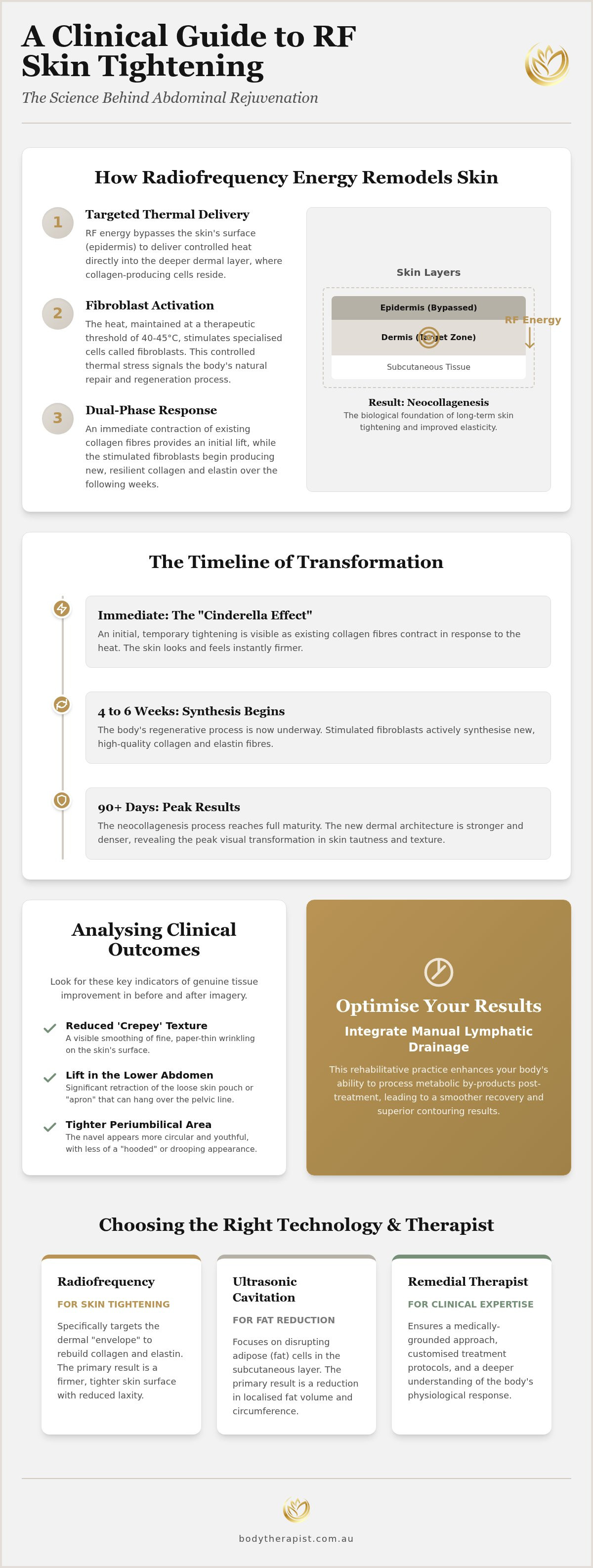
Radiofrequency (RF) technology isn't a surface-level cosmetic fix. It's a sophisticated thermal energy delivery system designed to trigger deep physiological change. When you look at RF skin tightening before and after stomach comparisons, you're seeing the result of precise heat application within the dermal layer. This process targets fibroblasts, the specialised cells responsible for synthesising the extracellular matrix. By raising the temperature of these tissues, we initiate a dual-phase response: an immediate structural contraction followed by a months-long regenerative cycle.
The Role of Thermal Energy in Dermal Remodelling
Unlike traditional heat treatments that affect the surface, RF energy bypasses the epidermis to focus energy on the deeper dermis. This is critical for both safety and efficacy. To achieve collagen denaturation, the tissue must reach a specific thermal threshold, usually between 40 and 45 degrees Celsius. This controlled "injury" signals the body to repair itself. Because this biological response is incremental, a single session won't provide the full result. A series of treatments ensures the thermal effect is sustained, allowing the dermal architecture to remodel gradually without the risks associated with invasive surgery.
Elastin and Collagen: The Building Blocks of a Taut Stomach
The abdominal "envelope" relies on two primary proteins for its aesthetic appearance. Collagen provides the structural scaffolding and tensile strength, while elastin allows the skin to "snap back" after movement or stretching. Pregnancy or weight fluctuations often compromise this balance, leading to the laxity seen in many RF skin tightening before and after stomach case studies. RF energy works to restore this integrity by tightening existing fibres and encouraging the production of fresh, resilient proteins.
Immediate contraction: Existing collagen fibres shorten upon heating, providing an initial visual lift.
Fibroblast activation: Thermal stress stimulates these cells to begin the wound-healing response.
12-week maturation: The new collagen network continues to strengthen and densify for up to three months post-treatment.
Neocollagenesis is the biological foundation of skin tightening.
Analysing RF Skin Tightening Before and After Stomach Results: What to Look For
When reviewing RF skin tightening before and after stomach imagery, it's vital to look beyond general lighting and shadows. True clinical improvement manifests in the structural integrity of the tissue. You should specifically look for a reduction in "crepey" texture, which often appears as fine, paper-thin wrinkling on the surface. Another key indicator is the "lift" in the lower abdominal pouch or "apron." While RF isn't a replacement for a surgical abdominoplasty, it can significantly retract loose skin that hangs over the pelvic line.
Pay close attention to the periumbilical area. As skin loses elasticity, the belly button often develops a "hooded" or drooping appearance. Successful treatment results in a visible tightening of this central zone, making the navel appear more circular and youthful. It's important to remember that results vary based on age and the degree of initial laxity; younger skin with higher fibroblast activity typically responds more rapidly than mature tissue.
The Timeline of Transformation
Don't judge your final outcome on the day of your first appointment. You'll likely experience an immediate "Cinderella effect" where the skin looks instantly tighter due to temporary collagen fibre contraction. However, this is just the beginning. By the 4-to-6 week mark, the body begins synthesising new collagen. The peak visual transformation generally occurs around 90 days after completing a course, as the neocollagenesis process reaches its full maturity.
Differentiating Between Fat Reduction and Skin Tightening
It's a common misconception that skin tightening is synonymous with fat loss. While ultrasonic fat cavitation focuses on disrupting adipose tissue, RF energy specifically targets the dermal "envelope." You can tell your results are due to skin retraction if the surface feels firmer to the touch and the "pinch test" shows less lingering laxity. For many clients, combining these modalities produces the most comprehensive contouring effect.
Understanding these anatomical nuances ensures you can track your progress accurately. If you're unsure how your skin might respond to these thermal protocols, a professional consultation can help assess your specific laxity grade and set realistic benchmarks for your journey.
The Clinical Protocol: A Step-by-Step Guide to Your Abdominal Treatment
A successful clinical outcome is contingent upon a methodical approach that begins long before the device is activated. Your practitioner should perform a detailed assessment to grade skin laxity and identify specific areas of concern; this diagnostic step ensures the treatment parameters are calibrated to your unique tissue density. Once the assessment is complete, a conductive medium is applied to the abdominal surface. This medium acts as a bridge, allowing radiofrequency energy to transition from the handpiece into the deep dermis without causing epidermal discomfort. Energy delivery follows a systematic grid pattern. By working in focused zones, the therapist maintains the optimal thermal threshold required for collagen denaturation. This precision is fundamental to achieving the high-quality RF skin tightening before and after stomach results seen in clinical case studies.
Preparation and Patient Safety
Hydration is your most important preparation tool. Radiofrequency energy relies on the presence of water molecules within the tissue to create the necessary friction and heat. If you're dehydrated, the energy cannot travel as effectively, which may diminish your overall results. You should also be aware of contraindications such as pregnancy, pacemakers, or metal implants in the treatment area. During the session, you'll feel a deep, buildable warmth. Most clients find this sensation quite pleasant, often comparing it to a hot stone massage rather than a medical procedure. Post-treatment, the skin may appear slightly flushed, but this typically resolves within a few hours.
The Importance of Treatment Frequency
Collagen remodelling is a biological marathon, not a sprint. To achieve a significant shift in your RF skin tightening before and after stomach profile, a standard course usually involves 6 to 10 sessions. We adhere to a strict 1-week interval between treatments. This timing is deliberate; it allows the initial inflammatory response to settle while keeping the fibroblasts in an active, productive state. Skipping appointments or extending the gaps too far can disrupt the cumulative effect of the thermal energy. Consistency is the primary variable that determines whether you achieve a subtle improvement or a transformative structural lift. Adhering to the full programme ensures the new collagen network is dense enough to provide long-lasting support to the abdominal "envelope."
Optimising Your Contouring Results with Integrated Lymphatic Support
Achieving superior RF skin tightening before and after stomach outcomes requires more than just high-frequency energy. While the thermal process successfully stimulates collagen, it also generates metabolic by-products and temporary localised inflammation. If these cellular remains linger in the interstitial space, they can obscure the visual refinement of the abdominal contour. Integrating manual lymphatic drainage massage into your protocol addresses this biological bottleneck. By physically assisting the movement of fluid, we reduce post-treatment swelling and ensure the skin reflects its new, tightened state as quickly as possible.
The Science of Waste Removal in Body Contouring
The lymphatic system serves as the body’s primary waste management network. In the context of radiofrequency treatments, it is responsible for transporting processed proteins and cellular debris away from the abdominal site. When the lymphatic flow is sluggish, the area may remain slightly oedematous, which masks the structural improvements of the dermal layer. Lymphatic drainage acts as an accelerator for non-surgical contouring. This mechanical support improves local circulation and enhances tissue oxygenation, creating the optimal physiological environment for fibroblast activity and long-term skin health.
Remedial Massage and Tissue Health
Beyond fluid management, the structural integrity of the abdomen often benefits from targeted remedial techniques. Myofascial release can be particularly effective in addressing adhesions or "hardened" tissue that may have formed due to previous surgeries or chronic posture issues. These structural restrictions can pull on the skin, creating an uneven appearance that even the best RF technology cannot fully resolve on its own. A results-oriented treatment plan looks at the body as a whole, ensuring that the skin, fascia, and underlying musculature are all functioning in harmony. By clearing these physical blocks, we allow the RF skin tightening before and after stomach results to appear more cohesive and natural.
For those seeking the most refined abdominal aesthetic, combining advanced thermal energy with clinical manual therapy is the gold standard. You can book an integrated consultation to see how a combined approach can maximise your specific body contouring goals.
Choosing a Results-Oriented Clinic for Non-Surgical Abdominal Tightening
Selecting the right practitioner is as critical as the technology itself. While many general beauty salons offer skin tightening as a secondary service, a clinic led by a qualified remedial therapist provides a superior anatomical perspective. This isn't just about surface aesthetics; it's about understanding how the dermal layers interact with the underlying fascia and musculature. A practitioner with a background in myotherapy or rehabilitative health can better assess the structural integrity of your abdomen. This clinical depth ensures that your RF skin tightening before and after stomach results are achieved safely and effectively, with a treatment plan tailored to your specific tissue density and laxity grade.
Avoid "one-size-fits-all" packages that don't account for individual physiological differences. Your skin’s response to thermal energy is influenced by variables like age, hormonal health, and previous surgical history. A results-oriented clinic will always prioritise a comprehensive consultation before you commit to a course. This initial meeting should involve a physical assessment and a transparent discussion about what non-surgical technology can realistically achieve for your specific condition. It's the difference between a generic treatment and a methodical, evidence-based intervention.
Questions to Ask Your Therapist
Before beginning your journey, you should feel empowered to vet your provider. Start by enquiring about the specific RF technology they utilise and whether it is TGA-listed for safety. Ask for a realistic assessment of your skin’s potential response; a professional will never over-promise. You should also understand how they integrate other modalities. For example, if you have stubborn adipose tissue, ask how they might use ultrasonic fat cavitation alongside RF to refine the overall contour. This multi-modality approach is often what separates an average result from a transformative RF skin tightening before and after stomach outcome.
The Body Therapist Difference
At Body Therapist, the approach is rooted in the clinical expertise of Lee Carnegie. With a deep background in functional mobility and myotherapy, Lee views abdominal rejuvenation through a rehabilitative lens. We don't just focus on the "after" photo; we focus on the long-term vitality of the tissue. This means considering how your lymphatic health, muscle tone, and skin elasticity work together. By choosing a practitioner who understands the "how" and "why" of human anatomy, you're investing in a methodical path toward physical well-being. Our goal is to provide a specialised environment where safety and physical optimisation are the primary metrics of success.
Taking the Next Step Toward Abdominal Rejuvenation
Reclaiming the structural integrity of your midsection is a process that blends advanced thermal technology with biological patience. By understanding the science of neocollagenesis and the necessity of integrated lymphatic support, you're now equipped to evaluate RF skin tightening before and after stomach results with a clinical eye. True transformation isn't found in a generic beauty package. It requires a methodical protocol that respects your unique anatomy and tissue health.
Body Therapist, led by qualified therapist Lee Carnegie, provides an evidence-based clinical approach that prioritises physical optimisation through advanced non-surgical technology and rehabilitative care. We focus on the how and why behind every treatment to ensure your skin health is restored from the inside out. You don't have to settle for persistent laxity or guess which technology is right for you. Book your clinical abdominal assessment with Body Therapist today and begin your journey toward a firmer, more resilient abdomen with confidence.
Frequently Asked Questions
How long do the results from RF stomach tightening last?
Results typically last between 12 and 18 months, though this depends heavily on your lifestyle and the natural ageing process. Since RF triggers neocollagenesis, the new collagen remains a permanent part of your dermal structure. However, because your body continues to age, maintenance sessions every 6 to 12 months are recommended to sustain the visual lift. Maintaining a stable weight and high skin hydration levels will further extend the longevity of your clinical outcomes.
Can RF skin tightening help with post-pregnancy "mummy tummy"?
Yes, RF skin tightening is highly effective for addressing post-pregnancy laxity and "crepey" skin texture. It specifically targets the overstretched dermal fibres that targeted exercise alone cannot fix. Many women seeking RF skin tightening before and after stomach improvements find that the treatment helps retract the lower abdominal "pouch" or "apron." It is an excellent non-invasive alternative for those not ready for surgery, provided they have finished breastfeeding and their body has healed.
Is RF skin tightening painful on the abdominal area?
No, the procedure is generally described as a comfortable, warming sensation similar to a hot stone massage. The therapist monitors the skin temperature constantly to ensure it stays within the therapeutic range of 40 to 45 degrees Celsius. While you may feel intense heat in certain zones, it should never be painful or cause burning. Most clients find the session quite relaxing, requiring no topical anaesthetics or downtime for recovery after the appointment.
How many sessions will I need to see a visible "after" result?
A standard clinical course usually consists of 6 to 10 sessions spaced one week apart. While some clients notice an immediate "Cinderella effect" due to initial collagen contraction, the most significant RF skin tightening before and after stomach transformations occur after the full course. This cumulative approach is necessary to stimulate enough fibroblast activity for long-term structural remodelling, with peak results appearing approximately 90 days after your final treatment session is completed.
Can I have RF skin tightening if I have a pacemaker or metal implants?
No, having a pacemaker or active metal implants in the treatment area is a strict contraindication for radiofrequency energy. The electrical current used in RF can interfere with the function of electronic medical devices or cause internal heating of metal components. During your initial clinical assessment, we perform a thorough screening to identify any such risks. Safety is our primary metric, and we will always suggest alternative therapeutic modalities if RF is unsuitable for your health profile.
What is the difference between RF skin tightening and a surgical tummy tuck?
RF skin tightening is a non-surgical, non-invasive procedure that stimulates natural collagen synthesis without incisions or downtime. A surgical tummy tuck involves the physical removal of excess skin and the repair of separated abdominal muscles. While RF cannot achieve the same dramatic results as surgery for severe laxity or muscle repair, it offers a safe, scar-free alternative for clients with mild to moderate skin sagging who wish to avoid the risks of general anaesthesia.
Do I need to lose weight before starting my RF treatment course?
You don't need to reach your "goal weight" to start, but being at a stable weight produces the most predictable results. RF energy targets the skin's structural proteins rather than fat cells. If you have significant adipose tissue you wish to address simultaneously, we often combine RF with ultrasonic fat cavitation. This integrated approach ensures that as the fat volume decreases, the skin is stimulated to retract, preventing further laxity during your contouring journey.
What should I do after my session to ensure the best results?
Post-session care focuses on hydration and supporting the lymphatic system to process metabolic waste. You should increase your water intake significantly for at least 48 hours to improve conductivity and waste removal. For those looking to manage abdominal bloating and support their internal health during this recovery phase, you can check out Enterosgel as a drug-free option. Avoid extremely hot showers, saunas, or vigorous exercise for 24 hours to allow the localised heat to dissipate naturally. Many clients find that scheduling a manual lymphatic drainage massage shortly after their session helps accelerate the visual results and reduces minor inflammation.


Comments