

Gentle Massage After Mastectomy: Clinical Benefits, Safety, and Recovery Protocols

Clinical gentle massage after mastectomy is not a passive spa indulgence; it is targeted neuro-lymphatic rehabilitation. When you are healing from extensive breast surgery, living with delicate reconstructed tissue, or managing an altered axilla, the prospect of manual touch often triggers valid hesitation. It is completely natural to fear that pressure might disrupt vulnerable incision sites or instigate post-surgical swelling. However, when therapeutic touch is calibrated with clinical precision, it does not endanger your recovery; it actively accelerates it.
Discover how clinical gentle massage and manual lymphatic drainage support safe tissue healing, reduce post-mastectomy swelling, and restore vital upper-body mobility. We break down the exact recovery milestones that govern safe post-operative care, clarify the vital distinctions between day-spa bodywork and certified oncology massage, and explain how specialised manual therapy resolves painful chest tightness and axillary cording. Here is your evidence-based guide to reclaiming physical comfort and functional movement with absolute confidence.
Table of Contents
Gentle Massage After Mastectomy: Why It's Necessary
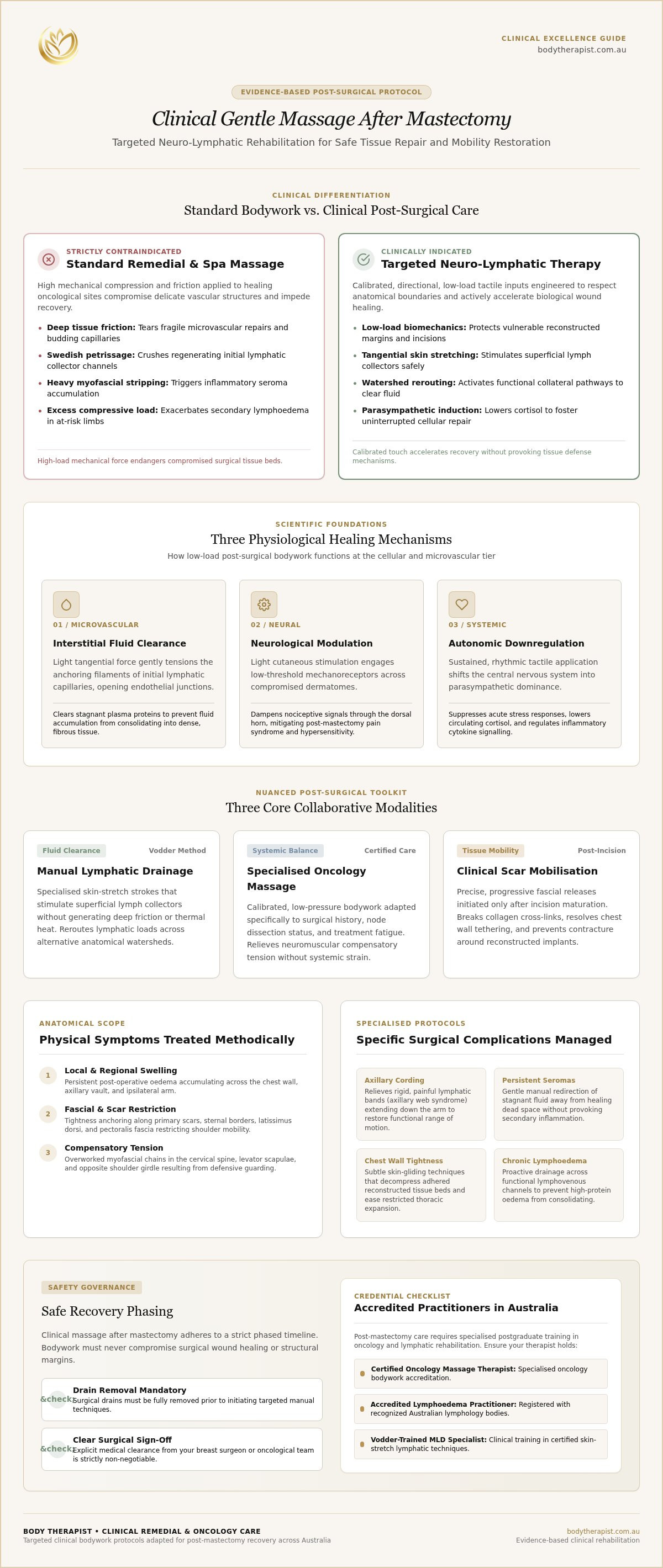
Breast surgery causes immediate disruption to both the physical architecture of the chest wall and its underlying vascular pathways. The excision of breast tissue, paired with sentinel node biopsy or full axillary clearance, severs delicate lymphatic collectors, lacerates micro-capillaries, and damages superficial cutaneous nerves. Clinical gentle massage after mastectomy is not a luxury or a standard day-spa rubdown. Instead, it is an intentional, low-load biomechanical therapy engineered to support compromised tissue beds, restore vascular dynamics, and protect vulnerable healing structures.
Conventional bodywork techniques, such as deep tissue friction or traditional Swedish petrissage, apply high mechanical loads that can tear fragile microvascular repairs, provoke seroma formation, and crush regenerating lymphatic channels. Clinical post-surgical bodywork adopts the opposite approach. By applying calibrated, directional tactile inputs without deep compression, specialized practitioners stimulate recovery pathways safely. Beyond local structural benefits, gentle manual touch calms a heightened sympathetic nervous system. Shifting the body into parasympathetic dominance lowers circulating cortisol levels, regulates inflammatory signaling, and creates the cellular conditions necessary for uninterrupted healing.
Physiological Mechanisms of Gentle Post-Surgical Bodywork
At the microvascular tier, low-load touch mobilises interstitial fluid without provoking vascular defence mechanisms. Light tangential force stimulates the anchoring filaments of initial lymphatic capillaries, opening endothelial junctions to clear stagnant plasma proteins:
Interstitial fluid clearance: By reducing local fluid pressure, manual therapy prevents early fluid accumulation from developing into dense, fibrous tissue.
Neurological modulation: Light cutaneous stimulation engages low-threshold mechanoreceptors. This dampens nociceptive signals traveling through the dorsal horn, relieving post-mastectomy pain syndrome and hypersensitivity.
Autonomic downregulation: Sustained, rhythmic application quietens acute central nervous system stress responses, promoting cellular repair across delicate healing incisions.
Common Post-Mastectomy Physical Symptoms Addressed
Surgical trauma rarely stays confined to the initial excision site. Structural compensations, scar contracture, and fluid retention often create complex, compounding discomfort across the entire upper torso:
Local and regional swelling: Persistent post-operative oedema pooling across the chest wall, axillary vault, and ipsilateral arm, which increases vulnerability to chronic lymphedema.
Fascial restriction: Severe tightness anchoring through the primary surgical scar, sternal borders, latissimus dorsi, and underlying pectoralis fascia, which limits functional shoulder mobility.
Compensatory tension: Overworked myofascial chains through the cervical spine, levator scapulae, and contralateral shoulder girdle caused by defensive guarding post-surgery.
Applying purposeful gentle massage after mastectomy allows you to address these interconnected restrictions methodically, providing sustained physical relief while safeguarding surgical margins.
Clinical Modalities Compared: MLD, Oncology Massage, and Scar Mobilisation
Post-surgical recovery requires a nuanced clinical toolkit. Selecting the appropriate technique depends on your current phase of wound healing, reconstruction status, and whether your axillary lymphatics remain intact. Standard remedial massage techniques, such as deep ischaemic compression, transverse friction, or heavy myofascial stripping, are strictly contraindicated. High compressive loads crush compromised capillary beds, increase inflammation, and exacerbate fluid pooling in limbs at risk of lymphoedema. Clinical gentle massage after mastectomy relies on three distinct, collaborative modalities that safely respect tissue boundaries.
Manual Lymphatic Drainage (Vodder Technique) vs. Oncology Massage
Manual Lymphatic Drainage (MLD) employs precise, rhythmic skin-stretch strokes that stimulate superficial lymph collectors without generating deep heat or friction. By activating functional collateral pathways across anatomical watersheds, MLD clears stagnant protein-rich fluid away from congested quadrants. You can explore the clinical guide to manual lymphatic drainage massage for deeper foundational insights into these fluid-rerouting mechanics.
Oncology massage adjusts stroke dynamics, positioning, and pacing around active cancer treatments, surgical scarring, and medical devices. Reviewing the broader spectrum of oncology massage benefits reveals how adapted bodywork addresses whole-body fatigue and musculoskeletal strain without compromising fragile surgical margins. Alternating these modalities balances systemic nervous system relief with regional decongestion.
Gentle Scar Tissue Mobilisation Protocols
Direct scar work requires complete incision epithelialisation and explicit surgical clearance, alongside verified drain removal. Premature manipulation tears nascent collagen matrices, provoking secondary seromas or hypertrophic scarring. Once tissues stabilise, a qualified practitioner uses low-load mechanical traction to break deep restrictions:
Multi-directional micro-traction: Gentle, sub-pain planar shearing separates tight dermal layers from underlying pectoral fascia, preventing restrictive anchoring to the ribcage.
Perimeter skin rolling: Feather-light mobilization applied around the scar perimeter softens dense fibrotic tissue bands without pulling open the incision line.
Sustained low-load fascial release: Slow, stationary holds release fascial tension across the chest wall, restoring upright postural alignment without placing shear stress on delicate implants or flap reconstructions.
Integrating these specialised manual therapies prevents chronic adhesions while protecting reconstructed contours. If you are navigating post-operative tension, partnering with an experienced team like Body Therapist ensures every manual modality matches your precise surgical history and stage of healing.
The Phased Recovery Timeline: When to Begin Gentle Bodywork
Timing determines both the safety and clinical efficacy of post-operative care. Introducing manual touch too early can disrupt fragile surgical wound margins, while delaying therapy unnecessarily permits dense fibrotic tethering to take hold. A structured clinical pathway ensures that gentle massage after mastectomy matches your evolving tissue tolerance. Clear communication between your breast surgeon, oncology team, and specialised massage practitioner provides the clinical baseline required before beginning treatment.
Strict red flags require immediate medical assessment and the postponement of manual therapy:
Sudden localized heat, spreading erythema, or purulent wound discharge indicating possible acute surgical site infection.
Unexplained unilateral calf pain, sudden shortness of breath, or deep chest pain requiring urgent evaluation for deep vein thrombosis or pulmonary embolism.
Unchecked, rapidly expanding fluid pockets around the surgical bed that suggest a rapidly enlarging seroma or active haematoma.
Phase 1 and 2: Acute Healing to Drain Removal
During Weeks 0 to 2, direct chest manipulation is strictly contraindicated. Focus rests on non-operative pathways: gentle diaphragmatic breathing to mobilise deep lymphatic trunks, light manual clearing of the unaffected contralateral axilla, and remote limb drainage. While surgical drains remain in situ, avoiding local mechanical pull protects healing flaps and reduces seroma risk.
Following verified drain removal and initial wound closure between Weeks 2 and 6, safe touch expands. Practitioners introduce gentle oncology-adapted touch across the cervical spine, rhomboids, and contralateral shoulder to release defensive muscle holding patterns without stressing the operative site.
Phase 3 and 4: Tissue Maturation and Remodelling
Weeks 6 to 12 mark the window for gentle scar desensitisation and superficial pectoral fascial work, provided complete re-epithelialisation is confirmed. Practitioners apply micro-traction around scar margins to free sub-dermal adhesions. Understanding these protocols is vital; review the principles of lymphoedema drainage massage to see how sustained collateral routing controls chronic regional fluid retention.
From Month 3 onward, treatment prioritises structural maintenance. Therapists monitor capsular tension around implants, manage latent secondary lymphoedema vulnerabilities, and progressively restore complete, unrestricted shoulder glenohumeral biomechanics.
Adhering to this phased schedule guarantees that your post-surgical recovery advances methodically, building joint mobility while preserving complete tissue security.
Targeting Post-Surgical Complications: Cording, Seromas, and Lymphoedema
Post-operative healing rarely follows a perfectly linear course. Secondary complications frequently arise as structural tissues remodel and interrupted fluid pathways struggle to adapt. Applying targeted gentle massage after mastectomy gives you a clinically sound mechanism to intercept these issues before they turn into chronic physical impairments. When auxiliary interventions like radiotherapy or endocrine therapies further compromise tissue suppleness, precise manual touch preserves skin elasticity, counters radiation-induced fibrosis, and maintains essential glenohumeral mobility.
Persistent post-operative seromas require delicate handling. Heavy local pressure or deep kneading over a fluid pocket must be strictly avoided, as aggressive compression risks rupturing newly formed capsular walls and aggravating inflammation. Instead, clinical protocols direct manual drainage around the seroma periphery. Clearing the surrounding lymph corridors reduces local tissue pressure naturally, encouraging the body to resorb accumulated fluid without surgical re-aspiration.
Managing Axillary Web Syndrome (Cording) Safely
Axillary web syndrome presents as rigid, painful subcutaneous bands running from the axilla down the medial arm, occasionally reaching the base of the thumb. These cords stem from inflamed, thrombosed, or fibrosed lymphatic channels and superficial fascial sheaths following surgical axillary dissection. Attempting to forcibly "snap" or vigorously rub these cords causes micro-tears in fragile vessels, heightening regional inflammation and escalating lymphoedema risk.
Qualified practitioners apply sustained, feather-light fascial traction directly along the length of the cord while guiding the arm through gentle, active physiological extension and abduction. This gradual release softens tension along the collagenous sheath, restoring full range of motion to the shoulder and elbow without structural trauma.
Mitigating Secondary Lymphoedema Risks
Secondary lymphoedema develops when disrupted lymphatics cannot manage interstitial protein loads. Distinguishing early lymphatic vascular insufficiency from normal, temporary post-operative swelling is critical for prompt care:
Subtle early signals: A sensation of heaviness, cutaneous tightness across the chest wall, or rings and clothing feeling snug without visible pitting.
Collateral clearing: Using specialised skin-stretch strokes to reroute fluid across alternative anatomical watersheds toward intact supraclavicular and inguinal node basins.
Biological triggers: Review 5 signs your body needs clinical lymphatic support to recognise when compromised circulation requires therapeutic intervention.
If you are experiencing arm heaviness or persistent axillary tension, book a clinical consultation with Body Therapist to receive individualized, evidence-based manual care tailored to your recovery.
Clinical Sessions: Preparation, Expectations & Therapists
Entering an outpatient clinic for bodywork after breast surgery requires trust and transparency. A standard remedial massage setup is ill-suited to post-operative realities, where surgical scars, tissue expanders, or transferred muscle flaps demand modified handling. Safe gentle massage after mastectomy relies on specialized assessment, tailored mechanical positioning, and explicit practitioner qualifications. You are not entering a day spa; you are engaging an evidence-based clinical rehabilitation protocol designed around your medical history.
Your initial clinical consultation should always be exhaustive. A qualified practitioner reviews surgical clearance documentation, the exact date of drain removal, and whether you underwent sentinel node biopsy or full axillary dissection. They will also screen for ongoing medical therapies, such as radiation fields, chemotherapy cycles, or targeted endocrine regimens, ensuring pressure inputs align with your haematological status and skin integrity.
Vetting Your Manual Therapist: Essential Qualifications
General remedial certifications do not prepare a therapist for the delicate biomechanics of post-surgical oncology care. When selecting a practitioner across Australia, verify specific postgraduate qualifications:
Oncology massage training: Confirm certification through Oncology Massage Limited (OML) or the Society for Oncology Massage (S4OM), ensuring your practitioner understands tumour biology, metastasis pathways, and bone fragility.
Accredited MLD qualifications: Look for recognized training in clinical Manual Lymphatic Drainage frameworks, such as the Vodder, Foldi, or Casley-Smith methods.
Reconstruction experience: Inquire directly about their practical background working with sub-pectoral implants, pre-pectoral devices, DIEP flap harvest sites, and radiation-induced fibrosis.
The Clinical Treatment Environment and Protocol
Therapy tables must adapt to your physical presentation, avoiding any prone (face-down) positioning that places compressive stress on healing incisions or implants. Instead, practitioners utilize semi-reclined, side-lying, or supine configurations using specialised orthopedic wedges and articulated bolsters to offload spinal tension and prevent axillary stretch.
Topical mediums receive equal scrutiny. Practitioners use unscented, hypoallergenic, aqueous emulsions rather than heavily fragranced oils to protect radiation-sensitised, fragile epidermal barriers. Clear verbal check-ins ensure that touch never exceeds light pressure boundaries. Partnering with the certified clinical practitioners at Body Therapist gives you access to a dedicated clinical environment where every manual protocol is tailored to support your long-term mobility and tissue resilience.
Reclaiming Comfort and Functional Mobility
Restoring your body after breast surgery requires patience, anatomical precision, and specialised clinical guidance. Integrating gentle massage after mastectomy provides the vital neurological and circulatory foundation needed to soften surgical adhesions, drain stagnant lymph fluid, and relieve post-operative guarding safely. True recovery does not mean simply waiting for discomfort to subside; it means actively supporting your tissues with calibrated, evidence-informed care as they remodel.
Every recovery journey is distinctly personal, governed by surgical clearances, reconstruction parameters, and individual lymph node pathways. You do not have to accept persistent tightness, axillary discomfort, or mobility restrictions as permanent outcomes. Working alongside qualified practitioners who understand oncology precautions protects your long-term health while systematically restoring ease to every movement.
Take the next proactive step in your rehabilitation. Book a specialized clinical consultation with Body Therapist today to receive safe, dedicated manual therapy tailored precisely to your healing journey.
Frequently Asked Questions
How soon after a mastectomy can I have a gentle massage?
Remote, gentle manual therapy can commence within one to two weeks post-surgery, provided surgical drains have been monitored and the primary incision site is strictly avoided. During this acute phase, treatment focuses entirely on diaphragmatic breathing and non-affected quadrant lymphatic clearance. Direct scar mobilisation and local chest wall touch should wait at least six to eight weeks until tissues have fully re-epithelialised and your surgical team provides formal clinical sign-off.
Can gentle massage cause cancer cells to spread or recur?
No, clinical gentle massage cannot spread cancer cells or cause a mechanical recurrence. Metastasis is driven by complex cellular genetics and molecular biology, not by the low-load mechanical forces applied during post-surgical bodywork. Light touch therapies do not disrupt internal oncological processes. Qualified therapists always adapt treatment by avoiding active tumour sites, ports, or areas receiving concurrent radiation to safeguard delicate epidermal tissue and prevent inflammation.
What is the difference between regular remedial massage and oncology massage?
Regular remedial massage relies on deep compressive pressure and firm friction, which are strictly contraindicated over healing post-surgical tissues and compromised lymph pathways. In contrast, oncology massage adapts pressure, positioning, and pacing around cancer treatments, scar tissue, and secondary lymphoedema risks. Practitioners calibrate touch to sub-pain thresholds, focusing on tissue healing and down-regulating the sympathetic nervous system without shearing fragile microvascular connections or provoking seroma formation.
Will gentle massage help with chest tightness after breast reconstruction?
Yes, gentle massage after mastectomy significantly reduces chest tightness and myofascial restriction following implant or autologous flap reconstruction. By applying low-load, multi-directional micro-traction to the superficial fascia and surrounding scar tissue, therapists safely liberate adherent dermal layers from the pectoral wall. This restores tissue compliance and eases sternal tension without stressing surgical sutures or displacing newly placed prosthetic expanders or permanent implants.
How does manual lymphatic drainage help prevent post-mastectomy lymphoedema?
Manual Lymphatic Drainage stimulates the intrinsic contractions of superficial lymph collectors, redirecting fluid away from damaged axillary beds toward functional watersheds. By clearing interstitial protein accumulation through intact collateral nodes in the neck and groin, this specialised therapy reduces local tissue pressure. Routine post-operative drainage minimizes fluid stagnation, helping prevent early post-surgical swelling from solidifying into persistent, fibrotic lymphoedema across the chest wall and arm.
Do I need a doctor's referral or clearance before booking a session?
While a formal GP referral is not always legally required to book an outpatient appointment, written clinical clearance from your breast surgeon or oncology team is strongly advised. This confirmation ensures your surgical margins are stable, drains are safely removed, and no active contraindications, such as deep vein thrombosis or wound infection, are present. Clinical practitioners rely on this documentation to tailor manual protocols to your precise surgical history.
Can gentle massage help relieve axillary cording (axillary web syndrome)?
Yes, targeted gentle massage after mastectomy effectively releases the tight, fibrous structures associated with axillary web syndrome. Rather than aggressively snapping or rubbing the cords, a trained therapist applies delicate fascial traction along the medial arm while guiding your limb through gentle, active movement. This low-load approach elongates the fibrosed lymphatic and fascial channels, restoring functional shoulder extension and abduction without triggering acute local inflammation.


Comments