

Managing Lymphedema After Breast Cancer: The Clinical Care Guide (2026)

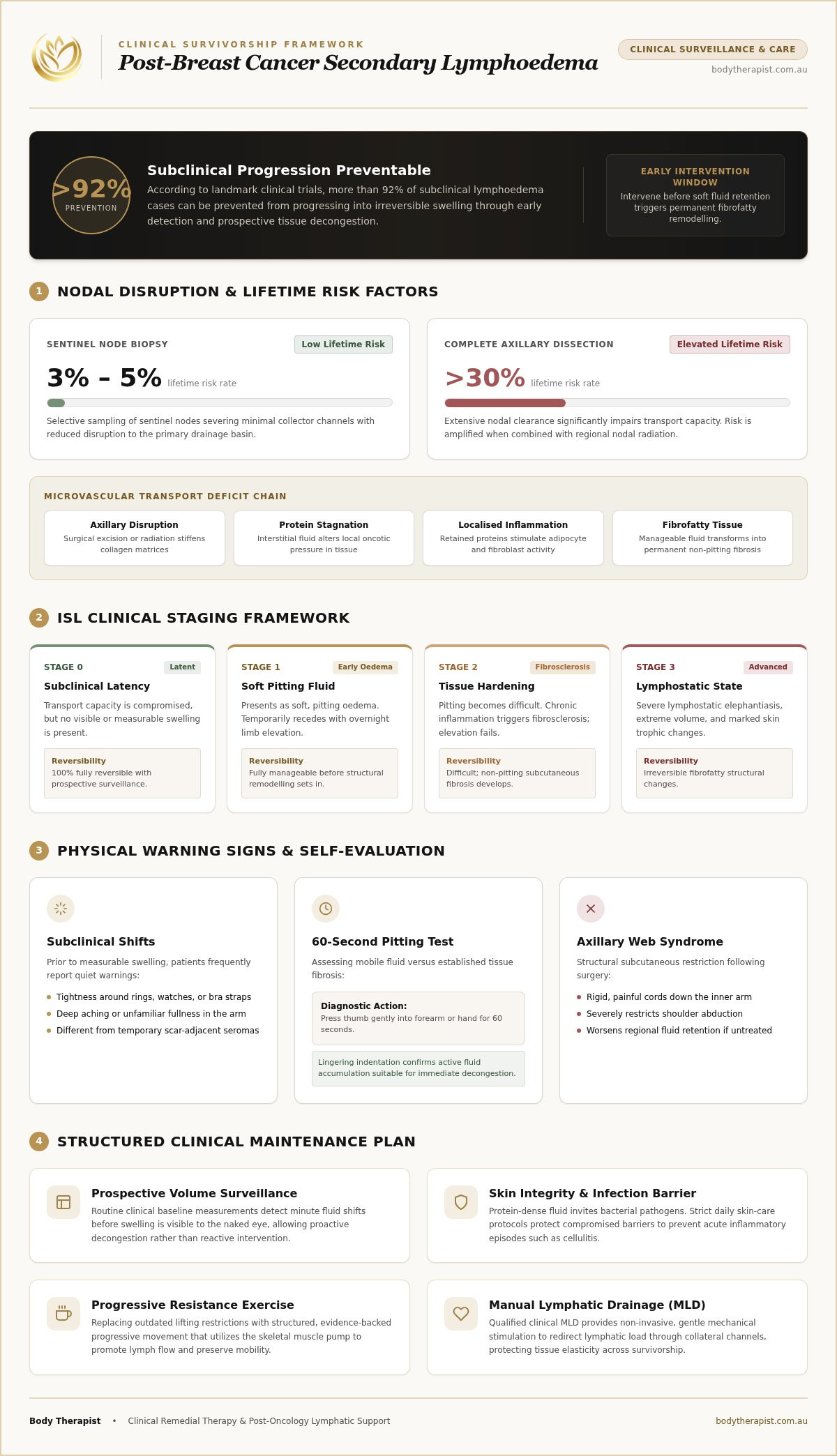
According to landmark clinical trials, more than 92% of subclinical lymphoedema cases can be prevented from progressing into irreversible swelling, yet too many survivors are left waiting for their jewellery to tighten before receiving clear guidance. If you're dealing with an uncomfortable fullness in your arm or constant anxiety over minor scratches triggering cellulitis, that frustration is completely valid. Effectively managing lymphedema after breast cancer shouldn't feel like an exhausting guessing game built on outdated lifting restrictions and contradictory advice.
Proactive tissue decongestion transforms post-cancer care from passive worry into structured, reliable physical maintenance. In this clinical guide, you'll discover how to recognise subtle fluid shifts before visible swelling takes hold, protect vulnerable skin barriers, and implement clinical therapies that preserve joint mobility. We'll examine modern prospective surveillance standards, evidence-backed resistance exercises, and how integrating qualified manual lymphatic drainage safely protects your functional recovery across survivorship.
Table of Contents
Understanding Secondary Lymphedema: Why Breast Cancer Treatment Triggers Swelling
Clinical Stages of Post-Mastectomy Lymphedema and Warning Signs
The Daily Self-Care Framework: Skin Integrity, Movement, and Protection
Professional Therapies: The Essential Role of Manual Lymphatic Drainage
Building a Long-Term Management Plan: Sustainable Health and Professional Support
Understanding Secondary Lymphedema: Why Breast Cancer Treatment Triggers Swelling
Surgical and oncological interventions fundamentally alter how the microvascular system clears waste. In oncology care, secondary lymphedema develops when structural disruption prevents interstitial fluid from clearing efficiently from tissue spaces. Unlike primary conditions caused by congenital malformations, secondary lymphoedema represents a mechanical transport capacity deficit. Healthy lymph collectors operate under low pressure. Once axillary nodes are excised or damaged by regional irradiation, the remaining architecture struggles to manage daily lymphatic load. Without sufficient outflow, protein molecules stagnate in subcutaneous layers, altering local oncotic pressure and drawing excess water into vulnerable tissue.
The Role of the Axillary Lymphatic Pathway
The axillary lymphatic basin acts as the primary drainage hub for the ipsilateral arm, anterior chest wall, and upper back. Surgical procedures like sentinel node biopsies or complete axillary dissections intentionally sever these collector channels. While sentinel biopsies carry a modest 3% to 5% lifetime risk, extensive nodal clearance elevates this risk past 30%, especially when combined with regional nodal radiation. Radiation therapy induces progressive soft-tissue fibrosis, stiffening collagen matrices and constricting remaining superficial vessels. When lymphatic transport capacity drops below physiological load, retained proteins trigger localized inflammation. Over time, unchecked interstitial stagnation stimulates adipocyte proliferation and fibroblast activity, gradually turning a manageable fluid retention problem into dense fibrofatty tissue.
Recognising Subclinical Changes and Early Indicators
Early detection is paramount when managing lymphedema after breast cancer. Long before swelling becomes visible or measurable with a tape measure, subclinical tissue shifts produce quiet warning signs. Patients frequently report an unfamiliar fullness, deep aching, or sudden tightness around rings, watches, and bra straps.
It helps to differentiate this from a postoperative seroma. A seroma is a temporary fluid pocket directly beneath the surgical scar that usually resolves with time. Chronic lymphatic congestion, by contrast, is a systemic drainage failure across the quadrant. Intervening during this subclinical window prevents microvascular deterioration, ensuring proactive therapies can preserve tissue elasticity and arm function.
Clinical Stages of Post-Mastectomy Lymphedema and Warning Signs
The International Society of Lymphology (ISL) categorises lymphatic progression into four distinct phases. In Stage 0 (latent), transport capacity is compromised without measurable swelling. Stage 1 presents as soft, pitting oedema that temporarily recedes with overnight limb elevation. As the condition advances into Stage 2, pitting becomes difficult; chronic inflammation triggers fibrosclerosis and tissue hardening that no longer responds to elevation alone. Stage 3 involves severe lymphostatic elephantiasis, extreme volume, and marked skin changes. Successfully managing lymphedema after breast cancer relies on catching these tissue alterations before structural remodelling sets in.
Evaluating Pitting Oedema vs Tissue Fibrosis
To test for pitting oedema, press a thumb gently into the forearm or hand for sixty seconds; an indentation that lingers confirms fluid accumulation. Left unmanaged, persistent stagnant proteins stimulate fibroblast activity, transforming soft fluid into firm, non-pitting subcutaneous fibrosis. Survivors also frequently encounter axillary web syndrome, or cording. This presents as rigid, painful subcutaneous cords extending down the inner arm, severely restricting shoulder abduction and worsening regional fluid retention. Learning to recognise these structural shifts, including identifying lymphatic draining: 5 signs your body needs clinical support, ensures you seek intervention while tissues remain soft and fully reversible.
Critical Red Flags: Preventing and Identifying Cellulitis
Protein-dense interstitial fluid provides an ideal breeding environment for bacterial pathogens. As detailed in the National Cancer Institute PDQ lymphedema guidelines, an episode of cellulitis can rapidly accelerate underlying lymphatic damage and trigger sudden limb enlargement.
Watch for acute clinical indicators:
Sudden, spreading erythema (skin redness) and localised surface heat
Escalating throbbing pain accompanied by skin tightness
Systemic symptoms like shivering, sudden chills, and fever
If these red flags appear, contact a doctor immediately for oral or intravenous antibiotic therapy. Once an acute infection is fully resolved, partnering with a qualified practitioner at Body Therapist helps re-establish gentle, non-invasive fluid transit to keep vulnerable tissues protected.
The Daily Self-Care Framework: Skin Integrity, Movement, and Protection
Sustainable tissue health requires a predictable daily routine. Successfully managing lymphedema after breast cancer relies on mitigating fluid accumulation before microvascular pressures overwhelm the quadrant. By blending cutaneous defence, mechanical muscle pump activation, and external gradient compression, survivors can proactively stabilise limb volume.
Rigorous Cutaneous Protection and Hygiene Rules
A compromised lymphatic territory possesses blunted immune surveillance. Even minor pinpricks, pet scratches, or cracked cuticles create direct portals for bacterial entry. Wash the arm with gentle cleanser daily, pat dry thoroughly (especially in skin folds), and immediately apply a low-pH, fragrance-free emollient to reinforce barrier function. Wear durable gloves during household cleaning and gardening. If micro-trauma occurs, cleanse the wound instantly with an antiseptic and cover it with a sterile dressing. Where possible, direct phlebotomy, intravenous cannulations, and blood pressure cuffs to the contralateral arm.
Therapeutic Exercise and the Physiological Muscle Pump
Modern clinical consensus has retired outdated blanket restrictions against lifting. Groundbreaking research from the Physical Activity and Lymphedema (PAL) trial confirmed that progressive resistance exercise does not induce swelling; it actually cuts symptom flare-up rates. Muscular contraction against external resistance compresses deep collectors, mechanically pumping fluid proximally.
Structure your movement protocol around three sequential steps:
Diaphragmatic breathing: Deep belly breaths expand the thoracic duct, generating negative pressure that draws stagnant fluid into central venous circulation.
Proximal clearing: Perform gentle shoulder rolls and scapular retractions to open the neck and chest basins.
Distal pumping: Transition into active elbow flexion and wrist rotations to push peripheral fluid upward.
Clinical Compression Garment Protocols
External support balances internal capillary pressures. As outlined in the American Cancer Society's guide to managing lymphedema, graduated compression counteracts daytime hydrostatic filtration. Flat-knit or circular-knit sleeves must be professionally measured by a certified fitter. Poorly fitted off-the-shelf sleeves risk bunching at the antecubital fossa, creating an accidental tourniquet that accelerates distal swelling. Wear your prescribed sleeve during sustained physical exertion and high-altitude air travel. Wash garments regularly to maintain elastic recoil, and replace them every four to six months as fabrics lose their therapeutic tension.
Professional Therapies: The Essential Role of Manual Lymphatic Drainage
Complete Decongestive Therapy (CDT) remains the international benchmark in oncology rehabilitation for managing lymphedema after breast cancer. Within this structured framework, Manual Lymphatic Drainage (MLD) relies on light, rhythmic skin traction to stimulate initial lymph collectors and accelerate lymphangion pulsing. Crucially, this specialised method avoids hyperaemia, ensuring vulnerable capillary beds are never flooded with reactive arterial inflow.
How Manual Lymphatic Drainage Directs Fluid Across Watersheds
The human torso is divided by physiological drainage boundaries known as watersheds. When surgery interrupts axillary channels, specialized bodywork systematically redirects lymph across these boundaries into functioning adjacent territories. A qualified practitioner starts centrally, clearing the unaffected contralateral axillary basin and ipsilateral inguinal nodes first. This creates a functional pressure gradient before gently working the affected limb. Understanding broader systemic recovery through oncology massage benefits provides perspective on supportive care, while reviewing the clinical guide to manual lymphatic drainage massage (MLD) details how gentle tissue traction safely mobilises stagnant interstitial load.
Addressing Post-Surgical Scarring and Axillary Cording
Surgical incisions from mastectomies, lumpectomies, and reconstructions frequently generate dense scar tissue that mechanically compresses superficial collectors. Axillary Web Syndrome, or cording, presents as tight, fibrous structures that severely restrict arm abduction and perpetuate congestion. Rather than using aggressive friction, targeted clinical bodywork applies calibrated, light myofascial traction to gradually soften these fibrotic bands, restoring joint range of motion and reopening collateral fluid pathways.
Differentiating Clinical MLD from Generic Relaxation Treatments
Clinical drainage differs fundamentally from general spa therapies. Conventional Swedish massage, remedial kneading, or deep sports treatments exert heavy pressure that heats muscular tissues. That thermal friction induces rapid vasodilation; increased arterial flow quickly overwhelms an impaired lymphatic system, escalating swelling. Clinical drainage uses superficial, directional traction calibrated to the depth of the initial lymphatic network without compressing fragile anchoring filaments.
Explore the therapeutic protocols underpinning lymphedema drainage massage to see how clinical techniques preserve tissue health. To support your recovery with a structured, oncology-informed treatment plan, schedule a clinical bodywork session with Body Therapist.
Building a Long-Term Management Plan: Sustainable Health and Professional Support
Long-term success in managing lymphedema after breast cancer rests on an intentional shift from active symptom reduction to stable daily preservation. A sustainable survivorship plan integrates regular volume monitoring, supportive lifestyle adaptations, and structured self-care. Routine clinical surveillance, whether tracked through bioimpedance spectroscopy or serial circumferential measurements, captures subtle volumetric changes early. Pair this with anti-inflammatory nutrition, steady weight management, and consistent physical conditioning to protect functional lymphatic transport capacity across your lifetime.
Transitioning from Intensive Reduction to Daily Maintenance
Complete Decongestive Therapy operates in two distinct phases. Phase 1 focuses on clinical decongestion to achieve maximal volume reduction and soften indurated tissue. Phase 2 centres on patient-led maintenance to preserve those clinical gains indefinitely. Translating clinic milestones into daily life requires combining dedicated skin hydration, daily gradient compression, and gentle movement drills. Adopting this predictable self-care routine provides immense psychological reassurance, replacing passive anxiety with proactive, methodical control over your recovery.
Collaborating with Qualified Clinical Practitioners
While home care forms your everyday foundation, periodic reviews with an accredited practitioner keep your management plan effective. A qualified therapist evaluates subcutaneous tissue texture, monitors joint range of motion, and checks that compression garments retain therapeutic elasticity. Because elastic fibres degrade after months of daily wear, clinical refitting prevents fluid rebound before it compromises tissue mobility.
Your long-term health benefits immensely from a coordinated multidisciplinary care team linking your breast oncologist, reconstructive surgeon, and specialized clinical bodywork practitioner. When managing lymphedema after breast cancer, working with professionals who understand post-surgical oncology protocols ensures your compromised tissues are treated safely and methodically. Consult with a qualified therapist at Body Therapist to design an individualised, evidence-based maintenance plan that supports your ongoing survivorship.
Taking Proactive Control of Your Lymphatic Recovery
Sustained fluid balance after oncology treatment doesn't happen by chance; it relies on proactive surveillance, reinforced skin integrity, and consistent muscle pump activation. When you address subtle fluid shifts early and adapt your daily routine to protect compromised pathways, managing lymphedema after breast cancer transforms into an empowering, structured framework for lifelong physical wellness.
Navigating long-term survivorship calls for clinical precision rather than guesswork. Experienced clinical practitioners dedicated to evidence-based remedial and oncology therapies provide specialised, gentle techniques designed to respect sensitive post-surgical and irradiated tissues. Establishing individualised clinical treatment frameworks tailored to long-term lymphatic maintenance helps you preserve joint range of motion, protect tissue softness, and keep fluid retention under control. Explore clinical manual lymphatic drainage support at Body Therapist to secure the dedicated professional care, functional comfort, and lasting resilience you deserve on your healing journey.
Frequently Asked Questions
Can lymphedema develop years after breast cancer treatment has finished?
Yes, secondary lymphoedema can emerge years or even decades following surgical or radiation treatment. While over 50% of cases appear within the first nine months, impaired lymphatic transport capacity creates a permanent, lifelong vulnerability. Any subsequent physical insult, such as a severe insect bite, local infection, regional surgery, or sudden physiological strain, can abruptly overwhelm the reduced drainage threshold. Lifelong vigilance remains vital for sustainable risk reduction.
Is remedial massage safe for someone with secondary lymphedema after breast cancer?
Traditional remedial massage is not safe on the affected upper quadrant or limb. High-pressure techniques, friction, and trigger point therapy generate reactive hyperaemia, flooding fragile capillaries with arterial blood that overwhelmed collectors cannot drain. However, remedial massage remains safe on distant, unaffected body regions when delivered by a qualified practitioner trained in oncology adaptations who avoids the compromised quadrant completely.
What should I do immediately if I notice swelling or heaviness in my arm?
Contact your breast care nurse, surgeon, or an accredited lymphoedema therapist promptly. Early assessment rules out acute complications like deep vein thrombosis or soft-tissue infection. While awaiting review, elevate the limb above heart level when resting, avoid tight clothing or jewellery, and avoid applying thermal heat packs. Initiating clinical intervention during this early, reversible stage is the most decisive factor in successfully managing lymphedema after breast cancer.
Do I need to wear a compression sleeve all day, every day?
Garment requirements depend entirely on your clinical stage and baseline tissue stability. During Phase 1 decongestion, continuous daytime compression is usually necessary to stabilise volume. For well-managed maintenance or subclinical presentations, your therapist may recommend wearing the sleeve primarily during strenuous physical activities, repetitive household chores, or air travel. Always follow the wear schedule prescribed by your certified fitter, and remove garments during sleep unless wearing specialised night-time compression.
Can exercise and weight training worsen lymphedema in breast cancer survivors?
No, progressive resistance exercise does not worsen lymphoedema when introduced gradually. Clinical evidence from trials like the PAL study demonstrates that structured weight training actually lowers flare-up frequency by engaging the skeletal muscle pump to propel lymph centrally. The key is progressive loading. Begin with low resistance, maintain proper form, monitor tissue responses closely, and wear a fitted compression garment during lifting if previously recommended by your clinical therapist.
What are the early warning signs of cellulitis in an affected limb?
Cellulitis typically manifests with rapid, spreading erythema (patchy redness), localized skin warmth, tenderness, and noticeable swelling. Systemic warning signs frequently precede or accompany the rash, including sudden rigours, fever, nausea, and flu-like lethargy. Cellulitis is a medical emergency that demands immediate evaluation by a general practitioner or hospital emergency department for prompt antibiotic therapy to prevent irreversible structural damage to surviving lymphatics.
How does manual lymphatic drainage differ from regular relaxation or deep tissue massage?
Manual lymphatic drainage uses light, rhythmic skin traction designed strictly to stimulate superficial initial lymphatic collectors without compressing them. Unlike deep tissue massage, which relies on heavy mechanical pressure to release muscular tension and induces inflammatory hyperaemia, clinical drainage never causes tissue heating or redness. It remains an evidence-based clinical modality essential for redirecting stagnant fluid toward healthy lymph node basins when managing lymphedema after breast cancer.


Comments