

Remedial Massage for Sciatica: What It Can, and Can’t, Do

Updated: 12 hours ago
Could easing muscle tension help when pain travels down your leg, without treating its underlying cause? Radiating pain, tingling or altered sensation can make sitting, walking and everyday movement difficult, so it’s understandable to look for relief. Remedial massage for sciatica may support comfort and movement for some people, but it can’t diagnose the cause or repair a compressed nerve.
Sciatica describes a pattern of symptoms, not a specific diagnosis, and similar pain can have different causes. A tailored treatment should respond to your symptoms and comfort, rather than using forceful pressure that triggers sharp or spreading pain. Seek urgent medical assessment if you develop new bladder or bowel problems, numbness around the groin or saddle area, or rapidly worsening leg weakness.
This article explains what sciatica can involve, where remedial massage may fit into an individualised care plan, and what it can’t do. You’ll also learn which warning signs need prompt attention and how movement-aware care, including myotherapy and functional mobility techniques, may be adapted to your needs without promising a guaranteed result.
Table of Contents
What does sciatica feel like, and when is it more than ordinary back pain?
Pain in the lower back or buttock doesn’t automatically mean sciatica. The pattern matters: nerve-related symptoms may travel down one leg and include tingling, numbness or changes in strength. General muscular discomfort may stay more local, although symptoms can overlap. No single pattern confirms the cause, and remedial massage for sciatica can’t diagnose what’s happening beneath the symptoms.
How can sciatica symptoms travel from the back into the leg?
The sciatic nerve forms from nerve roots in the lower spine, passes through the buttock and runs down the back of the leg, branching towards the foot. Irritation can be felt along some part of this route, but symptoms don’t look the same for everyone. Sciatica describes pain or other symptoms that follow the sciatic nerve pathway; it isn’t a diagnosis of one specific condition.
Lumbar radiculopathy is one possible source: a nerve root in the lower spine is irritated or compressed, potentially causing pain, altered sensation or weakness in the leg. Sciatica is the broader symptom description, not the name of that underlying cause. For an overview of typical symptoms and possible causes, see What is sciatica.
Which sciatica symptoms need urgent medical attention?
Some symptoms need urgent assessment, not a massage appointment. New difficulty controlling or emptying your bladder or bowel, or numbness around the genitals, buttocks or inner thighs (the “saddle” area), can signal serious nerve compression. Seek emergency medical care immediately. In Australia, call 000 for an emergency or go to a hospital emergency department.
Rapidly worsening or significant weakness in a leg also needs urgent medical assessment, particularly if walking or lifting the foot becomes difficult. Don’t wait to see whether massage helps. If you’re unsure how urgent your symptoms are, contact a health professional or healthdirect on 1800 022 222 for advice; call 000 if you’re in immediate danger.
Symptoms alone can’t establish whether the cause is nerve-root irritation, another spinal issue or something else. A health professional can assess the pattern and decide whether further investigation or care is needed. This distinction matters before considering hands-on support: massage may be adapted to comfort, but it can’t identify the underlying cause or rule out an urgent condition.
How might remedial massage support someone with sciatica?
Remedial massage may be one part of a broader plan when symptoms affect comfort or movement. Its role is supportive: a session may work with surrounding soft tissues and your movement tolerance, but it can’t reposition a spinal disc, decompress a nerve or establish why symptoms are occurring. Information on sciatica symptoms from MedlinePlus outlines some possible causes, showing why symptom relief and treatment of the underlying cause are not the same thing.
Remedial massage for sciatica may support comfort, but it doesn’t treat or correct the underlying cause of nerve symptoms. Responses vary, and massage shouldn’t be presented as a cure, a way to repair nerve damage or a guarantee of lasting pain relief.
What happens to the muscles and tissues around a painful area?
Pain can be accompanied by protective muscle guarding: muscles around the lower back, hip or buttock may feel tense or sensitive. That tension may affect comfort, but it doesn’t prove that muscle tightness is causing nerve-related symptoms. A careful approach considers the whole presentation rather than assuming the sorest spot explains the problem.
Technique and treatment focus should follow assessment, tolerance and your goals. Depending on what feels appropriate, a remedial massage session may use gentle or more focused hands-on work around the affected region, while checking how you respond. The intention is to support comfort and function, not to force a structural change.
Can massage aggravate sciatica symptoms?
Yes. Massage can feel uncomfortable or aggravate symptoms, particularly if pressure or positioning isn’t well tolerated. Sensitivity varies. Pressure shouldn’t be pushed through sharp, spreading or worsening pain, and tingling or numbness isn’t a cue to work harder.
Tell the therapist if your symptoms change during the session. They can adjust your position, pressure or technique, change the area treated, or stop the hands-on work. If pain escalates or you notice new numbness, altered sensation or weakness, stop and seek appropriate medical assessment. New bladder or bowel changes or numbness around the saddle area require urgent medical care.
At Body Therapist, Lee Carnegie’s remedial massage approach combines myotherapy, kinetic release and functional mobility techniques, adapted to individual symptoms and comfort. More about the service is available at remedial massage at Body Therapist.
Remedial massage for sciatica versus other care: what is the difference?
These approaches can have different, complementary roles. Remedial massage provides hands-on support for comfort and movement; clinical assessment investigates symptoms and guides decisions about diagnosis and care; movement-based rehabilitation may help build confidence and capacity through individually selected activity. One approach shouldn’t be treated as a substitute for another when a particular type of care is needed.
When is a medical or allied-health assessment important?
Arrange an assessment if symptoms are new and concerning, persist, become severe or change in character. A clinician can consider the full picture, including symptom distribution, sensation, strength and relevant health history. For patients investigating persistent disc problems or nerve compression, specialist practices such as Dr. Rodrigo Ávila Cervantes · Spine Neurosurgeon offer comprehensive clinical evaluations to determine whether surgical intervention or other medical care is warranted. A response to massage alone can’t confirm sciatica or reveal its cause. Imaging isn’t automatically required; a clinician decides whether it’s appropriate based on the assessment and circumstances.
If urgent warning signs arise, don’t use massage as a reason to delay medical care. Seek the level of urgent assessment described earlier.
How can hands-on care fit alongside movement-based support?
Where appropriate, remedial massage can sit alongside assessment and other care as one supportive component, rather than being the whole plan. An allied-health professional may guide graded movement or exercise, adjusting activity to your presentation and response. The roles are distinct: hands-on care may support comfort, while movement guidance focuses on activity and function.
For a broader explanation of how hands-on treatment can be tailored to individual needs, read about clinical massage therapy. The appropriate next step depends on symptoms, assessment and personal goals, not on a promise that one approach will suit everyone.
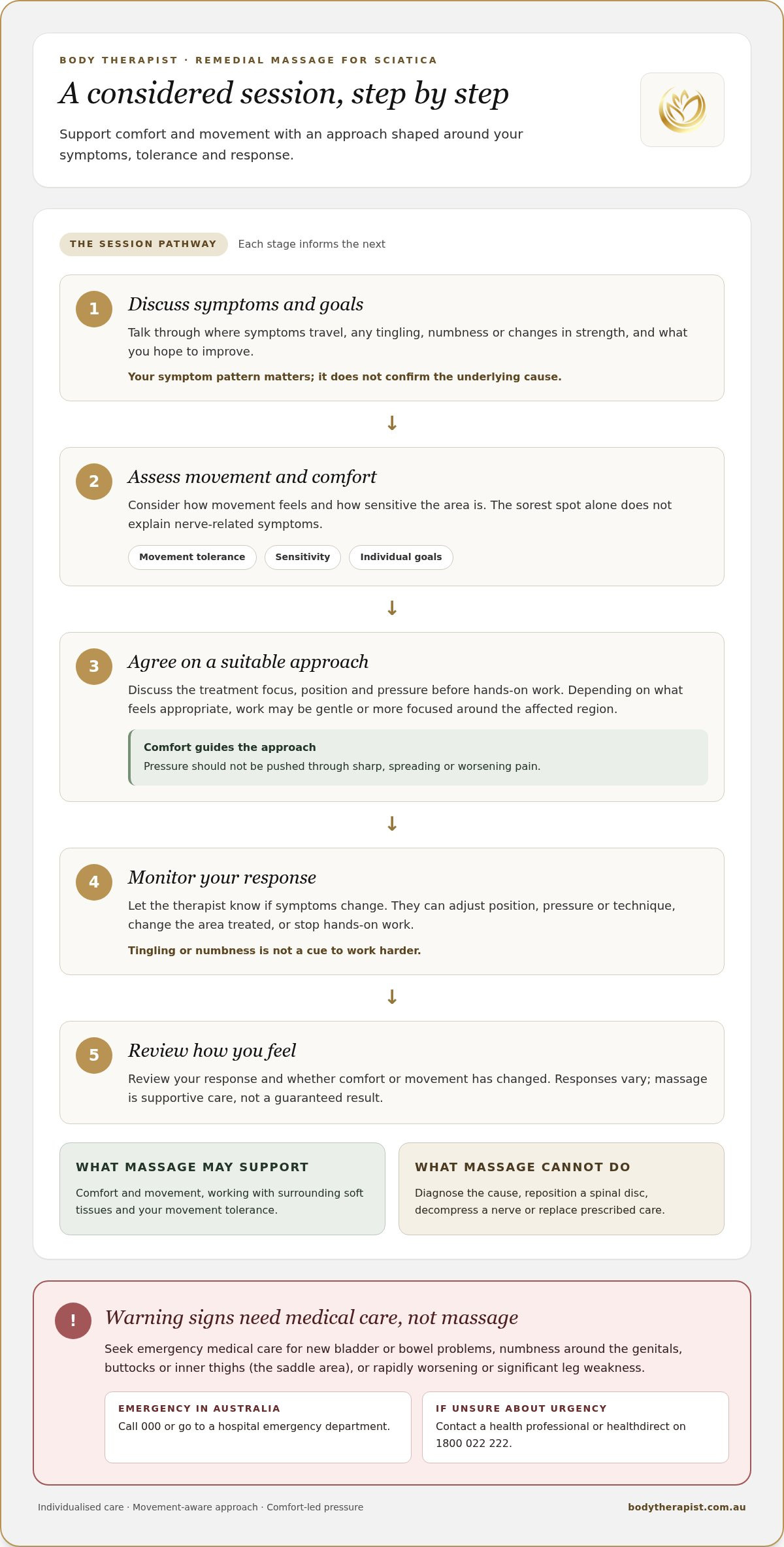
What to expect from a remedial massage session for sciatica
A considered session starts with a conversation, not a preset routine. Before hands-on work, the therapist should understand how your symptoms behave, what you hope to address and whether anything calls for medical assessment first. Remedial massage for sciatica should be adapted to your presentation and comfort; strong pressure isn’t a measure of effectiveness.
What should you tell your therapist before treatment?
Describe where the discomfort begins and travels, when it started, and what changes it, such as sitting, walking or bending. Mention tingling, numbness, weakness or any recent change in symptoms, along with relevant medical advice, diagnoses or treatment. You don’t need perfect words; a clear account of what you notice helps shape an individual approach.
You can speak up at any point. If a position or technique feels uncomfortable, say so and ask for an adjustment. For practical preparation, see this guide on how to prepare for remedial massage.
How should treatment be adapted to your symptoms?
Your therapist may consider how you move and which positions feel manageable before agreeing on an approach. Positioning and hands-on techniques can then be selected around your symptoms, tolerance and goals. The focus may change during the session as your comfort and response become clearer.
If symptoms worsen, the therapist can pause, modify the pressure or technique, change your position, or stop treatment. Tell them promptly about sharp or spreading pain, or any new change in sensation or strength. New or worsening neurological symptoms may need medical assessment rather than further hands-on work.
A typical session follows four steps:
Discuss symptoms: Share their location, pattern, onset, relevant history and your goals.
Check movement and comfort: Consider which movements or positions feel manageable, without treating this as a medical diagnosis.
Agree on a plan: Choose a treatment focus and pressure that feel appropriate to you.
Review your response: Talk about how the session felt and whether symptoms changed, then use that feedback to guide next steps.
There’s no guaranteed response or fixed number of visits that suits everyone. Details about booking a remedial massage are available online.
Choosing a safe next step with Body Therapist
Start with the level of care your symptoms call for. New bladder or bowel changes, numbness around the saddle area, or significant and rapidly worsening leg weakness need urgent medical assessment, not massage. Persistent, worsening or changing symptoms also deserve assessment by an appropriate health professional. If supportive hands-on care is suitable, it should complement, not replace, clinical guidance or prescribed treatment.
What makes an individualised approach important for sciatica?
Similar pain patterns can have different causes, sensitivities and effects on everyday function. One person may find sitting uncomfortable, while another may be more affected by walking or certain movements. These differences matter when considering positioning, pressure and treatment focus. A remedial massage therapist can discuss symptoms and comfort to adapt hands-on care, but this isn’t a diagnosis of sciatica or its underlying cause.
Lee Carnegie, a qualified remedial massage and dynamic movement therapist, combines myotherapy, kinetic release and functional mobility techniques in an individualised approach. Treatment choices respond to your presentation, tolerance and goals. Movement considerations may also help shape a supportive session, while diagnosis or rehabilitation guidance remains within the role of an appropriate clinician. For additional context, read about remedial massage and pain management.
How can you decide what to do next?
If symptoms include urgent warning signs, seek urgent medical care. If they’re persistent, worsening or changing, arrange an appropriate clinical assessment before relying on massage. For symptoms that have been considered and hands-on care is suitable, an appointment is an opportunity to discuss your goals and agree on a comfortable, individualised approach. There’s no promise of a cure or predictable result.
Consider progress in practical terms: whether movement and daily activities feel more manageable, how comfortable you feel, and what your clinician advises. Remedial massage for sciatica is supportive care, and its role should remain guided by your symptoms and wider care plan.
More information about remedial massage with Body Therapist is available online.
Choose a considered next step for your symptoms
Sciatica describes a pattern of symptoms, not a confirmed cause, so new, worsening or persistent symptoms may need clinical assessment. Urgent warning signs call for urgent medical care. Remedial massage for sciatica may offer individualised support for comfort and movement, but it can’t diagnose or correct the underlying cause, and results aren’t guaranteed.
At Body Therapist, Lee Carnegie is a qualified remedial massage and dynamic movement therapist. His approach combines myotherapy, kinetic release and functional mobility techniques, with treatment shaped around your symptoms, comfort and goals. Massage can be considered as supportive care alongside appropriate clinical guidance.
To discuss an individualised remedial massage session, contact Body Therapist. A thoughtful next step can help you move forward with greater clarity and confidence.
Frequently Asked Questions
Can remedial massage help with sciatica?
Remedial massage for sciatica may support comfort and movement for some people, but it doesn’t diagnose or correct the cause of symptoms. A session may consider surrounding muscle tension and adapt hands-on techniques to your tolerance and goals. Any benefit can vary, and massage should be considered supportive care alongside appropriate clinical advice, not a guaranteed cure or replacement for treatment of an underlying condition.
Is massage safe if I have sciatica?
Massage may be suitable for some people, but safety depends on your symptoms, health history and whether warning signs are present. Tell the therapist about pain that travels into your leg, numbness, tingling, weakness, recent changes and any clinical advice you’ve received. Treatment should be adapted to your comfort. Seek medical assessment first if symptoms are new, severe, worsening or unexplained, and urgent care for serious warning signs.
Can remedial massage make sciatica worse?
Yes. If pressure or positioning isn’t well tolerated, massage may aggravate pain or other symptoms. Sharp, spreading or worsening pain isn’t something to push through. Tell the therapist straight away so they can pause, change your position, adjust the technique or stop. If symptoms escalate after treatment, or you develop new numbness, altered sensation or weakness, stop massage and seek appropriate medical assessment.
What is the difference between sciatica and lumbar radiculopathy?
Sciatica is a broad description of symptoms, such as pain or altered sensation travelling along the sciatic nerve pathway. Lumbar radiculopathy refers to irritation or compression of a nerve root in the lower spine, which can cause symptoms in the leg. The terms are related but not interchangeable: sciatica doesn’t identify one specific cause. A clinician assesses your symptoms and history to determine what may be happening.
When should I see a doctor for sciatica?
Arrange a medical assessment if symptoms are persistent, severe, changing or affecting your strength or daily activities. Seek urgent medical care for new bladder or bowel problems, numbness around the genitals, buttocks or inner thighs, or significant, rapidly worsening leg weakness. In Australia, call 000 for an emergency or go to a hospital emergency department. Don’t delay urgent assessment to try massage first.
Should massage hurt to work for sciatica?
No. Remedial massage doesn’t need to hurt to be useful, and intense pressure isn’t proof of effectiveness. The right pressure depends on your comfort and how your symptoms respond. Communicate during treatment, especially if you feel sharp, spreading or increasing pain, tingling or numbness. The therapist can adjust or stop. A session should be guided by your tolerance, not by the idea that more pressure produces better results.
Can remedial massage fix the cause of sciatica?
No. Massage can’t establish or fix an underlying cause such as nerve-root irritation or a disc problem, and it shouldn’t be described as repairing nerve damage or repositioning spinal structures. Its role is supportive, with treatment adapted to comfort and movement goals. If the cause hasn’t been assessed, or symptoms persist or worsen, seek clinical advice. A clinician can guide diagnosis and any further investigation or care.


Comments