

Postpartum Belly Tightening Treatments

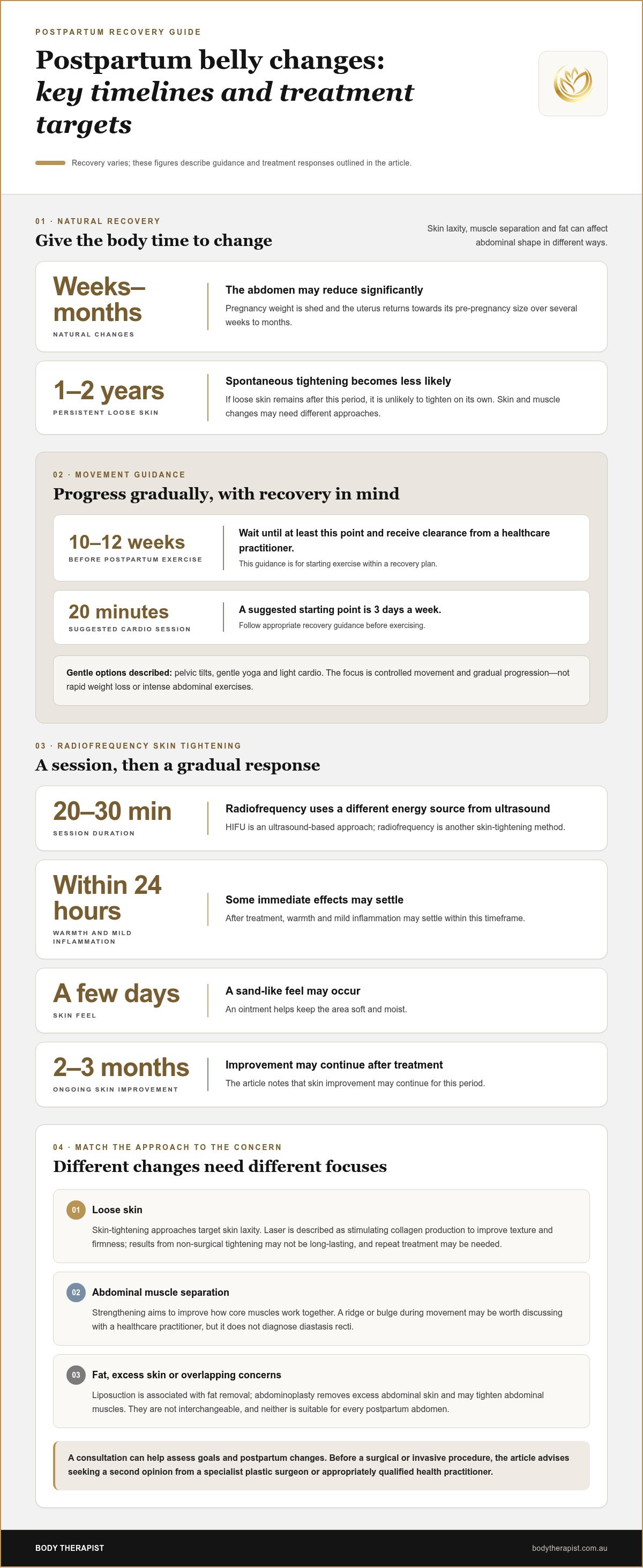
A postpartum belly often reduces significantly over several weeks to months as the body sheds pregnancy weight and the uterus returns to its pre-pregnancy size. Pregnancy can also stretch abdominal skin and connective tissue or separate the abdominal muscles, so the shape may not change through natural recovery alone. If loose skin remains after 1-2 years, it’s unlikely to tighten on its own, and postpartum belly tightening treatments may be worth exploring.
It’s understandable to expect your abdomen to return to its previous shape, but loose skin and abdominal muscle separation are different concerns and may need different approaches. Timing matters, too: guidance recommends waiting until natural recovery has begun, a few weeks after giving birth, before laser skin treatment.
This article explains why postpartum belly changes can persist, how skin-focused treatments and abdominal strengthening address different concerns, and what a consultation can assess when considering suitability. You’ll also learn about radiofrequency skin tightening and how to think about treatment timing as your body recovers.
Table of Contents
What is a ‘Mummy Tummy’ (Post Pregnancy Tightening)?
A postpartum abdomen can reflect stretched skin, connective tissue changes, abdominal muscle separation, or a combination. These differences matter: skin-tightening approaches target skin laxity, while muscle changes need a different focus.
Pregnancy-related skin and connective tissue changes
During pregnancy, the abdomen expands and stretches skin fibres and connective tissue. The rectus abdominis muscles may also separate, changing the abdominal profile independently of loose skin. Look at the texture and movement of the area, as well as its shape: crepey or folded skin points to a different concern than a central ridge during movement. If loose skin remains after 1-2 years, it’s unlikely to get tighter by itself.
Preventing loose skin during and after pregnancy
Prevention focuses on supporting skin health and allowing recovery, rather than promising that skin will not stretch. A balanced diet containing vitamins C, E and A, zinc, selenium and sufficient protein supports skin health and tissue repair. Creams or serums containing collagen and elastin may improve elasticity and the appearance of stretch marks, but may not remove loose skin. After pregnancy, the suggested cardio starting point is 20 minutes, 3 days a week; follow appropriate recovery guidance before exercising.
Ultrasound skin tightening
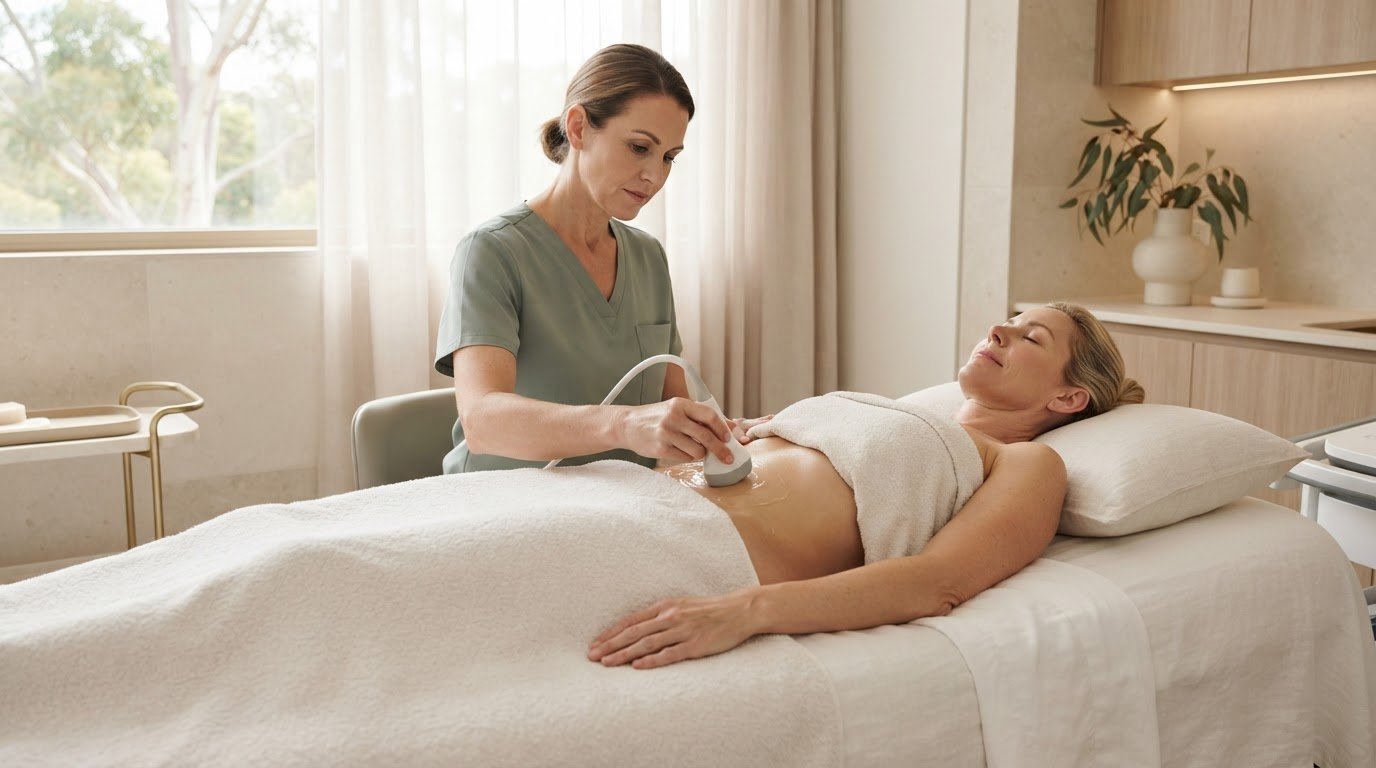
Ultrasound skin tightening uses ultrasound energy directed at tissue beneath the skin, aiming to improve firmness. It differs from creams applied to the surface and exercises that work the abdominal muscles. During a consultation, identify whether your main concern is skin laxity, stretch marks, or abdominal muscle separation. This helps clarify what ultrasound is intended to address, rather than treating every postpartum change as the same issue.
HIFU and radiofrequency tightening
HIFU, or high-intensity focused ultrasound, is an ultrasound-based approach, while radiofrequency uses a different energy source for skin tightening. A radiofrequency session takes 20-30 minutes. Following treatment, warmth and mild inflammation may settle within 24 hours; skin can feel sand-like for a few days, and an ointment helps keep the area soft and moist. Skin improvement may continue for 2 to 3 months.
Laser is another option described for loose abdominal skin: it stimulates collagen production to improve texture and firmness. Non-surgical tightening results may not be long-lasting, and repeat treatment may be needed. Compare approaches by their target, expected recovery, and relevance to your skin changes, not just by their names.
Abdominal muscle strengthening and diastasis recti
Diastasis recti is the separation of the rectus abdominis muscles, which can affect abdominal support and shape after pregnancy. It isn’t the same as loose skin or body fat. Postpartum separation may improve gradually, although some women have lasting changes. A useful first step is to notice how your abdomen behaves during everyday movement, rather than judging the change by appearance alone.
For example, notice whether a ridge or bulge appears along the middle of your abdomen when you sit up or move. This may be a reason to discuss muscle function with a healthcare practitioner, but it doesn’t diagnose diastasis recti. The aim of strengthening is to improve how the core muscles work together, not to force the abdominal wall flat. A suitable programme should match your recovery and ability.
Gentle options described for postpartum strengthening include pelvic tilts, gentle yoga and light cardio. The focus is controlled movement and gradual progression, not rapid weight loss or intense abdominal exercises. Before starting exercise, the guidance is to wait until at least 10-12 weeks postpartum and receive clearance from a healthcare practitioner. That timing helps place exercise within a recovery plan rather than treating it as a cosmetic shortcut.
Abdominoplasty, or a tummy tuck, is a surgical option that removes excess abdominal skin and tightens abdominal muscles. This differs from exercise: surgery changes abdominal tissue directly, while strengthening aims to improve muscle function. A tummy tuck removes stretch marks only where they lie on skin that is excised; it doesn’t remove stretch marks across the entire stomach. Consider whether your concern is functional or cosmetic.
Liposuction and abdominoplasty are not interchangeable. Liposuction is associated with fat removal, whereas abdominoplasty addresses excess skin and may tighten abdominal muscles. Neither procedure is suitable for every postpartum abdomen, particularly when muscle separation, loose skin, and fat overlap. Before proceeding with a surgical or invasive procedure, seek a second opinion from a specialist plastic surgeon or appropriately qualified health practitioner.
In Australia, Medicare and private health insurance coverage isn’t automatic for diastasis recti treatment or postpartum abdominal surgery. Eligibility depends on Medicare requirements and the terms of a private policy; the treatment’s purpose and clinical documentation are relevant considerations. Cosmetic surgery and care for a functional problem may be assessed differently, so distinguish the reason for treatment when reviewing cover.
If muscle tension is also affecting your comfort, remedial massage may be relevant to that separate concern. It doesn’t replace assessment or a strengthening plan for diastasis recti.
Collagen contraction and longer-term improvement
Collagen gives skin structural support, while elastin helps it stretch and recoil. Pregnancy can stretch abdominal skin and connective tissue, leaving the stomach less firm after birth. Skin-tightening methods aim to stimulate a repair response or contract tissue; they don’t directly strengthen abdominal muscles. This distinction helps set realistic goals: improving skin texture or firmness is different from restoring muscle function or removing excess skin.
With laser treatment, the stated mechanism is stimulation of collagen production to improve skin texture and firmness. The change isn’t an instant surface effect: skin improvement may continue for 2 to 3 months following treatment. Loose skin can take weeks to months, and sometimes years, to show tightening results. These timeframes describe gradual change, not a date when every abdomen will look the same.
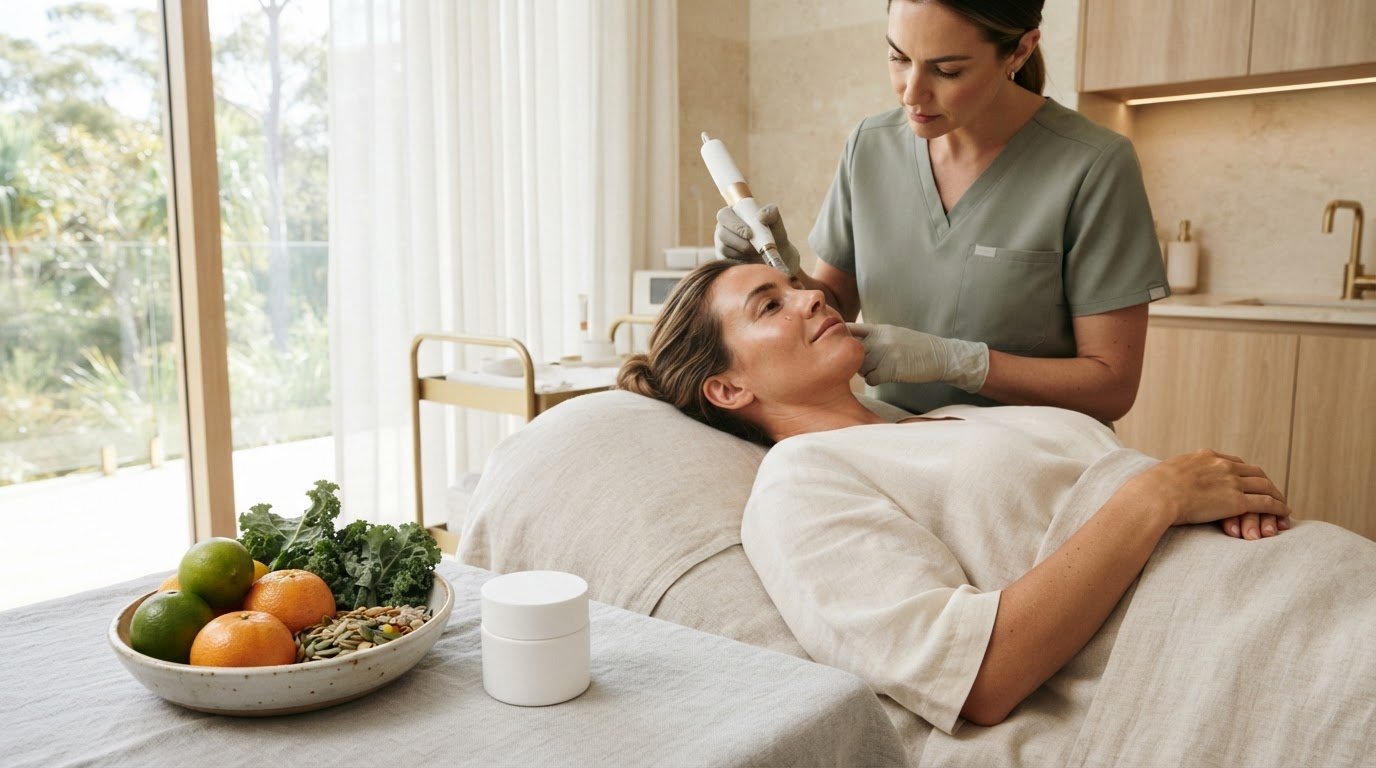
Microneedling uses tiny punctures in the top layer of skin to trigger healing and stimulate collagen and elastin production. It differs from exercise, which works muscles, and topical creams, which sit on the skin’s surface. When comparing methods, identify the target first: skin texture, mild laxity, stretch marks, or muscle separation each calls for a different discussion.
Non-surgical skin tightening may not produce long-term results, and treatment may need repeating. Ask what the method is designed to change, how progress will be assessed, and what aftercare it involves. For example, a treatment aimed at skin firmness won’t remove excess skin or repair separated abdominal muscles. A clear goal makes it easier to judge whether the method matches your concern.
Downtime and after-effects also differ between approaches. Following skin-tightening treatment, warmth and mild inflammation may settle within 24 hours; skin may feel sand-like for a few days. An ointment is used to keep the treated area soft and moist. These details help you plan ordinary activities and understand the skin’s immediate response, while longer-term collagen changes develop separately.
Exercise remains useful for general postpartum recovery and abdominal strength, but it doesn’t directly tighten loose skin. Likewise, a collagen-focused treatment doesn’t replace movement that targets muscle function. Keep these aims separate when considering postpartum skin care: note whether your priority is the skin’s surface, its firmness, or core strength. Combining methods should have a clear rationale, rather than assuming more treatments will achieve a better result.
Note the concern you want to address before comparing options. For instance, record whether the main change is crepey texture, a fold of loose skin, or a central bulge during movement. This helps frame a focused conversation about collagen stimulation, expected recovery, and the likely pace of change, without confusing gradual skin remodelling with immediate results.
Treatment suitability after pregnancy
Suitability depends on what has changed, how recovery is progressing, and what you want treatment to address. A procedure intended to improve skin texture won’t repair separated abdominal muscles. Start by identifying your main concern: loose skin, stretch marks, muscle separation, or a combination. Then consider whether a non-surgical method matches your goal, or whether excess tissue calls for a surgical discussion.
Timing is central to the decision. Guidance recommends waiting until the body has begun its natural recovery, a few weeks after giving birth, before laser treatment for postpartum skin tightening. This is not a universal clearance point for every procedure. Raise timing during an assessment, alongside your recovery stage and the area you want treated.
Skin-focused procedures also work in different ways. Laser treatment is described as stimulating collagen production to improve skin texture and firmness. Microneedling creates tiny punctures in the skin’s top layer, triggering healing and collagen and elastin production. Radiofrequency skin tightening uses another method. Comparing the target and mechanism helps clarify whether a treatment addresses laxity, texture, or another concern.
Use a consultation to make the decision more specific. Describe where the loose skin sits, whether you have stretch marks, and what happens when you move or sit up. These details help distinguish a surface skin concern from abdominal muscle changes. Ask what the proposed procedure involves, what recovery may look like, and how progress will be assessed. A clear treatment goal makes the discussion more useful.
Non-surgical tightening may not provide long-term results, and repeat treatment may be needed. Skin improvement can continue for 2 to 3 months following treatment, so immediate appearance isn’t the only point for judging progress. Following treatment, warmth and mild inflammation may settle within 24 hours; skin may feel sand-like for a few days. An ointment is used to keep treated skin soft and moist.
Surgical and invasive procedures require a different level of consideration from non-surgical skin treatments. Before proceeding with a surgical or invasive procedure, seek a second opinion from a specialist plastic surgeon or appropriately qualified health practitioner. This supports an informed comparison of the intended result, the procedure, and the alternatives. It’s particularly relevant if your concern combines excess skin with muscle separation, since these involve distinct anatomical changes.
For a practical next step, write down your treatment goal and recovery timeline before an appointment. Include whether your priority is firmer skin, improved texture, or a change in abdominal contour. Bring those details to the consultation, then compare the proposed method with its target and expected course of change. The key question isn’t simply which treatment is available, but which concern it is designed to address.
How can you tell whether postpartum belly changes are due to diastasis recti, loose skin, or abdominal fat?
These changes can look similar in the mirror, but they involve different tissues. Diastasis recti affects the abdominal muscles, loose skin affects the skin, and fat contributes to the volume beneath it. More than one change can be present at once. Look for patterns in texture, movement, and contour rather than assuming one cause from appearance alone.
Diastasis recti: A ridge or doming along the midline may appear during a movement such as sitting up. It relates to separation of the rectus abdominis muscles, not simply extra skin.
Loose skin: The skin may look folded, crepey or less firm, especially when bending or changing position. Stretch marks can also appear where the skin stretched during pregnancy.
Abdominal fat: A fuller contour can come from tissue beneath the skin. It doesn’t, by itself, explain a midline ridge during movement or changes in skin texture.
Observe your abdomen during ordinary movement, such as getting up from a chair or leaning forward. Note whether the centre forms a ridge, skin folds gather, or fullness remains fairly even. These observations can help describe what you see, but they can’t confirm a diagnosis. Avoid repeatedly testing the area with forceful sit-ups, which don’t provide a reliable assessment.
Skin and muscle changes can overlap. For example, someone may have stretch marks and loose skin alongside abdominal separation. A soft abdominal contour can coexist with either concern. That’s why a single visual feature, such as a rounded stomach, doesn’t establish whether fat is the main contributor.
Keep a simple record to clarify the pattern: note the movement that changes your abdomen, where the change appears, and whether it involves skin texture or a central bulge. Include whether the concern affects everyday movement or is mainly about appearance. These details help a health practitioner focus an assessment on the relevant tissues and distinguish a functional concern from a cosmetic goal.
Treatment choice should follow the tissue involved. Skin-tightening methods target skin firmness or texture; abdominal strengthening addresses muscle function. A procedure aimed at loose skin won’t repair muscle separation, while exercises don’t directly remove excess skin. If changes remain after 1-2 years, loose skin is unlikely to tighten on its own, which can inform a discussion about realistic options.
If you’re unsure how to describe what you’re noticing, start a conversation about postpartum support. Bring your observations about movement, skin folds and abdominal contour so the discussion can stay focused on your concerns.
Body Therapist: Manual Lymphatic Drainage Massage
Body Therapist offers Manual Lymphatic Drainage Massage, a gentle massage approach centred on lymphatic drainage. It isn’t a skin-tightening treatment and doesn’t repair separated abdominal muscles, so it addresses a different concern from loose skin or diastasis recti. Consider it when your focus is lymphatic support rather than changing abdominal contour.
If swelling or fluid-related concerns are part of your postpartum experience, Lymphedema Therapy may also be relevant. Remedial Massage addresses a separate therapeutic need and isn’t a substitute for assessing abdominal muscle separation. Matching the service to your goal helps keep expectations clear: massage and skin-tightening procedures serve different purposes.
For guidance on services that may suit your concern, contact Body Therapist or visit bodytherapist.com.au.
Choose a next step that fits your goal
Before choosing among postpartum belly tightening treatments, decide what you want to address and what outcome matters in daily life. Firmer-looking skin, improved comfort, and stronger abdominal function are different goals. Taking a clear priority into a consultation makes the discussion more practical, including whether a treatment matches your concern or another form of support is more relevant.
Body Therapist offers Manual Lymphatic Drainage Massage, Lymphedema Therapy, and Remedial Massage. These services address therapeutic needs distinct from tightening loose skin or repairing separated abdominal muscles. If lymphatic support or muscular tension is part of your concern, explain that alongside your skin or abdominal goals so the discussion stays focused on the right kind of care.
Contact Body Therapist to discuss treatment and take a considered next step towards care that reflects your needs.
Frequently Asked Questions
Does a Postpartum Stomach Go Away on Its Own?
The abdomen often changes naturally over several weeks to months after birth as the uterus returns to its pre-pregnancy size and the body sheds pregnancy weight. Skin laxity and abdominal muscle separation can persist beyond those changes. Postpartum belly tightening treatments may be considered if a specific concern remains, but first notice whether your abdominal shape is still changing or whether loose skin or a ridge during movement persists.
What Causes Loose Skin After Pregnancy?
Loose skin can develop because pregnancy stretches abdominal skin fibres and connective tissue. Stretch marks may appear where the skin has stretched, while reduced firmness can leave folds or a crepey texture. The degree of change depends on how the skin responds to stretching and recovery. For example, a persistent fold differs from a temporary change in abdominal volume as the body adjusts after birth.
Can I return to my pre-pregnancy weight while tightening my stomach muscles?
Weight change and abdominal muscle strength are separate goals, so progress in one doesn’t necessarily produce the other. A person may lose weight while still having muscle separation or loose skin. Strengthening focuses on core function, while weight change affects overall body mass. Postpartum exercise guidance recommends waiting until at least 10-12 weeks and receiving clearance from a healthcare practitioner before exercising.
How Long Will the Results Last?
Results depend on the treatment method and the tissue it targets. Postpartum belly tightening treatments may involve non-surgical approaches whose results aren’t necessarily long-term, and repeat treatments may be needed. Skin improvement can continue for 2 to 3 months after treatment, so assess change over time rather than judging it immediately. Ask what the treatment aims to improve, such as firmness or texture, and how progress will be evaluated.
How do you lose belly fat after having a baby?
Focus on gradual changes in overall body composition, rather than trying to reduce fat from one specific area. A balanced diet supports tissue repair, and postpartum exercise can build activity progressively. The suggested starting point for cardio is 20 minutes, 3 days a week, with appropriate clearance before exercising. Abdominal exercises strengthen muscles, but they don’t directly remove loose skin or address every cause of a protruding abdomen.
How to avoid a wrinkled stomach after pregnancy?
You can support skin health, but there’s no reliable way to ensure pregnancy won’t leave wrinkles or loose skin. A balanced diet with sufficient protein, vitamins C, E, and A, zinc, and selenium supports skin health and tissue repair. Topical creams or serums containing collagen and elastin may improve elasticity and the appearance of stretch marks, but may not eliminate loose skin. Don’t treat creams as a guarantee of prevention.
How to massage the stomach to tighten skin?
Massage shouldn’t be relied on to tighten loose skin or change abdominal muscle separation. A suggested stomach massage method uses gentle movements for 2-3 minutes; keep pressure comfortable and avoid forceful pulling. Massage may be used for comfort, but it doesn’t replace a skin-focused treatment or core rehabilitation. Stop if the technique causes discomfort, and keep the goal clear: massage isn’t a way to remove excess skin.
What causes a loose or protruding belly after pregnancy, and how long does it take to improve?
A postpartum belly may reflect stretched skin, abdominal muscle separation, body fat, or several changes together. The uterus and pregnancy weight can take several weeks to months to reduce significantly after birth. Muscle separation may also improve gradually, though lasting changes can occur. A ridge during movement, loose skin folds, and general fullness can point to different contributors, so note what changes with posture or activity.

Comments