

Four answers on swelling, bruising, and what to avoid after surgery

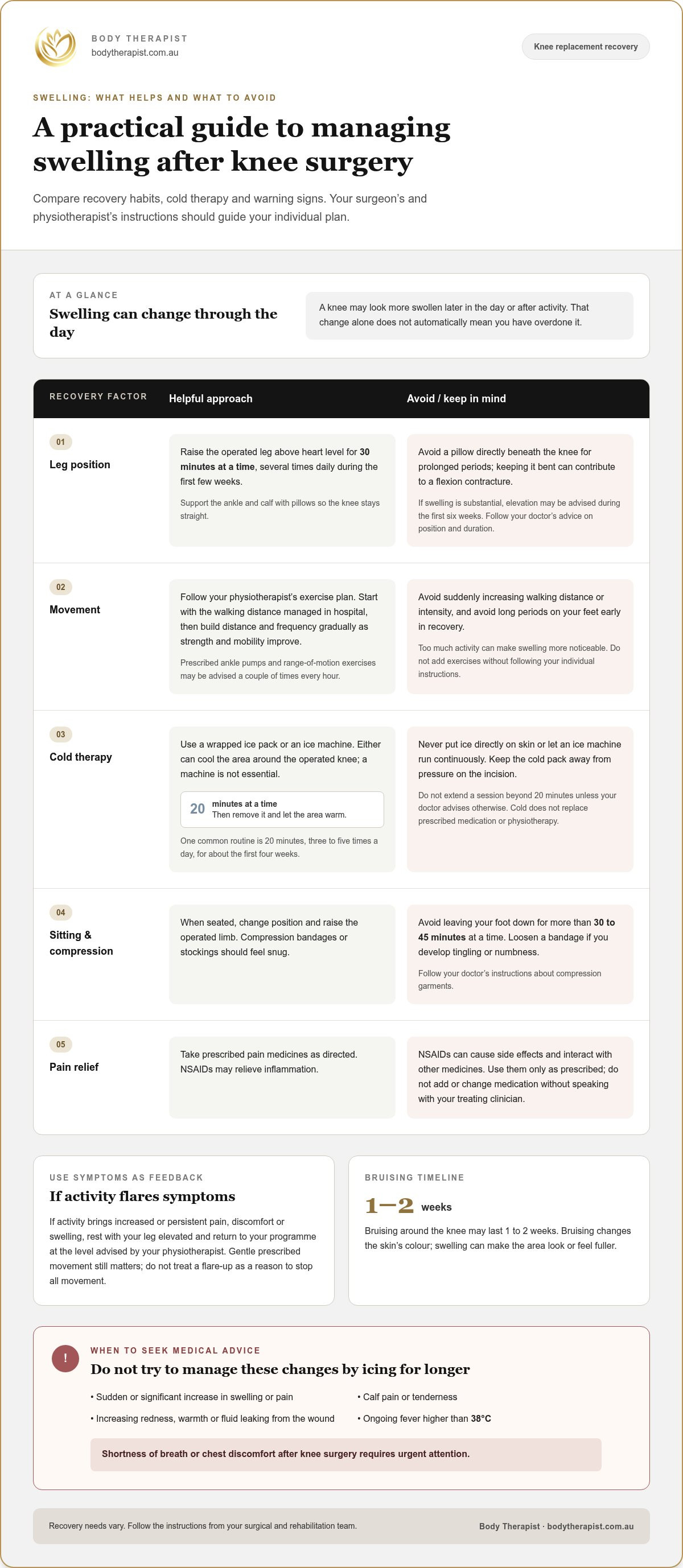
More swelling by evening doesn’t automatically mean you’ve overdone it: after knee replacement, swelling can look more pronounced later in the day or after activity. For reducing swelling after knee surgery, follow your post-operative instructions, elevate your leg as advised and use a wrapped ice pack for about 20 minutes at a time. Bruising around the knee may last 1 to 2 weeks after surgery.
It’s understandable to feel concerned when your knee looks more swollen or bruised as the day goes on. These changes can happen during recovery, but knowing what may ease discomfort, what to avoid and when to seek medical advice can help you respond confidently.
This guide answers four practical questions: what may help or worsen swelling, whether an ice machine may be useful, what evening swelling can mean and how bruising may change after surgery. It also covers safe icing and why your surgeon’s recovery instructions should guide your next steps.
Table of Contents
1. What Should You Avoid After Surgery to Limit Swelling?
After knee replacement surgery, elevate the operated leg above heart level for 30 minutes at a time, several times daily during the first few weeks. Support the ankle and calf with pillows so the knee stays straight. Avoid placing a pillow directly beneath the knee for prolonged periods, as holding it bent can contribute to a flexion contracture.
If you have substantial swelling, leg elevation is advised during the first six weeks after knee replacement. Some recovery instructions also suggest resting with the leg raised for several hours each afternoon. Follow your doctor’s advice on position and duration, especially if elevation increases pain or pulls at the incision. When seated, avoid leaving your foot down for more than 30 to 45 minutes at a time. Change position and raise the operated limb.
A compression bandage or stocking should feel snug, not tight. Loosen a bandage if you develop tingling or numbness, and follow your doctor’s instructions about compression garments after replacement surgery.
Take prescribed pain medicines as directed. Non-steroidal anti-inflammatory medicines (NSAIDs) may relieve inflammation, but can cause side effects and interact with other medicines. Use them only as prescribed, and don’t add or change medication without discussing it with your treating clinician.
Seek prompt medical advice for a sudden or significant increase in swelling or pain, calf pain or tenderness, or increasing redness, warmth or fluid leaking from the wound. An ongoing fever higher than 38°C also needs medical advice. Shortness of breath or chest discomfort after knee surgery requires urgent attention.
2. How to Reduce Swelling After Knee Replacement: What Helps and What Hurts?
Movement supports circulation, but too much activity can make swelling more noticeable. After total knee replacement, follow your physiotherapist’s exercise plan and build up gradually. Start with the walking distance you managed in hospital, then increase distance and frequency as strength and mobility improve. Avoid spending long periods on your feet early in recovery.
Small, regular movements can support fluid movement and help limit stiffness. Ankle pumps are a simple example: point your toes away, then draw them back towards your shin. Ankle pumps and range-of-motion exercises while lying down may be advised a couple of times every hour. Straight leg raises may also be part of your postoperative programme, but follow your individual instructions rather than adding exercises yourself.
When should you start walking or exercising after knee surgery? Begin with the supported walking and exercises introduced during your hospital recovery, then progress according to your physiotherapy plan. Short, manageable walks and prescribed movements are a safer starting point than suddenly increasing distance or intensity.
Use swelling as feedback. If activity leads to increased or persistent pain, discomfort or swelling, contact a medical professional. Rest with your leg elevated and return to your programme at the level advised by your physiotherapist. Don’t treat a flare-up as a reason to stop all movement: gentle, prescribed exercises help maintain mobility during recovery.
Increasing redness, warmth or fluid leaking from the incision can be warning signs of infection, not simply exercise-related swelling. Seek medical advice about these changes. For ongoing lymphatic swelling after your surgical team has cleared hands-on care, Lymphedema Therapy may be a supportive option alongside your rehabilitation plan.
3. Is an ice machine worth it after a knee replacement?
An ice machine may make repeated cold application easier after knee replacement, but a wrapped ice pack is another practical option. For reducing swelling after knee surgery, either can cool the area around the operated knee when used safely. Choose the option you can use comfortably and consistently, alongside your recovery instructions. Cold may ease discomfort and help manage swelling, but it doesn’t replace prescribed medication or physiotherapy.
Use a barrier between the cold source and your skin. After knee replacement surgery, ice should never be placed directly on the skin. Apply an ice pack for about 20 minutes at a time, then remove it and allow the area to warm. One common routine is 20 minutes, three to five times a day, for about the first four weeks. Follow your doctor’s instructions if they differ.
Position matters. Rest with your leg supported on a pillow, keeping the knee comfortable and the cold pack over the surrounding area without pressing on the incision. Don’t let an ice machine run continuously or extend a session beyond 20 minutes unless your doctor advises otherwise. If you’re unsure how to position its sleeve, ask your care team to demonstrate.
Cold packs are generally the focus early in recovery. Some people may find warmth soothing later in recovery, but follow your clinician’s advice about whether and when to use it. Don’t switch from cold to heat just because walking or movement makes your knee feel stiff; follow your instructions on timing and method. A warm pack is not a substitute for an ice pack during the early phase.
In short, an ice machine can make applying cold more convenient, but an ice pack can also do the job. A machine isn’t essential for reducing swelling after knee surgery. Choose based on comfort and ease of use, and keep each session short. If swelling suddenly increases or pain worsens, seek medical advice rather than icing for longer or changing your medication.
4. Bruising after surgery
Bruising around the knee may last 1 to 2 weeks after surgery. It can appear alongside swelling, so notice the difference: bruising changes the skin’s colour, while swelling can make the area look or feel fuller. After replacement surgery, monitor both during rehabilitation. A bruise alone doesn’t show how the joint is healing, so note any changes alongside pain, movement and wound appearance.
Check the bruise visually each day, such as when changing clothes. Note whether the discolouration is changing and whether discomfort is settling or worsening. Avoid rubbing or massaging the bruised area, particularly near the incision. Don’t massage directly over the surgical wound. Wait until the site has healed sufficiently and a healthcare provider has advised that hands-on care is suitable.
A wrapped ice pack can ease discomfort after knee surgery. Apply it for about 20 minutes at a time, then remove it; never place ice directly on the skin. Cold may help with discomfort, but don’t assume it will make a bruise disappear faster. Keep following your rehabilitation and medication instructions, rather than changing your routine based on bruising alone.
Seek medical advice if swelling or pain suddenly increases, or if the area becomes increasingly red or warm. Fluid leaking from the wound, calf pain or tenderness, fever, shortness of breath or chest discomfort also need prompt attention. These symptoms require more than monitoring a bruise at home. Describe the changes clearly, including when they began and whether they are worsening.
If bruising and swelling are affecting comfort, discuss hands-on care with your healthcare provider first. Once the wound has healed sufficiently and you’ve been cleared for gentle massage, explore post-operative recovery support that can be considered alongside your rehabilitation plan.
Body Therapist: Manual Lymphatic Drainage Massage
Body Therapist offers Manual Lymphatic Drainage Massage, a gentle approach focused on supporting lymphatic fluid movement and easing fluid congestion. After knee replacement, massage is not a substitute for your surgeon’s recovery plan or prescribed rehabilitation. Wait until the incision has healed sufficiently, and get clearance from your healthcare provider before starting gentle massage.
Manual Lymphatic Drainage Massage may be a suitable next step if swelling persists and your surgical team has cleared hands-on care. Treatment should avoid the incision and any area that remains painful, warm or irritated. Sudden swelling, increasing pain, wound leakage, calf tenderness or shortness of breath calls for prompt medical advice, not massage.
For a discussion about Manual Lymphatic Drainage Massage after surgery, contact Body Therapist.
Make your next recovery step a considered one
As you continue healing, use your recovery plan to guide decisions about extra support. Keeping a simple note of changes in comfort, mobility and your leg’s response to daily activity can help you describe your progress clearly to your care team. Reducing swelling after knee surgery isn’t about pushing through symptoms; it’s about supporting recovery while following the surgical instructions that apply to you. Orthopaedic care providers such as Swope Joint Replacement similarly emphasise that following structured rehabilitation and surgical guidance is key to long-term joint function.
For support alongside your prescribed rehabilitation, Body Therapist offers Manual Lymphatic Drainage Massage, Lymphedema Therapy and Remedial Massage. These services don’t replace surgical care, and hands-on treatment should suit your recovery needs and medical advice. A conversation can help you decide whether this support is appropriate for your next step.
Contact Body Therapist to discuss support for your recovery. Keep moving forward at a pace that respects your healing, one considered step at a time.
Frequently Asked Questions
Does more swelling at the end of the day mean I overdid it?
Not necessarily. Swelling may look more pronounced later in the day or after activity following knee replacement. Compare how your knee feels after rest with how it feels after walking or exercising, and note any changes in a simple daily record. A sudden or significant increase in swelling, especially with worsening pain, differs from a familiar activity-related fluctuation and needs medical advice.
How often and how long should I ice?
Use a wrapped ice pack for about 20 minutes at a time, three to five times daily during about the first four weeks after knee replacement. Never put ice directly on skin, and stop if the area becomes unusually numb or painful. Set a timer so you don’t fall asleep with the pack in place. Your post-operative instructions take priority if they give a different routine.
How to Reduce Swelling After Knee Replacement: What Helps and What Hurts?
Follow your rehabilitation plan, balance prescribed movement with rest, and notice which activities increase discomfort or swelling. For example, if a longer walk leaves your knee more swollen, return to the walking distance in your physiotherapy programme rather than stopping all movement. Don’t add exercises or increase effort abruptly. Increasing redness, warmth or fluid from the wound needs medical attention, as these may signal a complication rather than ordinary exertion.
Is an ice machine worth it after a knee replacement?
An ice machine may be worthwhile if its application method makes it easier to follow your cold-therapy routine, but it isn’t essential: wrapped ice packs are another option. Consider whether you can position the machine comfortably and use it for short sessions without restricting movement. Whichever method you choose, keep a barrier between the cold source and your skin, and don’t exceed the advised session duration.
Is it normal for my knee to still be swollen weeks after surgery?
Yes, swelling can continue for weeks after knee replacement. It commonly becomes noticeably better within 6–12 weeks, although mild swelling can persist for several months. The knee may also swell more after activity, so look at the overall pattern rather than one evening alone. As noted by orthopaedic specialists like London Hip & Knee Consultant, contact your surgical team if swelling is worsening, suddenly increases, or occurs with increasing pain, redness, warmth or wound leakage.
Should I sleep with my leg elevated after knee surgery?
Elevating your leg while resting can help manage swelling, but keep your knee comfortably straight rather than propping a pillow directly beneath it for a prolonged period. Support your ankle and lower leg so your knee isn’t held bent. If elevation causes discomfort or puts pressure on your incision, adjust your position and follow the specific advice in your post-operative instructions.


Comments