

Avoiding Surgery for Stubborn Fat: Options and Sessions

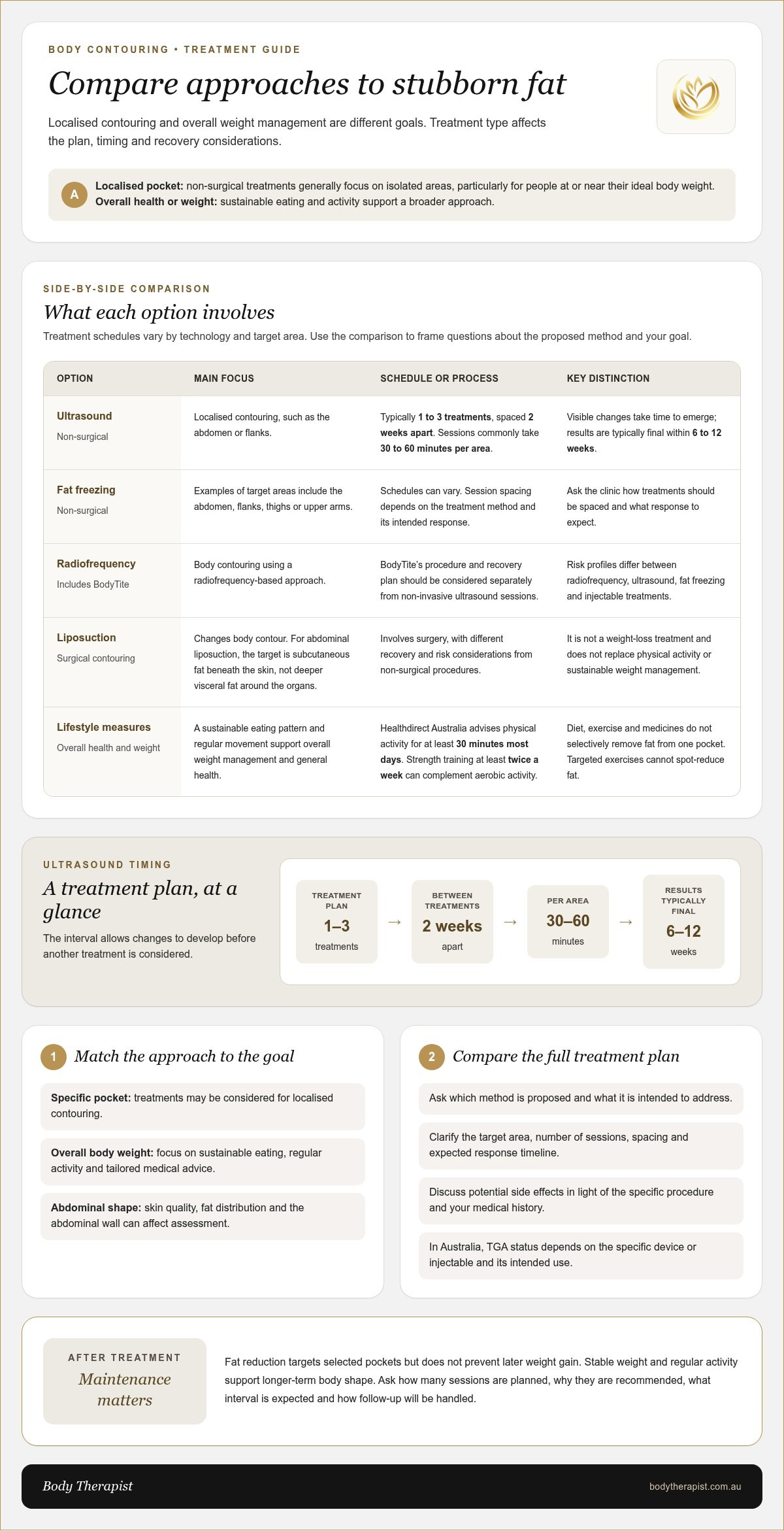
A stubborn pocket of fat doesn’t automatically mean surgery. Avoiding surgery for stubborn fat may involve sustainable changes to eating and activity, or a non-surgical treatment for localised fat. Ultrasound fat reduction commonly involves 1 to 3 treatments spaced 2 weeks apart, while visible changes can take time to emerge.
It can be frustrating when a particular area persists despite your efforts. Non-surgical approaches generally target isolated pockets, especially for people at or near their ideal body weight who do not need significant reshaping. They are not a substitute for overall weight management, and targeted exercises cannot selectively remove fat from one spot. This guide explains how lifestyle measures may help, who may be a potential candidate for non-surgical treatment, and how treatment sessions can be planned. It also explains why the type and location of fat matter, and when a different clinical assessment may be more appropriate.
Table of Contents
Treatment frequency and number of sessions
Options in Australia include ultrasound fat reduction, fat freezing, radiofrequency and lifestyle changes. BodyTite is a named radiofrequency-based contouring procedure. Treatment schedules vary by technology and target area. For stubborn pockets, the aim is usually localised contouring.
Ultrasound fat reduction typically involves 1 to 3 treatments, spaced 2 weeks apart. Sessions commonly take 30 to 60 minutes per area. Ultrasound results are typically final within 6 to 12 weeks. That interval allows changes to develop before another treatment is considered. Plans may focus on localised areas, such as the abdomen or flanks. The clinic should explain the selected area and timing together.
Fat-freezing schedules can vary, so ask the clinic how treatments should be spaced. Areas may include the abdomen, flanks, thighs or upper arms. These examples help distinguish local contouring from general body-weight reduction. Session spacing depends on the treatment method and its intended response.
BodyTite uses radiofrequency as part of body contouring, unlike non-invasive ultrasound sessions. Its procedure and recovery plan should be considered separately from clinic-based sessions. Neither surgery nor liposuction is a weight-loss treatment. Liposuction changes body contour, but does not replace physical activity or sustainable weight management. A qualified practitioner considers localised body fat, health and the person’s overall goal.
Results and maintenance also depend on what happens after treatment. Fat reduction targets selected pockets, but does not prevent later weight gain. Stable weight and regular activity support the body’s longer-term shape. For example, abdominal contouring will not prevent changes if body weight fluctuates. Before booking, ask how many sessions are planned and why. Clarify the interval, expected response timeline and follow-up approach.
Is non-surgical fat reduction a good option for me?
Non-surgical treatment may suit people near their ideal body weight who want to address isolated fat pockets that persist despite diet and exercise. Liposuction is a surgical contouring option, with different procedural and recovery considerations.
Comparing non-surgical treatments with liposuction
Non-surgical fat reduction includes methods such as fat freezing, radiofrequency or ultrasound; injectable treatments use a different approach. These options may target localised subcutaneous fat without surgery, but they are not interchangeable, and the method affects the treatment plan. That distinction matters: someone seeking modest contouring may have different needs from someone seeking more substantial reshaping. Crunches can strengthen abdominal muscles, but they do not selectively remove belly fat.
In Australia, TGA status depends on the specific device or injectable and its intended use; a treatment category alone does not establish approval. Ask what method is proposed and what it is intended to address.
Costs, risks and side effects
Australian costs depend on the treatment, area, number of sessions and clinic; the price is provided after a quote request. Risk profiles also differ between fat-freezing, radiofrequency, ultrasound and injectable treatments. The specific procedure and your medical history shape which potential side effects matter, so discuss both before proceeding. This helps you weigh the likely treatment burden against the contouring goal.
Non-surgical treatments generally do not require an operation, while liposuction involves surgery. Westmead Private Hospital says liposuction can take an average of one to two hours. Recovery and risks differ from those of non-surgical procedures, so compare the full process, not just the treatment session.
For abdominal liposuction, the target is subcutaneous fat beneath the skin, rather than deeper visceral fat around the organs. A surgeon assesses the abdominal wall, skin quality and fat distribution to tailor recommendations. This can help distinguish a localised pocket from stretched skin or another cause of abdominal shape. Choose based on the underlying concern, not appearance alone.
Healthy diet and lifestyle measures
A sustainable eating pattern supports gradual weight loss and general health. Build meals around plant-based foods and lean protein, while limiting processed meats and saturated fat. Include moderate amounts of unsaturated fats. Replacing sugary drinks, such as soft drink and juice, with water or calorie-free sparkling water can also reduce excess energy intake. These habits support an overall lifestyle approach rather than targeting one abdominal area.
Regular movement matters beyond body composition. Being physically active for at least 30 minutes most days can help reduce the chance of chronic disease, according to Healthdirect Australia. Choose an activity you enjoy, such as brisk walking or cycling, to help make it part of your routine. Strength training at least twice a week can complement aerobic activity by working different muscle groups.
Diet, exercise and prescription weight-loss medicines may support overall weight management, but none selectively removes fat from one pocket. Medicines can be part of a medically supervised weight-management program for some patients, but they are not a substitute for tailored medical advice. A steady approach to food and physical activity is more relevant to overall body fat than abdominal exercises alone.
Foods containing probiotics include Greek yoghurt, kimchi, sauerkraut, nattō and kefir. They can add variety to a balanced diet, but should not be treated as a standalone fat-reduction method. Kombucha is another option, although it can contain substantial sugar, so check the product label and moderate intake. These choices complement, rather than replace, whole foods and regular activity.
Consistency makes lifestyle changes more practical than short-term restriction. For example, plan regular meals, add a walk to your day and include strength training across the week. These steps support general health and weight management, but do not guarantee a change in a specific tissue pocket. A local contouring procedure addresses a different concern from habits that influence overall body composition.
Why belly fat can be resistant to diet and exercise
Belly fat includes subcutaneous tissue beneath the skin and visceral fat deeper inside the abdomen. Subcutaneous fat can be pinched; visceral fat surrounds organs, including the liver and intestines. Diet and exercise affect overall body fat, but crunches cannot selectively target fat around the lower abdomen. They strengthen abdominal muscles, which may change muscle tone without removing the overlying fat.
Lower belly shape can reflect several factors. A localised subcutaneous pocket differs from visceral fat, stretched skin or abdominal muscle separation. After menopause, women tend to store more body fat around the abdomen. Age-related changes in muscle mass can also affect body composition and physical appearance. A change in waist measurement or abdominal contour does not, by itself, identify the underlying tissue.
Visceral fat matters for health, not appearance alone. It’s linked with insulin resistance, type 2 diabetes, heart disease, chronic inflammation and liver disease. In Australia, a waist circumference greater than 80 cm for women or 94 cm for men is associated with a higher chance of chronic disease. These measurements are risk indicators, not a diagnosis.
Abdominal exercises remain useful for strength, but targeted exercise cannot achieve spot reduction. A balanced approach combines regular physical activity, strength training and sustainable eating habits to support overall health and body composition. If a lower-abdominal pocket remains, first distinguish localised subcutaneous fat from deeper visceral fat. That difference shapes which treatment options are relevant.
For support with movement-related tension or tissue concerns, discuss your body therapy needs as part of your broader wellbeing plan.
Body Therapist: Manual Lymphatic Drainage Massage
Body Therapist offers Manual Lymphatic Drainage Massage for people seeking support with lymphatic flow, not targeted fat removal. Stubborn fat and lymphatic swelling are different concerns, so this massage is not a substitute for weight management or a fat-reduction procedure.
If swelling or a lymphatic condition is your concern, Lymphedema Therapy may be more relevant. Remedial Massage can address muscular tension, while Oncology Massage is tailored to people affected by cancer and its treatment. The appropriate option depends on your health needs and the reason you are seeking care.
To discuss support suited to your needs, contact Body Therapist.
Choose a next step that fits your needs
A useful next step is to identify your main goal: changing a localised contour, supporting general health or addressing swelling and discomfort. These concerns call for different approaches. If avoiding surgery for stubborn fat is your aim, focus on options suited to the tissue and outcome you want, rather than expecting one treatment to meet every need. For lymphatic or body-therapy support, Body Therapist offers Manual Lymphatic Drainage Massage, Lymphedema Therapy and Remedial Massage. These services address therapeutic needs, not stubborn fat removal, so it is important to match the service to your concern.
Take time to identify what you want help with and what you hope will change. A clear goal makes it easier to discuss relevant support and decide on a practical way forward. Contact Body Therapist to discuss your options and take the next step with a clearer sense of direction.
Frequently Asked Questions
How Can You Manage Stubborn Fat?
Start by distinguishing a localised contour concern from overall weight management, then match your approach to that goal. If you are considering avoiding surgery for stubborn fat, identify the specific area and the change you hope to see. Regular movement and sustainable eating habits support general health, while targeted exercise does not selectively remove fat from one body part.
What are the results like?
Non-surgical contouring aims to change the appearance of a treated area, rather than produce whole-body weight loss. Look for changes in the area’s outline and compare them consistently, such as by using the same clothing fit or body position. The outcome depends on the treatment method and the area addressed. Keep expectations focused on local contouring, not a change in overall body weight.
How many sessions are typically needed, and when do results appear?
Ultrasound fat reduction typically involves 1 to 3 treatments spaced 2 weeks apart, with results typically final within 6 to 12 weeks. Fat-freezing treatments are spaced 4 weeks apart. The timing depends on the method and treatment area. Allow time for the planned response to develop before judging the outcome or considering another session.
How much fat reduction can non-surgical body contouring achieve?
Non-surgical body contouring is intended to address a localised area, not remove a set amount of fat from the whole body. The effect depends on the technology used, the size and location of the pocket, and the treatment plan. If you are exploring avoiding surgery for stubborn fat, discuss the contour change you want in a particular area rather than expecting a specific change on the scales.
Who is a suitable candidate for non-surgical fat reduction?
A suitable candidate is generally at or near their ideal body weight, with an isolated pocket that persists despite diet and exercise, and no need for major reshaping. For instance, someone concerned about a small area at the flank may have a different goal from someone seeking overall weight loss. Stable weight and the nature of the tissue also inform whether contouring suits the goal.
How can I check whether an Australian fat reduction clinic and practitioner are qualified?
Ask which practitioner will perform the treatment, what qualifications and training they hold, and how that experience relates to the specific method. Request a written treatment plan that sets out the area addressed, expected session schedule and risks. You can then verify the stated qualification with the awarding organisation and make sure you understand the proposed procedure before deciding.


Comments