

Post Liposuction Massage Care: The Clinical Guide to Recovery in 2026

Post-surgical bodywork isn't a relaxing day-spa indulgence; it's a vital decongestive rehabilitation protocol where incorrect technique can permanently compromise your results. If you're currently managing severe swelling, fluid pooling, and mounting anxiety over firm lumps beneath tender skin, you aren't alone. Knowing exactly when to introduce clinical post liposuction massage care is the single most common concern after body contouring, especially when distinguishing between gentle lymphatic therapy and standard remedial treatments.
You'll discover how clinical post liposuction massage accelerates tissue healing, resolves stubborn oedema, and prevents complications such as subcutaneous fibrosis and chronic seromas. We also provide a structured recovery roadmap that coordinates specialised skin-stretch mechanics with your medical compression garment, mapping out safe treatment frequencies from week one onward so you can heal with confidence and protect your aesthetic investment.
Table of Contents
The Physiological Necessity of Post Liposuction Massage Care
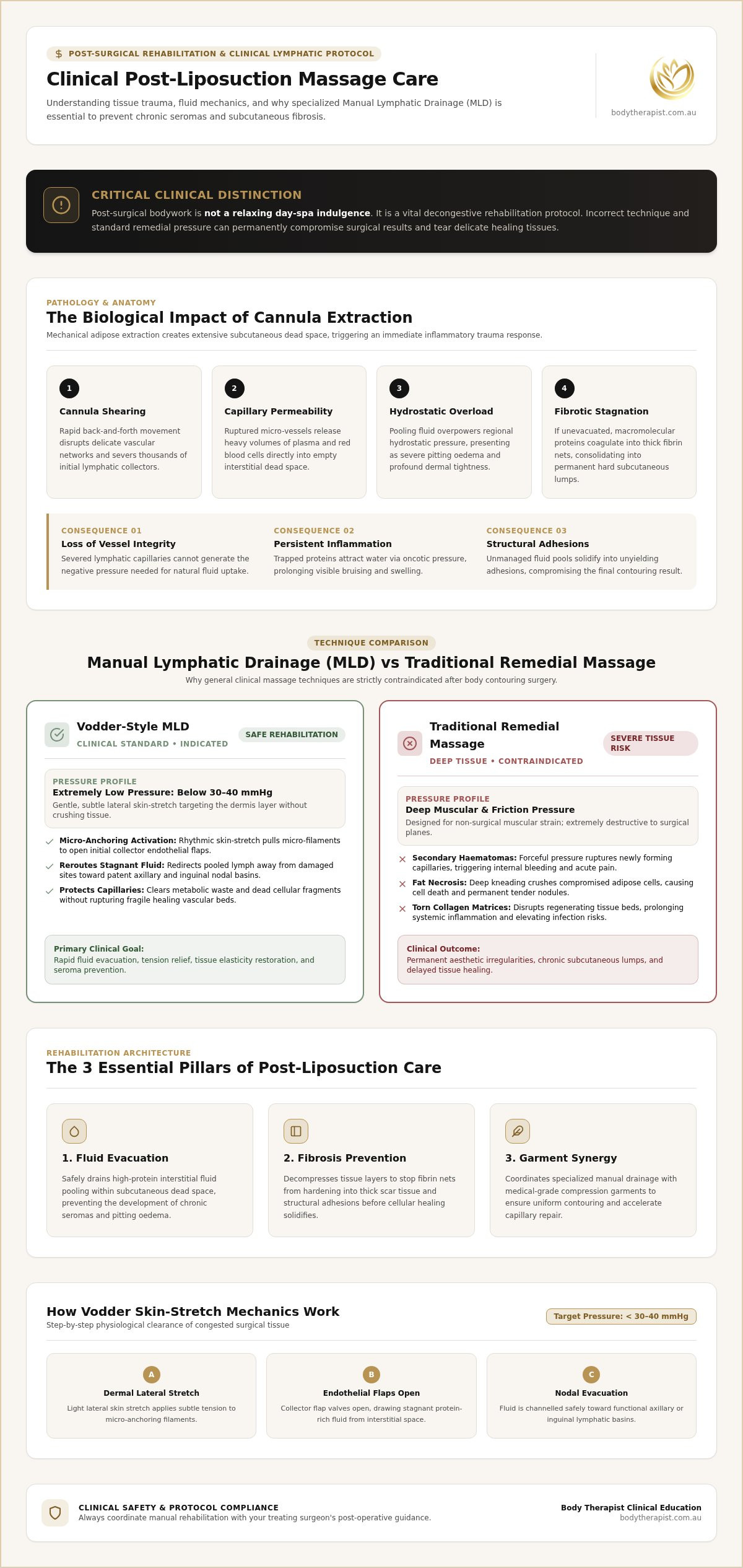
Body contouring procedures fundamentally alter the structural architecture beneath the skin. In procedures such as liposuction, the mechanical extraction of adipose tissue creates an extensive subcutaneous dead space. This empty plane triggers an immediate, aggressive trauma response. Capillaries rupture, cell membranes break down, and the body rushes inflammatory fluids to the surgical bed. Without specialised post liposuction massage care, this protein-rich accumulation stagnates within the newly formed voids, causing severe local tension and delaying cellular repair.
Targeted rehabilitation does not simply offer comfort. It actively clears metabolic waste and dead cellular fragments from the operative site. By decompressing congested tissue layers, clinical bodywork restores tissue elasticity and mitigates structural tightness before initial healing solidifies into unyielding adhesions.
Understanding Cannula Trauma and Interstitial Fluid Dynamics
The rapid back-and-forth movement of an extraction cannula shears subcutaneous tissue, disrupting delicate vascular networks. This trauma spikes capillary permeability, releasing heavy volumes of plasma and red blood cells directly into interstitial spaces. The resulting fluid volume overpowers regional hydrostatic pressure, presenting clinically as unyielding pitting oedema and dermal tightness. Gentle clinical manual drainage mobilises this pooling fluid safely without stretching or rupturing newly healing capillary beds.
Why Natural Fluid Resorption Stalls After Body Contouring
Surgical intervention severs thousands of initial lymphatic collectors, rendering the local lymphatic vascular system incapable of normal fluid uptake. The physiological consequences unfold rapidly:
Loss of vessel integrity: Disrupted lymphatic capillaries cannot generate the negative pressure needed to draw interstitial fluid into initial channels.
Persistent inflammation: Trapped macromolecular proteins attract water via oncotic pressure, keeping the surgical field swollen and prolonging visible bruising.
Fibrotic coagulation: If high-protein fluid remains stagnant, it forms thick fibrin nets that rapidly consolidate into hard subcutaneous lumps.
Clinical post liposuction massage care prevents this cascade. Applying precise, light skin-stretch mechanics redirects pooled lymphatic fluid away from damaged zones toward patent, functional nodal basins in the axillary or inguinal regions, restoring healthy biological equilibrium.
Manual Lymphatic Drainage vs Traditional Remedial Massage After Surgery
Confusing remedial bodywork with post-operative recovery protocols poses real risks to healing tissue. Deep tissue manipulation and friction work belong strictly within the scope of general clinical massage therapy for non-surgical muscular strain. After body contouring, traditional heavy pressure is strictly contraindicated. Safe, evidence-based post liposuction massage care relies exclusively on specialized Manual Lymphatic Drainage (MLD) to move interstitial fluid without disturbing delicate vascular repairs.
The Perils of Excessive Mechanical Pressure on Healing Tissues
Forceful manual pressure tears reforming collagen matrices and shreds newly forming capillaries. Applying deep kneading to traumatised areas leads to serious complications:
Secondary haematomas: Rupturing micro-vessels triggers internal bleeding and intense, avoidable pain.
Fat necrosis: Crushing compromised adipose cells causes them to die, forming tender, permanent subcutaneous nodules.
Compromised healing: Excessive force contradicts standard post-liposuction aftercare instructions, prolonging systemic inflammation and elevating infection risks.
The Vodder Technique: Light-Touch Decongestive Mechanics
Original Vodder-style manual lymphatic drainage massage operates at an extremely low pressure profile, remaining below 30 to 40 mmHg. Rather than gliding over lubricated muscle, the practitioner applies gentle, rhythmic skin-stretching strokes that target the dermis. This subtle lateral stretch pulls on micro-anchoring filaments, opening the endothelial flaps of initial lymphatic collectors. The rhythmic pumping then stimulates the intrinsic contractility of smooth-muscle lymphangions, directing high-protein fluid toward healthy, uninjured axillary, inguinal, or cervical lymph basins.
Preventing Subcutaneous Fibrosis and Dense Scar Tissue Formation
Unmanaged swelling acts as an active biological catalyst for severe fibrosis. When interstitial fluid lingers, stranded fibrinogen polymerises into dense, irregular collagen bands. These structural adhesions anchor the skin to underlying muscle layers, creating visible ridges, hard lumps, and tethered contours that compromise your final aesthetic outcome.
Early, consistent post liposuction massage care clears stagnant proteins before they organise into chronic, rigid scars. If you identify persistent fullness, skin tightness, or common warning signs of structural lymphatic draining failure, seeking care from an accredited specialist in decongestive therapy protects your contour and ensures safe healing. Consider scheduling a dedicated session with Body Therapist to align your recovery with safe, clinical post-surgical protocols.
Clinical Timeline: Stages of Post Liposuction Massage Care
Recovery is not linear. Tissue repair advances through specific biochemical stages, requiring manual bodywork that adapts to cellular changes. Rather than following an arbitrary massage schedule, structured post liposuction massage care aligns directly with your body's intrinsic physiological phases: acute inflammation, tissue proliferation, and structural remodelling.
Days 3 to 14: Acute Decongestion and Bruising Clearance
With surgeon clearance, therapy ideally commences between days 3 and 7. During this acute phase, sessions are scheduled 2 to 3 times weekly. Work does not involve deep manipulation of traumatised tissue. Instead, strokes remain ultra-light, focusing on decongesting healthy proximal lymph basins in the neck, axilla, and groin.
This early clearance provides two critical clinical benefits:
Accelerated ecchymosis clearance: Enhances the evacuation of extravasated red blood cells, accelerating haemoglobin breakdown and clearing severe skin discoloration.
Seroma suppression: Prevents acute inflammatory fluid from pooling into discrete, unyielding pockets within vulnerable dead space.
Weeks 3 to 6: Tissue Softening and Fibrosis Management
During the proliferation stage, fibroblast activity peaks as the body synthesises new collagen. Without targeted intervention, this reparative matrix can deposit erratically. Sessions taper to 1 or 2 visits weekly, shifting toward breaking down dense, nascent scar plates beneath incision sites.
Carefully applied myofascial techniques are integrated with foundational lymphatic drainage strokes. This combination softens indurated tissue bands, prevents dermal puckering, and ensures progressive tissue compliance without placing undue stress on healing surgical wounds.
Months 2 to 6: Structural Remodelling and Final Contour Refinement
The final phase focuses on dynamic maturation. Collagen fibres reorganise along functional stress lines, while underlying vascular channels regain baseline autonomy. Clinical visits transition to fortnightly or monthly maintenance, targeting lingering focal indurations and stubborn subcutaneous firmness.
At this stage, therapy pairs direct tissue softening with functional mobility exercises. Active muscle contractions act as an internal physiological pump, driving remaining interstitial fluids through regenerated lymph collectors. This disciplined approach eliminates persistent contour asymmetries, leaving the treated areas supple, natural, and cleanly defined.
Synergy Between Manual Lymphatic Therapy and Medical Compression
Compression garments and manual bodywork are not independent recovery tools. They operate as a dynamic, interdependent system. While surgical garments apply continuous external pressure, they cannot actively pump trapped fluid upward against gravity. Specialised post liposuction massage care clears congested interstitial pools, allowing medical garments to sit evenly against soft tissue rather than compressing fluid collections into rigid lumps.
How Compression Garments Maintain Manual Drainage Gains
Each treatment visibly reduces circumference by clearing regional fluid reservoirs. Immediately donning your medical garment locks in these decongestive results. Elevated hydrostatic pressure prevents capillary leakage from refilling freshly evacuated dead spaces.
This combined therapy delivers distinct clinical advantages:
Accelerated dermal reattachment: Constant, even pressure holds the detached skin flat against underlying muscular fascia, speeding structural adhesion.
Organised collagen deposition: Suppressing micro-swelling ensures newly deposited collagen fibrils settle into smooth sheets rather than disorganized fibrous knots.
Sustained vascular stability: Stable external support limits fluid reflux while compromised lymphatic networks rebuild baseline flow capacity.
Utilising Liposuction Foam Inserts and Avoiding Contour Indentations
Ill-fitting garments frequently introduce complications. Tight fabric edges, waistbands, or front zippers can act like restrictive tourniquets, carving deep cutaneous grooves into soft, recovering skin. These pressure points block lymphatic flow, causing swelling to pool directly above or below the band.
Medical-grade liposuction foam sheets solve this problem. Placed between your skin and the garment, foam distributes compressive tension uniformly over curved surfaces like the abdomen, flanks, or thighs. During clinical sessions, an experienced therapist examines the skin for localised redness or creasing, repositioning foam inserts to eliminate uneven pressure before permanent tissue indentations develop.
Managing the interplay between garment pressure and lymphatic clearing requires clinical precision. To protect your surgical results and ensure your recovery stays on track, book a clinical post-operative session with Body Therapist.
Patient Safety: Identifying Complications and Choosing Qualified Care
Clinical vigilance forms the backbone of post-operative recovery. While body contouring generally carries low complication rates, with surgical site infection occurring in less than 1% of cases, the physical changes following surgery demand skilled observation. A trained therapist acts as a crucial second pair of eyes, spotting deviations from normal tissue healing before they escalate into medical emergencies. Entrusting your post liposuction massage care to unaccredited beauty salons exposes delicate, regenerating tissue to significant clinical harm.
Recognising Red Flags: Seromas, Infections, and Deep Vein Thrombosis
Differentiating expected swelling from pathological complications requires trained tactile assessment. Practitioners must monitor for critical contraindications:
Seromas: A distinctive wave-like sensation beneath the skin indicates encapsulated fluid. Attempting to massage across an active seroma can stretch healing tissues, requiring prompt medical aspiration instead.
Infection: Spreading redness, localised heat, sudden chills, offensive incision drainage, or unexplained fever demand immediate medical assessment.
Deep Vein Thrombosis (DVT): Unilateral calf tenderness, warmth, or sudden lower-leg oedema can indicate a vascular clot. If present, all manual therapy stops immediately for urgent clinical referral.
Vetting Practitioners: Credentials and Clinical Competence to Verify
Delicate tissue rehabilitation requires advanced clinical training, not generic relaxation skills. Patients must vet their provider carefully to avoid aggressive, damaging fads.
Before booking your post liposuction massage care, confirm that your therapist meets essential standards:
Holds verified training in recognized Manual Lymphatic Drainage techniques, such as the Dr. Vodder method.
Maintains accredited membership with a recognized professional body and demonstrates documented clinical experience in surgical recovery.
Rejects harmful devices such as high-frequency percussion massage guns, aggressive wooden contour rollers, or forced fluid expulsions through open incisions.
Maintains open communication channels to coordinate treatment safely with your plastic or cosmetic surgeon's specific postoperative guidelines.
Optimise Your Healing and Protect Your Surgical Results
Surgical body contouring represents a significant investment in your appearance, but the final aesthetic result depends heavily on how you care for healing tissues. Effective recovery isn't about enduring forceful pressure or waiting months for fluid retention to dissipate on its own. By committing to structured post liposuction massage care, you actively prevent subcutaneous fibrosis, decompress fragile tissue beds, and secure the smooth, contoured shape you envisioned.
Managing postoperative swelling demands genuine clinical expertise rather than generic salon treatments. Certified practitioners apply gentle, Vodder-style skin-stretch mechanics that respect healing micro-vessels while coordinating seamlessly with medical compression garments. To safeguard your contour with evidence-based rehabilitation tailored to your specific surgery, book your clinical post-surgical recovery consultation today. With targeted decongestion and dedicated therapeutic support, you can progress through each phase of recovery with total comfort and confidence.
Frequently Asked Questions
When should I begin post liposuction massage care after my surgery?
Most patients begin treatment between days three and seven post-op, provided their operating surgeon grants formal clearance. Starting during this initial window ensures early inflammatory fluid gets redirected before it stagnates. Your therapist focuses strictly on proximal, uninjured nodal basins to decongest the trunk before working near tender surgical margins.
How many post liposuction lymphatic massage sessions will I need?
Most rehabilitation plans require between eight and sixteen sessions, depending on the volume of tissue treated and individual healing rates. Patients generally attend two to three appointments weekly during the first fortnight. Treatment frequency gradually reduces to weekly or fortnightly visits as swelling resolves and tissues soften into their permanent contour.
Will post-surgical manual lymphatic drainage massage be painful?
No, clinical manual lymphatic drainage should never cause acute pain. Practitioners use exceptionally light, rhythmic skin-stretch mechanics that apply less than 40 mmHg of pressure. Because the goal is stimulating initial lymph collectors rather than kneading deep muscle tissue, treatments provide substantial pressure relief rather than sharp discomfort.
Can I use a massage gun or body roller instead of clinical MLD?
No, mechanical percussion devices and unyielding body rollers are strictly contraindicated on recovering surgical sites. Aggressive vibration or intense pressure tears healing micro-vessels, increases internal bruising, and can cause fat necrosis. Clinical post liposuction massage care demands trained hands capable of assessing subtle tissue resistance and fluid movement safely.
What happens if I skip professional massage care after liposuction?
Skipping decongestive therapy allows protein-dense interstitial fluid to pool within surgical dead space. Over time, stagnant fluid organizes into unyielding fibrin matrices, resulting in persistent hardness, irregular contours, and tethered skin adhesions. Prolonged swelling also lengthens visible bruising and delays the retraction of delicate skin over treated muscle beds.
How do I know if hard lumps under my skin are fibrosis or normal swelling?
Normal post-surgical oedema feels soft, doughy, and typically fluctuates throughout the day based on gravity and activity. Subcutaneous fibrosis feels like distinct, firm bands or hard, unyielding nodules beneath the dermal layer that do not shift. A qualified lymphatic practitioner can differentiate these textures and adapt manual techniques to break down organizing fibrous tissue.
Do I need a referral from my plastic surgeon to book post-operative massage?
While an official medical referral is not strictly mandatory to schedule an initial consultation, obtaining written approval from your operating surgeon is essential for patient safety. Clinical therapists work in close alignment with surgical post-operative instructions, ensuring active wound healing, drain removal timelines, and compression protocols are respected throughout your recovery.


Comments