

Myotherapy for Chronic Back Pain: How It Works and What to Expect

Could hands-on treatment help with recurring back pain without being the whole plan? If stiffness keeps interrupting everyday activities, it’s understandable to wonder whether myotherapy for chronic back pain is suitable and whether any relief will last beyond a session.
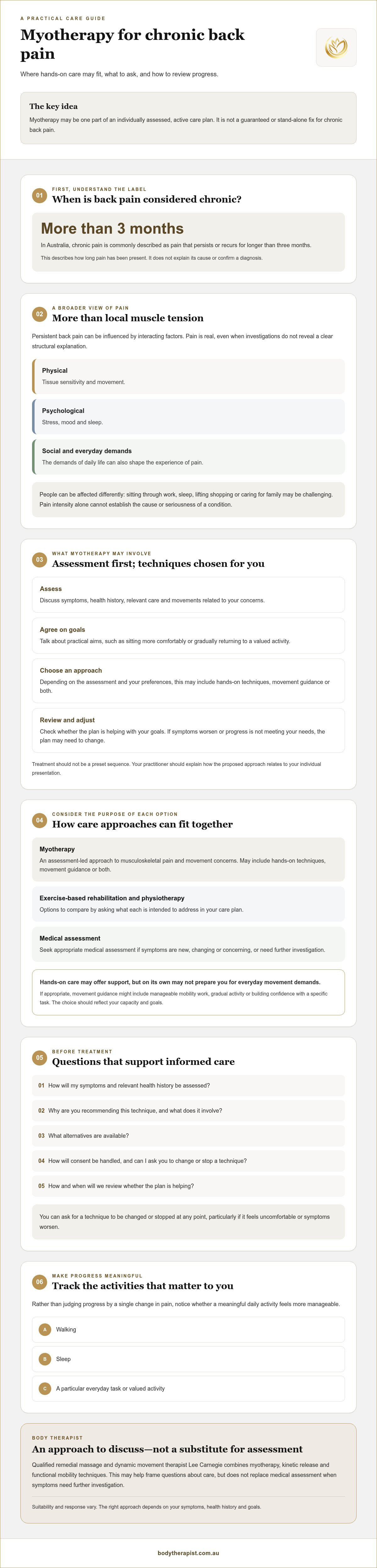
Myotherapy focuses on assessing and treating muscle and soft-tissue pain, but chronic back pain can involve more than local tension. It’s best considered as one possible part of an individually assessed, active care plan, not a guaranteed or stand-alone fix. The right approach depends on your symptoms, health history and goals.
This article explains what myotherapy may contribute, what to expect at an appointment and how hands-on treatment compares with movement-based care and other options. It also covers what to ask a practitioner about their assessment, proposed techniques and ways to support movement between sessions. At Body Therapist, qualified remedial massage and dynamic movement therapist Lee Carnegie combines myotherapy, kinetic release and functional mobility techniques. This approach may help you frame questions, but it doesn’t replace medical assessment when symptoms need further investigation.
Table of Contents
Chronic back pain and myotherapy: what each term means
Back pain that keeps returning can affect more than your back. In Australia, chronic pain is commonly described as pain that persists or recurs for longer than three months. Healthdirect Australia’s overview of chronic pain explains this timeframe. The label describes how long pain has been present, not what is causing it or what diagnosis applies.
Pain is real, even when investigations don’t reveal a clear structural explanation. It can be shaped by physical factors, such as tissue sensitivity and movement, as well as psychological and social influences, including stress, mood, sleep and the demands of daily life. These factors interact; they don’t mean the pain is imagined.
How persistent back pain can affect movement and daily life
One person may find it difficult to sit through a workday; another may be most affected by disrupted sleep, lifting shopping or caring for family. Recurring symptoms can also reduce confidence in bending or being active. Experiences vary. Pain intensity alone can’t establish the cause or seriousness of a condition, and a long-lasting pattern of symptoms isn’t, by itself, a confirmed diagnosis.
What myotherapy means in a back-pain context
Myotherapy is an assessment-led approach to musculoskeletal pain and movement concerns. A practitioner may ask about your symptoms and health history, observe movements related to your concerns, then discuss whether hands-on techniques or movement guidance may suit your situation. Techniques should be selected for the individual, not delivered as a fixed recipe. For a neutral overview of what myotherapy is, see this summary of its history, techniques and evidence.
In brief: Myotherapy may support symptom management and movement goals, but it can’t guarantee a cure or identify every cause of back pain. If symptoms are new, changing or concerning, seek appropriate medical assessment rather than assuming hands-on care is the right first step. For ongoing symptoms, myotherapy for chronic back pain may be one option within a broader care plan, guided by your needs and response.
How myotherapy may fit into a chronic back pain care plan
For persistent symptoms, treatment should follow a clear assessment and reasoning process, not a preset sequence of techniques. A practitioner can ask when the pain started, how it has changed, which activities affect it, and whether relevant health conditions or previous care may influence the approach. They may then assess movements related to your concerns and discuss practical goals, such as sitting more comfortably or gradually returning to a valued activity.
Myotherapy for chronic back pain may involve hands-on techniques, movement guidance or both, depending on the assessment and your preferences. The International Myotherapy Association provides information about the profession. Your practitioner should also be able to explain how their proposed approach relates to your individual presentation.
Assessment, treatment choices and informed consent
Before treatment, explain what tends to aggravate your symptoms, what eases them and what you hope to do more comfortably. Ask why a technique is being suggested, what it involves and what alternatives are available. Your practitioner should explain the plan and seek your consent before starting. You can ask them to change or stop a technique at any point, particularly if it feels uncomfortable or your symptoms worsen.
Agree on how you’ll review your response. For example, check whether a particular daily activity feels more manageable instead of judging progress by a single change in pain. If symptoms worsen or the approach isn’t helping you meet your goals, the plan may need to change, or you may need input from another health professional.
Why movement guidance can matter alongside hands-on care
Hands-on treatment may offer support, but it may not prepare you for the demands of everyday movement on its own. If appropriate, a practitioner might discuss manageable mobility work, gradual activity or ways to build confidence with a specific task. The choice should reflect your current capacity and goals. An exercise plan that suits one person may not suit another.
Treatment choice and response vary between individuals. A useful care plan explains what each part is intended to address, then adjusts based on your experience and progress. For broader context on hands-on care, read this clinical massage therapy guide.
If you’re considering hands-on care, you can enquire with Body Therapist about its remedial massage and dry needling offerings. Ask how Lee Carnegie’s combined myotherapy, kinetic release and functional mobility approach may relate to your goals. This is an option to discuss, not a substitute for medical assessment when needed. Learn about Body Therapist.
Myotherapy versus other approaches for chronic back pain
Different care options can address different needs, and they don’t have to be alternatives to one another. The Better Health Channel’s overview of myotherapy describes its focus on musculoskeletal pain and dysfunction. The comparison below outlines common purposes, not a ranking. Scope and treatment depend on the practitioner, your presentation and the assessment.
Australian professional roles and registration differ. Physiotherapists and medical practitioners are registered through the Australian Health Practitioner Regulation Agency (AHPRA); myotherapy is not a nationally registered profession under AHPRA. Ask about a practitioner’s training and scope, and how they’ll respond if your needs fall outside it. More than one approach may form part of a care plan. Where symptoms affect your duties at work or require injury support, occupational health providers such as Persona Health can assist with workplace medical assessments and rehabilitation management.
When hands-on myotherapy may be one option to discuss
You might discuss myotherapy if you value guided assessment and hands-on care, and want to explore how movement support could fit alongside it. Suitability can depend on your health history, preferences, access to care and response to treatment. For further context on clinical massage approaches, see this remedial massage guide.
When another health professional or approach may be appropriate
Seek medical advice for new, changing, unexplained or concerning symptoms rather than assuming manual therapy is appropriate. Exercise-based care may also be discussed to support longer-term function and self-management. The most useful option is the one that matches your assessed needs and goals, with room to review the plan as you go.
If you’re comparing hands-on options, Body Therapist offers remedial massage and dry needling. You could enquire about these services and ask how a proposed technique is selected; a guide to dry needling technique choices provides further context. This isn’t a recommendation that dry needling is suitable for your back pain. Explore remedial massage and dry needling as options to discuss, not substitutes for medical assessment when needed.
How to assess suitability, safety and progress with myotherapy
A considered approach to myotherapy for chronic back pain starts by checking that the care suits your symptoms, health history and goals. Use the consultation to understand the assessment, treatment options and how you’ll judge whether the plan is helping. You should be able to ask questions, give or withdraw consent, and request changes at any stage.
Questions to ask before starting treatment
These questions can help you decide whether the proposed care is clear, appropriate and collaborative:
1. How will you assess my symptoms? Ask what you’ll discuss or do, and how the practitioner will decide whether myotherapy is suitable for your situation.
2. What is the treatment intended to help with? Ask how the suggested approach relates to your concerns and what alternatives may be available.
3. What techniques might be used? Ask what each involves, what sensations to expect and how you can communicate discomfort.
4. How is consent managed? Check that the practitioner will explain a technique and ask permission before proceeding. Agree that you can pause, stop or modify treatment.
5. How will we review the plan? Ask when you’ll check progress and whether another health professional may be appropriate if symptoms change or the approach isn’t meeting your goals.
Setting realistic goals and monitoring change
Choose a practical goal that matters to you, such as walking for a personally manageable period, sleeping with fewer interruptions or completing a regular household task more comfortably. Note your starting point simply, then check the same activity over time. A brief record of activity, sleep and symptom changes can help you spot patterns and discuss them with your practitioner.
Progress may fluctuate. One difficult day doesn’t necessarily mean care has failed, but a lack of meaningful movement towards agreed goals is a reason to review the plan with your practitioner. Discuss unexpected symptom changes promptly rather than pushing through a technique or activity that feels wrong.
Seek prompt medical advice for concerning symptoms. Healthdirect Australia advises urgent assessment for back pain accompanied by problems controlling your bladder or bowel, numbness around the genitals or anus, or new or worsening leg weakness. If symptoms are severe or rapidly worsening, seek urgent care. Read Healthdirect’s back pain guidance for more information. Don’t rely on a therapy appointment to assess potentially serious symptoms.
If you’d like to ask about the clinic’s remedial massage or dry needling offerings and discuss whether they fit your needs, enquire with Body Therapist. This doesn’t replace medical advice when it’s needed.
Considering myotherapy for chronic back pain with Body Therapist
After comparing care options and considering what matters in a practitioner relationship, you may want to ask whether Body Therapist’s approach is relevant to your situation. Lee Carnegie is identified as a qualified remedial massage and dynamic movement therapist, and combines myotherapy, kinetic release and functional mobility techniques. This describes an approach, not confirmation that myotherapy is available as a separately bookable service.
If you’re exploring myotherapy for chronic back pain, first check whether your concern is within the practitioner’s scope and whether an appointment is suitable. A considered conversation can clarify what the practitioner may assess, what care could involve and when input from another health professional may be appropriate.
What to discuss with a practitioner at Body Therapist
Give a clear account of your back-pain history, including how symptoms began or changed, which activities affect them, relevant health information and any care you’ve already tried. You might also describe a practical goal, such as managing a regular task more comfortably. This helps keep the discussion focused on your experience rather than a generic treatment expectation.
Ask how hands-on techniques and functional movement guidance might relate to your needs, what the practitioner would assess before suggesting an approach, and how you’ll review your response. It’s reasonable to ask whether your symptoms call for medical assessment or input from another health professional before proceeding. If the proposed care doesn’t feel right for you, discuss alternatives or pause before making a decision.
A considered next step towards care
Review the clinic’s information and ask directly whether myotherapy can be included in an appointment, how that approach is delivered and whether your back-pain concern is within the practitioner’s scope. This helps distinguish a practitioner’s combined approach from a standalone service or a promise of a particular result. Your decision should be shared, based on assessment, your preferences and how your agreed goals are progressing.
If you’d like to clarify what the clinic offers and whether it may suit your needs, enquire with Body Therapist. An enquiry is a chance to ask questions; it doesn’t commit you to treatment or replace medical advice when that’s needed.
Choose your next step with confidence
Myotherapy for chronic back pain may be worth discussing as one part of an individually assessed care plan, rather than as a guaranteed cure or substitute for medical advice. The right approach depends on your symptoms, preferences and goals. Consider progress in terms of meaningful changes to daily function as well as pain.
At Body Therapist, qualified remedial massage and dynamic movement therapist Lee Carnegie combines myotherapy, kinetic release and functional mobility techniques. The clinic also offers remedial massage and dry needling. Ask whether myotherapy can be included in an appointment, whether your concern is within the practitioner’s scope, and how any proposed hands-on care or movement guidance relates to your needs.
Care should be a shared decision, with room to ask questions and review whether the approach is meeting your goals. For a low-pressure conversation about available options, Enquire with Body Therapist about your care options. A clear next step can help you make an informed choice and move forward at a pace that feels right for you.
Frequently Asked Questions
Can myotherapy help with chronic back pain?
Myotherapy may help some people manage musculoskeletal symptoms and work towards improved movement, but it isn’t a guaranteed cure or suitable for everyone. Its role depends on your symptoms, health history, assessment and preferences. Myotherapy for chronic back pain may be considered alongside other care, such as movement-based strategies, rather than replacing medical advice or a broader care plan when these are needed.
What happens during a myotherapy session for back pain?
A session will generally start with questions about your symptoms, health history and goals, followed by an assessment relevant to your concerns. The practitioner should explain their reasoning and discuss possible care, which may include hands-on techniques or movement guidance if appropriate. You should be able to ask questions, give or withdraw consent, and request that a technique be changed or stopped if it feels uncomfortable.
Is myotherapy the same as remedial massage?
No, the terms aren’t interchangeable, although the approaches can overlap. Myotherapy typically involves assessment of musculoskeletal pain and dysfunction, with treatment choices that may include hands-on techniques and movement guidance. Remedial massage is a massage therapy service that may address muscular tension and discomfort. Training, scope and methods vary between practitioners, so ask what an appointment includes and how the approach relates to your needs.
How long does myotherapy take to improve chronic back pain?
There’s no reliable set timeframe for improvement. Response can differ depending on the person, the nature of their symptoms, other health factors and the care plan. Rather than expecting a specific number of sessions, agree on practical goals and a review point with the practitioner. You might track whether walking, sleep or a regular daily task becomes more manageable, then discuss the plan if progress isn’t meaningful.
Can myotherapy be combined with exercise or physiotherapy?
Yes, these approaches may complement one another when they suit your needs. Hands-on care might be considered alongside gradual activity or exercise guidance, while a physiotherapist may assess movement and help plan rehabilitation. Tell each practitioner about the other care you’re receiving so approaches can be coordinated. Treatment and activity should reflect your assessment, preferences and response, rather than follow a standard programme.
When should I see a doctor about chronic back pain instead of a myotherapist?
Seek medical advice for new, worsening, unexplained or concerning symptoms, or if you’re unsure what’s causing the pain. Back pain with loss of bladder or bowel control, numbness around the genitals or anus, or new or worsening leg weakness needs urgent medical assessment. Don’t wait for a myotherapy appointment to assess these symptoms. A doctor can review your health and advise whether investigation or other care is appropriate.


Comments