

Maternity Massage: Clinical Guide to Antenatal Relief

Pregnancy isn't just a waiting period for the body; it's a profound biomechanical reorganisation that places unprecedented stress on the musculoskeletal and lymphatic systems. You're likely feeling the constant strain of shifting pelvic alignment or the distressing weight of lower limb oedema, and it's natural to feel hesitant about the safety of traditional bodywork. Seeking professional massage for maternity shouldn't feel like a gamble. It's a clinical necessity for managing the physiological demands of gestation while ensuring the absolute safety of both mother and child.
This guide provides a clinical perspective on how remedial techniques and manual lymphatic drainage offer evidence-based relief for chronic pregnancy pains. We'll explore the anatomical shifts within the pelvic girdle, the mechanics of fluid retention, and the precise protocols used to restore functional mobility. By understanding the "how" and "why" behind these specialised treatments, you can move through your pregnancy with physical confidence and a clear plan for recovery. Our focus remains on results-oriented care that addresses the root cause of your discomfort through a master-practitioner approach to human anatomy.
Table of Contents
Understanding the Physiological Demands of Pregnancy
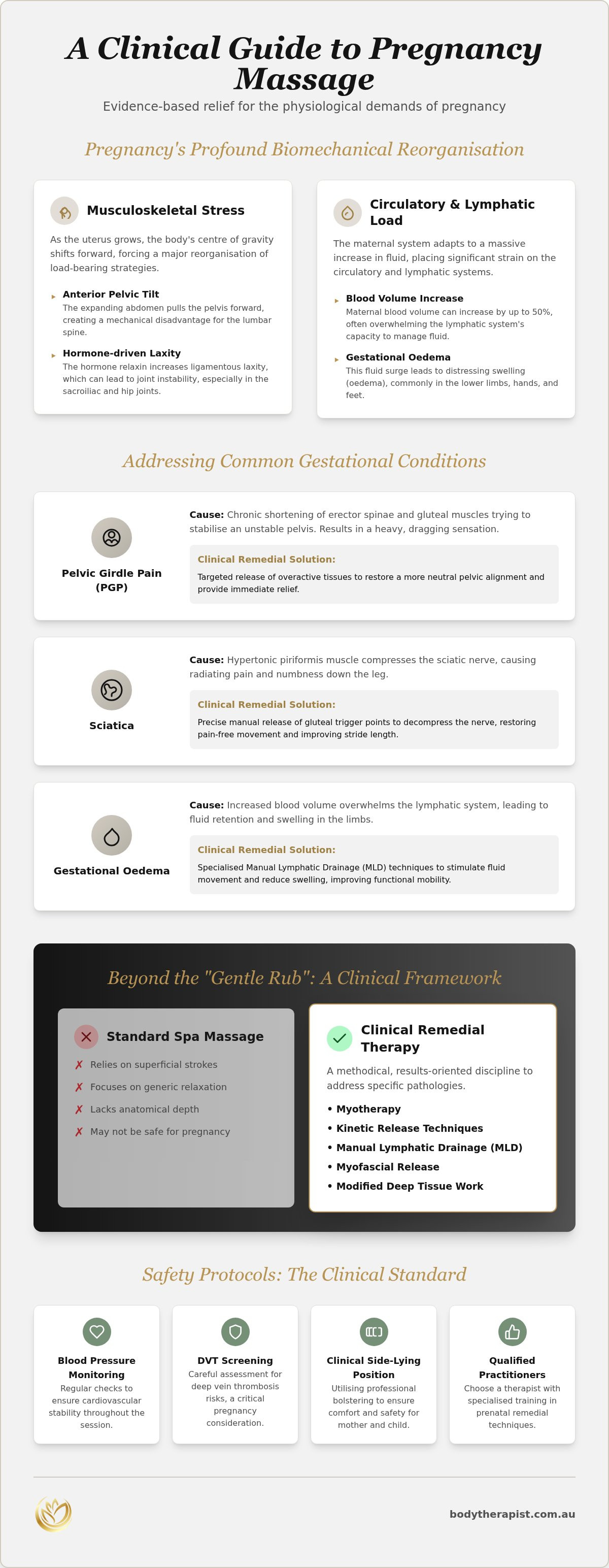
Clinical massage for maternity is a specialised remedial practice focused on the complex physiological requirements of the gestational period. It's distinct from the generic relaxation treatments offered in day spas, which often lack the anatomical depth required to treat specific pregnancy-related pathologies. As the uterus grows, it triggers a profound biomechanical shift that alters the body's centre of gravity. The resulting forward migration of mass forces the musculoskeletal system to reorganise its load-bearing strategies. The acceleration of this process occurs via the hormone relaxin, which increases ligamentous laxity. While this laxity is essential for pelvic expansion during delivery, it frequently causes joint instability and debilitating pain in the sacroiliac and hip joints.
The Biomechanics of Pelvic Girdle Pain (PGP)
Pelvic Girdle Pain (PGP) is a common result of the anterior pelvic tilt that develops as the abdomen expands. Such a tilt creates a mechanical disadvantage for the lumbar spine, placing intense strain on the sacroiliac joints. In response, the erector spinae and gluteal muscles often become chronically shortened and hypertonic as they attempt to stabilise the pelvis. These compensatory patterns don't just cause local pain; they can radiate through the kinetic chain, affecting the knees and upper back. During the second and third trimesters, our clinical focus shifts toward maintaining functional mobility. By using targeted remedial techniques, we can release these overactive tissues and restore a more neutral pelvic alignment, providing immediate relief from the heavy, dragging sensations associated with advanced pregnancy.
Hormonal Influences on Soft Tissue
The maternal circulatory system must adapt to a blood volume increase of up to 50%. Such a significant surge in fluid often overwhelms the lymphatic system, leading to distressing oedema in the lower limbs and hands. Clinical massage for maternity works to stimulate lymphatic drainage, encouraging the movement of interstitial fluid back into the circulatory system to reduce swelling. Hormonal shifts also impact the nervous system, contributing to the cognitive fatigue often described as "pregnancy brain." Tactile therapy plays a crucial role here by regulating cortisol levels and promoting a state of systemic calm. Clinical massage modulates the parasympathetic nervous system to reduce maternal stress. As part of a comprehensive clinical plan, some mothers also integrate antenatal perineal massage in the later stages to assist with tissue elasticity. Our approach ensures that every technique is grounded in physiological evidence, prioritising the health of both mother and child.
Clinical Techniques: Beyond the "Gentle Rub"
Effective massage for maternity requires a transition from general relaxation to a results-oriented framework. At Body Therapist, we implement clinical pregnancy massage as a methodical discipline, integrating myotherapy and kinetic release to address specific gestational pathologies. Unlike standard day spa treatments that rely on superficial strokes, our approach utilises technical modifiers to achieve structural change. Deep tissue work is never entirely avoided; instead, it is modified in depth and location to ensure maternal safety while still releasing chronic hypertonicity. We also employ myofascial release to manage the discomfort of rib cage expansion, which often compresses the diaphragm and restricts respiratory capacity as the pregnancy progresses.
Remedial Massage for Sciatic Nerve Compression
Pregnancy-related sciatica often stems from the piriformis muscle, which becomes hypertonic as it works to stabilise the pelvis during the characteristic "waddling" gait. This muscle can compress the sciatic nerve, causing radiating pain and numbness through the glutes and down the leg. Our remedial approach identifies these gluteal trigger points and applies precise manual release techniques to decompress the nerve. This problem-solution arc is essential for restoring pain-free movement. By neutralising the tension in the deep lateral rotators, we provide a functional correction that allows for improved stride length and reduced nocturnal discomfort. If you are experiencing persistent neural symptoms, a targeted remedial consultation can help identify the exact anatomical source of the compression.
Manual Lymphatic Drainage (MLD) for Oedema
Distinguishing between general bodywork and manual lymphatic drainage massage is critical for managing gestational swelling. While remedial massage targets the muscular system, MLD utilises light, rhythmic skin-stretching techniques to stimulate the lymphatic collectors. This process encourages the movement of interstitial fluid back into the venous system, effectively reducing the "heavy leg" syndrome that many women face in the third trimester. MLD is a specialised health niche that prevents the excessive skin stretching associated with severe oedema. It's a methodical, anatomical intervention that supports the body's increased circulatory demands, ensuring that fluid retention does not compromise your physical comfort or mobility. For those seeking a broader therapeutic approach, Traditional Chinese Medicine from clinics like Rakuvital can provide additional support for systemic health and fluid balance during pregnancy.
Addressing Common Gestational Musculoskeletal Issues
Managing chronic gestational pain requires more than superficial comfort; it demands a structured remedial intervention. While relaxation massage provides temporary relief from anxiety, clinical massage for maternity focuses on the mechanical triggers of pain. As the centre of gravity shifts, the body often develops "Upper Crossed Syndrome." This postural distortion occurs as increased breast tissue and anterior weight pull the shoulders forward, causing the pectorals to shorten and the mid-back muscles to weaken. Similarly, carpal tunnel syndrome often emerges in the third trimester. This isn't just a wrist issue; it's frequently caused by systemic fluid retention compressing the median nerve. Remedial work targets these specific nerve pathways and postural imbalances to restore functional capacity.
Managing Lower Back and Sacroiliac Strain
The quadratus lumborum (QL) is a primary driver of deep lower back aches during pregnancy. As the pelvis tilts anteriorly, the QL remains in a state of constant contraction to support the lumbar spine. Clinical intervention focuses on releasing this hypertonicity to stabilise the lower back and reduce compressive forces on the vertebrae. Because the hormone relaxin creates systemic laxity, the sacroiliac joints often become unstable, leading to sharp, localised pain. Sacroiliac joint dysfunction requires specific, asymmetrical muscle release because the imbalances are rarely uniform across both sides of the pelvis. By addressing these asymmetries, we neutralise the torque on the sacrum and improve gait efficiency.
Alleviating Pregnancy-Induced Fluid Retention
Fluid management is a critical component of antenatal care. Recognising the signs of lymphatic draining issues, such as pitting oedema or a persistent "tight" sensation in the skin, is the first step toward effective treatment. The thoracic duct, located near the diaphragm, serves as the main highway for lymphatic return. We use diaphragmatic breathing techniques in conjunction with manual drainage to create a pressure gradient that pulls fluid from the extremities toward the torso. For swollen ankles and feet, we follow specific protocols that avoid deep pressure on the medial malleolus, ensuring the safe and efficient clearance of interstitial fluid without compromising vascular integrity.
Safety Protocols and Choosing a Qualified Therapist
Safety is the primary consideration when selecting massage for maternity. A professional consultation must begin with a rigorous clinical screening to identify potential contraindications. Your therapist should assess for symptoms of Deep Vein Thrombosis (DVT), as pregnancy creates a hypercoagulable state that increases clot risk. Blood pressure monitoring is equally vital to screen for pre-eclampsia, a condition that necessitates immediate medical deferral. While some establishments promote "belly-hole" tables, these are often discouraged by clinical specialists. Such tables allow the lumbar spine to sag or "hammock," which places excessive strain on the already lax sacroiliac ligaments and can exacerbate lower back pain. Clinical massage must also be deferred if you experience sudden, severe oedema in the face, persistent headaches, or unexplained abdominal pain.
The Importance of Specialised Qualifications
Selecting a practitioner with specific clinical massage therapy training ensures your treatment is grounded in pathology rather than just pampering. In Australia, the eligibility for private health fund rebates serves as a reliable marker of a qualified remedial practitioner. It requires a minimum Diploma-level qualification and adherence to strict professional standards. Before your first session, ask your therapist about their specific prenatal protocols and how they manage high-risk conditions. A master practitioner will always be able to explain the anatomical rationale behind every technique used during your session.
Positioning for Optimal Maternal and Foetal Health
Side-lying is the clinical gold standard for prenatal bodywork. We prioritise the "Left Lateral" position to prevent compression of the inferior vena cava, a major vein that can be obstructed by the weight of the uterus when lying supine. This obstruction, known as supine hypotensive syndrome, can reduce blood flow to both the mother and the foetus, causing dizziness or nausea. We use specialised bolsters to support the symphysis pubis and the upper leg, which prevents internal hip rotation and maintains neutral spinal alignment. This professional setup differs significantly from a standard massage table, providing a stable base for deep, effective remedial work. If you have concerns about your specific physical requirements, you can book a clinical assessment to discuss a tailored positioning plan.
The Body Therapist Approach to Maternity Care
At Body Therapist, led by Lee Carnegie, our approach to massage for maternity is defined by a master-practitioner philosophy that views the pregnant body as a complex, integrated functional unit. Rather than treating isolated symptoms, we apply a methodical, anatomical lens to every session, ensuring that each intervention supports the body's kinetic chain. We synthesise diverse modalities, including myotherapy and kinetic release, to address the profound structural changes occurring during gestation. For specific neuromuscular pain patterns, we may integrate dry needling near me where clinically appropriate and safe for the specific trimester. This results-oriented framework moves beyond temporary relief, focusing instead on long-term postural maintenance and functional stability through every stage of the antenatal journey.
Integrated Care for Postnatal Recovery
The physiological demands of the "fourth trimester" require a shift toward postnatal rehabilitation. Our integrated care model addresses the repetitive strain injuries often associated with newborn care, such as de Quervain's tenosynovitis or the chronic neck tension resulting from "breastfeeding posture." This postural pattern often manifests as hypertonicity in the pectorals and weakness in the deep neck flexors. Additionally, we utilise Manual Lymphatic Drainage (MLD) as a critical tool for post-caesarean scar management. By stimulating the lymphatic system, we reduce localised oedema around the incision site and support the body's natural tissue remodelling processes, ensuring a more comfortable and functional recovery. Beyond physical healing, many women find that Still Point Therapy offers essential support for the emotional and mental health challenges that can arise during the transition to parenthood.
Your journey begins with a comprehensive clinical assessment at our clinic. We don't believe in a one-size-fits-all approach to pressure or technique. During your initial consultation, we map your musculoskeletal imbalances and discuss your obstetric history to create a safe, targeted treatment plan. We calibrate every movement to your specific stage of pregnancy, ensuring that the depth of work remains effective without compromising maternal safety. This methodical progression from assessment to treatment provides the clarity and reassurance needed for a healthy pregnancy. Organise your clinical maternity massage with Body Therapist today to experience a higher standard of prenatal care.
Optimising Your Physical Journey Through Pregnancy
Managing the physiological demands of pregnancy requires a methodical, evidence-based approach to bodywork that prioritises functional outcomes over simple relaxation. By focusing on anatomical precision, you can navigate the biomechanical shifts of each trimester with significantly reduced pain and improved pelvic stability. Choosing a specialised massage for maternity serves as a critical clinical intervention for resolving sacroiliac joint dysfunction and managing distressing fluid retention through Manual Lymphatic Drainage. This structured care ensures that your body remains resilient as it adapts to the significant demands of gestation.
Body Therapist offers a dedicated health niche for expectant mothers, led by Lee Carnegie, a highly Qualified Myotherapist and Remedial Specialist. Our master-practitioner philosophy ensures every session is grounded in an evidence-based anatomical approach, moving beyond superficial spa treatments to provide genuine physical optimisation. We understand the "how" and "why" behind your discomfort and provide the methodical solutions needed for a more comfortable gestation. You'll find that our clinical environment provides the expertise and safety required for total peace of mind. Book your clinical maternity massage session with Body Therapist to restore your functional mobility and prepare your body for the transition into motherhood. We look forward to supporting your journey toward health and recovery.
Frequently Asked Questions
Is massage for maternity safe during the first trimester?
Clinical massage for maternity is generally safe during the first trimester when performed by a qualified remedial therapist. While some practitioners choose to wait until the second trimester, a master practitioner can safely modify techniques for early pregnancy. The primary focus during this stage is gentle support and clinical screening to ensure no underlying contraindications exist. It's vital to disclose your pregnancy immediately so your therapist can avoid specific reflexology points.
How often should I get a remedial massage during pregnancy?
The frequency of your remedial sessions depends on the severity of your musculoskeletal symptoms and your specific stage of gestation. For managing chronic lower back or pelvic girdle pain, an initial intensive phase of fortnightly treatments is often recommended to restore functional mobility. Once acute discomfort is managed, monthly maintenance sessions help regulate postural shifts and fluid retention. Your therapist will tailor a clinical schedule based on your body's unique response.
Can pregnancy massage help with my swollen ankles and feet?
Manual Lymphatic Drainage is highly effective for reducing gestational oedema in the lower limbs. Unlike standard massage, MLD uses light, rhythmic strokes to stimulate the lymphatic collectors and encourage the movement of interstitial fluid back into the venous system. This targeted approach provides immediate relief from the heavy sensation in the ankles and feet. Regularly addressing fluid retention also prevents excessive skin stretching and improves systemic circulation throughout the third trimester.
What is the best position for a maternity massage?
The left lateral side-lying position is the clinical gold standard for maternity care. This specific orientation prevents the weight of the uterus from compressing the inferior vena cava, which ensures optimal blood flow to both the mother and the foetus. We use specialised bolsters to support the symphysis pubis and maintain neutral spinal alignment. This setup is far safer and more effective than belly-hole tables, which often lead to increased lumbar strain.
Will my health fund cover the cost of a pregnancy massage?
Most Australian private health funds provide rebates for pregnancy treatments when performed by a qualified remedial massage therapist. Since Body Therapist provides clinical remedial services, you can typically claim a portion of the session fee depending on your level of extras cover. It's important to check with your specific provider to confirm your eligibility and annual limits. This professional recognition serves as a marker of the therapist's formal training and safety standards.
Are there any conditions where I should avoid massage while pregnant?
Massage should be deferred if you experience certain high-risk conditions such as pre-eclampsia, deep vein thrombosis (DVT), or unexplained abdominal pain. Other contraindications include sudden, severe oedema in the face, persistent headaches, or a high-risk pregnancy where your obstetrician has advised against manual therapy. A professional therapist will perform a thorough clinical screening before every session to identify these red flags. Always consult with your primary healthcare provider if you have concerns.
What is the difference between a spa pregnancy massage and a clinical one?
A spa pregnancy massage typically focuses on superficial relaxation and sensory comfort through light pressure and essential oils. In contrast, clinical massage for maternity is a results-oriented remedial treatment designed to address specific musculoskeletal pathologies and functional imbalances. Clinical practitioners utilise advanced anatomical knowledge to treat conditions like sciatica and pelvic girdle pain. This methodical approach prioritises structural release and long-term relief over the temporary pampering found in a standard beauty salon.
Can dry needling be used safely during a maternity massage session?
Dry needling can be safely integrated into a maternity session when performed by a qualified myotherapist who understands gestational contraindications. While certain trigger points in the lower back and pelvic region are avoided to ensure maternal safety, needling can be highly effective for treating Upper Crossed Syndrome or shoulder tension. Your therapist will always conduct a risk assessment before using this modality. It's a precise tool for deactivating stubborn trigger points during pregnancy.


Comments