

Massage for Office Workers with Back Pain: A Practical Guide

What if the answer to back discomfort after a day at your desk isn’t simply “sit up straight”? Long periods in one position, limited movement and the demands of your workday can all play a part. If you’re considering massage for office workers back pain, you’ll want clear guidance on what may help and what else could be worth changing.
Remedial massage may support short-term relief and easier movement for some people, but it isn’t a guaranteed cure or a substitute for reviewing the routines that may contribute to discomfort. A session can take your symptoms, movement and work habits into account, using approaches such as myotherapy, kinetic release and functional mobility techniques. This guide explains how desk-based work can affect your back, what massage may and may not support, and how practical changes, such as moving more often, can form part of a broader plan. You’ll also find guidance on responding to persistent or changing symptoms, so you can make informed choices rather than relying on posture rules alone.
Table of Contents
Massage for office workers with back pain: how desk-based work can contribute
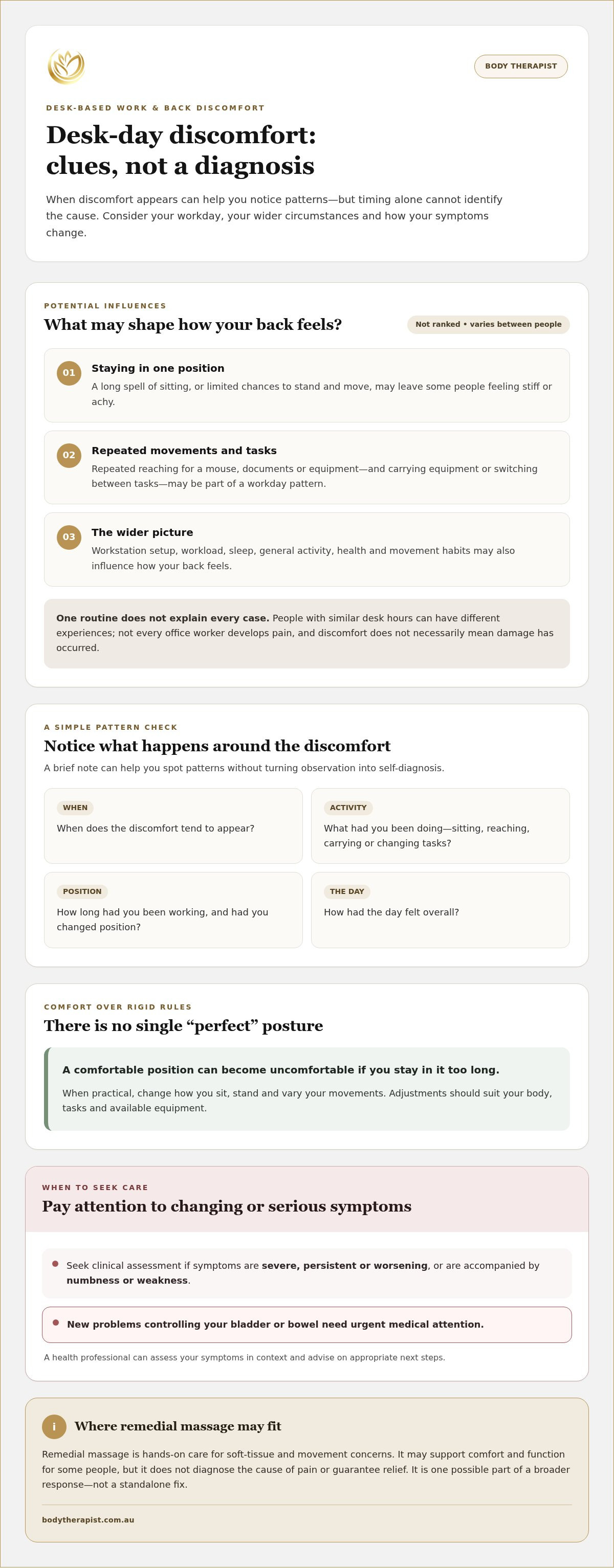
Back discomfort that builds during a workday may be associated with desk-based routines, but its timing alone doesn’t show what’s causing it. A long spell of sitting may leave some people feeling stiff or achy. Others notice symptoms after repeated reaching, carrying equipment or switching between tasks. These patterns are useful clues, not a diagnosis. Back pain can affect different areas and have a range of possible causes, so consider your overall circumstances rather than assuming your chair is to blame.
Workstation setup, workload, sleep and general activity may also influence how your back feels. Health and movement habits matter too. Two people can spend similar hours at a desk and have very different experiences. Not every office worker develops pain, and discomfort doesn’t necessarily mean damage has occurred.
Which workday patterns may aggravate back discomfort?
Staying in one position for a long time may make some people feel stiff, particularly when work leaves few opportunities to stand or move. Repeatedly reaching for a mouse, documents or equipment can also mean repeating the same movement throughout the day. Limited movement breaks may add to that pattern, but no single habit explains every case.
Notice when discomfort tends to appear and what you’ve been doing. Consider how long you’ve been working, whether you’ve changed position and how the day has felt overall. A brief note about these details can help you spot patterns without turning observation into self-diagnosis.
Is desk-related back pain always caused by sitting?
No. Sitting may be one contributor, but back discomfort can have multiple causes, and a search query can’t identify yours. Muscle tension describes a feeling of tightness or guarding around muscles; reduced mobility means a movement feels restricted or less comfortable than usual. These terms describe sensations, but they don’t confirm their cause.
If symptoms are severe, persistent, worsening or accompanied by numbness or weakness, seek clinical assessment. New problems controlling your bladder or bowel need urgent medical attention. A health professional can assess your symptoms in context and advise on appropriate next steps.
There isn’t one perfect posture that suits everyone or needs to be held rigidly all day. A position that feels comfortable can become uncomfortable if you stay in it too long. Changing how you sit, standing when practical and varying your movements may be more useful than trying to hold a single “correct” shape. Adjustments should suit your body, tasks and available equipment.
Remedial massage is hands-on care that works with soft-tissue and movement concerns to support comfort and function. It doesn’t diagnose the cause or guarantee pain relief. For someone searching “massage for office workers back pain”, massage can be one part of a broader response, alongside noticing workday patterns and considering appropriate clinical advice. A therapist can discuss your symptoms and routine to help shape an individual approach, while recognising that outcomes vary and other factors may need attention.
How remedial massage may support office workers with back pain
Remedial massage can be one way to address soft-tissue discomfort and movement concerns that occur alongside a desk-based routine. A session begins with a conversation about what you’re experiencing and what you’d like help with. Your movement and comfort can then help guide the choice of hands-on techniques, rather than treating everyone with back discomfort in the same way.
The aim is to support comfort and function, such as making a particular movement feel easier. Massage doesn’t identify the medical cause of pain or promise a specific result. A treatment goal can guide a session, but it can’t guarantee how your body will respond. For an overview of how treatment can be structured around individual needs, see Clinical Massage Therapy: A Comprehensive Guide to Results-Oriented Treatment.
What might an individualised massage session consider?
Describe where you feel discomfort, when it tends to appear, what changes it and how it affects daily activities. The therapist may also consider your movement and priorities, such as easing stiffness when you stand or feeling more comfortable during ordinary tasks. These details can help shape the session, but they don’t amount to a medical diagnosis.
Pressure and technique can be adjusted to your comfort and presentation. Lee Carnegie’s approach combines myotherapy, kinetic release and functional mobility techniques, bringing hands-on work together with attention to movement. The specific approach is individual, and no technique or session can guarantee an outcome.
What can massage address, and what are its limits?
Massage may suit some soft-tissue concerns and support comfort or movement for some people. It won’t necessarily address every factor contributing to back pain, so it shouldn’t be treated as a complete answer for every cause. Work routines, general health and other influences may also need consideration. Massage for office workers back pain is best understood as one possible part of a broader plan, not a standalone fix.
A practitioner can adapt hands-on care if your symptoms, comfort or movement suggest a technique isn’t suitable. They may change the approach or defer treatment when caution is warranted. Be open about changes in your symptoms, relevant health history and what feels comfortable during the session. Speak up if pressure feels uncomfortable; you shouldn’t have to tolerate pain for treatment to be useful.
Severe, worsening or concerning symptoms call for medical assessment rather than relying on massage alone. If your symptoms change or aren’t settling, a GP or other appropriate health professional can assess them and advise on next steps. For an individualised approach to remedial massage, discuss your back discomfort and movement goals with Lee Carnegie during a session.
Massage, movement breaks or a massage device: what suits back discomfort?
These options serve different purposes. A brief walk or change of position can break up a long spell of sitting. A massage device offers self-directed pressure, while remedial massage involves practitioner-delivered care that can be adapted to your presentation. The options may complement one another, but none suits everyone. Don’t assume a device or single treatment will resolve the underlying reason for discomfort.
Use this comparison to choose a practical first step, not as a diagnosis or ranking of treatments.
Movement breaks vary your activity, devices let you apply pressure yourself, and remedial massage offers practitioner-guided, individualised care. You might combine options, such as moving regularly during work and considering hands-on care for recurring symptoms. Let your response and circumstances guide your choices.
When might hands-on remedial massage be worth considering?
If discomfort keeps returning or affects everyday movements and tasks, an individual discussion and assessment can help determine whether remedial massage may be appropriate. A practitioner can take your symptoms, comfort and movement goals into account, then adapt the approach. There’s no universal symptom threshold for booking, and a session can’t guarantee a particular response.
What can movement breaks and massage devices contribute?
When your work allows, try changing position or taking a brief, comfortable walk. A small reset, such as standing to read a document, can help vary your posture. A device may offer convenient self-directed pressure, but it can’t assess your symptoms. Avoid using a massage gun directly over the spine or bones. If you have nerve-related symptoms or acute inflammation, seek professional advice before using one.
For people researching massage for office workers back pain, the useful question isn’t which option is universally best, but what fits the situation safely and practically. If symptoms are severe, worsening or concerning, prioritise clinical assessment rather than relying on a device or massage alone.
Practical workday steps to manage back discomfort
You don’t need to overhaul your desk or hold a rigid posture to make a practical start. Try a simple sequence: notice what’s happening, vary your position, add comfortable movement, then review how your symptoms respond. The aim is to find workable adjustments for your role and routine, not to follow a perfect formula.
How can you vary your workday without overhauling your desk?
Start by noticing when discomfort appears and what you’ve been doing. Then look for small opportunities to change position or move. If you can’t leave your workstation, standing to take a call or switching tasks for a short while may still break up an uninterrupted stretch of sitting.
Notice patterns. Briefly note when discomfort starts, what tasks you’re doing and whether it changes when you move or rest. Recording this over several workdays can make it easier to compare patterns rather than rely on memory.
Vary your position. Change between sitting and standing if your setup allows, or adjust how you sit from time to time. Don’t treat one posture as a position you must maintain all day.
Add comfortable movement. Take a short walk, stand and stretch gently, or move between tasks when practical. Stay within a comfortable range and stop if an activity sharply increases your symptoms.
Review and adapt. Consider what felt manageable and whether discomfort changed during or after work. Keep useful adjustments; modify or stop anything that aggravates your symptoms.
Your options depend on the work you do, available equipment, meetings and access to breaks. A call-centre worker, someone working remotely at a kitchen table and an employee who moves between tasks won’t have identical routines. Choose changes that fit your circumstances. If a formal break isn’t practical, a brief position change between tasks may be more realistic than following a strict timetable.
Which symptoms should prompt medical attention?
Seek urgent medical care for sudden, severe back symptoms or pain after significant trauma. New weakness or numbness, or changes in bladder or bowel control, also need prompt medical assessment. If symptoms are severe or rapidly worsening, call 000 in an emergency; don’t rely on workday adjustments or massage to manage them.
Arrange assessment with a health professional if discomfort persists, worsens or keeps interfering with everyday activities, even after changing your routine. A professional can consider your symptoms and advise on appropriate next steps. Self-management may be useful for some people, but it can’t establish the cause of back pain.
If recurring discomfort is affecting your workday, book a remedial massage session to discuss your symptoms, movement and practical goals with Lee Carnegie. Massage may form one part of an individualised plan, alongside workday adjustments and appropriate clinical assessment.
What to expect when seeking remedial massage for office-related back pain
A useful appointment starts with a conversation, not an assumption about what’s causing your discomfort. Describe where you feel it, when it tends to occur and how it affects work or everyday movement. The therapist may ask about relevant health history and changes in your symptoms, then discuss what you’d like from the session. This helps shape an approach around your concerns while keeping expectations realistic.
How to prepare for an appointment about back discomfort
A few notes can make it easier to explain what’s been happening. You might record when symptoms show up, which activities affect them and what you’ve already tried. Mention relevant medical history, any new or changing symptoms, and questions you’d like answered. You don’t need to arrive with a diagnosis or a complete account of every detail.
Before hands-on work begins, discuss comfort, pressure and positioning. You can speak up or ask for an adjustment at any point during the session. Your feedback helps the therapist respond to how you’re feeling, rather than treating the session as a fixed routine. For more preparation guidance, see How to Prepare for Remedial Massage: A Clinical Guide to Optimising Your Treatment.
How Body Therapist approaches remedial massage
Lee Carnegie is a qualified remedial massage and dynamic movement therapist. His approach combines myotherapy, kinetic release and functional mobility techniques, with the session shaped around your concerns and movement priorities. Sharing what feels comfortable, what aggravates symptoms and what you hope to work towards can help inform your care. It doesn’t establish a diagnosis or prescribe a fixed treatment plan.
During the appointment, the therapist can adapt pressure and techniques in response to your presentation and feedback. If your symptoms change or raise concerns, discuss this openly. Massage may support comfort or movement for some people, but responses differ, and a session can’t guarantee relief or resolve every contributing factor. If your symptoms are severe, worsening or concerning, seek medical assessment rather than relying on massage alone.
Afterwards, consider how you feel and whether any changes in comfort or movement matter in your daily routine. There’s no need to judge the session by a single sensation or assume one treatment will settle the issue. Your experience can inform a conversation about practical next steps, including whether workday adjustments or further assessment may be relevant.
If you’re considering massage for office workers back pain, an individual appointment gives you space to discuss your symptoms, comfort and goals with Lee. Remedial massage can be one part of a considered approach to managing back discomfort.
Take a considered next step for your back
Choose one manageable change to try during your next workday, then notice how your back responds. If discomfort keeps returning or affects the way you move, an individual remedial massage appointment gives you an opportunity to discuss your symptoms, work routine and goals. Massage for office workers back pain is best approached as part of a considered plan, not a promise of a particular result.
At Body Therapist, qualified remedial massage and dynamic movement therapist Lee Carnegie combines myotherapy, kinetic release and functional mobility techniques, tailoring care to your presentation and comfort. You can share what matters to you and take part in shaping the session.
Book a remedial massage appointment to discuss a practical, individualised next step. Small, thoughtful adjustments can help you move forward with greater confidence.
Frequently Asked Questions
Can massage help if my back pain spreads into my leg?
Massage may help some people feel more comfortable, but pain travelling into a leg can have different causes, including nerve irritation, and needs careful consideration. A massage therapist can’t determine the cause from that symptom alone. If you develop new or increasing weakness or numbness, or changes in bladder or bowel control, seek urgent medical care. Don’t try to manage nerve-like symptoms with forceful pressure or percussion.
How often should an office worker get remedial massage for back pain?
There’s no standard schedule that suits every office worker. The right frequency depends on your symptoms, goals, response to treatment and any other advice you’ve received. Rather than booking repeated sessions automatically, review whether everyday activities or movement are changing and discuss the next step with your therapist. If symptoms persist or worsen, seek clinical assessment instead of simply increasing massage frequency.
Is remedial massage painful when treating back discomfort?
You shouldn’t have to endure pain. Pressure can be adjusted to your comfort, and you can ask the therapist to use a lighter touch, change position or stop. Some areas may feel sensitive, but sharp, burning or escalating pain is a reason to speak up straight away. Clear feedback helps the therapist adapt the session; more pressure doesn’t necessarily mean a better result.
Can I get remedial massage during my lunch break?
It depends on whether the appointment length and your travel and work arrangements leave enough time. Consider how long it takes to get there, change if required and return to work without rushing. If your break is short, you might use it for a gentle walk or a change of position, then plan a massage at a more suitable time.
Should I see a doctor before booking massage for back pain?
Not everyone with mild, familiar back discomfort needs a medical appointment before considering massage. However, seek medical advice first if the pain is new and unexplained, severe, worsening or affecting your usual activities. Sudden weakness, numbness or bladder or bowel changes require urgent assessment. If you have a health condition or are unsure whether hands-on treatment is suitable, discuss that before treatment begins.
How long does it take to feel relief after remedial massage?
There’s no reliable timetable. Some people notice a change during or after a session, while others experience little immediate difference. Responses vary with the nature of your symptoms and other individual factors, so relief shouldn’t be promised. Notice how comfortable everyday movements feel afterwards, rather than judging only by how the treated area feels straight away. If discomfort continues or worsens, seek further assessment.


Comments