

Managing Swelling After BBL Surgery: A Safe, Practical Guide

The safest approach to managing swelling after BBL surgery starts with your surgeon’s advice, not a generic online massage routine. Swelling can occur during recovery, but what’s appropriate for you depends on the procedure and how your healing is progressing.
If you’re unsure whether to adjust compression, move more, change how you sit or ask about lymphatic drainage, it’s understandable to feel uncertain. Conflicting advice can make ordinary recovery changes feel alarming, and concern about protecting your result can make it hard to know when a symptom needs clinical review. Your operating surgeon is best placed to clarify your restrictions and assess concerning changes.
This guide explains how to support recovery within your surgeon’s plan, which symptoms warrant prompt medical attention and how to assess whether qualified manual lymphatic drainage could be appropriate after clearance. Professional lymphatic support is an adjunct, never a substitute for care from your surgical team. A clear, surgeon-led approach can help you make recovery decisions without relying on one-size-fits-all advice.
Table of Contents
Managing swelling after BBL surgery: what may be expected?
After a Brazilian butt lift (BBL), swelling is fluid collected in the tissues around areas affected by the operation. It can contribute to visible puffiness, tightness or tenderness, but those sensations alone can’t confirm whether recovery is progressing as expected. For a plain-language overview of what is edema, see this general reference. It isn’t specific post-operative advice.
There’s no single recovery pattern that applies to everyone. Your experience may depend on the procedure, your health and how recovery is progressing. Follow your surgeon’s discharge instructions and individual advice when making decisions about compression, activity, positioning or hands-on care. This guide provides general information, not a diagnosis or a substitute for advice from your surgical team.
Why swelling can occur after a Brazilian butt lift
Surgery changes and handles body tissues, and swelling can be part of the body’s response during recovery. Its location, extent and progression can differ between patients and procedures. Comparing your appearance with someone else’s online account may not help you assess your own recovery.
Ask your surgeon which changes they expect in your case and what to do if the pattern changes. If you’re unsure whether a sensation or visible change fits the plan you were given, contact the surgical team rather than trying to interpret it yourself.
Which recovery changes should not be self-assessed?
Some discomfort may occur after surgery, but don’t assume that worsening or unfamiliar symptoms are routine. Contact your surgical team promptly about changes that concern you, particularly increasing pain, worsening swelling, fever, spreading redness or unusual fluid from an incision. The team can assess your symptoms in the context of your procedure and recovery.
Seek emergency help for sudden breathlessness or chest pain. In Australia, call 000 for an ambulance. Don’t wait for a routine appointment or try to manage these symptoms with massage or changes to your aftercare.
For safer decisions about managing swelling after BBL surgery, keep your surgeon’s contact instructions accessible. When you call, describe what has changed, when it began and whether it’s worsening. If you’re uncertain, ask. Only a clinician who can assess your circumstances can advise whether a change is expected or needs review.
What can influence swelling and recovery after BBL surgery?
Swelling and recovery can be influenced by the procedure, your individual health and how your post-operative course develops. Two people who have had a Brazilian butt lift may receive different instructions, even if their procedures seem similar. Your surgical team can interpret changes in the context of your operation and health history.
Recovery guidance must be personalised by the treating surgical team. Use your discharge plan as the reference for positioning, movement, compression garments and follow-up appointments. If an instruction is unclear or seems to conflict with advice you’ve seen elsewhere, check with your surgeon before changing your routine.
How the lymphatic system relates to fluid movement
The lymphatic system is a network of vessels and nodes that helps collect excess fluid from body tissues and return it to the circulation. It’s one part of how the body manages fluid, but that doesn’t mean all post-surgical swelling can be addressed with massage. Consider manual lymphatic drainage only if your surgeon approves it and an appropriately qualified practitioner assesses whether it’s suitable for you. Read more about manual lymphatic drainage massage.
Why one-size-fits-all BBL advice can be unsafe
Another patient’s garment schedule, movement limits or recovery milestones may reflect a different operation or clinical situation. Copying their plan could conflict with the instructions for your own care. Your surgical team should guide compression and activity recommendations and explain how they apply to your procedure.
Keep your written instructions available and ask the clinic to clarify conflicting advice before you adjust garment use, positioning or activity. The American Society of Plastic Surgeons also outlines considerations in its post-surgery recovery plan. Use this as general background, not a replacement for your surgeon’s directions.
When managing swelling after BBL surgery, distinguish prescribed aftercare from general comfort measures. Follow the plan for your recovery and ask your team before adding anything new, including hands-on therapy. If you’ve received clearance and want to learn about the approach, explore manual lymphatic drainage massage and discuss suitability with a practitioner before arranging care.
Comparing ways to manage swelling after BBL surgery
Managing swelling after BBL surgery isn’t about choosing between your surgeon’s plan and every measure you find online. Follow prescribed aftercare first, use only daily routines your surgical team has approved, and consider hands-on therapy only if your surgeon explicitly clears it. Nothing should override the instructions for your operation.
Surgeon-directed aftercare versus general online advice
Your surgeon’s written instructions and scheduled review appointments relate to your procedure and clinical assessment. Online recovery timelines may describe someone else’s experience, but they can’t establish what’s right for you. Before changing how you wear a garment, position yourself or move, contact your surgical team for guidance. If advice from different sources doesn’t match, ask your surgeon to clarify which instructions apply to your recovery.
When manual lymphatic drainage may be discussed
Manual lymphatic drainage isn’t a required step for every patient. Don’t book hands-on treatment until you have explicit clearance from your surgeon. If cleared, share your surgical instructions and restrictions with the therapist before treatment so they can assess whether it’s appropriate. For general background, see optimising lymphatic drainage for fluid health. That information doesn’t replace your surgeon’s advice or confirm that treatment is suitable for you.
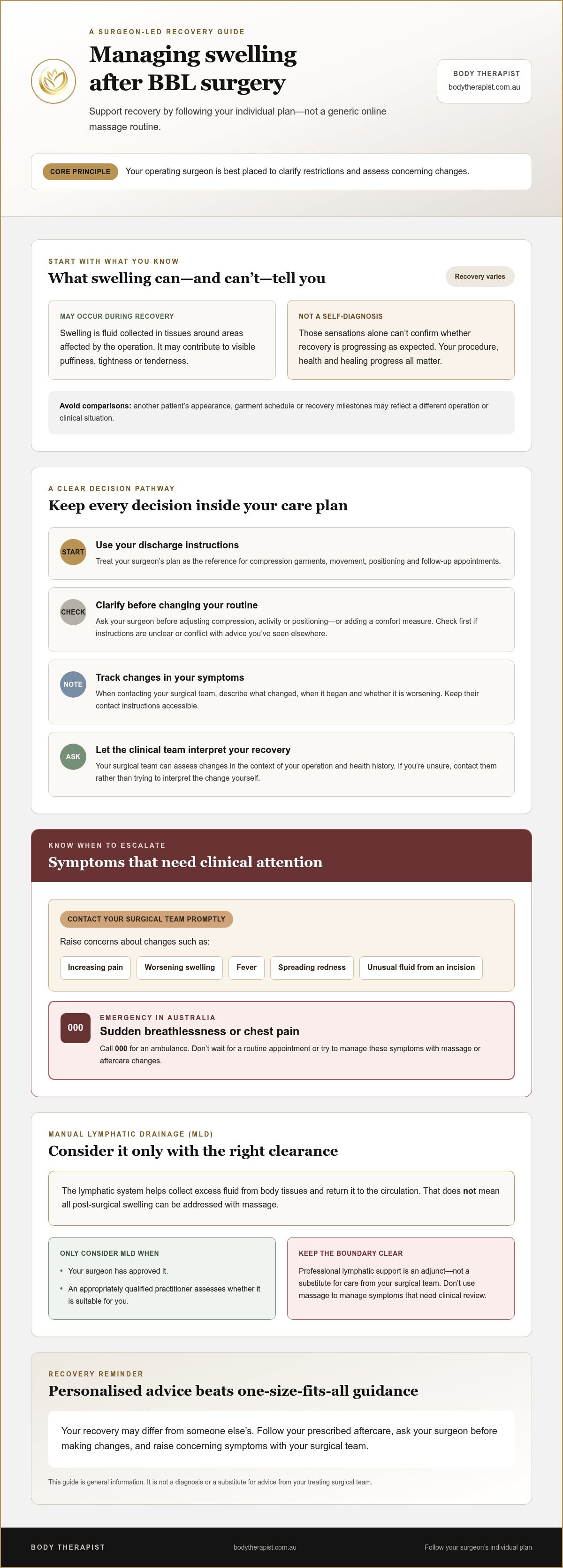
A practical, surgeon-led plan for managing BBL swelling
Use a simple sequence rather than adding several recovery measures at once. Start with your written discharge plan, and contact your surgical team if symptoms or circumstances change.
Follow your discharge instructions. Use the positioning, movement and garment guidance provided for your procedure. Don’t alter it because of general online advice.
Keep a brief symptom record. Note what has changed, when it began, whether it’s improving or worsening, and any related symptoms. This helps you give the team a clear account.
Contact your surgical team with questions. Ask about unexpected changes before trying a new measure, including massage or manual lymphatic drainage.
New or worsening symptoms after surgery should be assessed by an appropriate clinician, particularly if they include increasing pain, redness, fever or another unexpected change. Contact your surgical team promptly rather than trying to diagnose the cause yourself.
Questions to ask before trying massage or lymphatic drainage
Get explicit clearance from your surgeon before booking hands-on treatment. Ask whether it’s appropriate for your recovery, when it may be considered, and what limits apply to pressure, positioning and areas that must not be treated. If cleared, tell the therapist what procedure you had, your recovery stage, current symptoms and any relevant instructions or restrictions.
Symptoms that need medical review
Contact your surgical team promptly about worsening pain, redness, fever or changes that are unusual for you. Sudden one-sided leg swelling or calf pain needs urgent medical assessment. Don’t wait to see whether it settles or try to treat it with massage.
If your surgeon has cleared manual lymphatic drainage and you’d like to explore whether it may suit your circumstances, you can ask about manual lymphatic drainage massage. It’s a possible adjunct to your recovery plan, not a replacement for surgical follow-up. Suitability needs to be assessed before treatment.
Professional lymphatic support after BBL: safe next steps
Manual lymphatic drainage may be considered as an adjunct to your recovery, but it isn’t appropriate for everyone and shouldn’t begin without your surgeon’s approval. Body Therapist offers Manual Lymphatic Drainage Massage. Discuss whether treatment is suitable after your procedure with your surgical team, and have the practitioner assess your circumstances. It’s not a substitute for surgical follow-up.
What to discuss with a lymphatic drainage therapist
Before arranging treatment, ask your surgeon whether it’s appropriate and request clear guidance about timing, positioning, pressure and any areas that must be avoided. If you receive approval, share those instructions with the therapist, along with details of your procedure, recovery stage, current symptoms and relevant medical history. Discuss any restrictions or health concerns that may affect whether treatment is suitable.
Ask how the practitioner handles concerns that arise before or during an appointment. A therapist shouldn’t diagnose surgical complications. If symptoms suggest you need medical review, contact your surgical team. If symptoms are urgent, seek appropriate medical care rather than attending a massage appointment.
Choosing support without compromising recovery
Look for a practitioner with relevant therapeutic qualifications who is willing to work within the restrictions set by your surgical team. Ask how they’ll use your surgeon’s instructions to inform an assessment, and whether they’ll defer treatment if it doesn’t appear suitable. Be cautious of anyone who promises a particular result or encourages you to disregard medical advice.
Managing swelling after BBL surgery remains a surgeon-led process. A therapist can provide a separate, non-surgical service, but can’t assess the operation in place of your surgeon or override post-operative instructions. Keep your surgical team informed if symptoms change, even if you’ve also discussed them with a therapist.
Once you’ve checked with your surgeon, you can ask Body Therapist about manual lymphatic drainage and discuss whether an assessment may be appropriate for your circumstances. You don’t need to proceed unless you have clearance and feel comfortable with the practitioner’s approach.
Move forward with a recovery plan you can trust
Managing swelling after BBL surgery is safest when decisions are guided by your surgical team, not generic timelines or another patient’s routine. Follow your discharge instructions, track changes and contact your surgeon about symptoms that are worsening or concerning. Manual lymphatic drainage may be an option for some people, but only after your surgeon approves it and a practitioner assesses whether it’s suitable.
Body Therapist offers Manual Lymphatic Drainage Massage. The practice is owned and operated by Lee Carnegie, a qualified remedial massage and dynamic movement therapist. This is not surgical care and can’t replace assessment or follow-up by your operating surgeon.
Once you’ve checked with your surgeon, you can contact Body Therapist to discuss lymphatic drainage support and share any relevant instructions or restrictions. Take recovery one informed step at a time, with clear clinical guidance for your decisions.
Frequently Asked Questions
Is swelling normal after BBL surgery?
Swelling can occur after surgery, but what to expect depends on your procedure and individual recovery. Your surgeon is best placed to explain the likely pattern and review changes in your condition. Don’t assume new, worsening or unusual symptoms are routine. Follow your discharge instructions and contact your surgical team if you’re concerned or unsure, especially if swelling changes or occurs with other symptoms.
How long does swelling last after BBL surgery?
There isn’t one recovery timeline that applies to everyone. The extent and duration of swelling can vary with the procedure and your individual recovery, so an online estimate can’t tell you what to expect. Ask your surgeon about the likely pattern in your case and attend scheduled reviews. If swelling worsens or changes unexpectedly, contact your surgical team for advice rather than waiting for a general timeframe to pass.
Can I have lymphatic drainage massage after BBL surgery?
Possibly, but only if your operating surgeon confirms it’s appropriate for your recovery. Before booking, ask about timing, pressure, positioning and any areas that must be avoided. If treatment is cleared, tell the therapist about your procedure, recovery stage and restrictions. Manual lymphatic drainage isn’t a substitute for surgical follow-up, and it shouldn’t replace clinical assessment if you’re concerned about symptoms.
When should I contact my surgeon about swelling after BBL?
Contact your surgical team if swelling is worsening, feels unusual or comes with symptoms that concern you. Seek prompt medical advice for fever, spreading redness, increasing pain or sudden one-sided leg swelling. Sudden chest pain, severe breathlessness or collapse requires emergency help: call 000 in Australia. Follow any escalation instructions in your discharge plan, and don’t delay urgent care while trying to manage symptoms at home.
Can compression garments reduce swelling after BBL surgery?
Your surgeon’s instructions determine whether and how to wear a compression garment after your operation. Wear, adjust or stop using it only as directed. If it feels painful, excessively tight or difficult to use, ask your surgical team what to do rather than changing it yourself. Don’t copy another patient’s garment schedule or rely on general online advice, as their procedure and recovery needs may differ from yours.
What can I do at home to manage swelling after BBL surgery?
Start with your surgeon’s written aftercare instructions, including guidance on movement, positioning, garments and follow-up. Keep a brief record of changes and contact the surgical team if something is unclear or concerning. Before adding massage, supplements or other treatments, check with your surgeon. General advice may not suit your procedure or recovery, so use the plan provided for you as your guide.
Is one-sided leg swelling after BBL surgery a concern?
Sudden swelling or pain in one leg after surgery needs prompt medical assessment so a clinician can determine the cause. Contact your surgical team or seek urgent medical care rather than massaging the area or waiting to see if it settles. If one-sided leg symptoms occur with chest pain or severe breathlessness, call 000 immediately. Follow the emergency and escalation guidance in your discharge plan where relevant.


Comments