

Post-Surgery Fluid Retention Treatment: A Clinical Guide to Managing Oedema

Updated: Sep 22
The ultimate success of your surgical outcome is determined as much by the recovery of your lymphatic system as it is by the precision of the surgeon's scalpel. While some swelling is a natural part of the inflammatory response, persistent heaviness and skin tightness often signal a system under significant duress. You're likely feeling the physical discomfort of restricted movement and perhaps the quiet anxiety that comes with wondering if your healing has stalled. If you've been searching for an effective post surgery fluid retention treatment, it's important to understand that clinical oedema requires a more sophisticated response than simple rest and elevation.
We recognise that the transition from the operating theatre to daily life isn't always linear. This clinical guide will help you discover the physiological mechanisms behind post-operative swelling and the evidence-based treatments that accelerate lymphatic recovery. We'll examine how integrating specialised modalities like Manual Lymphatic Drainage and Low Level Laser Therapy can reduce limb volume, prevent seroma formation, and soften hardened fibrotic tissue. By the end of this article, you'll have a clear roadmap for managing your recovery with anatomical precision and clinical confidence.
Table of Contents
The Physiology of Post-Operative Oedema: Why Swelling Persists
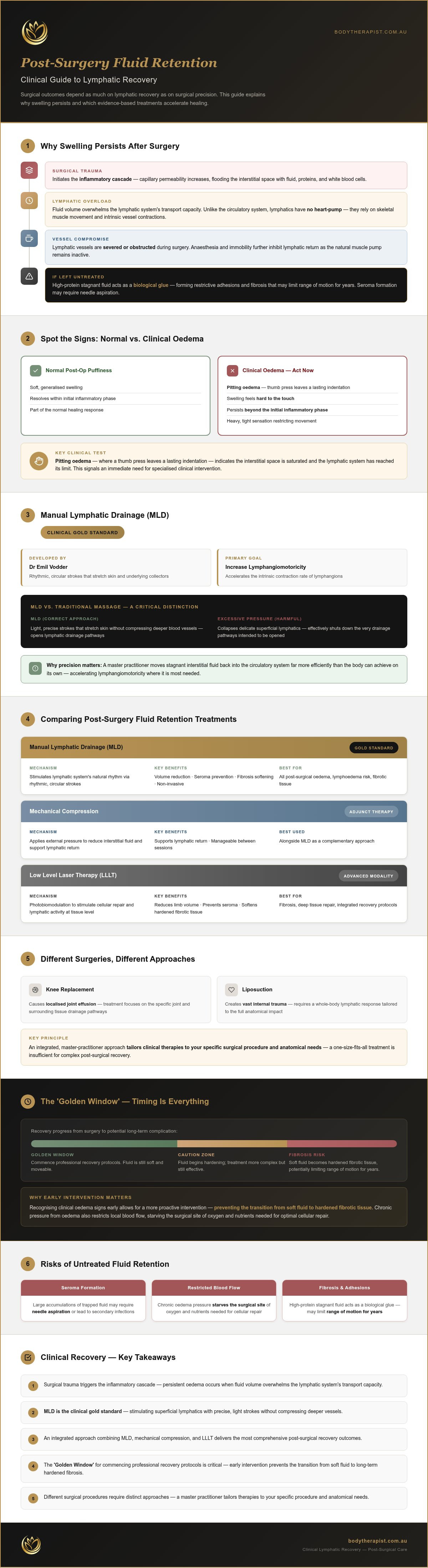
Surgical trauma initiates a complex biochemical response known as the inflammatory cascade. This process increases capillary permeability, allowing fluid, proteins, and white blood cells to flood the interstitial space. While acute inflammation is a necessary first step in wound healing, the transition to chronic post-surgical oedema occurs when the volume of fluid overwhelms the lymphatic system's transport capacity. Surgery isn't just a surface event; it's a systemic disruption that can leave the body's drainage pathways struggling to keep pace with the influx of waste products.
For many patients, seeking an effective post surgery fluid retention treatment becomes a clinical necessity because the lymphatic vessels themselves are often compromised during theatre. Unlike the circulatory system which has the heart as a pump, the lymphatic system relies on skeletal muscle movement and intrinsic vessel contractions. When these vessels are severed or obstructed, the risk of developing lymphoedema and fluid retention increases significantly. The tipping point occurs when the lymphatic load exceeds the system's ability to clear it, leading to the heavy, tight sensation that characterizes a difficult recovery.
Untreated fluid retention isn't merely an aesthetic concern or a minor discomfort. Large accumulations of trapped fluid can form seromas, which may require needle aspiration or lead to secondary infections. Chronic pressure from oedema also restricts local blood flow, starving the surgical site of the oxygen and nutrients needed for optimal cellular repair. If this fluid remains stagnant, the high protein content can act as a biological glue, facilitating the formation of restrictive adhesions and tissue fibrosis that may limit your range of motion for years to come.
Anatomical Triggers of Fluid Retention
Surgical recovery often involves a disruption of the Starling equilibrium, the delicate balance between hydrostatic and oncotic pressure that governs fluid exchange. Anaesthesia and the subsequent period of immobility further inhibit lymphatic return, as the natural muscle pump remains inactive. While surgical drains are often utilised to manage immediate output, they are frequently insufficient for clearing the deeper, protein-rich interstitial fluid that accumulates in the weeks following a procedure. Optimising your post surgery fluid retention treatment involves understanding that different surgeries require distinct approaches; for instance, a knee replacement causes localised joint effusion, whereas a procedure like liposuction creates vast internal trauma that requires a whole-body lymphatic response. Similarly, for bariatric patients, experts like ד"ר אסנת רזיאל emphasize that careful post-operative management is essential for ensuring the longevity of surgical results and metabolic stability.
Anatomical Triggers of Fluid Retention
Differentiating between standard post-operative puffiness and clinical oedema is vital for long-term health. Pitting oedema, where a thumb press leaves a lasting indentation in the skin, indicates that the interstitial space is saturated and the lymphatic system has reached its limit. When swelling persists beyond the initial inflammatory phase or begins to feel hard to the touch, it often signals a requirement for specialised clinical massage therapy to manually redirect fluid. Recognising these signs early allows for a more proactive intervention, preventing the transition from soft fluid to hardened fibrotic tissue.
Manual Lymphatic Drainage (MLD): The Clinical Gold Standard
Manual Lymphatic Drainage (MLD) is a specialised clinical modality that serves as the cornerstone of any effective post surgery fluid retention treatment. Unlike traditional massage, MLD is a precise, non-invasive technique designed to stimulate the lymphatic system's natural rhythm. Developed by Dr Emil Vodder, this method uses rhythmic, circular strokes to stretch the skin and underlying collectors without compressing the deeper blood vessels. This distinction is vital. Excessive pressure can collapse the delicate superficial lymphatics, effectively shutting down the very drainage pathways we intend to open. Precision is paramount.
The primary physiological goal of MLD is to increase lymphangiomotoricity, which refers to the intrinsic contraction rate of the lymphangions. By accelerating this rate, a master practitioner can move stagnant interstitial fluid back into the circulatory system far more efficiently than the body could achieve on its own. This process aligns with NHS-recommended treatments for post-surgical swelling, which emphasise the importance of manual therapies in preventing the progression of chronic oedema. Beyond the physiological shifts, the rhythmic nature of clinical touch provides significant psychological relief. It lowers cortisol levels and reduces the sympathetic nervous system's stress response during a vulnerable recovery period. The result: accelerated clearance and physical comfort.
The Science of Lymphatic Rerouting
When surgery involves the removal of lymph nodes or significant scarring, standard drainage pathways are often blocked. Clinical MLD employs lymphatic rerouting, a sophisticated technique where fluid is directed across anatomical watersheds toward healthy, functional node groups. This requires a deep understanding of lymphatic topography to ensure fluid isn't simply pushed into an already congested area. It's for this reason that general remedial massage can sometimes exacerbate acute post-op swelling. Deep tissue pressure may increase local blood flow and capillary filtration, adding more fluid to a system that is already struggling to cope.
What to Expect in a Clinical MLD Session
A professional session always begins with proximal clearance. This involves stimulating the major lymph nodes at the neck and torso before addressing the surgical site. It clears the pipes at the end of the system to allow distal fluid to move forward without resistance. During the treatment, your therapist will assess tissue tension and fluid drift to identify areas of high resistance or potential fibrosis. Integrating manual lymphatic drainage massage into your broader recovery plan ensures that each session builds upon the last, progressively reducing volume and restoring tissue elasticity. If you are currently experiencing persistent heaviness, consulting a clinical specialist can help determine the most effective timing for your intervention.
Comparing Post-Surgery Fluid Retention Treatments
Selecting the most effective post surgery fluid retention treatment requires a nuanced understanding of how different modalities interact with healing tissue. While some patients initially consider pharmacological interventions like diuretics, these often prove insufficient for surgical recovery. Diuretics primarily target the kidneys to remove water from the bloodstream, yet they fail to address the protein-rich interstitial fluid that characterizes post-operative oedema. Without physical intervention to move these proteins, the risk of tissue hardening remains high. A results-oriented recovery plan must therefore prioritise physical clearance over chemical suppression to ensure long-term tissue health.
Manual MLD vs. Pneumatic Compression
Mechanical pneumatic compression pumps are often marketed as a convenient home-based alternative to clinical therapy. These devices use inflatable sleeves to apply sequential pressure, which can assist with general circulatory maintenance. However, they lack the diagnostic sensitivity and anatomical precision of a master practitioner. A machine cannot detect subtle shifts in tissue tension or identify the early stages of localised fibrosis. In complex surgical cases, such as those involving the axilla or groin, mechanical pumps often miss specific pockets of fluid that a therapist's hands can easily target. While home devices have their place in long-term maintenance, they cannot replicate the strategic rerouting and 'drift' assessment provided during a professional session.
Adjuvant Therapies for Fluid Health
Modern clinical protocols often integrate advanced technology with manual techniques to achieve a superior physiological response. Incorporating low level laser therapy (LLLT) into your recovery programme can significantly accelerate the repair of damaged lymphatic vessels. LLLT operates at a cellular level, stimulating mitochondrial activity to provide the energy required for tissue regeneration and reducing the inflammatory markers that cause persistent swelling. This technological edge provides a powerful foundation for a multi-faceted approach to lymphatic drainage.
Beyond the clinic, tools like kinesiology taping can be applied to provide a continuous, low-level 'lift' to the skin, facilitating 24/7 drainage between appointments. Compression garments also remain a vital component of a post surgery fluid retention treatment, provided they are fitted with clinical precision. A garment that is too tight can act as a tourniquet, whereas a correctly fitted medical-grade garment provides the necessary external pressure to prevent fluid from re-pooling in the interstitial space. Combining these modalities ensures that recovery is active, consistent, and anatomically sound.
Optimising Your Recovery Timeline: A Practical Guide
Success in post-operative recovery depends heavily on timing. While generic advice often suggests waiting until a six-week surgical follow-up, the 'Golden Window' for starting a professional post surgery fluid retention treatment actually begins much earlier. Early intervention prevents protein-rich fluid from stagnating and hardening into restrictive fibrosis. By initiating clinical support as soon as the initial surgical drains are removed, we can facilitate a more efficient inflammatory response and reduce the total volume of interstitial fluid before it complicates the healing process. This proactive approach ensures the tissue remains pliable and the lymphatic pathways stay clear.
The First 14 Days Post-Op
The initial fortnight is characterised by the inflammatory peak. During this phase, managing surgical drains and maintaining strict elevation protocols are essential for controlling volume. You can assist this process through gentle ankle pumps and diaphragmatic breathing; these movements naturally stimulate the thoracic duct and encourage fluid return. However, if you notice persistent skin heat, excessive tightness, or a significant increase in limb volume, you should check the 5 signs your body needs clinical support. These indicators often signal that the lymphatic system is overwhelmed and requires manual assistance to clear the surgical site safely.
Long-Term Fluid Management (Weeks 3-12)
As you move into the third week, the focus of your post surgery fluid retention treatment shifts from acute drainage to scar tissue management and the prevention of chronic lymphoedema. This is the period where movement as medicine becomes critical. Gentle mobilisations help reorganise collagen fibres and prevent the formation of restrictive adhesions. Many patients also experience compensatory muscle tension in areas surrounding the surgery, such as neck pain following abdominal procedures. In these instances, integrating specialised remedial massage can address these structural imbalances while the lymphatic system continues to stabilise.
Monitoring your progress is a vital part of the rehabilitative journey. We recommend tracking limb or torso circumference at consistent intervals and noting the gradual softening of tissue textures. Hydration remains a key internal driver of lymphatic flow; drinking adequate water helps dilute the protein concentration in the interstitial fluid, making it easier for the vessels to transport waste. If you're ready to accelerate your healing journey with a personalised protocol, book a clinical assessment with our master practitioners to ensure your recovery stays on track and your results are optimised.
The Body Therapist Approach to Post-Surgical Care
At Body Therapist, we view post-operative recovery as a sophisticated anatomical puzzle that requires more than just standard care. Led by Lee Carnegie, our practice integrates deep expertise in myotherapy with advanced lymphatic health protocols to create a comprehensive post surgery fluid retention treatment. We don't believe in a one-size-fits-all approach; instead, we synthesise multiple clinical modalities to address the specific physiological trauma caused by your surgery. This methodical, results-oriented focus ensures that every session moves you closer to physical optimisation and functional freedom.
Beyond Simple Massage
Our practitioners prioritise anatomical precision over general relaxation. While many wellness centres offer basic lymphatic strokes, we employ a master-practitioner approach that incorporates kinetic release techniques to address the underlying structural restrictions. This is particularly important for patients recovering from complex procedures where scar tissue or compensatory muscle patterns can impede fluid return. By focusing on the structural release of fascia alongside lymphatic drainage, we achieve superior outcomes in tissue softening and mobility. We also value professional collaboration, often working alongside your surgical team to ensure our clinical interventions align perfectly with your surgeon's specific post-operative requirements.
Your Journey to Recovery Starts Here
Every recovery journey begins with a detailed clinical assessment. During this initial consultation, we identify your unique fluid challenges, assessing tissue density, limb volume, and the presence of any early-stage fibrosis. This diagnostic phase allows us to build a personalised post surgery fluid retention treatment protocol that might integrate Manual Lymphatic Drainage with Low Level Laser Therapy (LLLT) to accelerate cellular repair. We don't just treat the symptoms; we educate you on the 'how' and 'why' of your recovery, providing you with the tools to manage your health long after you leave our clinic.
Creating a sustainable plan for post-operative optimisation means looking beyond the immediate swelling. We focus on the long-term integrity of your tissue and the restoration of your natural movement patterns. If you're ready to transition from a state of discomfort to one of functional health, book your clinical assessment at Body Therapist today. Let us help you navigate the complexities of surgical recovery with the precision, care, and expertise your body deserves.
Securing Your Path to Anatomical Recovery
Navigating the complexities of surgical recovery requires more than passive rest; it demands a proactive, evidence-based approach to fluid management. We've explored how the inflammatory cascade triggers interstitial accumulation and why Manual Lymphatic Drainage is essential for stimulating the system's natural drainage rhythm. Implementing a specialised post surgery fluid retention treatment ensures that your body's internal drainage pathways are physically supported during their most vulnerable phase. By addressing swelling within the critical early window and utilising integrated technologies like Low Level Laser Therapy, you can prevent the transition from soft oedema to restrictive tissue fibrosis.
Our team of qualified therapists provides the clinical expertise in post-surgical MLD and anatomical recovery needed to accelerate cellular repair and restore functional mobility. Optimise your surgical recovery with Body Therapist and ensure your results are as precise as your procedure. Your journey toward physical comfort and structural health is a methodical process. With the right clinical support, you can return to your daily activities with confidence and ease.
Frequently Asked Questions
How soon after surgery can I start lymphatic drainage treatment?
You can typically commence specialised lymphatic drainage once your surgical drains are removed, which is often within the first 48 to 72 hours post-operation. It's essential to obtain clearance from your surgeon before beginning any manual therapy. Starting early helps manage the initial inflammatory peak and prevents the stagnation of protein-rich fluid. We tailor the timing of your post surgery fluid retention treatment to your specific procedure and physical presentation.
Is post-surgery fluid retention treatment painful?
Clinical lymphatic drainage is a non-invasive and painless procedure that uses extremely light, rhythmic pressure. Unlike remedial massage, which targets deeper muscle tissue, MLD focuses on the superficial lymphatic vessels located just beneath the skin. This gentle approach ensures that we don't disrupt surgical incisions or aggravate sensitive tissues. Most patients find the treatment deeply relaxing; it helps down-regulate the nervous system while facilitating fluid clearance and physical relief.
How many sessions of MLD will I need to see results?
Most patients observe a visible reduction in volume and an improvement in skin tension after three to five sessions. However, the exact number of treatments required depends on the complexity of your surgery and your body's natural inflammatory response. For extensive procedures like a tummy tuck or joint replacement, a more frequent protocol may be necessary during the first fortnight. When recovering from lower limb procedures, combining lymphatic care with experienced podiatric support helps protect long-term mobility; learn more about Narellan Foot Clinic to see how dedicated foot and lower extremity care assists rehabilitation. We continually assess your progress to adjust the frequency of your sessions.
Can I perform lymphatic drainage on myself at home?
While you can perform gentle diaphragmatic breathing and ankle pumps to support your recovery, clinical MLD requires a master practitioner's anatomical precision. Professional treatment involves specific sequences, such as proximal clearance and rerouting fluid across watersheds, which are difficult to replicate on yourself. Relying solely on self-massage may lead to fluid being pushed into congested areas. We provide clinical education on safe home-care techniques that complement your professional post surgery fluid retention treatment.
What happens if I don't treat the fluid retention after my surgery?
Leaving fluid retention untreated increases the risk of developing chronic complications like tissue fibrosis, where stagnant fluid hardens into restrictive scar tissue. This can lead to permanent changes in tissue texture and a significant reduction in your range of motion. Additionally, large accumulations of fluid may form seromas that require medical aspiration or potentially lead to secondary infections. Proactive management is vital for ensuring your surgical results remain aesthetically pleasing and functionally sound.
Will my health insurance cover post-surgical clinical massage?
Many Australian private health insurance providers offer rebates for clinical massage when performed by a qualified remedial therapist. Since our treatments are led by Lee Carnegie, a qualified specialist, you may be eligible for a rebate depending on your specific level of cover and policy inclusions. We recommend contacting your insurer directly to confirm your eligibility for remedial massage or lymphatic drainage. We provide the necessary clinical receipts to facilitate your claim.
Is MLD safe after a mastectomy or oncology-related surgery?
Manual Lymphatic Drainage is highly recommended and safe following a mastectomy or other oncology-related surgeries. At Body Therapist, we specialise in oncology massage and Lymphedema Therapy, using techniques that specifically account for removed lymph nodes and compromised drainage pathways. We employ rerouting strategies to move fluid toward functional node groups, reducing the risk of chronic swelling. This specialised care is a cornerstone of recovery for many breast cancer survivors and oncology patients.
What is the difference between normal swelling and a seroma?
Normal post-operative swelling is typically diffuse and feels like a general tightness or puffiness across the surgical site. In contrast, a seroma is a distinct, localised pocket of clear serous fluid that may feel like a soft, fluctuating lump under the skin. While diffuse swelling often responds well to manual therapy, a large seroma may require medical assessment by your surgeon. We monitor your tissue texture during each session to distinguish between these two conditions.


Comments