

Managing Lipedema Pain in Legs: A Clinical Guide to Non-Surgical Relief

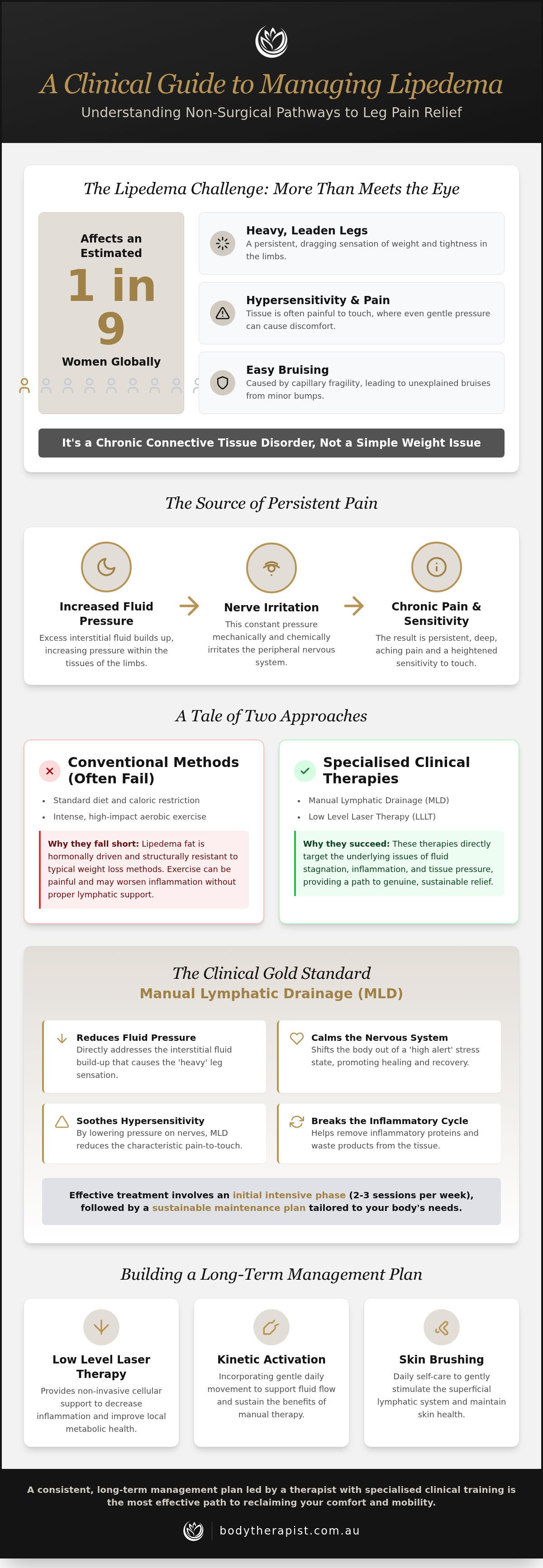
Did you know that an estimated 11% of the global female population lives with the persistent, leaden discomfort of Lipedema? You likely recognise the daily frustration of limbs that feel increasingly heavy and hypersensitive, where even a gentle touch can trigger sharp pain or bruising. It's a complex physiological challenge that often leaves many feeling unheard in traditional medical settings. This clinical guide focuses on evidence-based methods for managing lipedema pain in legs, providing you with the technical knowledge to reclaim your comfort and mobility without the immediate necessity of surgical intervention. We'll examine a sophisticated "clinical stack" of manual therapies, including the gold-standard Manual Lymphatic Drainage (MLD) and Low Level Laser Therapy, to address systemic inflammation and reduce limb pressure. By understanding the anatomical drivers of your discomfort, you can implement a sustainable self-care programme that prioritises cellular health and functional movement. This approach moves beyond general wellness, offering a methodical path to physical optimisation and long-term relief.
Table of Contents
Understanding the Mechanism of Lipedema Pain in the Legs
Lipedema is frequently mischaracterised as simple obesity, yet the physiological drivers behind the condition are far more complex and debilitating. A foundational step in Understanding Lipedema involves recognising it as a chronic loose connective tissue disorder rather than a lifestyle-based weight issue. Unlike standard adipose tissue, Lipedema fat is structurally fibrotic and metabolically active in ways that promote systemic inflammation. When managing lipedema pain in legs, we must address the specific "heavy leg" sensation that patients describe as a leaden, dragging weight. This isn't merely a subjective feeling of fatigue; it's a clinical manifestation of increased interstitial fluid pressure and tissue density. This pressure irritates the peripheral nervous system, leading to the hypersensitivity where even the lightest touch feels painful.
Distinguishing this from general muscle soreness is vital for effective treatment. While muscle soreness typically follows exertion and resolves with rest, Lipedema pain is persistent and often worsens throughout the day as fluid accumulates. It feels deep, aching, and "tight," rather than the sharp or burning sensation associated with acute injury. This chronic discomfort stems from a combination of mechanical compression and chemical irritation of the nociceptors within the skin and fat layers.
The Inflammatory Cycle of Lipoedema
As diseased adipose tissue expands, it often outpaces its own blood supply, creating micro-areas of hypoxia. This oxygen deprivation triggers a cascade of local inflammation, releasing cytokines that further damage the surrounding tissue. This cycle is exacerbated by capillary fragility, where weakened vessel walls leak fluid and red blood cells into the interstitium, causing the characteristic easy bruising many patients experience. Nociceptive pain in the context of tissue fibrosis occurs when hardened connective tissue mechanically stimulates sensory receptors, signalling persistent distress to the central nervous system. This structural change makes the tissue feel "nodular" or grainy to the touch, further complicating the pain profile.
Why Diet and Exercise Alone Often Fail
The "resistant" nature of Lipedema fat cells is a source of immense frustration. These cells are hormonally driven and structurally protected by fibrotic septa, making them largely unresponsive to traditional caloric deficits or aerobic exercise. Fluid stagnation plays a critical role here; when the lymphatic system is overwhelmed, metabolic waste products remain trapped in the limb. This "toxic" environment creates a barrier to cellular recovery and fat metabolism. Beyond the physical, the psychological impact of living with "invisible" chronic pain that doesn't respond to conventional weight-loss advice can lead to significant distress. Recognising that managing lipedema pain in legs requires specialised manual intervention rather than just "working harder" is often the first step toward genuine relief. If you are exploring how metabolic and hormonal health impacts weight management, click here for further clinical insights.
Manual Lymphatic Drainage (MLD) is often misunderstood as a gentle relaxation technique, yet in a rehabilitative context, it is a precise clinical intervention. Unlike remedial massage that targets deep muscle groups, MLD focuses on the superficial lymphatic system located just beneath the skin. By using specific, rhythmic strokes, a therapist can stimulate the initial lymphatics to increase the rate of fluid uptake. This process is essential for managing lipedema pain in legs, as it directly addresses the interstitial fluid pressure that irritates peripheral nerves. When this pressure is mechanised and moved, the "heavy" leaden sensation often begins to dissipate.
The rhythmic nature of MLD also provides a profound regulatory effect on the sympathetic nervous system. For those living with Lipedema, the body is often in a state of high alert due to chronic inflammation and hypersensitivity. MLD helps down-regulate this stress response, shifting the body into a parasympathetic state where healing and recovery occur. To achieve significant pain reduction, an initial intensive phase of two to three sessions per week is typically recommended; this is followed by a transition to a sustainable maintenance schedule tailored to individual symptoms.
Scientific Benefits of Lymphatic Stimulation
The primary goal of MLD is to reduce the protein-rich fluid load that characterises Lipedema. This fluid is highly inflammatory; if left stagnant, it contributes to tissue fibrosis and a worsening of the "cuffing" sensation around the ankles. By facilitating the removal of these metabolic by-products, MLD improves skin elasticity and reduces local swelling. For a deeper technical exploration of these mechanisms, you may refer to our Clinical Guide to Manual Lymphatic Drainage Massage. This manual approach is a vital component among Non-Surgical Pain Management Modalities, offering relief that exercise alone cannot provide.
What to Expect During a Clinical MLD Session
A clinical MLD session is notably different from traditional bodywork. The pressure is light and stretching, designed to move the skin without compressing the underlying lymphatic vessels. A critical step involves "clearing the trunk" or the proximal areas first. By opening the lymphatic pathways in the neck, abdomen, and groin, the therapist ensures there is a clear destination for the fluid being moved from the legs. Post-treatment, patients often experience an immediate sense of lightness and increased frequency of urination as the body processes the cleared fluid. A consultation for specialised lymphatic therapy can help determine the ideal treatment frequency for your specific stage of Lipedema.
Comparing Non-Surgical Pain Management Modalities
Effective management of Lipedema requires a sophisticated clinical "stack" rather than a single-lane approach. While Manual Lymphatic Drainage (MLD) remains the cornerstone of treatment, comparing it to other modalities like pneumatic compression pumps reveals important functional distinctions. Pneumatic pumps use mechanical, sequential pressure to move fluid in a linear fashion. While these are useful for home maintenance, they often lack the specific, directional nuance of a skilled therapist. MLD allows for the precise rerouting of fluid around fibrotic blockages, a critical factor in managing lipedema pain in legs that a machine simply cannot replicate. Relying solely on mechanical pumps can sometimes move fluid into areas that aren't yet cleared, potentially increasing local pressure.
Integrating myofascial release and kinetic techniques further enhances the therapeutic outcome. These methods address the hardened connective tissue, or fibrosis, that often traps fluid and restricts joint range of motion. By loosening these structural barriers, we improve functional mobility and decrease the mechanical pull on sensitive, inflamed nerves. A multi-modal strategy is consistently superior because it addresses the condition from multiple physiological angles: fluid volume, tissue texture, and cellular inflammation.
Low Level Laser Therapy: A Modern Clinical Ally
Low Level Laser Therapy (LLLT) serves as a potent adjunct by addressing the cellular drivers of discomfort. It works at a mitochondrial level to stimulate ATP production, which accelerates tissue repair and modulates the inflammatory response. For Lipedema patients, this is particularly beneficial for reducing the frequency of haematomas and spontaneous bruising. Using laser before manual drainage creates a powerful synergistic effect. The laser helps "soften" the tissue and reduces local inflammatory markers, making the subsequent manual clearance of interstitial debris significantly more effective and comfortable for the patient.
Compression Garments: Support vs. Solution
Medical-grade compression is a non-negotiable component of the long-term management of lipoedema, but it's vital to view it as a maintenance tool rather than a standalone cure. Without professional fitting, ill-fitting garments can actually exacerbate pain by creating "tourniquet" effects at the ankles or knees. Success lies in balancing daily garment wear with regular lymphatic drainage sessions. This combination ensures that fluid is first cleared from the limb manually before the garment provides the necessary external resistance to prevent re-accumulation. Professional fitting ensures the gradient pressure is appropriate for your specific stage of the condition, preventing further tissue distortion.
A Step-by-Step Guide to Managing Daily Leg Pain and Heaviness
Managing lipedema pain in legs is not a passive endeavour; it requires a structured daily protocol to mitigate the accumulation of inflammatory fluid. A proactive morning routine begins with "clearing the pipes." This involves five minutes of deep diaphragmatic breathing. By expanding the abdomen, you create a pressure change that stimulates the thoracic duct, the body's largest lymphatic vessel, located deep within the chest. This simple act jumpstarts the return of lymph fluid from the lower limbs toward the heart. Following this, engage in gentle "kinetic activation," such as ankle pumps or seated leg lifts, to utilise the calf muscle pump without overtaxing the joints.
Nutrition and hydration serve as the chemical foundation for pain management. An anti-inflammatory approach, prioritising whole foods and minimising processed sugars, helps reduce the systemic "fire" that exacerbates tissue sensitivity. Consistent hydration is equally critical. It might seem counterintuitive to drink more when feeling "swollen," but adequate water intake is necessary to thin the lymph fluid, making it easier for the body to transport metabolic waste out of the limbs.
Effective Self-Management Techniques
Diaphragmatic breathing is the internal engine of the lymphatic system. When you inhale deeply into the belly, the diaphragm moves downward, physically massaging the cisterna chyli and propelling fluid upward. For those seeking joint-friendly exercise, hydrotherapy is an exceptional tool. The hydrostatic pressure of the water provides a natural, gentle compression that supports the tissues while the buoyancy reduces the mechanical load on the knees and ankles. Use a soft-bristled brush with feather-light, upward strokes to avoid rupturing fragile capillaries while still encouraging superficial lymphatic flow.
Identifying and Avoiding Pain Triggers
External factors often dictate the intensity of a flare-up. Heat and high humidity are significant triggers, as they cause vasodilation and increased fluid leakage into the tissues. During Australian summers, staying in climate-controlled environments and using cooling leg gels can provide necessary vasoconstriction. Stress is another often-overlooked trigger; elevated cortisol levels can increase systemic inflammation, making the legs feel more leaden and sensitive. Recognising when self-care isn't enough is crucial, so watch for these 5 signs your body needs clinical support. If you find your daily routine is no longer providing relief, it may be time to book a clinical assessment to recalibrate your management plan.
Conclude the day with an evening recovery protocol. Elevating the legs above the heart for 20 minutes utilises gravity to assist venous and lymphatic return. Combining this with a cool shower or cold packs can soothe the day's inflammation, preparing the body for restorative sleep.
Integrating Clinical Therapy into Your Long-Term Management Plan
Successfully managing lipedema pain in legs requires a transition from reactive symptom relief to a proactive, long-term maintenance programme. While daily self-care forms the foundation, professional clinical intervention is the catalyst for sustained functional mobility. A remedial therapist with specialised lymphedema training understands the delicate balance between structural myofascial release and superficial lymphatic clearance. This expertise is critical; applying excessive pressure can damage fragile vessels, while insufficient precision may fail to address fibrotic tissue changes. By establishing a consistent treatment rhythm, you can prevent the re-accumulation of protein-rich fluid and reduce the risk of secondary complications like lipo-lymphedema.
The shift from acute pain management to maintenance is a significant milestone. In the initial phase, sessions are frequent to "decongest" the tissues and lower the baseline of systemic inflammation. Once the limb volume has stabilised and the hypersensitivity has diminished, the focus moves to preservation. This might involve monthly clinical check-ins to monitor tissue health and ensure your compression garments remain effective. This professional partnership provides an objective assessment of your progress, allowing for adjustments to your routine as your body’s needs evolve over time.
The Body Therapist Approach to Lipedema
Our clinic adopts a methodical, results-oriented strategy that moves beyond the limitations of standard relaxation massage. We combine specialised Manual Lymphatic Drainage with targeted myotherapy to address both the fluid and the connective tissue components of the condition. This dual approach ensures that while we clear the interstitium, we also release the myofascial restrictions that impede movement. We prioritise a structured treatment plan over "one-off" appointments because chronic conditions require cumulative physiological change. You can learn more about our philosophy on tissue repair and physical optimisation in our guide to Clinical Massage Therapy.
Next Steps: Taking Control of Your Health
Taking the first step toward professional support is an empowering move. Your initial consultation involves a thorough clinical assessment where we evaluate tissue texture, limb symmetry, and current pain levels. This data allows us to set realistic, measurable goals for pain reduction and improved quality of life. We believe in educating our patients, providing you with the technical "how" and "why" behind every technique we use. This knowledge transforms you from a passive recipient of care into an active manager of your health. When you're ready to move beyond temporary fixes, a specialised clinical assessment is the best way to begin your journey toward sustainable relief and restored vitality.
Reclaiming Your Mobility and Comfort
Reclaiming your mobility and comfort starts with a shift from general wellness to specialised clinical intervention. Effective strategies for managing lipedema pain in legs require a methodical combination of Manual Lymphatic Drainage, targeted remedial techniques, and consistent self-care protocols. This multi-modal approach addresses both the interstitial fluid pressure and the underlying tissue fibrosis that contribute to chronic hypersensitivity. By prioritising evidence-based clinical protocols over generic massage, you can actively reduce inflammation and restore functional movement.
At Body Therapist, we provide the specialised MLD and remedial expertise necessary to navigate this complex condition with precision. Our dedicated focus on chronic pain and mobility ensures that your treatment plan is both rehabilitative and sustainable. If you're ready to transition from acute discomfort to long-term tissue health, we're here to support your journey. Organise your clinical assessment for Lipedema management today.
Frequently Asked Questions
Is Lipedema pain the same as Lymphedema pain?
Lipedema pain is distinct from Lymphedema pain in its origin and clinical presentation. While Lymphedema involves a failure of the lymphatic system to drain fluid, leading to asymmetrical swelling and a heavy ache, Lipedema pain is typically symmetrical and stems from diseased adipose tissue. This tissue is hypersensitive to touch and pressure due to chronic inflammation and nerve irritation. Understanding these differences is essential for managing lipedema pain in legs correctly through targeted clinical therapies.
Can remedial massage actually reduce the size of Lipedema legs?
Remedial massage cannot remove Lipedema fat cells, but it plays a vital role in reducing limb volume by addressing fluid accumulation. When combined with Manual Lymphatic Drainage, it helps move stagnant interstitial fluid that contributes to the "heavy" sensation. While it isn't a weight-loss tool, the reduction in swelling and inflammation can lead to a noticeable decrease in leg circumference and significant improvements in functional mobility and daily comfort.
How often should I get MLD for Lipedema pain management?
Treatment frequency depends on your current stage and symptom severity. For acute pain management, we often recommend an intensive phase of two to three sessions per week to decongest the tissues. Once the inflammation and fluid levels stabilise, most patients transition to a maintenance schedule, which may involve fortnightly or monthly appointments. This consistent approach ensures that managing lipedema pain in legs remains proactive rather than reactive, preventing the re-accumulation of inflammatory fluid.
Why do my legs bruise so easily with Lipedema?
Spontaneous bruising occurs because Lipedema diseased tissue is associated with significant capillary fragility. The small blood vessels within the fat layers are weakened and leak easily into the surrounding interstitium, even without trauma. This process contributes to the chronic inflammatory environment and high sensitivity of the limbs. Clinical therapies like Low Level Laser Therapy (LLLT) are often utilised to support vascular integrity and accelerate the repair of these damaged micro-vessels.
Will losing weight stop the pain in my legs?
Standard weight loss through diet and exercise rarely eliminates Lipedema fat because it is hormonally driven and metabolically resistant. However, managing overall body weight can reduce the total inflammatory load and mechanical stress on your joints. While weight loss may not stop the specific pain of Lipedema, it can improve your general health and make your clinical management plan more effective by reducing the secondary fluid burden on your lymphatic system.
Are there specific exercises that help with Lipedema pain?
Low-impact, kinetic movements are the most effective for managing discomfort. Water-based exercises like hydrotherapy or swimming provide natural compression and buoyancy, which supports the tissues while stimulating lymphatic flow. Rebounders and gentle walking also help engage the calf muscle pump. The goal is to encourage fluid movement without triggering further inflammation or joint pain. Avoid high-impact activities that cause excessive jarring, as these can exacerbate tissue sensitivity and lead to increased swelling.
Can I use a foam roller on Lipedema fat?
You should use a foam roller with extreme caution. Because Lipedema tissue is highly sensitive and prone to bruising, the aggressive pressure of a standard foam roller can cause more harm than good. If you choose to use one, opt for a soft version and apply very light, superficial pressure to avoid damaging fragile capillaries. For most patients, professional Manual Lymphatic Drainage or gentle skin brushing is a much safer and more effective way to manage tissue tension.
What should I look for in a Lipedema therapist?
Look for a therapist who holds specialised qualifications in Manual Lymphatic Drainage (MLD) and lymphedema therapy. It's essential they understand the physiological differences between standard adipose tissue and Lipedema fat. A clinical, results-oriented practitioner will combine manual techniques with evidence-based modalities like Low Level Laser Therapy. They should prioritise a methodical, step-by-step management plan that focuses on your specific mobility goals and long-term tissue health rather than just general relaxation massage.


Comments