

Lipedema Treatment: A Clinical Comparison of Management Strategies
- leecarnegie

- 7 days ago
- 11 min read
What if the persistent, heavy swelling in your legs isn't a failure of willpower, but a complex physiological condition that traditional dieting simply cannot touch? It's incredibly frustrating to deal with the chronic pain and easy bruising of lipoedema, especially when your efforts to lose weight leave your limbs feeling just as sensitive and burdened as before. You've likely suspected for a long time that this isn't just stubborn fat, and you deserve a clinical explanation that respects your lived experience.
This clinical comparison clarifies the essential differences between lipoedema and lymphoedema, offering you a roadmap for effective lipedema treatment that focuses on non-surgical management. We'll explore how evidence-based manual therapies, including manual lymphatic drainage and fat cavitation, can help soften fibrotic tissue and manage inflammation. By the end of this article, you'll understand how to implement a specialised rehabilitative plan that reduces pain and restores your mobility without the need for invasive surgery.
Table of Contents
Lipoedema vs. Lymphoedema: Understanding the Clinical Differences
Lipoedema is a chronic, progressive connective tissue disorder characterised by the pathological and disproportionate accumulation of adipose tissue, typically in the lower limbs. It's frequently misidentified as simple obesity or lymphoedema, yet the underlying physiology is distinct. While lymphoedema results from a mechanical failure of the lymphatic system to transport protein-rich fluid, lipoedema involves a proliferation of diseased fat cells that eventually compromises the surrounding microvasculature. For those seeking an effective lipedema treatment, understanding this distinction is the first step toward clinical relief. This Lipedema overview highlights that the condition is almost exclusively found in women, often triggered by significant hormonal shifts such as puberty, pregnancy, or menopause.
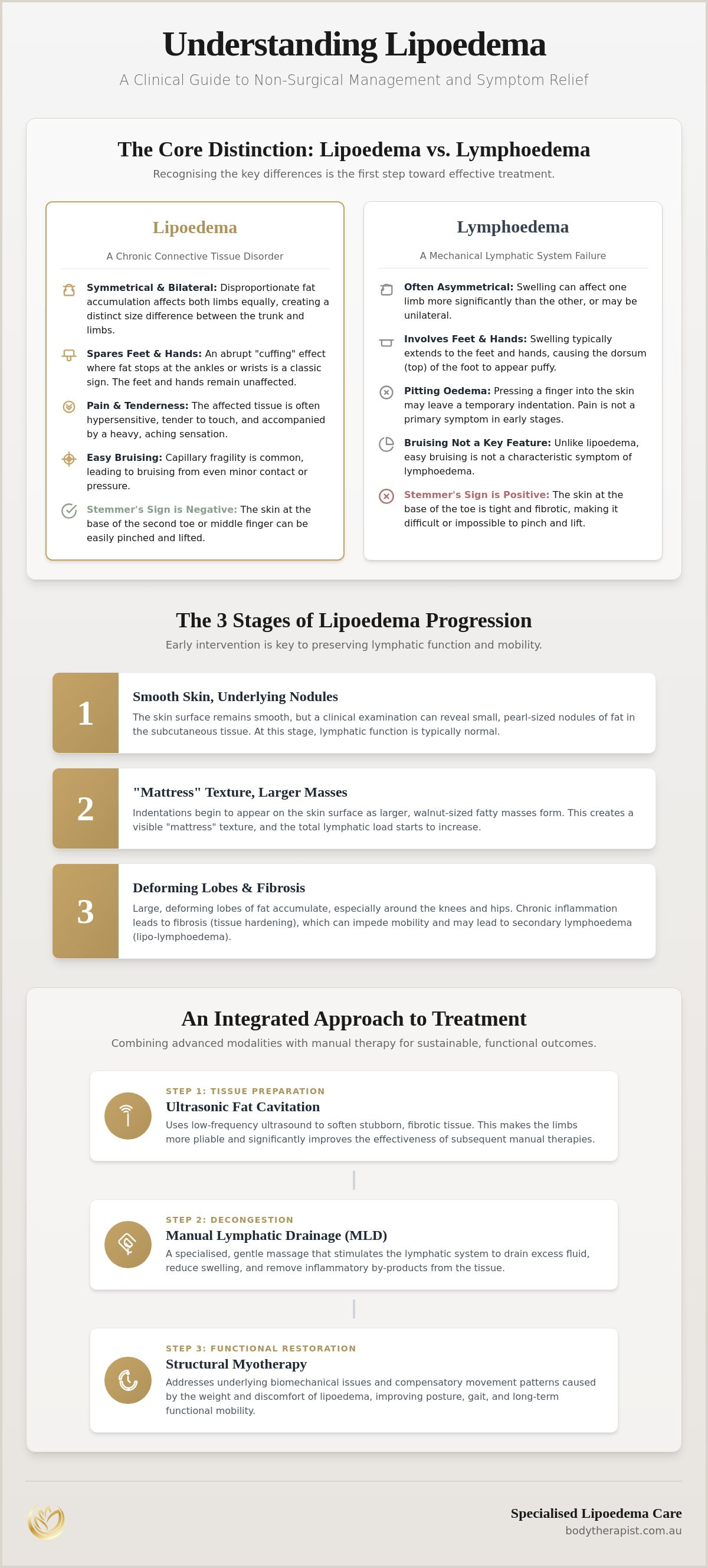
A critical clinical differentiator is the Stemmer’s Sign. In a physical assessment, a practitioner will attempt to pinch and lift the skin at the base of the second toe or middle finger. If the skin can be easily grasped, the test is negative, which is a classic indicator of lipoedema. In contrast, a positive Stemmer’s Sign, where the skin is too tight or fibrotic to pinch, typically points toward lymphoedema. Because lipoedema fat is resistant to caloric restriction, many patients experience emotional distress when traditional weight loss efforts fail to change the shape of their limbs.
Symmetry and Distribution: The Visual Markers
Lipoedema presents with a striking bilateral symmetry, meaning both legs or arms are affected equally. This creates a distinct disproportion between the trunk and the limbs. A hallmark feature is the "cuffing" effect, where fat deposits terminate abruptly at the ankles or wrists, leaving the feet and hands entirely unaffected. This sparing of the extremities is a vital diagnostic clue, as lymphoedema usually causes swelling that includes the dorsum of the foot. These visual markers help clinicians distinguish the condition from general lipohypertrophy.
Tissue Texture and Pain Sensitivity
The texture of the affected tissue often resembles an "orange peel" or "mattress" due to the formation of small, pea-sized nodules within the subcutaneous layer. Unlike standard adipose tissue, lipoedema fat is hypersensitive and tender to the touch. Patients often describe a heavy, aching sensation that intensifies throughout the day. Additionally, capillary fragility is common, leading to easy bruising even from minor contact. Recognising these sensory symptoms is essential when designing a conservative lipedema treatment plan that focuses on tissue mobilisation and pain reduction.
The Progression of Lipoedema: Why Early Intervention Matters
Lipoedema is not a static condition; it evolves through distinct clinical phases if left unmanaged. In the early stages, the lymphatic system often functions at a normal capacity, but as the volume of diseased adipose tissue increases, it creates a significant "lymphatic load." This term refers to the total volume of fluid and protein the lymphatic vessels must transport. When the physical mass of fat cells begins to compress these delicate vessels, the system becomes overtaxed. This chronic stress eventually leads to a mechanical failure known as secondary lymphoedema, or lipo-lymphoedema. Because of this progressive nature, starting a lipedema treatment plan early is the most effective way to preserve lymphatic integrity.
From Smooth Skin to Fibrotic Nodules
The transition through the three stages of lipoedema is marked by changes in both tissue volume and structural integrity. Identifying these stages early allows for more targeted intervention:
Stage 1: The skin surface remains smooth, though underlying pearl-sized nodules are palpable during a clinical examination.
Stage 2: Indentations develop on the skin surface as larger, walnut-sized fatty masses form, creating a visible "mattress" texture.
Stage 3: Large, deforming fat lobes accumulate, particularly around the knees and hips, which can significantly impede a patient's gait and overall mobility.
As the condition advances, chronic inflammation triggers the development of fibrosis, a hardening of the connective tissue that makes the limbs feel dense and resistant to manual pressure. This structural change is why early clinical intervention is so crucial for long-term health. If you've noticed changes in your limb texture, seeking an assessment with a specialised body therapist can help identify the stage of progression and tailor a response.
The Hormonal Connection: Puberty, Pregnancy, and Menopause
Oestrogen plays a foundational role in the proliferation of lipoedema fat cells, which explains why the condition is almost exclusively seen in women. Symptoms frequently flare during major life transitions, such as puberty, pregnancy, or the onset of menopause, when hormonal fluctuations are most acute. Clinical observations suggest that these hormonal shifts act as a catalyst for the rapid expansion of adipose tissue and increased pain sensitivity. Establishing a consistent lipedema treatment plan during these windows is vital for preventing the transition to more severe stages. Conservative lipedema treatment focuses on managing these symptoms through specialised compression and movement strategies. Lipoedema is a progressive condition that requires lifelong management strategies to maintain functional mobility and tissue health.
Conservative Lipoedema Treatment: Non-Surgical Management
In Australia, conservative management follows a multidisciplinary "Standard of Care" designed to stabilise tissue and alleviate chronic symptoms. While a definitive cure for the underlying adipose disorder remains elusive, a structured lipedema treatment plan can significantly improve quality of life and slow disease progression. This approach integrates anti-inflammatory nutrition, such as the Rare Adipose Disorder (RAD) diet, with low-impact movement like hydrotherapy or cycling. These activities are prioritised because they maintain joint mobility and cardiovascular health without overtaxing the fragile connective tissues or triggering inflammatory flares.
Managing a chronic condition also requires robust psychological support. Navigating the emotional distress caused by years of misdiagnosis and failed weight loss efforts is a vital component of a successful rehabilitative journey. Connecting with a specialised practitioner who understands the anatomical reality of your condition provides a sense of safety and professional reassurance.
Compression Therapy and Skin Care
Meticulous garment selection is a cornerstone of effective Lipedema management strategies. Unlike standard circular-knit stockings found in local pharmacies, a comprehensive lipedema treatment requires medical-grade flat-knit compression. Flat-knit garments are custom-made to provide a stiff, containment-style support that doesn't rope or cut into the skin folds. The primary goal is to support the compromised tissue and prevent further fluid accumulation in the interstitial spaces. Additionally, maintaining the skin's barrier is critical; patients must be vigilant with hydration and hygiene to prevent cellulitis, a common and dangerous complication for those with impaired lymphatic flow.
Manual Lymphatic Drainage (MLD) as a Primary Tool
Clinical manual lymphatic drainage massage serves as a primary tool for mobilising stagnant fluid and reducing the protein-rich load that contributes to tissue inflammation. This technique employs gentle, rhythmic strokes that specifically stimulate the initial lymphatics, encouraging the uptake of excess fluid and waste products from the interstitial spaces. By optimising lymphatic drainage, we can reduce the heavy, aching sensation in the limbs and improve overall tissue health. This manual intervention is particularly effective when integrated into a broader rehabilitative framework, ensuring that the lymphatic system is supported as it manages the increased metabolic load from diseased adipose tissue.
Advanced Modalities: Fat Cavitation and Tissue Mobilisation
While many clinical resources suggest a binary choice between conservative compression and invasive surgery, advanced non-surgical lipedema treatment offers a critical middle ground for managing pathological tissue changes. Ultrasonic fat cavitation utilises low-frequency sound waves to create micro-bubbles within the interstitial fluid, which implode and disrupt the membranes of stubborn adipocytes. This process is particularly effective for softening the fibrotic nodules that characterise Stage 2 and Stage 3 lipoedema. By liquefying a portion of the cellular contents, we can reduce the structural density of the affected areas, making the tissue more pliable and responsive to manual intervention.
The clinical success of this modality relies on a specific therapeutic synergy. We immediately follow fat cavitation with manual lymphatic drainage to ensure the liberated metabolic waste is efficiently processed by the lymphatic system. This dual approach addresses both the fat volume and the stagnant fluid load simultaneously. Furthermore, we integrate RF skin tightening to manage the skin laxity that often occurs after significant fluid reduction. These non-invasive body contouring methods prioritise tissue health and avoid the risks associated with surgical liposuction, such as potential lymphatic vessel damage or the extensive recovery periods required for multi-stage procedures.
Softening Fibrosis with Kinetic Release
Myotherapy plays a vital role in addressing the secondary structural restrictions that develop as lipoedema progresses. Through kinetic release and clinical massage therapy, a practitioner can release myofascial adhesions and improve the overall range of motion in limbs burdened by heavy adipose deposits. This structural focus ensures that the musculoskeletal system isn't compromised by altered gait patterns or joint pressure. Additionally, low-level laser therapy may assist in reducing deep-seated tissue inflammation and supporting cellular repair processes within the microcirculation.
Non-Surgical Body Contouring for Symptom Relief
It is essential to clarify that these advanced technologies are applied with a focus on rehabilitative outcomes rather than purely aesthetic gains. Fat cavitation specifically targets the interstitial pressure that causes the characteristic lipoedema pain and hypersensitivity. By reducing this internal pressure, patients often report an immediate decrease in the "heavy" sensation in their legs. Because lipoedema tissue is exceptionally sensitive and prone to bruising, these treatments must be administered by a qualified therapist who understands the delicate balance of applying energy to compromised anatomy. If you are seeking a non-invasive way to manage tissue hardening, you can book a specialised body contouring assessment to discuss a tailored lipedema treatment plan.
The Body Therapist Approach: Integrated Lipoedema Care
The Body Therapist philosophy centres on a sophisticated integration of clinical modalities tailored to the unique physiological demands of connective tissue disorders. We don't view manual lymphatic drainage in isolation; rather, it's a vital component of a broader rehabilitative framework that includes structural myotherapy and kinetic release. This master-practitioner approach ensures that while we address the fluid dynamics of the condition, we're also managing the musculoskeletal compensations that often occur in the hips, knees, and ankles due to altered gait. A results-oriented lipedema treatment plan requires this level of anatomical precision to achieve sustainable relief and improved functional mobility over the long term.
Success in managing this chronic condition depends on a personalised management plan that evolves alongside your symptoms. During our consultation process, we conduct a thorough assessment of your tissue quality, stage of progression, and current mobility levels. This methodical problem-solving ensures that every session moves you closer to your goals of reduced pain and increased activity. We encourage you to take an active role in this process, as education and self-advocacy are powerful tools in reclaiming control over your physical well-being.
Why a Qualified Specialist Matters
Lee Carnegie brings a deep understanding of human anatomy and dynamic movement to every clinical session, ensuring that each technique is applied with rehabilitative intent. Patients with complex lymphatic draining issues are often at risk when seeking general "beauty" or spa-style massages. These superficial treatments lack the technical modifiers and anatomical precision required to safely navigate lipoedema tissue, which is often hypersensitive and prone to bruising. A specialist understands the specific nuances of connective tissue disorders, ensuring that manual pressure is therapeutic rather than inflammatory.
Starting Your Management Journey
Your first step toward a non-surgical lipedema treatment starts with a comprehensive clinical consultation designed to map out your path to recovery. To get the most out of your initial appointment, please consider the following:
Bring any previous diagnostic notes or imaging results from your GP or vascular specialist.
Provide a list of current medications and supplements you're taking.
Wear or bring the compression garments you currently use for daily management.
Document any specific triggers that increase your pain or swelling.
Understanding how to prepare for remedial massage is equally important for clinical success. Arriving well-hydrated and in comfortable clothing allows us to begin the assessment and treatment process efficiently. Ready to develop a clinical strategy for your health? Book a clinical consultation with Body Therapist to discuss your personalised lipoedema management plan and begin your journey toward lasting relief.
Empowering Your Path to Physical Restoration
Managing a complex connective tissue disorder requires more than just patience; it demands a precise, clinical strategy that addresses the unique physiological changes in your body. We've explored the critical importance of differentiating between lipoedema and lymphoedema, alongside the progressive nature of tissue changes if left unmanaged. By integrating advanced non-surgical body contouring with manual lymphatic drainage, you can effectively soften fibrotic tissue and reduce the chronic pain that often accompanies this condition.
A successful lipedema treatment plan is built on the expertise of a master practitioner who understands the synergy between myotherapy and kinetic release. This integrated approach ensures your mobility is protected while your lymphatic load is reduced. You don't have to navigate this journey alone or settle for general treatments that don't respect your anatomy. Lee Carnegie’s specialised expertise in MLD and non-surgical management provides a results-oriented pathway to physical optimisation.
Take the next step toward reclaiming your physical comfort and functional health. Consult with a Clinical Specialist at Body Therapist to discuss how our specialised clinical manual therapies can support your recovery. You deserve a management plan that is as dedicated to your results as you are.
Frequently Asked Questions
Is lipoedema treatment covered by Medicare or private health insurance in Australia?
Medicare coverage for lipoedema management is currently limited. Patients might access small rebates through a Chronic Disease Management plan if referred by a GP for specific allied health services, but this rarely covers the full cost of specialised clinical sessions. Most Australians utilise private health insurance extras for remedial massage or myotherapy to help offset the costs of their ongoing lipedema treatment and manual therapies.
Can I lose lipoedema fat through diet and exercise alone?
Lipoedema fat is metabolically distinct and remains largely resistant to traditional caloric restriction or intensive exercise. While a balanced, anti-inflammatory diet is essential for weight stability and vascular health, it won't significantly reduce the pathological adipose tissue in the affected limbs. Clinical manual intervention and specialised management strategies are necessary to address the fibrotic tissue and fluid components of the condition.
How often should I have manual lymphatic drainage for lipoedema?
The frequency of sessions depends on your clinical stage and the current severity of your symptoms. During an intensive phase of lipedema treatment, practitioners often recommend sessions once or twice weekly to effectively mobilise stagnant fluid and soften fibrotic nodules. Once the tissue is stabilised, maintenance sessions every two to four weeks are typically sufficient to manage the lymphatic load and maintain comfort.
What happens if lipoedema is left untreated?
Left unmanaged, the condition is typically progressive and leads to increased tissue hardening and significant mobility issues. The accumulating adipose tissue puts mechanical stress on the lymphatic vessels, which can eventually cause the system to fail, resulting in a dual condition known as lipo-lymphoedema. This progression often increases chronic pain levels and makes the limbs significantly more susceptible to infections and joint strain.
Is lipoedema the same as being "pear-shaped"?
Being "pear-shaped" refers to a healthy genetic body type, whereas lipoedema is a pathological medical condition involving diseased connective tissue. Unlike a natural body shape, lipoedema involves disproportionate limbs that are tender to the touch, prone to easy bruising, and often present with a "cuffing" effect at the ankles. If your lower body shape is accompanied by pain and doesn't change with exercise, it's likely a clinical issue.
Can men get lipoedema, or is it only a female condition?
Lipoedema is almost exclusively a female condition, though extremely rare cases have been documented in men. In the few male cases identified, the condition is usually linked to severe hormonal imbalances, such as significant oestrogen dominance or liver cirrhosis. For the vast majority of the population, the disorder is driven by female hormonal transitions, including puberty, pregnancy, and menopause.
Are there any specific exercises that help with lipoedema pain?
Low-impact, buoyant activities are the most effective for reducing pain and supporting lymphatic return. Swimming and hydrotherapy are considered the gold standard because the hydrostatic pressure of the water acts as a gentle, whole-body compression while protecting the joints from impact. Cycling and walking are also beneficial for engaging the calf muscle pump, which helps move fluid out of the lower limbs.
What is the difference between lipoedema and cellulitis?
Lipoedema is a chronic, symmetrical tissue disorder, whereas cellulitis is an acute bacterial infection of the skin and underlying tissues. Cellulitis requires immediate medical intervention and presents with sudden redness, intense heat, and often a fever. It's important to note that individuals with advanced lipoedema have a higher risk of developing cellulitis because their compromised lymphatic system is less efficient at clearing bacteria from the interstitial spaces.


Comments