

Is RF Skin Tightening Safe? A Clinical Guide to Radiofrequency Technology

Can a technology that deliberately heats your internal tissues to 42 degrees Celsius truly be considered a gentle alternative to surgery? It's a valid concern, especially when your social feed is likely filled with conflicting reviews and cautionary tales about thermal burns or nerve damage. You aren't just looking for a cosmetic change; you're seeking a way to restore structural integrity to your skin without the anxiety of "plastic" or unnatural outcomes. Understanding whether is RF skin tightening safe requires moving past the spa-level jargon and looking at the clinical evidence and biological mechanisms at play.
In this guide, we'll examine the physiological science and safety protocols that define modern radiofrequency treatments. We'll explore how precise thermal control triggers a wound-healing response to synthesise new collagen while protecting the surrounding anatomy. By the end of this article, you'll have a clear understanding of the 2026 regulatory standards, the importance of anatomical mastery in your practitioner, and a definitive list of contraindications to help you decide if this non-surgical solution aligns with your personal health and rejuvenation goals.
Table of Contents
Understanding Radiofrequency (RF) Technology and Clinical Safety
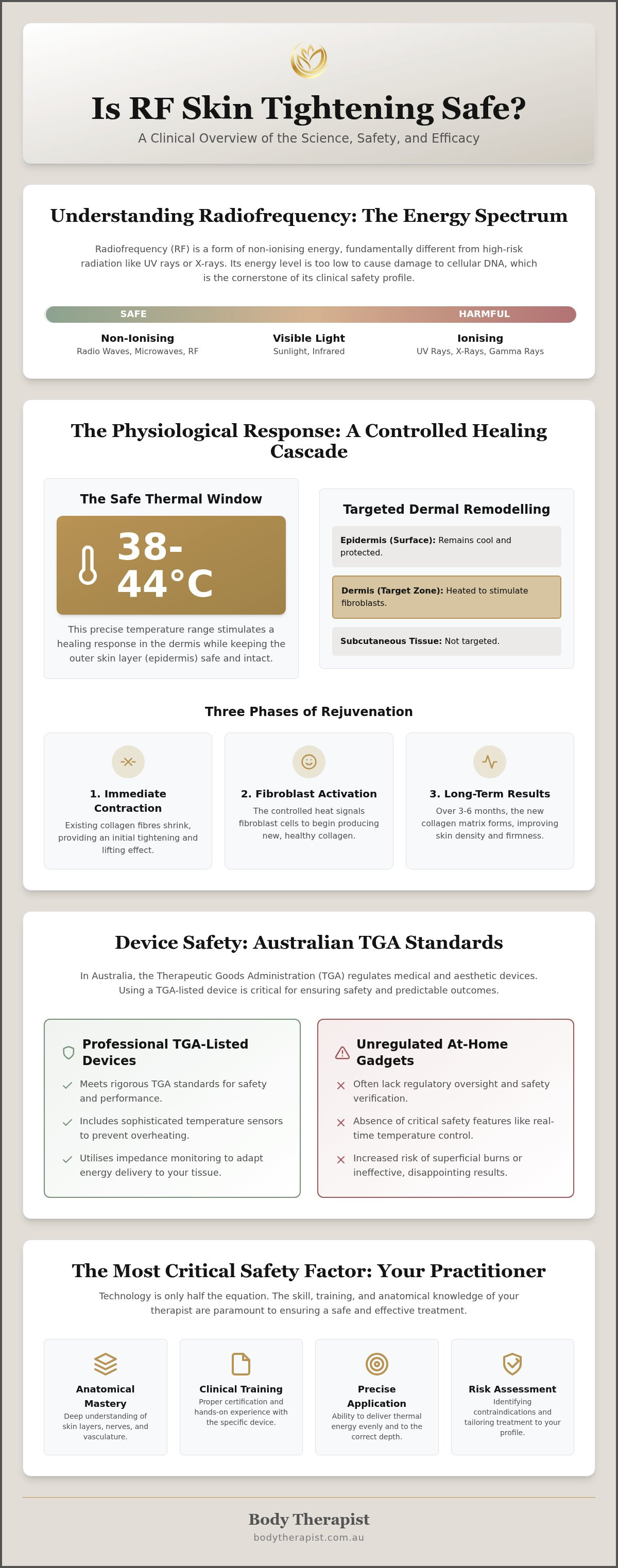
Radiofrequency energy is a specific form of non-ionising electromagnetic radiation. It occupies the lower frequency end of the spectrum, sitting well below visible light, ultraviolet rays, and X-rays. Unlike high-frequency radiation that can strip electrons from atoms, RF energy lacks the power to alter cellular DNA. This fundamental distinction in physics is the cornerstone of why we can confidently say is RF skin tightening safe when applied within professional clinical parameters. By operating at these lower frequencies, the technology achieves therapeutic results without the risks associated with ionising radiation.
Long before it was adopted for aesthetic rejuvenation, RF technology was a staple in medical surgery. Surgeons have utilised radiofrequency for decades in electrosurgery to coagulate blood vessels and excise tissue with high precision. This established medical history provides a robust foundation of clinical data regarding how human tissue reacts to thermal energy. Essentially, RF skin tightening is a controlled thermal delivery system for dermal remodelling.
Ionising vs. Non-Ionising Radiation
The primary concern for many patients involves the risk of long-term cellular damage or mutation. However, the physics of the electromagnetic spectrum provides clinical reassurance. Ionising radiation, such as UV rays from the sun or medical X-rays, possesses enough energy to break chemical bonds and damage the genetic code within our cells. In contrast, RF is non-ionising. It doesn't target the DNA; instead, it oscillates at a frequency that causes water molecules within the dermis to vibrate. This friction generates heat. By focusing on molecular vibration rather than genetic disruption, the technology maintains a high safety profile while achieving the desired physiological response. You can find a detailed Radiofrequency skin tightening overview to understand these technical classifications further.
The Role of TGA and Australian Safety Standards
In Australia, the safety of aesthetic devices is strictly monitored by the Therapeutic Goods Administration (TGA). For a treatment to be considered clinically safe, the device must be TGA-listed, ensuring it has met rigorous standards for electrical safety and performance. There's a significant divide between professional-grade equipment used in a clinical environment and the unregulated at-home gadgets often found online. Professional devices include sophisticated temperature sensors and impedance monitoring to prevent overheating. These safety features are often absent in consumer-level products, which increases the risk of superficial burns or ineffective results. Relying on TGA-regulated technology ensures that the energy delivery is both predictable and anatomically appropriate for the individual's tissue density.
The Physiological Response: How Thermal Energy Stimulates Collagen Safely
The efficacy of radiofrequency lies in its ability to induce a "controlled thermal injury" within the deeper layers of the skin. This isn't damage in the traditional sense; it's a strategic biological trigger. By elevating the temperature of the dermis to between 38°C and 44°C, we initiate a precise wound-healing cascade. This temperature threshold is critical. It's high enough to stimulate cellular change but low enough to avoid the risk of permanent tissue necrosis. One might wonder, is RF skin tightening safe when such high heat is involved? The answer lies in this narrow thermal window, which ensures the epidermis remains intact while the underlying structural proteins are refurbished.
The immediate response to this heat is the contraction of existing collagen fibres. This provides a visible "lift" shortly after the session. However, the true clinical value is the long-term activation of fibroblasts. These are the cells responsible for synthesising new collagen and elastin over the following three to six months. This delayed response creates a more resilient, denser skin structure that looks entirely natural.
The Science of Collagen Denaturation
When collagen fibres reach these specific heat levels, the hydrogen bonds that hold the triple helix structure together begin to break. This causes the fibres to "unwind" and then immediately contract. This process also releases Heat Shock Proteins (HSPs). These proteins act as molecular chaperones, signalling the body to repair the "injury" by producing fresh, high-quality collagen. This method is often preferred over aggressive chemical peels or ablative lasers because it leaves the skin's surface barrier undisturbed. While the technology is robust, it's vital to stay informed on regulatory updates, such as the FDA safety communication on RF microneedling, which highlights the importance of professional oversight in energy-based treatments.
Protecting the Epidermis During Deep Tissue Heating
Modern clinical devices heat from the inside out. While the dermis reaches therapeutic temperatures, the skin surface is protected through integrated cooling mechanisms or specific delivery techniques. The practitioner's role is vital here. Constant real-time temperature monitoring ensures the heat remains within the safe range throughout the session. If you're interested in how this technology can be tailored to your specific tissue health, exploring a clinical approach to RF skin tightening can provide the structural support your skin needs without the downtime associated with surgery.
Identifying Risks, Side Effects, and Contraindications
While the underlying technology is non-ionising and controlled, the question of whether is RF skin tightening safe for a specific individual depends on a rigorous clinical screening process. Every medical-grade aesthetic treatment carries a risk profile that must be managed through practitioner expertise and patient honesty. Most patients will experience a predictable inflammatory response, which is a necessary component of the tissue remodelling process. However, without a deep understanding of human anatomy and thermal physics, rare but significant complications can occur.
A professional consultation is the most critical step in ensuring safety. During this phase, a therapist evaluates the structural integrity of the skin, identifies potential contraindications, and sets realistic expectations for recovery. While major adverse events are rare, they typically stem from improper device settings or a failure to recognise a patient's underlying health conditions. Precise impedance monitoring and real-time temperature tracking are the primary safeguards against the rare risks of superficial burns or unwanted fat atrophy, which can happen if the energy is delivered too deeply or for too long in areas with thin subcutaneous tissue.
Common Post-Treatment Sensations
Immediately following a session, it is standard to observe mild erythema (redness) and oedema (swelling) in the treated area. These symptoms are clinical indicators that the dermis has reached the required thermal threshold to trigger collagen synthesis. Most patients describe a sensation similar to a mild sunburn, which typically subsides within 24 to 48 hours. To optimise recovery and manage the temporary accumulation of metabolic waste, many clinical protocols now integrate specialised lymphatic drainage. This manual approach assists the body in clearing the transient swelling and supports the inflammatory cascade required for structural rejuvenation.
Who Should Avoid RF Skin Tightening?
There are several absolute contraindications where radiofrequency energy cannot be safely applied. These include the presence of pacemakers or internal defibrillators, as the RF current can interfere with the electronic signalling of these life-saving devices. Additionally, metal implants, such as plates or screws in the treatment zone, can act as conductors for the electrical energy, leading to internal heat spikes. Other conditions that preclude treatment include:
Pregnancy and breastfeeding, due to a lack of clinical safety data.
Active skin infections, such as shingles or cold sores, in the target area.
Autoimmune diseases that affect skin healing or connective tissue.
Severe rosacea or skin conditions that are triggered by heat.
It is also vital to observe a waiting period if you have recently had dermal fillers or Botox. Applying high-intensity heat too soon after injectables can accelerate the degradation of the product or cause unwanted migration. Most clinicians recommend waiting at least four weeks after fillers and two weeks after Botox before proceeding with RF treatments.
RF vs. Surgical Alternatives: A Safety and Recovery Comparison
When evaluating aesthetic options, the clinical decision usually hinges on the balance between risk and results. Invasive procedures like a traditional rhytidectomy require general anaesthesia and significant tissue excision. These factors introduce systemic risks and the potential for hypertrophic scarring or nerve damage. In contrast, when asking is RF skin tightening safe compared to surgery, the primary advantage is the preservation of the skin's surface. RF avoids the physiological toll of surgery by working within the body's natural healing parameters rather than forcing a structural change through force or incisions.
The aesthetic outcome also differs significantly. Surgical intervention can sometimes result in a "pulled" or "wind-tunnel" appearance because it physically tightens the skin over the underlying fascia. RF technology focuses on dermal density. It encourages the body to produce its own structural scaffolding, leading to a more subtle, refreshed appearance that honours the patient's original anatomy. This gradual improvement is often safer for the patient's self-image, as it avoids the sudden, drastic changes that can lead to psychological distress or "plastic" results.
Risk Mitigation in Non-Surgical Rejuvenation
By eliminating incisions, we effectively remove the risk of post-surgical infection and the need for complex wound care. This is a critical factor for patients with active lifestyles or those who cannot afford the multi-week recovery periods associated with invasive lifting. Modern non-surgical facelift protocols prioritise these non-invasive modalities to achieve gradual, safe improvements. This cumulative approach allows the clinician to monitor tissue response over several sessions, adjusting parameters to ensure safety remains the absolute priority throughout the entire treatment programme.
Longevity and Safety Maintenance
RF skin tightening is not just a reactive treatment; it's a proactive strategy for long-term tissue health. For younger patients, "pre-juvenation" sessions can slow the degradation of existing collagen, maintaining structural integrity before significant laxity occurs. Because the technology does not alter the underlying facial structures, maintenance sessions can be performed safely over several years. This long-term safety profile makes it an ideal solution for those seeking to age gracefully without the permanence or risks of surgical alteration. If you are ready to explore a clinical path to skin health, you can book a consultation for RF skin tightening to discuss your specific anatomical needs.
Clinical Best Practices: What to Look for in a Qualified Therapist
The ultimate determination of whether is RF skin tightening safe for you often rests in the hands of the practitioner. While the technology is sophisticated, it remains a tool that requires deep anatomical knowledge to use effectively. A therapist who understands the complex layers of the dermis, fascia, and subcutaneous fat can modulate energy delivery to match your specific tissue density. This level of precision is what separates a clinical outcome from a superficial one. It's not just about operating a machine; it's about understanding the biological response of the person underneath it.
Practitioners with a background in results-oriented clinical massage bring a unique advantage to thermal treatments. Their hands-on experience with myofascial structures and kinetic release allows them to assess tissue health and hydration levels before the device even touches your skin. This rehabilitative perspective ensures that the treatment supports your overall functional mobility rather than just focusing on aesthetic surface changes. When a therapist can palpate the tissue and understand its structural integrity, they can deliver heat with far greater safety and efficacy.
The Master Practitioner Advantage
A master practitioner understands that tissue depth varies across different regions of the face and body. Delivering the same energy level to the thin skin of the periorbital area as you would to the denser tissue of the abdomen is a significant safety risk. Integrated care, which may combine radiofrequency with manual therapies, ensures that the inflammatory response is managed correctly from start to finish. Proper pre-treatment preparation is also essential. This phase allows the clinician to identify any temporary contraindications, such as recent sun exposure or active inflammation, that could compromise skin safety during the session.
Evaluating the Clinical Environment
When choosing a provider, look for indicators of a clinical environment rather than a high-volume beauty shop. A professional clinic prioritises hygiene, uses regularly calibrated TGA-listed equipment, and maintains transparent communication about potential risks. You shouldn't feel pressured into a treatment without a comprehensive safety screening and a detailed discussion of your medical history. A methodical, evidence-based approach ensures that your journey toward rejuvenation is both intellectually grounded and deeply supportive of your long-term health.
Ask your therapist specific questions about their safety protocols:
How do you monitor dermal temperature in real-time during the session?
What is your protocol if the skin shows signs of hyper-responsiveness?
How do you tailor the energy frequency to my specific skin type and tissue density?
A personalised treatment plan is the hallmark of safe practice. It should account for your unique physiological profile and aesthetic goals, moving away from "one-size-fits-all" settings. This ensures the delivery of energy is always within a safe thermal window.
Advancing Your Journey Toward Structural Skin Health
Deciding to pursue non-surgical rejuvenation is a significant step in your personal wellness journey. As we've examined, the question of is RF skin tightening safe is answered through the lens of clinical precision and anatomical mastery. By utilising non-ionising energy to trigger a controlled healing response, you can achieve genuine dermal remodelling without the systemic risks or extended downtime associated with invasive surgery. The success of this treatment relies on the synergy between sophisticated technology and a practitioner who understands the unique density and hydration of your tissues.
At Body Therapist, we integrate Lee Carnegie's expertise as a qualified Myotherapist and Body Contouring Specialist to ensure every session is grounded in evidence-based clinical protocols. We prioritise a personalised anatomical assessment for every client, ensuring your safety remains our absolute priority throughout the thermal delivery process. If you're ready to restore your skin's structural integrity with confidence, Book a Clinical Consultation for RF Skin Tightening today. We look forward to supporting your transition toward a more resilient, naturally refreshed appearance.
Frequently Asked Questions
Is RF skin tightening painful for most people?
Most patients describe the sensation as a deep, localised warmth similar to a hot stone massage. It's generally not painful; however, the therapist must maintain the temperature within the therapeutic window of 38°C to 44°C. If the heat becomes too intense, the practitioner can immediately adjust the device settings. This real-time control ensures that the treatment remains comfortable while effectively stimulating the dermal layers for structural rejuvenation.
Can RF skin tightening cause facial fat loss?
Facial fat loss is an extremely rare complication that typically occurs only if the energy is delivered too deeply into the subcutaneous layer. A qualified therapist with deep anatomical knowledge avoids this by precisely targeting the dermis. While some online reviews mention this risk, understanding the clinical mechanisms helps clarify that is RF skin tightening safe when performed by a practitioner who can distinguish between different tissue depths and densities.
How many sessions are typically required for safe results?
For optimal and safe results, most clinical protocols recommend a series of three to six sessions spaced several weeks apart. This timeframe allows the body to complete the natural wound-healing cascade and synthesise new collagen fibres. While some immediate contraction occurs, the cumulative effect of multiple treatments provides more significant and long-lasting structural support. Your therapist will design a personalised plan based on your skin's initial laxity and physiological response.
Is there any downtime or recovery period after a session?
There is virtually no downtime associated with this non-invasive procedure, making it an ideal option for those with busy schedules. You might experience mild erythema or transient swelling immediately following the session, but these symptoms typically resolve within a few hours. Most patients return to their regular activities, including work and exercise, straight away. We simply advise avoiding direct sun exposure and intense heat, such as saunas, for the first 24 hours.
Can I have RF skin tightening if I have metal dental implants?
Metal dental implants are generally not a contraindication for radiofrequency treatments on the face. Because clinical RF devices target the dermal layers rather than deep bone structures, the energy does not typically interact with dental hardware. However, you must disclose all implants during your initial screening. If you experience any unusual heat near the implant site, the therapist can adjust the technique or use protective barriers to ensure your safety throughout the session.
Does RF skin tightening work on all skin colours and types?
Radiofrequency technology is safe and effective for all Fitzpatrick skin types, from very fair to very dark complexions. Unlike some laser treatments that target melanin and carry a risk of post-inflammatory hyperpigmentation, RF energy is colour-blind. It bypasses the pigment in the epidermis to heat the underlying dermis directly. This makes it a highly inclusive clinical solution for anyone seeking skin rejuvenation without the risk of discolouration or scarring.
What is the difference between home RF devices and clinical machines?
Clinical machines are TGA-listed devices that offer significantly higher power and more precise temperature monitoring than at-home gadgets. Professional equipment includes sophisticated sensors that prevent the skin from overheating while ensuring the tissue reaches the necessary therapeutic threshold for collagen denaturation. At-home devices are often underpowered to ensure consumer safety, which frequently results in negligible physiological changes compared to the evidence-based results achieved in a clinical environment.
How long do the safety benefits and results of RF last?
The results of a successful treatment course typically last between one and two years, depending on your individual biological ageing process and lifestyle factors. While the initial collagen contraction is immediate, the safety benefits of fibroblast activation continue for several months post-treatment. Periodic maintenance sessions every six to twelve months can help sustain the structural integrity of the skin. This proactive approach ensures that the is RF skin tightening safe profile remains consistent over the long term.


Comments