

Is Massage Safe in the First Trimester? What to Know Before You Book

Updated: 12 hours ago
A first-trimester massage isn’t automatically off limits, and the timing of a miscarriage doesn’t mean massage caused it. Still, conflicting advice can make it hard to know whether booking is right for you. If you’re asking, “is massage safe in first trimester?”, the answer depends on your health, symptoms and how the session is planned.
It’s understandable to feel cautious, particularly if you’ve heard that massage should wait until later in pregnancy. Some clinics take that conservative approach, but it doesn’t establish that massage causes miscarriage. What matters for your decision is how you’re feeling, whether you have relevant health concerns and whether the session can be adapted to your comfort.
This guide explains when to pause and seek advice, what information to share before booking, and how to discuss pressure and positioning. Pregnancy massage should be tailored to you, not treated as a standard routine. It can support comfort and relaxation, but it doesn’t replace antenatal care or medical assessment.
Table of Contents
Is Massage Safe in the First Trimester? The Qualified Answer
First-trimester massage isn’t automatically ruled out for everyone. If you’re asking, “is massage safe in first trimester?”, the answer depends on your health, how you’re feeling and whether the therapist can adapt the session to your needs. A blanket yes or no doesn’t account for those individual differences.
For someone with an uncomplicated pregnancy who feels well, a gentle, pregnancy-aware session may be considered. A history of complications, a current health condition or symptoms such as bleeding or significant pain can change the decision. Tell your therapist how far along you are and share relevant health information. If you’re uncertain about a symptom or complication, speak with your maternity care professional, such as your midwife, GP or obstetrician, before booking.
Massage is supportive care. It may promote comfort and relaxation, but it doesn’t treat pregnancy complications, assess the health of a pregnancy or replace antenatal care. A therapist can adapt the hands-on session within their scope, but can’t diagnose or provide obstetric advice—for dedicated medical assessment and specialised women’s health services, providers like sincerehealthcaregroup.com offer comprehensive clinical care.
Why do people hear that first-trimester massage is unsafe?
Early pregnancy can bring uncertainty, and concern about miscarriage is understandable. Some clinics choose to defer massage during the first trimester as a conservative policy. That boundary may reflect caution or practice preference, but the policy itself isn’t proof that massage causes miscarriage. It’s reasonable for patients and practitioners to take a conservative approach while keeping that distinction clear.
What can a careful answer promise, and what can it not?
A careful answer can help you identify what to discuss and how to make a session more considered. It can’t promise that massage is risk-free for every pregnancy or determine whether your symptoms are harmless. Your circumstances matter more than a universal rule. If you have a known complication or a concern about your health, pause and seek advice from your maternity care professional before arranging a session.
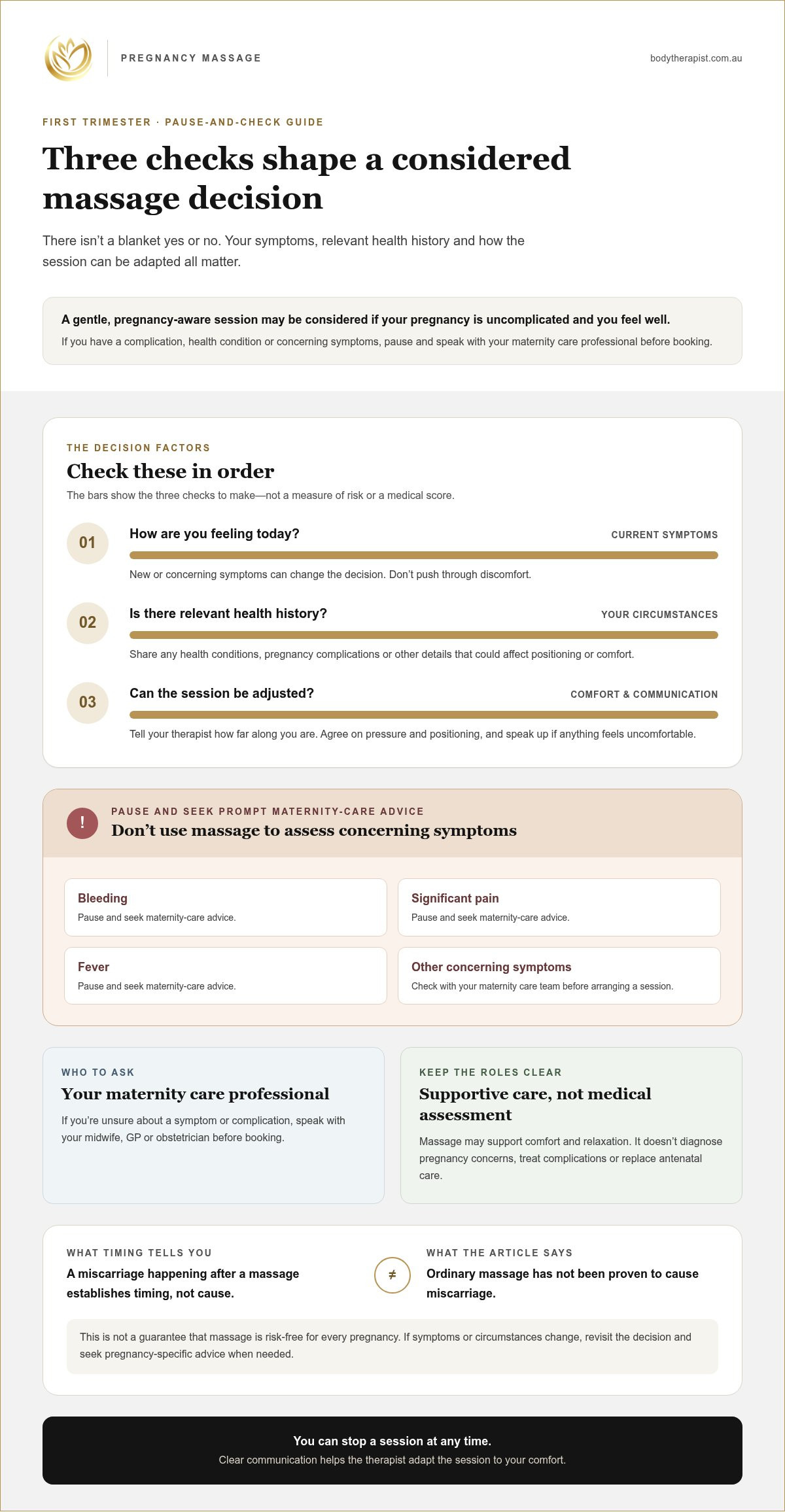
As a practical starting point, consider these three questions:
How are you feeling today? New or concerning symptoms may mean postponing the session and seeking maternity-care advice.
Is there relevant health history? Share conditions, pregnancy complications or other details that could affect positioning or comfort.
Can the session be adjusted? Agree on pressure and positioning, and speak up if anything feels uncomfortable.
You can revisit the decision if your symptoms or circumstances change. You don’t have to push through discomfort, and you can stop a session at any time. Clear communication helps the therapist respond to your needs, while your maternity care team remains the right source for pregnancy-specific medical advice.
What Does the Evidence Say About First-Trimester Massage?
Evidence about massage during pregnancy needs careful interpretation. Research may examine comfort or relaxation across different stages of pregnancy, but that doesn’t automatically show whether a particular technique is suitable for every person in the first trimester. Study methods, massage approaches and participant groups can vary, limiting how confidently findings apply to an individual pregnancy.
It’s also important to separate a possible benefit from a claim about miscarriage. A study reporting that participants felt more relaxed, for example, doesn’t establish that massage changes pregnancy outcomes. The American Pregnancy Association's guide to prenatal massage discusses prenatal massage and its potential benefits, but general information can’t assess your personal medical circumstances.
Does massage cause miscarriage?
Ordinary massage has not been proven to cause miscarriage. A miscarriage occurring after a massage establishes timing, not causation. Early pregnancy loss can happen for many reasons, and an event that follows an activity may have occurred regardless of that activity. Showing cause and effect requires more than a single experience or sequence of events.
That distinction doesn’t mean every technique or circumstance has been thoroughly studied. It means the evidence shouldn’t be stretched into either a guarantee of safety or an assertion that massage causes miscarriage. Claims that specific points or routine massage trigger pregnancy loss shouldn’t be treated as established facts without reliable evidence.
What benefits and limitations should readers understand?
Some people find massage relaxing or feel temporary relief from muscular tension. These are possible comfort effects, not promised outcomes. Studies of pregnancy massage may differ in technique, session timing, frequency and participant health, so results from one group may not apply to everyone, or specifically to first-trimester clients.
Massage can’t diagnose a pregnancy concern, prevent miscarriage or treat an obstetric complication. If symptoms develop, or you have a medical concern, seek advice from your maternity care professional rather than using massage to manage or investigate it. This keeps supportive hands-on care distinct from clinical assessment.
Evidence is only one part of a practical decision. Your symptoms, health history, comfort and the therapist’s preparation also matter. Body Therapist provides pregnancy massage as considered therapeutic care, with communication helping shape the session around your circumstances.
When Should You Pause and Seek Pregnancy-Specific Advice?
Use this as a pause-and-check guide, not a diagnostic tool or a complete list of reasons to avoid massage. If something feels wrong, postpone the session and seek advice rather than trying to decide whether massage might help. The question “is massage safe in first trimester?” can’t be answered separately from what’s happening in your pregnancy today.
Which symptoms mean massage should wait?
Don’t proceed with massage if you have unexplained bleeding, significant pain, a fever or feel acutely unwell. These symptoms need appropriate medical assessment, not hands-on treatment. Contact your maternity care professional promptly for advice. If symptoms are severe or worsening quickly, seek urgent assessment through an appropriate maternity service or emergency care.
This is a sensible pause, not a diagnosis. Symptoms can have different causes, and a massage therapist can’t determine what’s behind them or assess the wellbeing of your pregnancy. Even if you’ve already booked, rescheduling is preferable to attending while you’re waiting for advice or feeling unwell.
What health details may change the decision?
Ask your maternity care professional for individual guidance if your pregnancy is considered high-risk, a complication has been identified, or your clinician has advised restrictions. Existing medical conditions may also affect whether massage is appropriate or what adaptations are needed. There isn’t one checklist that covers every person’s circumstances.
Your care team can consider details together, including your pregnancy history, current symptoms and care plan. Mention medication or a previous pregnancy complication if your clinician considers it relevant. Don’t stop or change prescribed medication to prepare for massage; ask the prescriber if you have concerns about how it may affect your care.
Make that conversation specific. Explain that you’re considering massage, how far along you are, what symptoms you’ve noticed and whether anything has changed recently. You can also ask whether there are restrictions or precautions to follow. Advice from the professional familiar with your pregnancy is more useful than applying a general rule to everyone.
Pause: if you have new, unexplained or concerning symptoms.
Seek advice: from your maternity care professional before proceeding if you have a complication, relevant health condition or care-plan restriction.
Reassess: if your symptoms change after receiving guidance or before the appointment.
This guide isn’t exhaustive, and not every health detail automatically means massage is unsuitable. The aim is to make space for an informed decision. Once symptoms and medical concerns have been addressed, discuss relevant guidance and comfort needs with the therapist before the session begins.
How to Prepare for a First-Trimester Massage Session
Preparation helps the therapist understand what may affect your comfort and how the session can be adapted. If you have a clinical concern, a pregnancy complication or instructions from your maternity care team, discuss these with them before booking. The answer to “is massage safe in first trimester?” depends partly on details that a general guide can’t assess for you.
Once you’ve addressed any medical concerns, take four practical steps: check how you’re feeling, share relevant information, agree on comfort and keep communicating during the session. The clinical pregnancy massage guide offers broader information about pregnancy massage as therapeutic care.
What should you tell the therapist beforehand?
Be clear about how many weeks pregnant you are and mention symptoms that could affect comfort, such as nausea or tenderness. Share relevant medical conditions, pregnancy complications, medications and any advice or restrictions from your maternity care team. You don’t need to decide which details matter clinically on your own. Sharing them allows the therapist to consider them when planning the session.
Describe what feels comfortable, too. Let the therapist know your pressure preferences, positions you find difficult and any areas you’d rather avoid. You can ask for a change or stop at any point. Clear preferences help make the session responsive to you.
How can you make the session more comfortable?
Agree on positioning before the massage starts, then ask for an adjustment promptly if you feel strained, nauseous, light-headed or uncomfortable. There’s no need to hold a position just because the session has begun. Comfort can change, so speak up rather than waiting until the end to mention a concern.
Use this check-in sequence to guide the conversation:
Before booking: Check for new or concerning symptoms. Discuss clinical questions, complications or care-team restrictions with your maternity care professional.
Before the session: Share your gestation, relevant health history, symptoms and any guidance you’ve received.
During the session: Ask for a position, pressure or technique to be changed if it doesn’t feel suitable.
If something changes: Pause the massage if new symptoms arise. Seek appropriate clinical advice rather than asking the therapist to assess or treat them.
There’s no need to endure discomfort to get through an appointment. A considered session is shaped by your feedback as well as the information you share beforehand. To discuss pregnancy massage in a comfort-led therapeutic setting, explore pregnancy massage with Body Therapist.
Pregnancy Massage at Body Therapist: A Considered Next Step
Deciding whether to book is personal. If you’re still asking, “is massage safe in first trimester?”, consider your current symptoms, health history and any advice from your maternity care team. If you have a pregnancy concern or feel unwell, seek maternity-care advice before arranging a session.
Body Therapist provides pregnancy massage as therapeutic care, not as a substitute for antenatal assessment or treatment. The practice is led by Lee Carnegie, a qualified remedial massage and dynamic movement therapist. Clear communication about your trimester, symptoms and comfort helps inform the session, without promising a particular medical outcome.
What a considered session should prioritise
Your needs and feedback should guide the conversation. Before treatment begins, share what feels comfortable, any areas you’d prefer to avoid and whether you have questions about pressure or positioning. If your comfort changes during the session, say so. The approach can respond to your feedback rather than relying on a fixed routine.
Massage can sit alongside pregnancy care as supportive hands-on treatment. It doesn’t replace advice from your midwife, GP or obstetrician, and the therapist isn’t there to diagnose pregnancy concerns. Keeping those roles clear helps you make an informed decision about both clinical care and comfort.
How to take the next step with confidence
Before arranging a session, revisit the preparation checklist: check how you’re feeling, consider whether you need clinical advice, and note what you’d like the therapist to know. Share your gestation, relevant health history, symptoms and any care-team restrictions. You can also explain which positions feel comfortable and what would prompt you to ask for an adjustment.
If you have bleeding, significant pain, fever, feel acutely unwell or have another concerning symptom, pause and seek appropriate maternity-care advice first. If your care team has identified a complication or given you restrictions, ask how those apply to massage. This is an individual decision, not a test you need to manage alone.
Once you’ve considered those points and feel ready to proceed, you can explore a pregnancy massage session with Body Therapist. Bring your questions, communicate openly and remember that you can request a change or stop if the session doesn’t feel comfortable.
Explore pregnancy massage at Body Therapist when it feels appropriate for you.
Make Your Next Step Feel Considered
You don’t need to settle every question about pregnancy massage at once. Start with what you know today: how you’re feeling, what would help you feel comfortable, and whether you’d like guidance from your maternity care professional before booking. If you’re still wondering “is massage safe in first trimester?”, use the question to prompt a conversation about your circumstances rather than pressure yourself to make a quick decision.
Note any questions you’d like answered and the adjustments that would help you feel at ease. That gives you a clear starting point for deciding whether a session feels right for you now. It’s also reasonable to wait if you’d feel more settled after speaking with your care team.
When you’re ready, explore Body Therapist’s pregnancy massage and book a session that suits your needs. Explore pregnancy massage and book a session. Take the decision at your own pace, and ask for the care and comfort you need.
Frequently Asked Questions
Is massage safe at 6 weeks pregnant?
Massage at six weeks isn’t automatically unsuitable, but the answer depends on your health and how you’re feeling. If you’re well and haven’t been given pregnancy-related restrictions, discuss your needs and comfort with a therapist before arranging a session. If you have symptoms, complications or unanswered concerns, speak with your maternity care professional first. The general question “is massage safe in first trimester?” can’t establish what’s right for your individual pregnancy.
Can massage cause a miscarriage in the first trimester?
A miscarriage after a massage doesn’t, by itself, show that the massage caused it. Pregnancy loss can have different causes, and timing alone can’t establish what led to it. Don’t treat claims that ordinary massage causes miscarriage as fact without reliable evidence, but don’t take that as a guarantee about every pregnancy or technique. If you notice bleeding, significant pain or another concerning symptom, seek prompt advice from your maternity care professional.
Should I tell the massage therapist I am in my first trimester?
Yes, tell the therapist before the session and explain how many weeks pregnant you are. Mention symptoms that affect how you’re feeling, relevant health history, complications, medications and any advice from your maternity care team. This context helps guide a conversation about positioning and pressure. You can also say what you’d prefer to avoid, ask for an adjustment or stop the massage if you feel uncomfortable.
Do I need my doctor’s approval for a first-trimester massage?
Not everyone needs the same advice, so there isn’t one approval rule for every pregnancy. Speak with your midwife, GP or obstetrician before massage if your pregnancy is considered high-risk, you have a complication or concerning symptoms, or your care team has set restrictions. If you’re unsure, a clinician familiar with your circumstances can consider your history and care plan. General online information can’t provide that individual assessment.
What should I avoid during a first-trimester massage?
Avoid any position, pressure or technique that causes pain, distress or discomfort, and speak up straight away if something doesn’t feel right. Tell the therapist beforehand about symptoms and clinical restrictions so these can inform the session. Don’t rely on online lists of supposedly dangerous pressure points as a substitute for evidence or personal advice. Massage is supportive care, not a way to manage symptoms that need medical assessment.
Can I have a massage if I have bleeding or abdominal pain in early pregnancy?
No, don’t use massage to manage unexplained bleeding or significant abdominal pain. Pause the appointment and contact your maternity care professional for advice; seek urgent assessment if symptoms are severe or worsening. A massage therapist can’t determine the cause. After receiving appropriate clinical guidance, follow your care team’s advice about whether massage is suitable and whether you should wait before booking.
Is pregnancy massage different from a regular massage?
Yes. Pregnancy massage should take account of your stage of pregnancy, symptoms and changing comfort, rather than follow a fixed routine. The therapist can discuss your needs and adjust positioning, pressure and techniques in response to your feedback. That doesn’t make massage medical care, so it can’t replace antenatal advice or assessment. Tell the therapist what feels comfortable, and speak up if you need a change during the session.


Comments