

Fibrosis Treatment After Liposuction: A Safe, Informed Guide

Firmness after liposuction does not prove that scar tissue needs to be broken up. A hard or lumpy area can be unsettling, especially when online advice promises that intense massage will speed recovery. Swelling and normal healing changes can also affect how tissue feels, so appearance alone cannot confirm fibrosis. Safe fibrosis treatment after liposuction starts with understanding what may be happening, not forcing the tissue.
It is understandable to want a clear plan and to wonder when hands-on care is safe. The next step depends on your healing stage, symptoms and your surgeon’s instructions. This guide explains what fibrosis means in postoperative tissue, which changes to discuss with your surgeon or doctor, and how to consider supportive care without replacing medical follow-up.
You will also learn why claims about breaking down scar tissue deserve caution. Manual lymphatic drainage may be considered as supportive care once your surgical team has cleared it, but it is not a cure for fibrosis. A careful assessment can help you understand whether this approach may be appropriate for your recovery.
Table of Contents
Fibrosis After Liposuction: What It Means and What It Does Not
After liposuction, the treated tissue continues to heal and remodel. Fibrosis is one possible change in this process, but a firm patch or uneven contour is not enough to diagnose it. Swelling, bruising, tenderness and firmness can all change during recovery, and different areas may settle at different rates.
In brief: fibrosis is excess or altered connective tissue that may contribute to firmness or reduced tissue glide. Postoperative swelling is fluid-related and can fluctuate as the body heals. These changes may overlap, so a surgeon or doctor should assess symptoms that persist, worsen or concern you.
The term describes a process of connective tissue formation, not a diagnosis that can be confirmed by appearance alone. For a general explanation, see this overview of fibrosis. In the context of liposuction, your surgical team is best placed to interpret what you are noticing alongside your procedure and recovery history. This distinction matters before considering fibrosis treatment after liposuction: the right response depends on what is causing the change.
How can fibrosis feel or look after liposuction?
Some people describe areas that feel firm, tight or tethered, or notice an uneven texture beneath the skin. These features may be consistent with tissue changes, but they do not confirm fibrosis. Healing, swelling or a complication can also affect sensation and appearance.
Keep a simple record of when you noticed a change, whether it is improving or worsening, and any associated symptoms. Photos taken in similar lighting may help you describe changes to your surgical team, but they cannot replace an examination. Contact your surgeon or doctor if an area persists, worsens or concerns you. Avoid trying to diagnose it by pressing or repeatedly checking the tissue.
Fibrosis, swelling, and scar tissue: what is the difference?
Swelling is an accumulation of fluid in the tissues. It can vary during recovery and may occur alongside bruising, tenderness or firmness. Fibrosis involves changes in connective tissue, which may affect how an area feels or moves. The two are not interchangeable, and they can be difficult to distinguish without clinical assessment.
Scar formation is part of the body’s normal tissue repair response. Its presence does not automatically mean there is a problem requiring treatment. Do not rely on touch, appearance or a single symptom to tell these processes apart. Share your observations and postoperative instructions with your surgical team, who can advise whether further review is needed.
Why Firm Tissue Develops and Which Symptoms Need Medical Review
Firmness after liposuction can reflect the body’s ongoing repair and tissue remodelling, but recovery does not follow one fixed pattern. Surgical technique, the extent of treatment, individual healing and general health may all influence how the treated area changes. These factors do not establish a single cause, and firmness alone does not show that anyone has done something wrong.
How long a change lasts cannot, by itself, confirm fibrosis or show which care is suitable. If firmness or unevenness persists or concerns you, discuss it with your operating surgeon or GP. Do this before starting any hands-on treatment. The American Society of Plastic Surgeons lists contour irregularities among possible liposuction risks. Its information can help frame a discussion, but it cannot diagnose the cause of a particular change. See its information about liposuction risks.
What may contribute to firmness or uneven healing?
Inflammation and connective tissue remodelling are part of healing after tissue has been disturbed. The way these processes affect firmness or contour varies between people, and a change may have more than one explanation. Duration alone is not a reliable test. Rather than trying to identify fibrosis yourself, note what has changed and ask your surgeon or GP whether an assessment is appropriate before considering fibrosis treatment after liposuction.
When should you contact your surgeon or doctor?
New or worsening postoperative symptoms should be reviewed by the treating clinician. Follow your surgical team’s discharge instructions and use the contact or escalation pathway they provided. Seek prompt medical advice if you notice:
Increasing or severe pain, or an area that is becoming progressively hotter.
Spreading redness, fever, or wound changes such as discharge.
Sudden swelling, particularly if it affects one side.
Severe, rapidly worsening or whole-body symptoms need urgent medical assessment. Do not wait for a routine appointment or a manual therapy session to address them. If symptoms are stable but persistent, contact your surgeon or GP for advice on next steps. Supportive care, including Manual Lymphatic Drainage Massage, should only be considered if your surgical team has cleared it. It is not a substitute for medical review or a treatment proven to remove fibrosis.
Comparing Fibrosis Treatment Options After Liposuction
A firm area does not automatically need hands-on treatment. The right pathway depends on what is causing the change, where you are in recovery and whether your surgical team has cleared additional care. Medical review, clinician-approved monitoring and supportive manual therapy have different purposes. They are not substitutes for one another.
Liposuction can involve changes to tissue contour and its supporting structures. A clinical overview of common liposuction complications can provide context, but it cannot identify the cause of your symptoms. Suitability and evidence for any intervention vary. No approach should be presented as certain to remove fibrosis or guarantee a cosmetic result.
Can manual lymphatic drainage help after liposuction?
Manual Lymphatic Drainage (MLD) is a specialised, gentle technique that may support fluid management in suitable circumstances. It is not a way to diagnose fibrosis, and it should not be described as breaking up scar tissue or dissolving firm areas. Get clearance from your surgical team before booking postoperative manual treatment. For background on the technique, read this clinical guide to Manual Lymphatic Drainage Massage.
How should you assess treatment claims and practitioner suitability?
Ask whether the practitioner will discuss your procedure, current symptoms and medical clearance before treatment. A promise of guaranteed results, pressure to start immediately, or a claim that treatment will break up scar tissue deserves careful scrutiny. For safe fibrosis treatment after liposuction, a practitioner should respect your surgical team’s advice and recommend medical review if your symptoms warrant it.
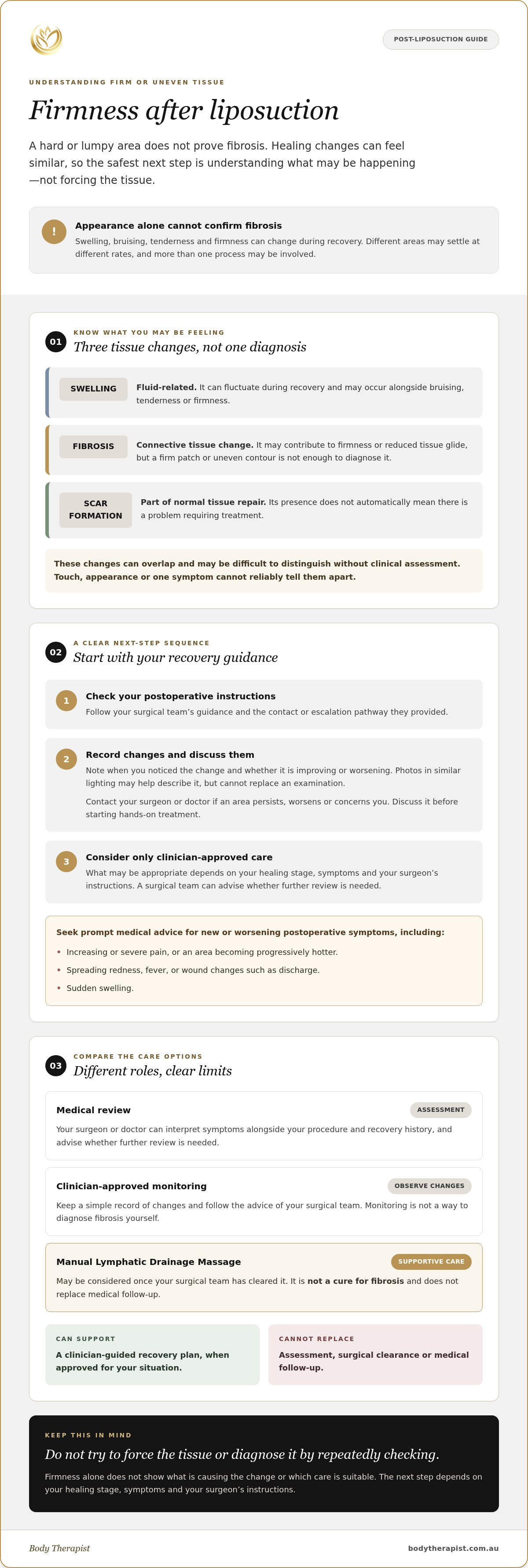
How to Decide When to Seek Fibrosis Care After Liposuction
A measured next step is safer than trying to treat firmness based on touch alone. Use this sequence to organise your care:
Note the symptoms. Record where the change is, when it began, whether it is improving or worsening, and any other symptoms.
Check your discharge guidance. Follow the instructions and contact pathway provided by your surgical team.
Contact your surgical team or doctor. Share your observations and ask whether you need an assessment before considering hands-on care.
Discuss supportive care only after clearance. If your treating team approves it, a practitioner can assess whether a session is appropriate.
New or worsening symptoms need medical advice, not a massage appointment. A therapist should defer treatment if your symptoms need clinical assessment or if your surgical team’s clearance is unclear. That safeguard matters: fibrosis treatment after liposuction should be guided by the cause of the change and your individual recovery, not by a standard timetable.
What information should you prepare before an appointment?
Have your procedure date and treated areas ready. Note when firmness began, where you feel it, whether it changes, and any accompanying symptoms. Bring your postoperative instructions, medication details and information about any surgeon or GP review. These details help the clinician or therapist understand the context, but they do not replace medical assessment.
When is supportive massage appropriate to discuss?
Your operating team determines whether and when manual care may be considered, based on the procedure and your recovery. There is no universal waiting period that makes treatment appropriate for everyone. For broader fluid-health context, read about post-surgical lymphatic drainage and recovery.
If you have been cleared to explore Manual Lymphatic Drainage Massage, ask the practitioner:
What technique will you use, and which areas will you avoid?
What pressure is appropriate, and can I ask you to adjust it?
What is the realistic goal of treatment, and what can it not do?
Are there symptoms, medications or other factors that mean treatment should be postponed?
What should I notice during a session, and what would make you stop?
Body Therapist offers Manual Lymphatic Drainage Massage as supportive care to discuss after surgical clearance. Share your instructions and symptoms so the practitioner can assess whether a session is appropriate. This care does not replace follow-up with your surgical team.
How Body Therapist Can Support a Clinician-Guided Recovery Plan
Body Therapist offers Manual Lymphatic Drainage Massage as supportive care to discuss only after your surgical team has cleared you for manual treatment. It is not surgery or a diagnostic service, and it should not be presented as a guaranteed fibrosis treatment after liposuction. If suitable, its role is to sit alongside your medical team’s advice, not replace it.
Before deciding whether a session is appropriate, share your procedure and recovery details, including the date, treated areas, current symptoms, relevant medications and postoperative instructions. This gives the therapist context to consider whether care fits within their scope. If your symptoms suggest you need medical assessment, or clearance is uncertain, treatment should be deferred while you contact your surgeon or doctor.
What can a therapist-led lymphatic session involve?
A careful discussion can cover your recovery history, what you are experiencing now, your surgical team’s guidance and what you hope to gain from supportive care. If proceeding is appropriate, the technique and areas addressed should take account of your circumstances and any relevant clinical advice. The therapist should refer you back to your medical team if a concern needs diagnosis or falls outside their scope.
What should you expect from supportive care?
Expect clear communication about the purpose and limits of a session, a plan consistent with your medical guidance, and the chance to raise concerns or ask for an adjustment. Manual lymphatic drainage may support fluid management when appropriate, but it cannot confirm that a firm area is fibrosis or promise to dissolve scar tissue, change appearance, or speed recovery. A responsible approach includes stopping or postponing care if new symptoms need medical review.
Body Therapist considers whether supportive manual care is suitable in light of your symptoms and postoperative instructions. If you have received clearance and want to explore whether Manual Lymphatic Drainage Massage fits your circumstances, you can contact Body Therapist about an appointment. There is no need to rush: obtain medical guidance first, then discuss your options with the practitioner.
Choose recovery support with confidence
Firmness or uneven texture after liposuction can have different causes, so appearance alone cannot confirm fibrosis. If changes persist, worsen or concern you, speak with your surgeon or doctor before pursuing treatment. Their guidance helps determine whether monitoring or supportive care is appropriate.
That distinction matters for fibrosis treatment after liposuction. Manual Lymphatic Drainage Massage may be considered as supportive care after surgical clearance, but it does not diagnose fibrosis or guarantee changes to scar tissue or appearance. Keep your medical team involved and share your postoperative instructions and symptoms with any practitioner you consult.
Body Therapist offers Manual Lymphatic Drainage Massage, with care considered only within appropriate clinical guidance and scope. The practice is run by qualified therapist Lee Carnegie. If your surgical team has cleared you for supportive manual care, you can discuss whether supportive lymphatic care may suit your recovery.
Take recovery one informed step at a time. With clear communication and the right clinical guidance, you can make choices that feel safer and more appropriate for your circumstances.
Frequently Asked Questions
Is fibrosis after liposuction normal?
Some firmness and changes in tissue texture can occur during healing, but appearance alone cannot tell you whether they are fibrosis or expected recovery changes. Fibrosis refers to altered or excess connective tissue; swelling, bruising and tenderness may also affect how the area looks and feels. If firmness persists, worsens or concerns you, contact your surgeon or doctor for an assessment rather than assuming it is normal.
Can massage break down fibrosis after liposuction?
Massage should not be assumed to break down fibrosis or remove scar tissue. Manual Lymphatic Drainage is a gentle technique that may support fluid management when appropriate, but it does not diagnose fibrosis or guarantee changes to firm areas or appearance. Ask your surgical team before arranging hands-on care. They can advise whether your recovery allows it, and a practitioner should defer treatment if medical review is needed.
How long does fibrosis last after liposuction?
There is no reliable timeline that applies to everyone. Tissue remodelling and recovery vary with the procedure, individual healing and other health factors, and duration alone cannot confirm fibrosis. If a firm or uneven area is not settling, is getting worse or is affecting you, discuss it with your surgeon or doctor. They can assess what may be contributing and whether monitoring or further review is appropriate.
When can I have lymphatic drainage massage after liposuction?
Only after your surgical team confirms that manual treatment is appropriate for your procedure and current recovery. There is no universal waiting period that suits everyone, so follow your discharge instructions and ask the treating team before booking. Share your procedure date, treated areas, symptoms and relevant medical guidance with the practitioner. If clearance is unclear or symptoms need medical assessment, postpone treatment and seek advice first.
How can I tell fibrosis from swelling after liposuction?
You cannot reliably distinguish fibrosis from swelling through self-examination. Swelling involves fluid accumulation and may change during recovery, while fibrosis involves connective tissue changes; their signs can overlap. Firmness or uneven texture alone does not establish the cause. Note when changes began, where they occur and whether they are improving or worsening, then share that information with your surgeon or doctor for an informed assessment.
What happens if fibrosis after liposuction is left untreated?
There is no single outcome that applies to every firm area, and a change may not be fibrosis in the first place. A clinician can assess whether monitoring, further investigation or another step is appropriate. Do not assume that a lump must be treated, or that delaying massage will cause harm. Seek medical advice if the area persists or worsens, and follow your surgical team’s guidance.
Who should I see for hard lumps after liposuction?
Contact your operating surgeon first, or speak with your GP if you cannot reach them or need medical advice. A doctor can assess the lump and decide whether further review is needed. Seek prompt medical advice for fever, spreading redness, increasing heat, severe or escalating pain, wound changes or sudden swelling. Consider supportive care only after medical concerns are addressed and your surgical team has cleared it.


Comments