

Fat Cavitation: A Guide to Recovery and Results

Updated: Aug 5
What if the ultimate success of your body contouring session has less to do with the ultrasound device and more to do with your body's internal filtration system? It's common to feel a mix of excitement and apprehension after your appointment, especially if you're experiencing unexpected sensations like a temporary ringing in the ears or slight abdominal tenderness. You want to ensure that the effort and investment you've put into your physique actually translate into a visible reduction in circumference. Understanding what to expect after fat cavitation is essential for navigating this physiological transition with confidence and clinical precision.
We recognise that the period following treatment can be confusing, particularly regarding the metabolic window and how to properly flush out the newly liquidated fat cells. This article provides a comprehensive roadmap of the recovery journey, bridging the gap between medical science and aesthetic results. You'll learn how to optimise your body's natural elimination processes through specialised manual therapies and lifestyle adjustments. We will detail the specific timeline for fat metabolism, the importance of lymphatic support, and the professional maintenance routines required to ensure your new contours remain permanent and well-defined.
Table of Contents
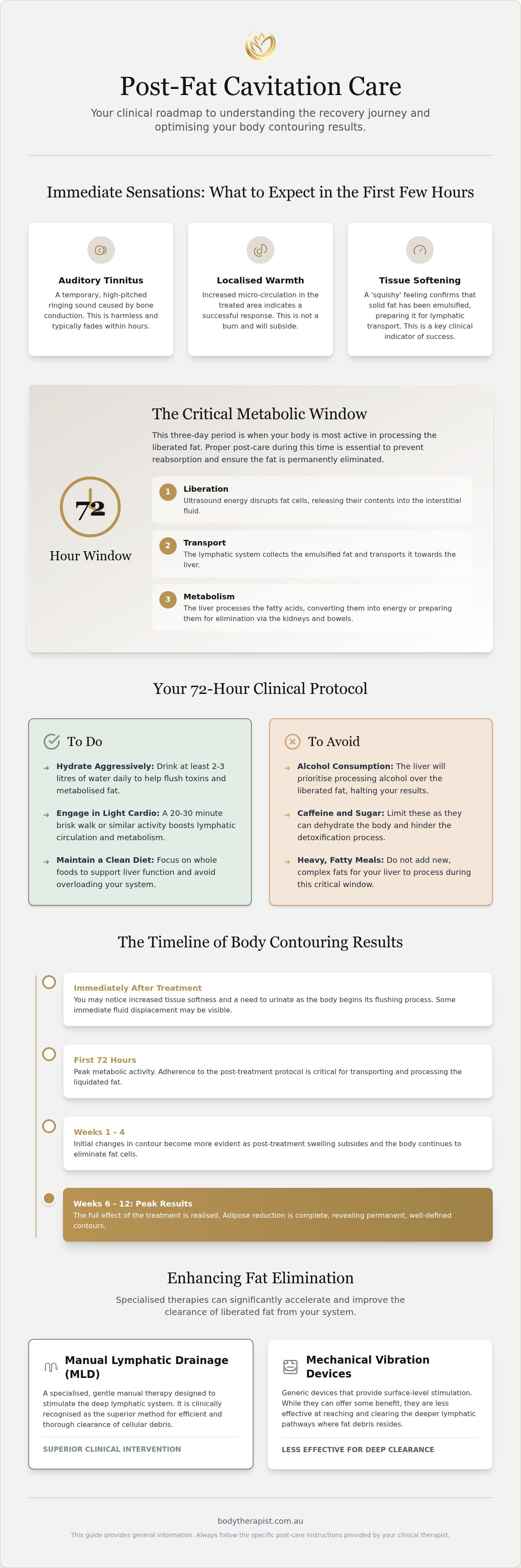
Immediate Post-Treatment: Sensations and Physiological Responses
The moment a session concludes, your body begins a complex series of biological shifts. Knowing what to expect after fat cavitation helps you differentiate between standard recovery and atypical responses. Most clients report an immediate, distinct set of sensory cues that confirm the ultrasound energy has successfully targeted the adipose tissue. These sensations are the first markers of a successful procedure, indicating that the mechanical destruction of fat cells is complete and the biological elimination phase has commenced.
The Auditory Phenomenon and Thermal Feedback
One of the most frequent queries involves a high-pitched ringing or buzzing sound. This auditory phenomenon occurs because the low-frequency sound waves travel through the bone structure to the inner ear; it is a harmless effect known as bone conduction. While it may feel unusual, the sensation typically dissipates within minutes or hours of the treatment ending. This is harmless. Simultaneously, you might notice a localised warmth or transient redness in the treated area. This is not a burn; rather, it's the result of heightened micro-circulation as the body responds to the internal friction generated between fat cells during the application of ultrasound energy.
Initial Fluid Dynamics and Tissue Softening
The physiological journey involves the metabolic process of lipolysis, where ultrasound energy disrupts the adipocyte membranes. This disruption causes fat cells to release their contents, specifically triglycerides and glycerol, into the surrounding interstitial fluid. Consequently, the treated zone often exhibits increased tissue pliability, feeling noticeably softer or even "squishy" to the touch immediately after the session. This tissue softening is a clinical indicator that the once-solid fat has successfully transitioned into an emulsified, liquid state, making it easier for the lymphatic system to transport.
You may also feel an urgent need to urinate shortly after your appointment. This is the first tangible sign that your kidneys and lymphatic system are beginning to process the excess fluid and cellular debris liberated during the session. Understanding what to expect after fat cavitation allows you to recognise these signals as positive progress. Other immediate responses include:
Increased Flexibility: A feeling of lightness or improved range of motion in the treated limb or torso due to the reduction of tissue density.
Systemic Hydration Needs: A subtle onset of thirst as the body requires water to facilitate the transport of newly released free fatty acids.
Mild Tenderness: A sensation similar to a light workout, caused by the mechanical manipulation of the subcutaneous layers.
These responses are healthy markers of clinical efficacy. They signal that the body has moved from the mechanical destruction phase into the active elimination phase, setting the stage for the intensive metabolic work that occurs over the following 72 hours. Results require patience. By monitoring these initial signs, you can be confident that the fat elimination process is correctly underway.
The 72-Hour Metabolic Window: Processing Liquidated Fat
The clinical efficacy of your treatment does not end when the ultrasound device is switched off. In fact, the most vital physiological work occurs during the subsequent 72 hours. This three-day period is known as the metabolic window, a critical timeframe where the body is most active in transporting and eliminating the fat liberated during the ultrasonic cavitation procedure. If the body doesn't successfully metabolise these lipids within this window, it faces the risk of re-esterification. This is a process where the released free fatty acids are reabsorbed by the body and stored in existing fat cells elsewhere, effectively neutralising the benefits of the session.
The Role of the Lymphatic System in Fat Transport
The lymphatic system serves as the body's intricate waste management network, specifically designed to handle large molecules that cannot enter the venous system directly. Emulsified fat is one such substance. Once the ultrasound energy has liquified the adipose tissue, the resulting cellular debris and lipids must be gathered by lymph vessels. These vessels transport the waste to lymph nodes for filtration and eventual systemic elimination. To ensure this process isn't hindered by stagnation, many clients seek a deeper understanding of lymphatic drainage to keep the fluid moving efficiently. When the lymph is sluggish, the liquidated fat remains trapped in the interstitial space, which can lead to temporary swelling rather than the desired reduction in body circumference.
Liver Metabolism and Energy Utilisation
After the lymphatic system delivers the lipids into the bloodstream, the liver becomes the primary site of processing. It works to convert glycerol into glucose, which the body then utilises as a source of immediate fuel. Simultaneously, the liver filters the free fatty acids to be either burned for energy or excreted through the urinary and digestive systems. You may notice a subtle rise in body temperature or a persistent thirst during this time. These are signs of a busy metabolism. To ensure your liver prioritises these newly available fats, it's essential to avoid competing substances like alcohol or high-sugar foods that might distract the liver from its task.
Understanding what to expect after fat cavitation involves recognising that your body is in a temporary state of metabolic overdrive. Your internal systems are working hard to clear the "rubbish" created by the treatment. Supporting this phase with light movement, such as a brisk walk, helps keep the lymph pumping and ensures the liver has a steady demand for the energy it is processing. If you want to ensure your system is functioning at its peak, booking a professional consultation can help refine your post-treatment strategy. By managing your metabolic rate during these 72 hours, you directly influence the visibility and permanence of your body contouring results.
Optimising Outcomes: The Clinical Post-Treatment Protocol
Achieving a visible reduction in body circumference requires more than just the clinical application of ultrasound energy; it demands a disciplined adherence to post-care protocols. While the treatment successfully liquefies adipose tissue, your lifestyle choices in the following days determine whether that fat is permanently eliminated or merely redistributed. Following a structured post-treatment care for fat cavitation ensures your lymphatic system remains efficient and your liver is not overwhelmed by competing metabolic tasks. This phase is about creating the ideal internal environment for waste removal.
The Hydration and Nutrition Strategy
Hydration is the single most important variable in the fat elimination process. You must consume between two and three litres of water daily for at least three days post-treatment. This isn't about general wellness; it's about fluid dynamics. Water volume directly affects lymph viscosity; if you're dehydrated, your lymph becomes thick and sluggish, slowing the transport of liberated triglycerides to the liver. When considering what to expect after fat cavitation, remember that your body needs this high fluid intake to physically flush the cellular debris through your renal system.
Dietary choices should focus on supporting the liver's workload. Implementing a low-GI (Glycaemic Index) diet prevents insulin spikes that would otherwise encourage the body to store the newly released free fatty acids back into existing adipocytes. A strict 24-hour alcohol ban is also non-negotiable. Alcohol is a metabolic priority for the liver. If you consume it, the liver will pause the processing of fats to detoxify the ethanol, significantly increasing the risk of the liquidated fat being reabsorbed by the body.
Movement as a Metabolic Catalyst
Physical activity serves as a mechanical driver for results. While a sauna session might feel therapeutic, it doesn't provide the necessary movement to clear the lymphatic pathways. A 20-minute brisk walk or light cardiovascular session is far more effective. Movement triggers the "muscle pump" effect, which is the primary driver of lymphatic flow in the limbs. Unlike the circulatory system, which has the heart as a pump, the lymphatic system relies on the contraction of skeletal muscles to push fluid through its one-way valves. This physical action ensures the "waste" from your treatment is actively moving toward the lymph nodes for filtration.
Don't overlook the importance of skin health during this transition. As the underlying fat volume reduces, the skin requires support to maintain its elasticity. Regularly moisturising the treated area with a firming cream or simple vitamin E oil helps maintain structural integrity. By combining targeted movement with precise nutrition and hydration, you transform the temporary softening of tissue into a permanent change in body contour. This clinical approach ensures you aren't just losing fluid, but effectively metabolising the targeted fat cells.
Managing Expectations: The Timeline of Body Contouring Results
Visible changes in body composition are rarely instantaneous. While the mechanical disruption of fat cells happens during the session, the aesthetic outcome is a cumulative process. Understanding what to expect after fat cavitation involves distinguishing between the immediate reduction in fluid volume and the long-term elimination of adipose tissue. Most clients notice a "de-bulking" effect within the first 48 hours; however, this is often the result of fluid displacement rather than permanent fat loss. The physiological removal of lipids takes significantly longer as the body systematically filters the emulsified waste.
The "Peak Result" milestone typically occurs between 6 and 12 weeks after your final session. This delay exists because the body continues to process cellular debris long after the ultrasound applicator has been removed. Clinical standards suggest a programme of 6 to 10 sessions, spaced approximately one week apart, to achieve substantial results. This frequency allows the lymphatic system to recover between treatments while maintaining a steady metabolic pressure on the targeted fat pockets. One-off treatments rarely produce the transformative contours most clients desire.
Week 1 to Week 4: The Internal Transition
During the first month, the changes are often more tactile than visual. You might find that your clothing fits more comfortably around the waist or thighs, even if the scales haven't moved significantly. This occurs because the body often prioritises the clearance of interstitial fluid or visceral fat before subcutaneous fat volume visibly drops. To ensure these tissues remain healthy and the fluid moves efficiently, incorporating clinical massage therapy can be highly beneficial. It helps to soften any temporary tissue congestion and supports the structural integrity of the treated zone, ensuring the skin remains supple as the underlying volume shifts.
Long-Term Maintenance and Sustainability
Sustainability depends on your biological baseline. Factors such as age, metabolic health, and hormonal balance dictate the speed of your transformation. It's also vital to remember that while cavitation reduces local fat volume, it doesn't prevent the body from storing energy in untreated areas if a caloric surplus is maintained. Many practitioners recommend combining cavitation with RF skin tightening to prevent skin laxity as the underlying fat volume decreases. This ensures the skin "shrinks" along with your new contours, providing a smoother, firmer finish.
Monitoring your body's response is key to a successful journey. If you notice persistent puffiness or a plateau in results, you should learn to identify the 5 signs your body needs clinical support. These indicators help you adjust your post-care routine before your next appointment. To develop a personalised plan tailored to your specific body composition, book a professional consultation with a qualified therapist today.
Enhancing Outcomes with Manual Lymphatic Drainage (MLD)
Ultrasonic fat cavitation is only half the equation. While the ultrasound energy successfully emulsifies the adipocytes, those lipids remain in the interstitial space until the lymphatic system clears them. This is where many people feel uncertain about what to expect after fat cavitation; without active intervention, the area can feel congested or even develop "tissue hardening" as the body responds to localised inflammation. Understanding what to expect after fat cavitation involves recognising that manual intervention is the bridge between liquifying fat and actually removing it. Integrating specialised MLD massage acts as a physiological vacuum, precisely directing the liquidated fat toward the nearest lymph nodes for systemic elimination.
The Science of Manual vs. Mechanical Drainage
Generic mechanical vibration plates or simple massagers often lack the nuance required for deep lymphatic clearance. The lymphatic vessels are delicate, superficial structures; excessive or blunt pressure from mechanical devices can actually collapse these vessels, hindering rather than helping the drainage process. Manual therapy allows for a specific, rhythmic hand pressure that mimics the body's natural lymphatic pulse. This clinical precision ensures that the drainage follows the correct anatomical pathways of the treated zone, rather than just moving fluid aimlessly. Beyond the physiological impact, the empathetic, clinical touch of a master practitioner provides a psychological sense of reassurance, grounding you during the physical transition of the contouring process.
Booking Your Post-Treatment Recovery Session
Timing is the most critical factor for success. To maximise the 72-hour metabolic window where your body is most active, scheduling an MLD session within 48 hours of your cavitation treatment is optimal. This ensures the liquidated fat is moved while it is still in its most emulsified state, preventing the risk of re-absorption. At Body Therapist, qualified therapist Lee Carnegie integrates functional mobility and myotherapy to support your recovery, ensuring that your lymphatic system isn't just stimulated, but fully cleared. This integrated approach distinguishes a professional clinical treatment from a standard beauty service. If you are ready to secure your results and support your body's natural filtration, book your clinical recovery session at Body Therapist to ensure your contouring journey is both safe and effective.
Mastering Your Clinical Contouring Journey
Mastering your clinical contouring journey involves understanding that the treatment room is only the starting point. By prioritising the 72-hour metabolic window and maintaining a rigorous hydration and movement protocol, you provide your body with the necessary tools to eliminate liberated lipids effectively. Recognising what to expect after fat cavitation allows you to navigate transient sensations with confidence, ensuring you remain focused on the cumulative results that peak between six and twelve weeks post-treatment.
Maintaining this focus on physical health often extends beyond clinical sessions; if you're interested in bringing wellness into the workplace, you might explore Chair Massage for Employees options to support your team's overall circulation and recovery.
At Body Therapist, we specialise in an integrated approach that combines advanced ultrasound technology with specialised Manual Lymphatic Drainage (MLD) expertise. Our qualified therapist, Lee Carnegie, focuses on functional mobility and anatomical precision within a medical-grade clinical environment to ensure your post-treatment care is as effective as the procedure itself. Optimise your body contouring results with a clinical consultation at Body Therapist. Your commitment to these clinical post-care steps is the final, essential element in achieving a more refined and permanent silhouette.
Frequently Asked Questions
Is the high-pitched ringing in my ears normal during fat cavitation?
Yes, a high-pitched ringing or buzzing sensation is entirely normal and expected during the procedure. Understanding what to expect after fat cavitation includes recognising that this auditory phenomenon occurs because the ultrasound waves travel through the bone structure to the inner ear via bone conduction. It is a harmless byproduct of the technology and typically ceases as soon as the applicator is removed from the skin.
How much water should I actually drink after my session?
You should consume between two and three litres of water daily for at least 72 hours following your session. This volume is a clinical requirement to maintain low lymph viscosity, allowing the emulsified fat to be transported efficiently to the liver. Without adequate hydration, the liquidated lipids may stagnate in the interstitial space, which significantly hinders your visible results and can lead to temporary tissue congestion.
Can I exercise immediately after fat cavitation treatment?
Immediate light to moderate cardiovascular exercise is highly encouraged to stimulate the "muscle pump" effect. Engaging in a 20-minute brisk walk or a light cycle within hours of your treatment helps the body utilise the newly liberated free fatty acids as fuel. This physical movement is a primary driver of lymphatic flow, ensuring the waste products are pushed toward the lymph nodes for filtration and eventual elimination.
Why do I need to avoid alcohol for 24 hours after cavitation?
Avoiding alcohol for at least 24 hours is essential because the liver prioritises the detoxification of ethanol over the processing of liberated fats. If you consume alcohol, the liver's metabolic capacity is diverted, which can lead to the re-esterification of the released lipids. Essentially, the fat you've just liquidated may be redeposited into existing fat cells rather than being permanently eliminated from your system.
How soon will I see actual centimetre loss on my waist or thighs?
While some clients notice a subtle shift in clothing fit within the first week, peak centimetre loss is typically observed between 6 and 12 weeks post-treatment. This timeline reflects the body's systematic approach to metabolising and excreting cellular debris. When considering what to expect after fat cavitation, it's important to view the process as a biological transition rather than an overnight fix, as the lymphatic system requires time for deep clearance.
What happens if I don't follow the post-treatment diet protocol?
Failing to follow the low-GI diet protocol significantly increases the risk of the liquidated fat being reabsorbed and stored by the body. High-sugar foods trigger insulin spikes that encourage adipose storage, which directly counteracts the effects of the cavitation. Adhering to the protocol ensures your liver remains focused on metabolising the released triglycerides rather than managing new energy intake from refined carbohydrates or simple sugars.
Is manual lymphatic drainage necessary after every cavitation session?
Will the fat come back if I stop my treatments?
The fat cells treated during cavitation are permanently disrupted; however, the remaining adipocytes in the area can still expand if a caloric surplus is maintained. Results are sustainable as long as you maintain a stable weight through a balanced diet and regular exercise. Cavitation is a body contouring tool designed to target stubborn pockets, not a permanent shield against future weight gain in untreated or adjacent tissues.


Comments