

Exercise for lymphatic system health and how it works
Breathing and movement are practical ways to support lymph flow. An exercise routine for lymphatic system health can combine deep belly breathing, everyday activity and gentle, targeted movements to help move fluid through the body. The lymphatic system relies on these actions to assist circulation.
If swelling, heaviness or tightness affects an arm or leg, it’s natural to wonder whether exercise will help or make things worse. For many people, appropriately paced movement can support lymphatic care. The right exercises and level of effort depend on individual needs.
This article explains how lymph moves, why breathing and large muscle groups matter, and which everyday activities can support circulation. It also covers gentle decongestive exercises for the legs and lower body, plus practical safety considerations for living with lymphoedema.
Table of Contents
Deep breathing exercises
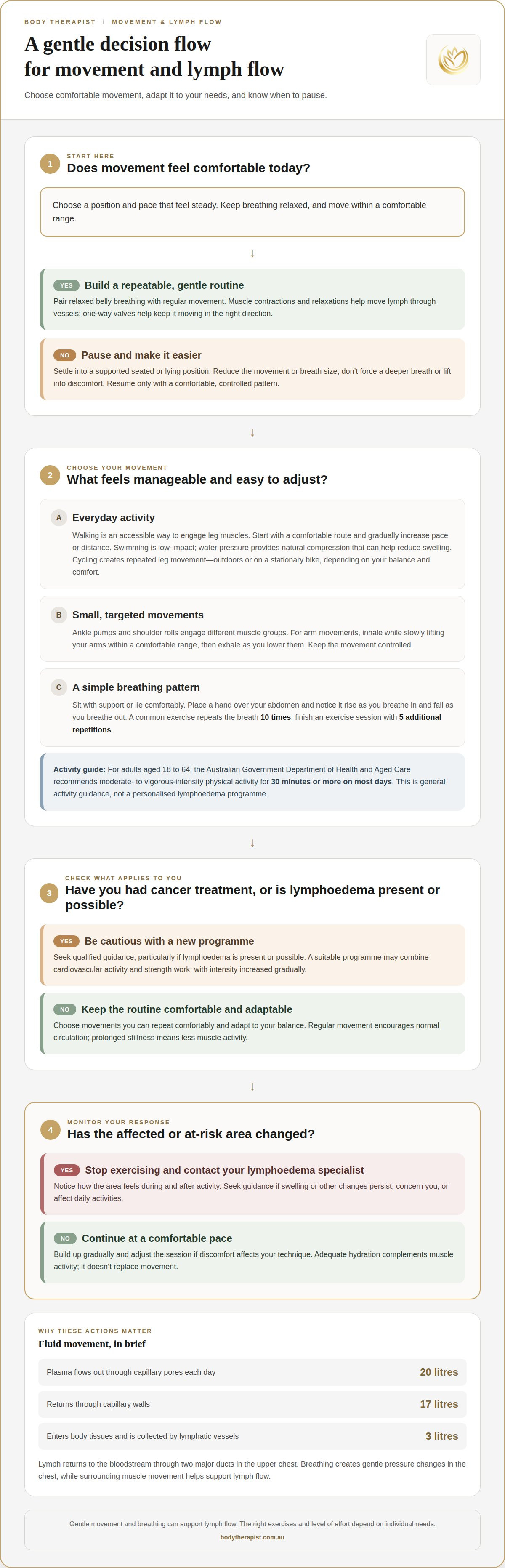
Deep breathing creates gentle pressure changes in the chest that support lymph flow. Pair it with arm movements, using a comfortable position and a slow, controlled pace.
Breathing technique
Use relaxed, deliberate breaths, allowing the abdomen to expand as you inhale and soften as you exhale. This gentle rhythm avoids straining and helps coordinate breathing with movement. A common exercise repeats the breath 10 times; finish an exercise session with 5 additional repetitions. Keep your shoulders relaxed and your balance steady, whether seated or standing.
Belly breathing
Belly breathing is a form of deep breathing in which the abdomen moves more than the upper chest. Sit with support or lie comfortably, place a hand over your abdomen, and notice it rise as you breathe in and fall as you breathe out. Your hand provides a simple movement cue. Breathe slowly, without forcing a deeper breath or holding it.
Coordinating breathing with arm movements
Breathing and arm exercises combine a steady breath with gentle shoulder and arm movement. For example, inhale as you slowly lift your arms within a comfortable range, then exhale as you lower them. Keep the movement controlled rather than reaching into discomfort. A South Australian health handout recommends its gentle arm exercise and breathing programme 5 times a day; follow the routine suited to your needs.
After cancer treatment, approach a new exercise programme cautiously and seek qualified guidance, particularly if lymphoedema is present or possible. Exercise is generally considered safe and beneficial when safety principles are followed. Stop exercising and contact your lymphoedema specialist if you notice a change in the affected or at-risk area.
For a simple check, place a hand on your abdomen before starting. It should move with each breath. If your shoulders lift or you feel strained, pause and settle into a comfortable position. Resume with a smaller, gentler breath. Aim for a repeatable pattern that works alongside movement, not forceful breathing or arm lifts.
How does the lymphatic system work?
For adults aged 18 to 64, the Australian Government Department of Health and Aged Care recommends daily moderate to vigorous intensity physical activities for 30 minutes or more on most days. The Australian Government Department of Health and Aged Care also recommends 30 minutes or more of moderate- to vigorous-intensity physical activity daily.
Movement and lymph flow
Movement supports lymph flow as surrounding muscles contract and relax, helping lymph travel through lymphatic vessels. One-way valves help keep it moving in the right direction. Walking, ankle pumps and shoulder rolls engage different muscle groups. A practical approach to exercise for lymphatic system health is to choose movements you can repeat comfortably and adapt to your balance.
Exercise supports the body’s fluid transport, but it isn’t a switch that prevents swelling. Prolonged stillness means less muscle activity, while regular movement encourages normal circulation. Notice how the affected area feels during and after activity. If you have lymphoedema, a suitable programme may combine cardiovascular exercise and strength work, with intensity increased gradually.
Hydration and lymph flow
Drinking enough water supports lymph movement throughout the body. Combine fluids with everyday movement, such as walking or gentle stretching. Hydration complements muscle activity; it doesn’t replace the contractions and pressure changes that help lymph flow. For exercise for lymphatic system health, regular movement and adequate hydration make a practical, consistent routine.
Fluid exchange helps explain lymph formation. About 20 litres of plasma flow out through capillary pores each day, while about 17 litres return through capillary walls. The remaining 3 litres of fluid enter body tissues and are collected by lymphatic vessels. Lymph returns to the bloodstream through two major ducts in the upper chest.
Manual lymphatic drainage massage uses gentle techniques to encourage lymph movement and may complement exercise. It isn’t a substitute for physical activity. If swelling or a change in symptoms concerns you, a health professional can help assess the situation. Learn how manual lymphatic drainage massage can fit alongside movement-based support.
Walking, running, swimming and cycling
Walking, running, swimming and cycling engage large muscle groups through rhythmic, repeated movement. Choose an activity you can adjust to your fitness and comfort.
Walking and running
Walking is an accessible way to engage leg muscles and support circulation during everyday activity. Start with a comfortable route, then gradually increase your pace or distance. Running requires more effort and may not suit everyone; walking is a useful alternative. Both activities involve repeated muscle contractions that help move lymph through vessels.
For adults aged 18 to 64, the Australian Government Department of Health and Aged Care recommends daily moderate to vigorous intensity physical activities for 30 minutes or more on most days. The Australian Government Department of Health and Aged Care also recommends 30 minutes or more of moderate- to vigorous-intensity physical activity daily. These recommendations describe general activity, not a personalised lymphoedema program.
Swimming and cycling
Swimming provides low-impact cardiovascular exercise, while cycling creates repeated movement through the legs. Water pressure provides natural compression, which can help reduce swelling. Choose a pace that allows controlled movement, and adjust the session if discomfort affects your technique. Depending on your balance and comfort, cycle outdoors or use a stationary bike.
Regular cardiovascular activity works alongside gentle movement, rather than replacing specific decongestive exercises. Walking, swimming and cycling recruit large muscles, while shoulder rolls and ankle pumps offer alternatives during seated breaks. The body has about 600 lymph nodes, but activity supports flow through the wider network of lymphatic vessels, not just the nodes.
Build a routine around activities you can repeat consistently. For example, alternate walking with cycling or swimming, and reduce the intensity if swelling or heaviness changes. People with lymphoedema should follow their usual care plan. If you wear a daytime compression garment, South Australian health guidance advises keeping it on during exercise. A treating health professional can help adapt activity to your needs.
Decongestive exercises for managing leg and lower-body lymphedema
Leg decongestive exercises use gentle muscle contractions and joint movements to encourage lymph flow. A routine can include seated, standing and ankle movements, adapted to your balance and comfort. A consistent exercise for lymphatic system health routine can help you organise these movements alongside everyday activity.
Yes. Before starting a new exercise routine, discuss it with your doctor, physiotherapist or lymphoedema specialist. They can adapt movements to your symptoms, mobility and usual compression routine, including positions that feel manageable.
Start gently, then increase activity gradually. One suggested starting point is 10 or 20 minutes of low-impact exercise a day. Leg lymphoedema exercises can be repeated 5 to 10 times each, at least twice a day. Follow advice from your treating professional if it differs from these general examples.
Ankle circles: Sit with your feet supported and rotate each ankle clockwise 10 times.
Seated marching: Lift each knee in turn, repeating 10 times per leg.
Knee extensions: Straighten one leg slowly, then lower it with control. Repeat 10 times per leg.
Heel raises: Hold a stable surface and lift your heels, repeating 10 times.
Mini squats: Stand near a stable surface, bend hips and knees towards a 45-degree angle, then rise. Repeat 10 times.
These movements use muscle contractions and joint motion. During heel raises, the calf muscles contract and relax, helping move fluid through lymph vessels. Keep each movement gentle and pain-free. Start with fewer repetitions or shorter holds if needed, and use support for standing exercises. A stable chair or bench can help with balance during mini squats. Keep exercise for lymphatic system health comfortable and repeatable rather than pushing through discomfort.
Follow your usual daytime compression routine during exercise. If the affected leg feels different or swelling changes, stop and contact your lymphoedema specialist. For guidance tailored to your movement needs, explore lymphoedema support options.
Body Therapist: Manual Lymphatic Drainage Massage
Body Therapist offers Manual Lymphatic Drainage Massage as a hands-on complement to movement-based lymphatic care. This gentle, rhythmic technique encourages lymph flow and may suit people seeking support alongside their usual exercise routine.
If ongoing swelling, heaviness or restricted movement affects daily activities, Lymphedema Therapy offers focused support. People managing care during or after cancer treatment may also consider Oncology Massage, while Remedial Massage addresses other muscular concerns. The right approach depends on your needs and health circumstances.
Exercise is an important part of lymphatic health, but it isn’t the only option. Manual treatment can form part of a broader approach alongside movement and advice from your healthcare team. Contact Body Therapist to discuss lymphatic support and services suited to your needs.
Make your next step a considered one
Building a routine for exercise for lymphatic system health is about finding movement you can sustain and adapting it to your body. If swelling, heaviness or changes in an affected area are present, seek advice from your healthcare professional before making significant changes to your activity. Their guidance can help you understand which movements suit your circumstances.
Hands-on support can also be part of a broader care approach. Body Therapist offers Manual Lymphatic Drainage Massage and Lymphedema Therapy for lymphatic care, alongside Remedial Massage for other muscular concerns. These services complement, rather than replace, advice from your healthcare team.
For a considered discussion about your needs, contact Body Therapist. Start with a manageable step, pay attention to how your body responds, and build from there with confidence.
Frequently Asked Questions
Compression or no compression during and after exercise?
If you usually wear a daytime compression garment or bandage, South Australian health guidance advises keeping it on during exercise. Afterward, follow your normal wearing routine rather than removing it simply because the session has ended. People who wear compression only while awake are advised to keep it on until bed. This guidance doesn’t mean everyone should wear compression continuously.
What exercise is for lymphatic drainage?
No single movement provides a complete lymphatic drainage routine. A balanced programme can combine low-impact cardio with simple movements that activate the limbs, such as seated marching or ankle pumps. These can be adapted for seated exercise or brief movement breaks. If you have lymphoedema, choose exercises suited to the affected area and follow the plan recommended by your healthcare team.
How does exercise support the lymphatic system?
Exercise supports lymph flow as muscles contract and relax around lymphatic vessels. For example, calf movement during a walk can help move lymph from the lower limbs, while arm movement engages muscles in the upper body. One-way valves in the vessels help direct lymph. Regular activity supports this transport process, but it doesn’t replace assessment when swelling is unexplained or persistent.
Which exercises are best for lymphatic flow and circulation?
The most useful options involve repeated, comfortable movement across large muscle groups. Walking, cycling, swimming and gentle strength work can all contribute. You can also break up long periods of sitting with simple joint movements. Rather than relying on one “best” exercise, choose activities that suit your ability and fit into a regular routine.
Can walking, swimming, cycling, or strength training help lymphatic drainage?
Yes. Walking, swimming and cycling provide rhythmic movement, while strength training repeatedly contracts muscles against resistance. These activities can support lymph flow as part of an overall routine. Start at a manageable level and build gradually, especially if you’re new to exercise or have lymphoedema. If you notice changes in an affected or at-risk area, stop and contact your lymphoedema specialist.
Are breathing exercises or gentle stretching effective for lymphatic flow?
They can support lymph movement as part of a broader activity routine. Relaxed belly breathing changes pressure through the chest, while gentle stretching moves muscles and joints without vigorous effort. For example, pair a comfortable stretch with a slow breath, keeping the movement within an easy range. Avoid forcing a stretch or breath; aim for controlled, repeatable movement.