

What Lymphedema Therapist Certifications and Credentials Mean

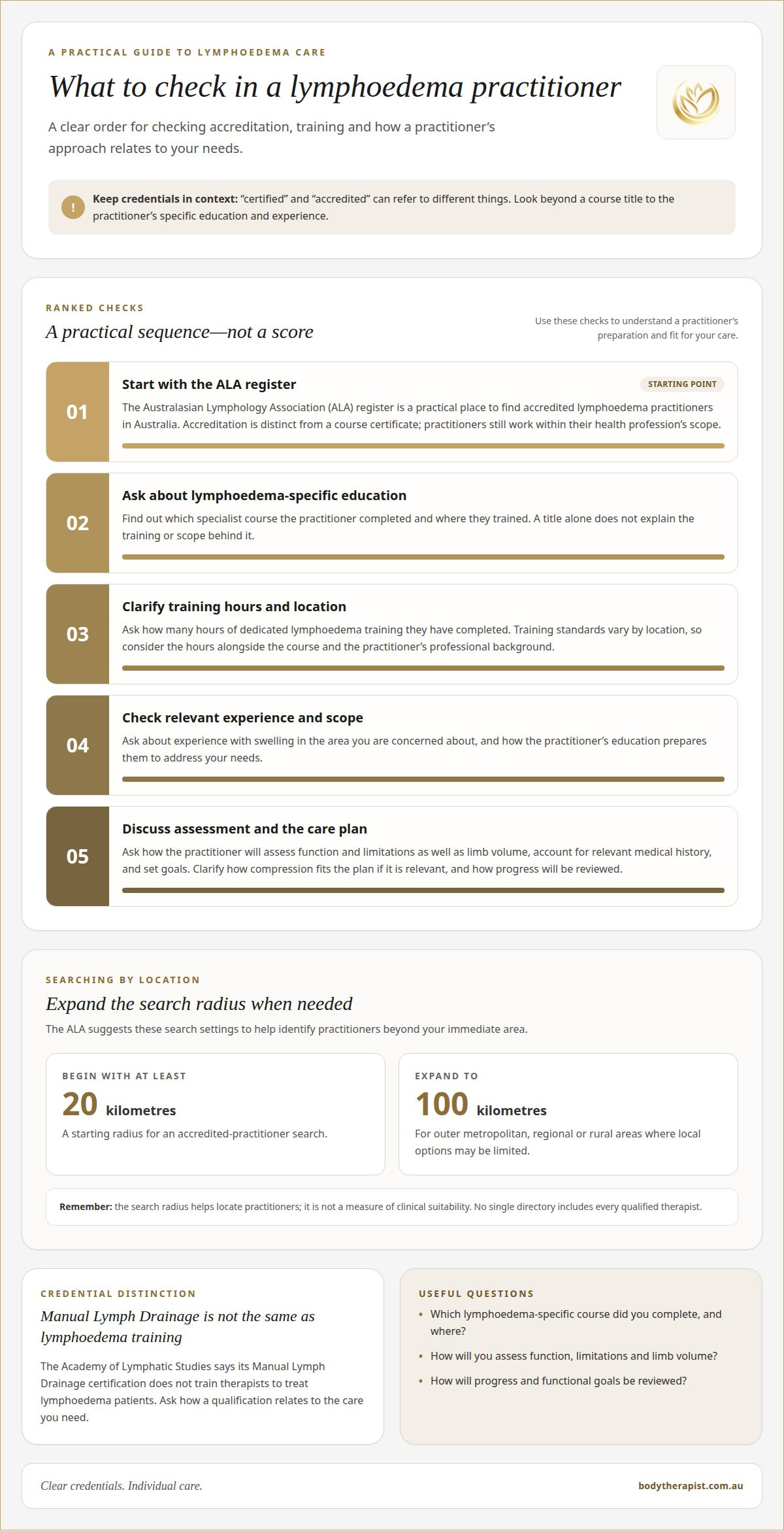
A Manual Lymph Drainage certificate and specialist lymphedema training are not interchangeable. The Academy of Lymphatic Studies says its Manual Lymph Drainage certification does not train therapists to treat lymphedema patients. In Australia, the National Lymphoedema Practitioners Register is the recognised register of accredited practitioners, so finding a lymphedema-certified therapist involves looking beyond a single course title.
It makes sense to look for clear evidence of a therapist’s training before starting care. “Certified” and “accredited” can describe different credentials, and understanding the distinction can help you choose lymphoedema support.
This guide explains what lymphedema therapist certification can mean, how Australasian Lymphology Association accreditation fits in, and what to ask about a practitioner’s qualifications. It also clarifies how Manual Lymph Drainage training fits into the picture, so you can assess credentials in context.
Table of Contents
1. What does “certified lymphedema therapist” mean?
“Certified lymphedema therapist” can describe specialist education, but the title alone doesn’t explain a practitioner’s training or scope. Lymphoedema has 2 types, primary and secondary, which have different causes, according to the NHS. A practitioner’s relevant preparation should relate to assessing and managing lymphatic conditions, not simply completing a course with a similar name.
In North America, LANA certification involves meeting its training requirement of at least 135 hours and completing an accredited board examination. Lymphedema specialists don’t all need LANA certification, however. LEARN also recommends choosing a therapist who has completed at least 135 hours of training. These are useful reference points when interpreting credentials, rather than a universal Australian certification rule.
Course titles matter. The Academy of Lymphatic Studies describes graduates of its Complete Lymphedema Certification as Certified Lymphedema Therapists, trained in the four components of Complete Decongestive Therapy. Its Advanced Lymphedema Management course is for therapists who already hold that certification and want further education. A Manual Lymph Drainage certificate alone does not establish the same preparation.
When finding a lymphedema certified therapist in Australia, start with the National Lymphoedema Practitioners Register, the recognised register of accredited practitioners in Australia and New Zealand. No single directory includes every qualified therapist. The National Lymphoedema Network and LANA offer online directories in North America, so treat them as additional training resources, not Australian accreditation lists.
When reviewing a profile, note the practitioner’s original health profession, specialist course, training hours and clinical focus. Occupational therapy is one professional background represented in Canadian lymphoedema care, and training standards vary by location. Ask how the therapist’s education prepares them to address your needs, including assessment, compression and decongestive therapy. The NHS says a GP may refer someone with typical symptoms to a specialist lymphoedema treatment centre for further assessment.
Patients can ask a referred therapist about their specific lymphedema training hours and where they trained. The United States has no single national certification requirement for lymphedema therapists. The Lymphology Association of North America (LANA) established standards and a testing system to certify a minimum level of training, knowledge and experience. The North America Lymphedema Education Association is an alliance of four lymphedema therapy certification schools; Vodder is the only training school requiring in-person recertification.
2. Questions to ask about therapist qualifications
A credential is most useful when you understand the training behind it and how it informs care. Before booking, ask about the therapist’s original health qualification, specialist lymphoedema education and experience with concerns like yours. Clear answers help you judge whether their preparation suits your needs.
Ask these practical questions during an initial conversation:
Which lymphoedema-specific course have you completed, and where did you train?
How many hours of dedicated lymphoedema training have you completed?
What experience do you have with swelling in the area I’m concerned about?
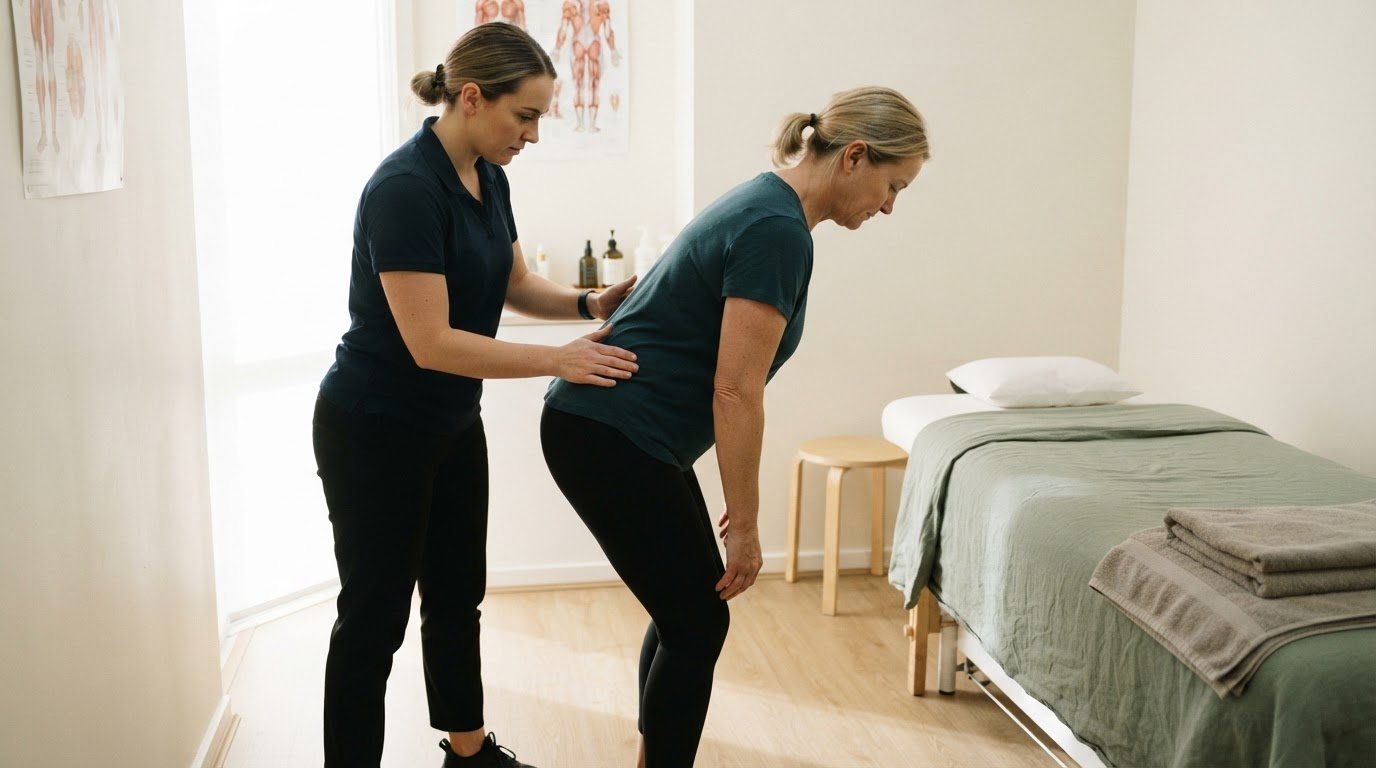
How will you assess function and limitations, as well as limb volume?
How do compression garments fit into the care plan, if they’re relevant to my situation?
How will you account for my medical history, including previous surgery or cancer treatment?
The answers should explain more than a course title. For example, a therapist might describe how their training informs assessment, treatment goals, education and an agreed plan. A first visit should cover these elements, giving you a clear understanding of the proposed approach.
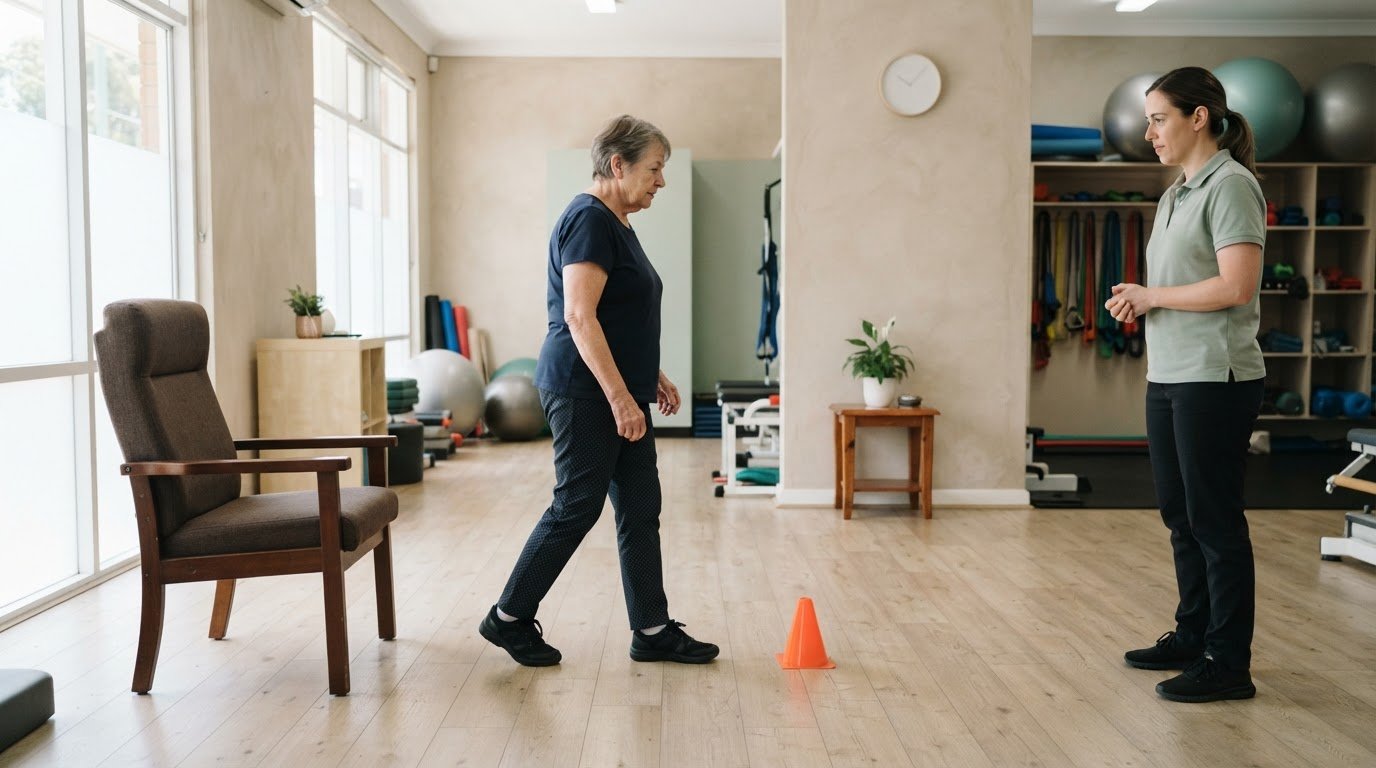
Ask how progress will be reviewed. A specialist may measure both arms at regular intervals to compare their size, but volume is only one part of an evaluation. Functional goals and limitations matter too. If swelling affects reaching, dressing or daily tasks, explain this clearly and ask how the assessment will account for it.
Before booking, clarify what information to bring, whether a referral is useful and how the first appointment is structured. A short symptom diary can help you recall changes and relevant details. Ask how the therapist will explain garment use, monitoring and self-care where these apply. The discussion should leave you with defined goals and a plan, not just a measurement.
For a focused discussion of lymphoedema care and your needs, explore lymphoedema support options.
3. Australasian Lymphology Association accreditation
In Australia, the Australasian Lymphology Association (ALA) provides a practical starting point for finding accredited lymphoedema practitioners. Its register identifies practitioners who have met the association’s criteria for inclusion. Accreditation is distinct from a course certificate: it reflects recognition through the ALA register, while each practitioner still works within their health profession’s scope of practice.
The ALA recommends beginning an accredited-practitioner search with a radius of at least 20 kilometres. If you live in an outer metropolitan, regional or rural area, expand the search radius to 100 kilometres. This can reveal practitioners beyond your immediate suburb, especially where local options are limited. Treat the radius as a search setting, not a measure of clinical suitability.
Use the register to identify practitioners near you, then consider how their professional background and lymphoedema education relate to your needs. An ALA listing does not replace a discussion about assessment, treatment goals or the care plan. If swelling affects movement or daily activities, for example, discuss those functional concerns alongside the treatment focus.
Annual criteria matter because inclusion on the ALA list depends on practitioners meeting requirements each year. The register is therefore more informative than an old course certificate viewed on its own. It does not mean every practitioner has identical experience or takes the same approach to lymphoedema treatment. Accreditation and clinical fit are related, but they answer different questions.
Keep the distinction clear when comparing credentials from Australia and overseas. The Lymphology Association of North America (LANA) has its own certification system, while ALA accreditation applies to the Australasian register. A course completed through an overseas training school may add relevant education, but its title alone does not establish ALA accreditation. Use the register first, then consider the practitioner’s training and scope together.
For a focused search, begin with the ALA register’s recommended radius, broaden it if needed, and use the listings as a starting point for assessing professional fit.
4. Manual Lymph Drainage certification
Manual Lymph Drainage (MLD) is a specific technique, not a synonym for comprehensive lymphoedema care. A certificate can show that a therapist completed MLD education, but the course title alone does not establish broader knowledge of assessment and treatment. That distinction is central when interpreting credentials.
The Academy of Lymphatic Studies says its MLD certification does not train therapists to treat lymphoedema patients. Its statement highlights the key point: MLD training and lymphoedema treatment training are not interchangeable. Ask what the course covered and whether the therapist has separate preparation for managing lymphoedema.
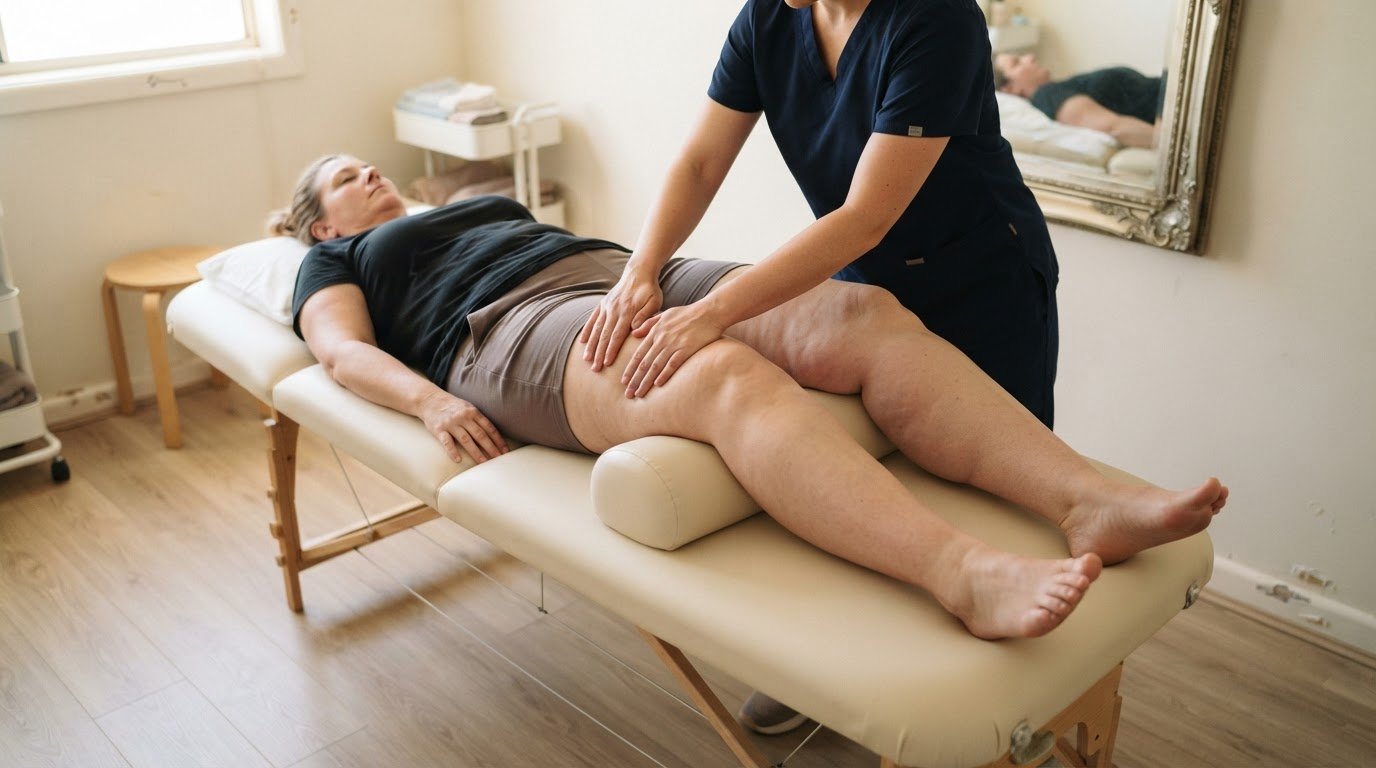
Complete Decongestive Therapy illustrates the broader scope. It can include diagnosis, manual lymphatic drainage, multilayer compression bandaging, compression garments, therapeutic exercises and self-care. MLD is one component, not proof of training in every part. A therapist’s overall preparation should match the care being discussed.
Before booking, ask whether the practitioner’s MLD course was standalone or part of comprehensive lymphoedema education. Then ask how their training prepares them to assess your needs, set goals and explain the proposed plan. If bandaging or garments are relevant, clarify how those elements fit the practitioner’s professional scope and your care plan.
Names can also cause confusion across countries. The National Lymphedema Network is a North American organisation, while Australian accreditation is addressed through the Australasian Lymphology Association. An MLD course certificate from a training school does not itself mean the practitioner appears on the Australian accredited-practitioner register. Treat technique training and professional accreditation as separate credentials.
The practical takeaway: consider MLD certification evidence of training in that technique, then assess lymphoedema-specific education separately. For care focused on manual drainage, explore Manual Lymphatic Drainage Massage.
Self-care education should also be part of the discussion. It should cover self-manual lymphatic drainage, appropriate exercises, progress monitoring, bandaging, garment use and maintenance, and skin care. Ask the practitioner to explain how these subjects are addressed in the education they provide and which are included in your care plan. This keeps the focus on practical self-care alongside the difference between learning a drainage technique and broader preparation for lymphoedema care.
Body Therapist: Lymphedema Therapy
Body Therapist offers Lymphedema Therapy for people seeking professional support with lymphoedema. If you’re comparing a practitioner’s training with your care needs, this service provides an opportunity to discuss an appropriate therapeutic approach.
Manual Lymphatic Drainage Massage is also available, but it is distinct from Lymphedema Therapy. The difference matters: a technique-focused massage and support for lymphoedema are not interchangeable terms. Oncology Massage may also be relevant for people seeking massage in an oncology context.
Share your concerns and relevant treatment history when discussing care, so the conversation can focus on your needs and goals. Contact Body Therapist to discuss Lymphedema Therapy.
Take the next step towards care that fits
Your next appointment can be more productive when the discussion starts with what you need from care. Describe the changes affecting your comfort or daily activities and the outcomes you hope treatment will support. This helps shape a conversation around your priorities, not just a credential.
Finding a lymphedema certified therapist is part of choosing support that suits your circumstances. The next step is to discuss how a practitioner’s approach relates to your needs and what a considered treatment plan might involve. You do not have to interpret every credential on your own.
Body Therapist offers Lymphedema Therapy, Manual Lymphatic Drainage Massage and Remedial Massage. Discuss your concerns to identify which service best fits the support you’re seeking.
Contact Body Therapist to discuss your care. A clear, informed conversation is a positive step forward.
Frequently Asked Questions
What does “certified lymphedema therapist” mean?
It generally describes a practitioner who has completed specialist lymphoedema education, but the title can refer to different courses and certification systems. In Australia, distinguish a course credential from accreditation on the Australasian Lymphology Association register. A therapist may, for example, hold a specialist training certificate without that title alone indicating ALA accreditation. Consider both the qualification and how it relates to the care being discussed.
Comments