

Body Contouring Consultation: What to Expect and Discuss

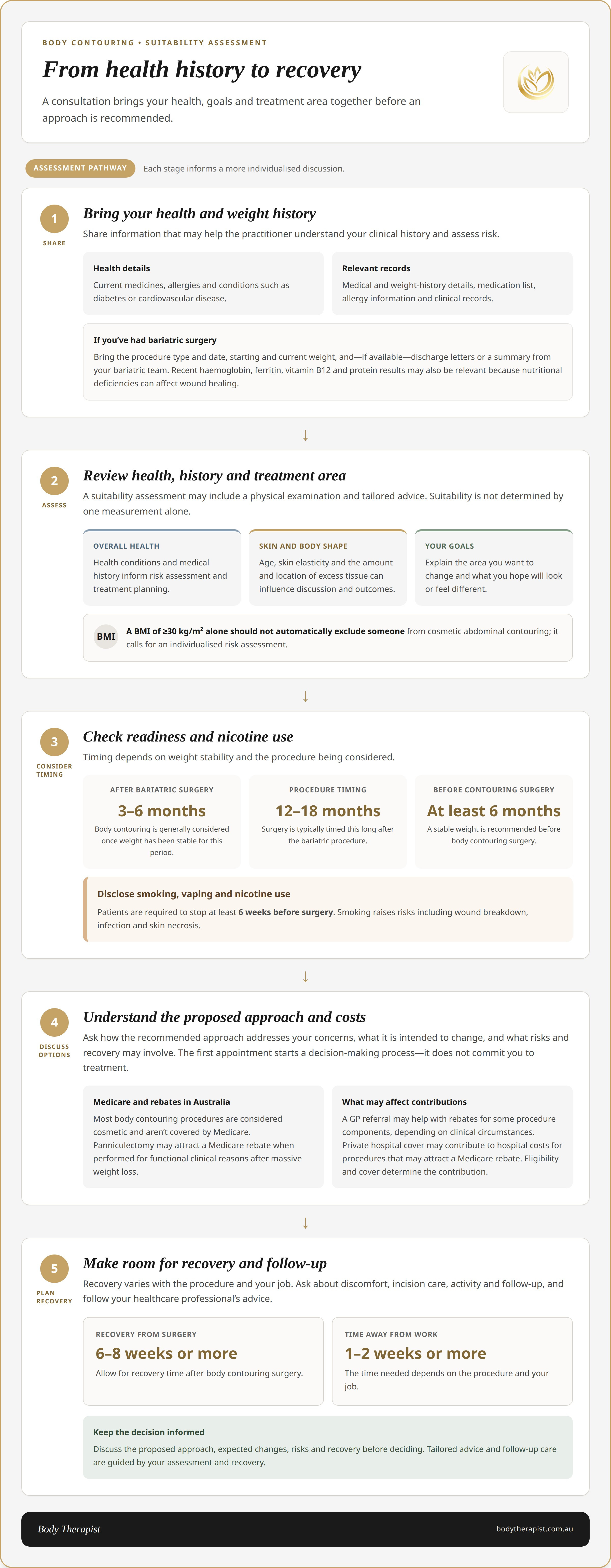
Your target area alone doesn’t determine whether body contouring is suitable. The most useful body contouring consultation questions help clarify how your health, medical history, body shape goals and treatment area fit together.
It’s natural to want to know what a body contouring consultation involves and which concerns it can address. Use the appointment to explain your goals, share relevant health information and understand which approaches may suit your needs.
This guide covers what may be assessed, how treatment areas and possible changes are discussed, and what information to bring. It also suggests questions about the proposed approach, recovery and risks, helping you make an informed decision without feeling rushed.
Table of Contents
Medical suitability and comorbidity assessment
A suitability assessment considers your overall health, medical history and goals before a procedure is recommended. It may include a physical examination and tailored advice. Share your current medicines, allergies and health conditions, such as diabetes or cardiovascular disease, so they can inform the risk assessment and treatment plan.
After bariatric surgery, bring the procedure type and date, plus your starting and current weight. Discharge letters or a summary from your bariatric team can help explain your clinical history. Recent haemoglobin, ferritin, vitamin B12 and protein results may also matter, because nutritional deficiencies can affect wound healing.
Timing depends on weight stability and the procedure being considered. After bariatric surgery, body contouring is generally considered once weight has been stable for 3-6 months, and surgery is typically timed 12-18 months after the bariatric procedure. A stable weight for at least 6 months is recommended before body contouring surgery.
Age, skin elasticity and overall health can influence outcomes. A BMI of ≥30 kg/m² alone should not automatically exclude someone from cosmetic abdominal contouring; it calls for individualised risk assessment. Smoking, vaping and nicotine use are also important to disclose: patients are required to stop at least 6 weeks before surgery, as smoking raises risks including wound breakdown, infection and skin necrosis.
In Australia, most body contouring procedures are considered cosmetic and aren’t covered by Medicare. Panniculectomy may attract a Medicare rebate when performed for functional clinical reasons after massive weight loss. A GP referral may help with rebates for some procedure components, depending on clinical circumstances. Private hospital cover may contribute to hospital costs for procedures that may attract a Medicare rebate. Eligibility and cover determine the contribution.
For preparation, bring your medical and weight-history details, medication list, allergy information and relevant clinical records. Recovery from body contouring surgery can take 6-8 weeks or more; time away from work may be 1-2 weeks or more, depending on the procedure and job. Follow your healthcare professional’s advice on discomfort, incision care and gradually resuming activity, with follow-up care guided by your recovery.
What Should I Expect During The Consultation?
The first appointment starts a decision-making process; it doesn’t commit you to treatment. Expect to discuss your goals, review relevant areas and consider possible approaches.
The Complimentary Consultation
If the appointment is described as complimentary, ask what it includes. A consultation typically covers your medical history, a physical examination and tailored advice, with time to explain your goals and hear the proposed approach. Bring a support person if useful, and note questions about the procedure, recovery and costs. Discuss your suitability, where surgery would take place and the recommended technique. You can leave without deciding on treatment.
Before-and-After Photos and Expectations
Ask to see before-and-after photos and discuss which outcomes are reasonable for your anatomy and goals. Images can help frame expectations, but they don’t predict an identical result. Ask how your appearance may change over time or after pregnancy, and what options exist if you’re dissatisfied. Final results are visible at 6-12 months as swelling resolves and scars mature. Share emotional concerns openly; a support person or counsellor can help you consider the decision.
Treatment Course and Expected Results
Ask how treatment will be staged, how long the procedure may take and what recovery support you’ll need. Body contouring procedures can take several hours; some patients stay overnight, while others go home the same day. Ask how risks and complications are managed, and when you can resume activities. For abdominoplasty, clarify how excess skin is addressed, what changes to expect and how follow-up will track healing. Weigh the expected result against the recovery involved to make an informed decision.
Assessing body shape goals and treatment areas
During the assessment, describe the areas you want to change and what you hope will look or feel different. For example, excess abdominal skin after significant weight loss may be a functional concern, an aesthetic concern, or both. Separating these aims helps clarify what matters most to you.
Be specific about the effects on daily life and your visual priorities. You might explain that skin folds make dressing uncomfortable, or that your main concern is your abdominal contour in fitted clothing. A useful body contouring consultation question is which tissue characteristics matter for your goal.
Functional: describe movement, clothing or skin-fold concerns.
Aesthetic: identify the body area and the change you hope to see.
Priority: name the concern that would make the greatest difference to you.
This distinction helps guide discussion of surgical and non-surgical approaches. A consultation considers your goals alongside your medical history, examination findings and the characteristics of the treatment area. The amount and location of excess tissue can influence which options are discussed.
Prioritise your goals by identifying the main area first, then noting related concerns. For instance, you may want to discuss abdominal skin before considering changes to another area. This creates a clearer plan and keeps the proposed treatment focused on your priorities, rather than a general wish to change your shape.
Ask the practitioner to explain how the recommended approach addresses each concern and what it is intended to change. One useful body contouring consultation question is how the treatment area and your specific goal shape the recommendation. Clear examples help you assess whether your expectations align with the tissue and treatment area.
Areas considered for body contouring
In Australia, procedures include abdominoplasty, liposuction, breast augmentation or reduction, arm lifts, butt lifts and vaginal rejuvenation. These surgical options address different areas and concerns. For example, abdominoplasty may be considered after major weight loss when excess skin is a concern. Non-surgical approaches are another category; the suitable option depends on the treatment area, tissue and goals.
Ask what each proposed procedure is intended to change, and compare its recovery and risks with your priorities. A cosmetic goal, such as changing your abdominal contour, differs from a functional concern that affects activity. This distinction can help shape a realistic discussion about whether a procedure fits your circumstances.
For surgery, ask about the practitioner’s specific plastic surgery training, including its duration, and their hospital privileges for the procedure. Discuss relevant qualifications and registration, where the procedure takes place, and how complications are managed. These questions clarify who provides care and the setting for treatment.
Abdomen: discuss excess skin after significant weight loss and any functional effects.
Arms or thighs: ask whether the concern is skin laxity, tissue distribution or both.
Breasts or buttocks: explain the desired change and how it relates to your overall goals.
Under the chin: discuss fullness, which may relate to genetics, ageing, lifestyle or posture.
For each area, describe what you want to improve and how it affects daily life. A practitioner can assess the tissue and explain which options match your concern. If several areas matter, prioritise the one with the greatest functional or aesthetic impact before discussing additional treatment.
Private hospital cover may contribute to hospital costs for procedures that may attract a Medicare rebate, such as panniculectomy for functional clinical reasons after massive weight loss. Most other body contouring procedures are considered cosmetic and aren’t covered by Medicare. Include the procedure’s purpose and likely setting in your planning.
Body Therapist
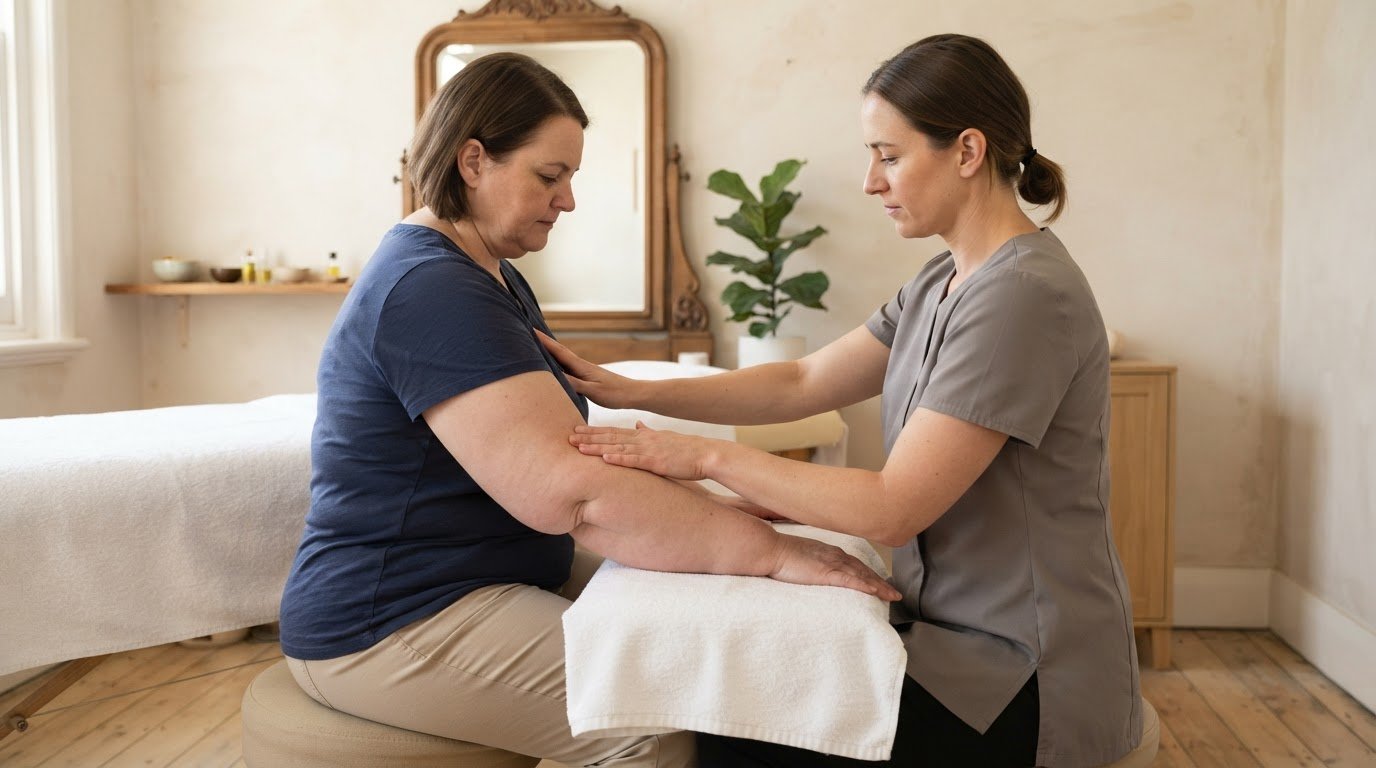
Body Therapist offers therapeutic care that can complement broader health needs alongside body shape goals. Services include Manual Lymphatic Drainage Massage, Lymphedema Therapy, Remedial Massage and Oncology Massage. These are therapeutic services, not surgical body contouring procedures.
If your consultation raises questions about lymphatic health, swelling or supportive massage, discuss those needs separately with your healthcare professional. They can help determine whether a therapeutic service suits your circumstances and how it relates to your treatment plan. Clear goals and relevant health information help focus that discussion.
Contact Body Therapist to discuss your therapeutic care needs.
Take your next step with clarity
Use the consultation to make a considered decision, not a rushed commitment. Keep your priorities grounded in what you want to change, how the concern affects you and what the proposed treatment involves. The body contouring consultation questions you prioritise can help you decide whether the approach aligns with your health needs and expectations.
For therapeutic support alongside broader care, Body Therapist offers Manual Lymphatic Drainage Massage, Lymphedema Therapy and Remedial Massage. These services are distinct from surgical body contouring and may suit separate therapeutic needs.
If you’d like to discuss supportive care in relation to your circumstances, contact Body Therapist. A clear conversation is a practical next step towards choosing care that feels informed and appropriate for you.
Frequently Asked Questions
Am I A Suitable Candidate For Body Contouring?
Suitability is assessed against your health, medical history and goals, not one measurement alone. For rectus diastasis surgery, postpartum patients are generally advised to wait at least 2 years after their last childbirth and have no plans for a future pregnancy. Functional impairment and completion of a standardised 6-month core training programme are also considerations. These factors help frame a clinical discussion about whether surgery is appropriate.
Can any procedures be combined safely, or should they be staged?
Some surgical procedures may be combined, while others are staged to manage the overall treatment and recovery plan. Body contouring surgery may combine procedures such as breast augmentation, abdominoplasty and liposuction. Arm and thigh lifts are typically staged 3-6 months after other body contouring procedures. Ask the surgeon to explain the reasoning for the proposed sequence, including how it affects recovery and support needs.
What information should I provide to prepare for a body contouring consultation?
Give a clear account of your health, medicines, allergies and treatment goals. If you’ve had bariatric surgery, include the procedure type and date, along with your starting and current weight. A discharge summary can help explain your care history. Be ready to discuss pregnancy or breastfeeding status, diet and exercise habits, as these details provide useful context for planning.
What Can I Expect Regarding The Recovery Time?
Recovery varies with the extent of surgery and the work involved. After body contouring surgery, compression garments may be worn for several weeks, and heavy lifting or intense exercise may need to be avoided for several weeks. Full recovery can take a few months. Ask for a practical plan covering incision care, discomfort, activity progression and help at home during recovery.
What Kind of Results Can I Expect?
Body contouring surgery after major weight loss can remove excess fat and skin and improve the tone of underlying tissue. Changes depend on the procedure and area treated, so discuss the specific contour you want addressed. Before-and-after images can support that conversation, but consider whether the examples reflect similar concerns and what outcomes are realistic for your body.
What happens during a body contouring consultation in Australia?
A consultation typically includes a review of medical history, a physical examination and tailored advice. You can discuss your goals, candidacy, proposed technique, procedure location and recovery plan. Standing medical photographs may be taken at 0°, 45° and 90° to document appearance. Bring questions and take time to understand the recommended approach before deciding whether to proceed.
Comments