

Clinical Lipedema Massage Techniques: A Practitioner’s Guide to Management in 2026

The firm, deep-tissue pressure you've been told is essential for physical recovery might actually be your greatest obstacle to lasting relief. For those living with the heavy, painful reality of lipedema, standard remedial methods often result in significant bruising and increased inflammation rather than the desired physiological release. Mastering specialised lipedema massage techniques is not about applying more force; it's about understanding the delicate interplay between lymphatic flow and diseased adipose tissue to facilitate genuine structural change.
We recognise the daily frustration of managing limbs that feel perpetually weighted and tissue that reacts with sharp pain to the slightest touch. It's exhausting to navigate the confusion between fluid-swelling and fat-swelling without a clear clinical roadmap. This guide provides a masterclass in professional management, moving beyond basic wellness to a sophisticated, evidence-based approach to treatment in 2026. You'll learn how to reduce limb volume and alleviate chronic pain through precise manual applications that respect your body's unique sensitivity. We will explore the vital role of central clearance, the integration of manual lymphatic drainage, and how to establish a clear distinction between professional clinical intervention and sustainable self-care protocols.
Table of Contents
What is Lipedema Massage and Why Does it Require Specialised Techniques?
The Clinical Hierarchy: The Proximal-to-Distal Clearance Method
Professional MLD vs. Self-Massage: Creating a Combined Programme
Step-by-Step Lipedema Massage Techniques for Lower Extremities
The Body Therapist Approach: Integrating MLD with Clinical Myotherapy
What is Lipedema Massage and Why Does it Require Specialised Techniques?
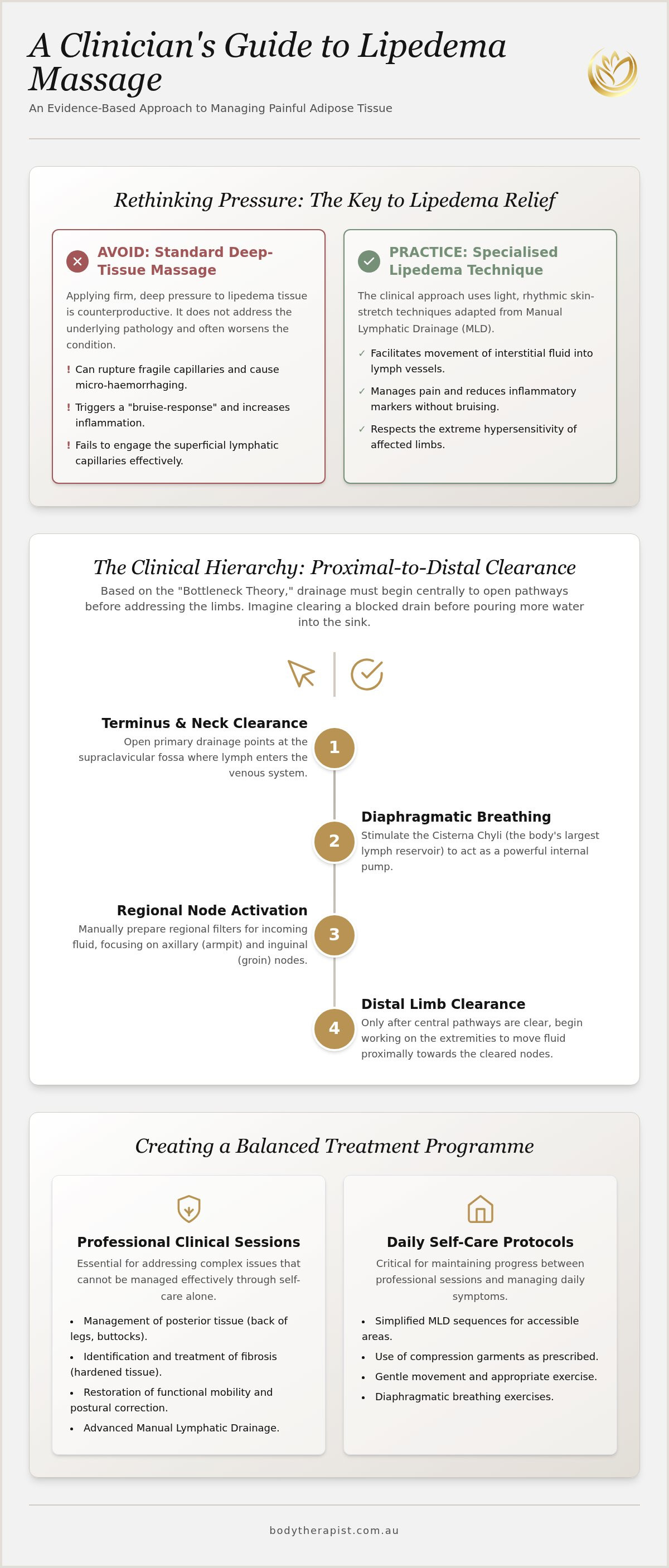
Lipedema massage is a highly specialised branch of clinical therapy, specifically adapted from traditional Manual Lymphatic Drainage (MLD) protocols. Unlike general wellness treatments, it's essential to recognise that these lipedema massage techniques are engineered to address the pathological changes in adipose tissue and the resulting secondary lymphatic impairment. The primary objective is to facilitate the movement of interstitial fluid into the lymphatic capillaries while respecting the extreme hypersensitivity of the affected limbs. By prioritising a light, rhythmic skin-stretch technique, we can effectively manage pain and reduce inflammatory markers without triggering the "bruise-response" common with standard remedial pressure. Standard "deep tissue" massage is often counterproductive; the excessive force can rupture fragile capillaries and cause micro-haemorrhaging in the already compromised tissue.
Lipedema vs. Lymphedema: Unique Manual Approaches
While both conditions involve swelling, the underlying physiology dictates distinct manual strategies. Lymphedema is primarily a failure of the transport system leading to fluid accumulation, whereas lipedema is a symmetrical adipose disorder characterised by painful, nodular fat. For a comprehensive overview of lipedema and its diagnostic markers, clinical literature highlights the fragility of the vascular walls in these patients. Practitioners don't apply the same depth of stroke used for fluid-dominant swelling; instead, they calibrate hand pressure to engage the initial lymphatics without compressing the deeper, sensitive adipose structures. As the condition progresses, identifying and treating fibrosis, which is the hardening of connective tissue, becomes critical to maintaining limb mobility and preventing further structural deterioration. This requires a methodical, tactile assessment to locate "pearl-like" nodules or larger fibrotic masses that impede the natural flow of lymph.
The Role of the Lymphatic System in Lipedema Management
The lymphatic system often becomes overwhelmed in lipedema patients due to an increased "lymphatic load" generated by diseased fat cells. These enlarged adipocytes physically obstruct the small lymphatic vessels, creating a mechanical barrier to efficient fluid return. Maintaining the health of these vessels is paramount to preventing the onset of secondary lymphedema, which can lead to permanent limb distortion. Lipo-Lymphedema occurs when the chronic lymphatic overload from untreated lipedema eventually causes the lymphatic system to fail, resulting in significant fluid-based swelling alongside the existing adipose tissue. By integrating these clinical lipedema massage techniques, we reduce the metabolic waste buildup that contributes to the "heavy limb" sensation and chronic inflammation. To further address systemic inflammation and its impact on cognitive health, Emagene Life offers resources on how functional medicine can support long-term metabolic recovery.
The "Bottleneck Theory" is a cornerstone of professional Manual Lymphatic Drainage (MLD). Imagine a sink with a blocked drain; pouring more water into the basin only causes an overflow. In lipedema management, the "drain" is the venous angle located at the base of the neck. We must clear this central pathway before we attempt to move fluid from the legs or arms. This methodical progression ensures that the lymphatic system can actually process the volume we're mobilising. Without this hierarchy, applying lipedema massage techniques to the limbs is often ineffective and can lead to increased localised pressure.
The clinical sequence follows a strict anatomical order:
Step 1: Terminus and Neck Clearance. We begin at the supraclavicular fossa to open the primary drainage points where lymph enters the venous system.
Step 2: Diaphragmatic Breathing. Deep, rhythmic abdominal breaths stimulate the Cisterna Chyli, the largest lymph reservoir in the body, acting as a powerful internal pump.
Step 3: Node Activation. We manually stimulate the axillary (armpit) and inguinal (groin) nodes to prepare the regional filters for incoming fluid.
Step 4: Limb Clearance. Only now do we treat the extremities, always working from the top of the thigh or arm downwards to "make room" for distal fluid.
Why Central Clearance is Non-Negotiable
The Thoracic Duct is the body's main lymphatic motorway, collecting roughly 75% of all lymph. If this central channel isn't cleared first, attempting to drain the limbs leads to "fluid backup." This often manifests as increased pressure or discomfort in the torso and neck. Clinical evidence confirms that diaphragmatic breathing significantly increases the flow rate within the Thoracic Duct. It creates a pressure vacuum that pulls lymph upward from the lower body. For those seeking professional support with this complex hierarchy, remedial lymphatic drainage provides the anatomical precision required to unlock these central pathways effectively.
The Mechanics of the "Scoop and Stretch" Stroke
Precision in handwork is what separates clinical practice from a standard massage. We focus on skin-stretching rather than skin-sliding. The goal is to gently pull the skin to its anatomical limit, which opens the initial lymphatic collectors just beneath the surface. Each stroke is directed toward the nearest functional node group. The rhythm must be slow and melodic. We mirror the natural pulsation of the lymphangions, which contract roughly six to ten times per minute. This intentional pace prevents the system from becoming overwhelmed or shutting down due to excessive mechanical stimulation.
Professional MLD vs. Self-Massage: Creating a Combined Programme
Effective management of lipedema is rarely achieved through isolated efforts. It requires a tiered approach where professional clinical intervention provides the structural heavy lifting, while daily self-care maintains those results. For individuals in Stage 2 or Stage 3, professional sessions are non-negotiable. The increased volume and significant tissue changes in these stages make it physically impossible to adequately clear the posterior chain, such as the back of the thighs and calves, through self-application alone. A practitioner can apply lipedema massage techniques with the necessary reach and precise anatomical pressure to mobilise fluid that has pooled in these gravity-dependent areas. For individuals whose mobility is severely restricted by these advanced symptoms, exploring specialized equipment like 電動輪椅 香港 can be a practical step toward regaining independence.
Self-massage should be viewed as a vital maintenance tool to be used between clinical appointments. It helps sustain the metabolic clearance achieved during a professional session and prevents the immediate re-accumulation of interstitial fluid. However, self-care has its limits. If you notice increased localised pain, skin temperature changes, or a significant hardening of the adipose tissue, it's a clear signal that your current home protocol is insufficient and requires professional clinical review. A practitioner can adjust the depth and rhythm of the treatment to address these specific inflammatory markers.
Clinical support is particularly critical during "heavy leg" flares or inflammatory cycles where the limb sensation becomes unbearable. High-stress events, such as long-haul travel or recovery from illness, often trigger a spike in lymphatic load that requires expert intervention to resolve. For a more detailed breakdown of these clinical protocols, refer to The Clinical Guide to Manual Lymphatic Drainage Massage. A qualified therapist can identify early signs of tissue fibrosis that a patient might overlook, ensuring that the management plan evolves alongside the condition's progression.
Essential Tools for Home Management
Home care is most effective when it focuses on gentle stimulation. Dry brushing is a popular technique, but common mistakes include using too much friction or moving in the wrong direction. The goal is a light skin-stretch toward the heart, not a vigorous exfoliation that could inflame sensitive capillaries. Following any massage, the use of medical-grade compression garments is essential to provide the external resistance needed to keep fluid moving. While mechanical vibration tools are often marketed for fat reduction, manual lipedema massage techniques remain superior for this population. Hand-delivered therapy allows for real-time adjustments based on tissue feedback, whereas mechanical tools can be too aggressive for hypersensitive lipedemic tissue.
Step-by-Step Lipedema Massage Techniques for Lower Extremities
Clinical execution of lipedema massage techniques begins with optimal patient positioning. We place the client in a supine position with the lower extremities slightly elevated; this simple adjustment uses gravity to assist venous return and reduces the initial pressure on the lymphatic collectors. Consistent with the proximal-to-distal hierarchy established in professional practice, we first address the inguinal nodes in the groin. These nodes act as the primary gateway for lower limb drainage. By applying gentle, stationary circles, we effectively clear the path for the fluid we're about to mobilise from the legs.
Once the gateway is open, we move to the thighs. We use large, rhythmic surface strokes that stretch the skin without compressing the underlying adipose tissue. This movement encourages interstitial fluid to enter the lymphatic capillaries. We then proceed to the popliteal nodes located behind the knee. It's common for patients to experience significant tension here, so the touch must remain light and intentional to avoid discomfort. Finally, we clear the calves and the tops of the feet, ensuring that every stroke follows the anatomical pathway back toward the inguinal nodes.
Upper Leg Protocols for Pain Relief
The medial thigh, or the area around the inner knee, is a frequent site for lipedema fat accumulation and localised pain. We adapt our hand placement to gently scoop this tissue, moving it away from the joint to relieve mechanical pressure. When we encounter painful nodules within the adipose tissue, we don't increase pressure. Instead, we modify the technique to use broader contact, which disperses the sensation and prevents a pain response. To address the "cuffing" effect often seen at the ankles, we use meticulous, distal clearing strokes that encourage fluid to bypass the fibrotic tissue that frequently settles around the malleolus. If you require expert assistance with these complex protocols, our clinical lymphedema therapy provides a structured approach to volume reduction.
Safety and Contraindications to Monitor
While specialised massage is a cornerstone of management, certain clinical presentations prohibit treatment. We must screen for acute infections, such as cellulitis, as well as unstable heart conditions or suspected deep vein thrombosis (DVT). A common misconception is that effective lipedema massage should cause bruising; this is a myth. Professional lipedema massage techniques are designed to be atraumatic, meaning they should never cause micro-haemorrhaging or new discolouration in the skin. Red Flags include sudden unilateral swelling, localised heat, skin redness, or sharp calf pain, all of which require immediate medical referral to rule out vascular complications.
The Body Therapist Approach: Integrating MLD with Clinical Myotherapy
The Body Therapist philosophy prioritises results-oriented care that addresses the complex anatomical realities of this condition. We move beyond simple drainage by integrating various rehabilitative modalities to ensure long-term physical optimisation. While traditional Manual Lymphatic Drainage is the foundation, our clinical application of lipedema massage techniques is frequently synthesised with myofascial release to improve connective tissue health. This dual approach is necessary because the mechanical weight of lipedemic tissue fundamentally alters a patient's gait and posture over time. By treating the fascial system, we can release the restrictive "tethering" that often occurs in advanced stages, allowing for more effective fluid movement and a significant reduction in tissue tension.
Functional Mobility and Kinetic Release
The chronic weight of lipedema limbs places immense stress on the knee and hip joints, often leading to premature wear and functional limitations. Our kinetic release techniques specifically target these areas of joint strain. Myotherapy provides the necessary support for the muscular system that sits beneath the adipose layer, ensuring that muscles aren't becoming inhibited by the surrounding tissue pressure. For those interested in how these various modalities work in harmony, our Clinical Massage Therapy: A Comprehensive Guide offers deeper insight into our results-oriented approach. This integration ensures that patients don't just feel lighter, but move with greater efficiency and less pain. We focus on restoring the natural glide between tissue layers, which is often lost as the disease progresses.
Designing Your Long-Term Management Plan
Successful management in 2026 requires a transition from reactive treatment to proactive maintenance. We typically recommend an intensive phase of clearance sessions to reduce initial volume and pain levels, followed by a shift toward monthly or bi-monthly clinical appointments. This professional cadence works in synergy with your daily movement and hydration goals. Clinical massage acts as the "reset" button for your lymphatic system, while your home movement practice keeps the pump active. Consistency is the primary driver of success in managing lipedema symptoms. To begin this journey, you can book a consultation to organise your clinical lipedema management plan and secure a treatment schedule tailored to your specific stage and symptoms.
Advancing Your Clinical Management Strategy
Managing lipedema requires more than just standard care; it demands a precise, anatomical approach that respects tissue sensitivity while driving physiological change. By prioritising the proximal-to-distal clearance method, you ensure the body's central pathways are prepared to process mobilised fluid effectively. Integrating professional lipedema massage techniques with clinical myotherapy further addresses the postural shifts and joint strain common in advanced stages, restoring the functional mobility essential for long-term health.
Led by qualified myotherapist Lee Carnegie, Body Therapist provides evidence-based clinical protocols with a specialised focus on complex lymphatic conditions. We're dedicated to providing the technical expertise required to manage your symptoms and improve your quality of life through methodical, results-oriented treatment. Book Your Clinical Lymphatic Consultation at Body Therapist to organise your personalised management plan today. You don't have to navigate this journey alone; expert clinical support is available to help you regain control over your physical well-being.
Frequently Asked Questions
How often should I have MLD for lipedema management?
Frequency varies based on your clinical stage and symptom severity. During an initial clearance phase, practitioners often recommend two to three sessions per week to manage acute inflammation and volume. Once we achieve stability, a transition to maintenance sessions every four to six weeks is typical. It's essential to monitor your "heavy limb" sensation; if flares occur more frequently, we adjust the schedule to prevent secondary fluid accumulation and maintain tissue health.
Can massage actually reduce the size of lipedema fat cells?
No, manual therapy cannot physically shrink or eliminate lipedema fat cells. These specialised lipedema massage techniques focus on the interstitial fluid and metabolic waste that accumulates around the diseased adipose tissue. While you may notice a reduction in limb circumference, this is due to improved lymphatic drainage and reduced inflammation rather than a loss of fat mass. Lasting volume reduction of the fat itself generally requires medical interventions beyond manual therapy protocols.
Why is the pressure so light in lipedema lymphatic drainage?
The lymphatic system's initial collectors sit just beneath the skin's surface. Applying heavy pressure collapses these delicate vessels, which prevents fluid from moving and can damage fragile capillaries. Because lipedemic tissue is often hypersensitive and prone to bruising, we use a light skin-stretch technique. This calibrated touch is enough to stimulate the lymphangions without triggering a pain response or causing micro-haemorrhaging in the compromised adipose layer, ensuring a safe and effective treatment.
Is it normal to feel tired or thirsty after a clinical lipedema massage?
Yes, these are common physiological responses to effective lymphatic stimulation. As we mobilise fluid and metabolic by-products, your kidneys work harder to process and eliminate these substances, which often leads to increased thirst. Fatigue is also a frequent side effect as the parasympathetic nervous system is activated during the treatment. We recommend increasing your water intake and allowing for a period of rest immediately following your clinical appointment to support the body's natural recovery process.
Can I use a foam roller or deep tissue massage on my lipedema legs?
We strongly advise against using foam rollers or traditional deep tissue massage on affected limbs. The aggressive mechanical force of these tools can be traumatic to the sensitive adipose tissue and fragile vascular structures characteristic of lipedema. Such high-pressure methods often result in significant bruising, increased inflammation, and heightened pain levels. It's much safer to stick to professional lipedema massage techniques that prioritise tissue integrity and gentle metabolic clearance without causing unnecessary trauma.
What is the difference between MLD and a standard remedial massage for lipedema?
Standard remedial massage typically targets deep muscle tissue and trigger points using significant force. In contrast, Manual Lymphatic Drainage (MLD) is a specialised, rhythmic protocol designed to move fluid through the superficial lymphatic system. While we may integrate myotherapy for functional mobility, the lymphatic component remains light and follows a specific proximal-to-distal hierarchy. This ensures we clear central pathways first, which is a clinical step often missed in general remedial treatments or wellness massages.
Should I wear my compression garments immediately after a massage session?
Yes, donning your medical-grade compression garments immediately after a session is vital for maintaining the treatment's results. The massage mobilises fluid, but compression provides the necessary external resistance to prevent that fluid from re-pooling in the lower extremities. Think of the massage as the clearance and the compression as the maintenance. This combination is the most effective way to sustain the reduction in limb heaviness and manage the daily swelling associated with the condition.
How can I tell if my lymphatic drainage massage is actually working?
Success is measured by functional and symptomatic improvements rather than just fat loss. You should notice a significant reduction in the heavy limb sensation and a decrease in the sharp, touch-sensitive pain associated with lipedema. Other indicators include increased frequency of urination shortly after treatment, improved joint mobility, and a visible reduction in fluid-based swelling. Keeping a symptom diary can help you track these subtle but important changes in your tissue health over time.


Comments