

Bruising After Cupping: What to Expect and When to Seek Help

Could a dark cupping mark be less important than how it feels and changes over time? If you're searching “bruising after cupping what to expect”, it’s understandable to wonder whether circular discolouration is a common response or a sign your skin needs attention. Cupping marks are common, but colour alone can’t tell you how your body is responding.
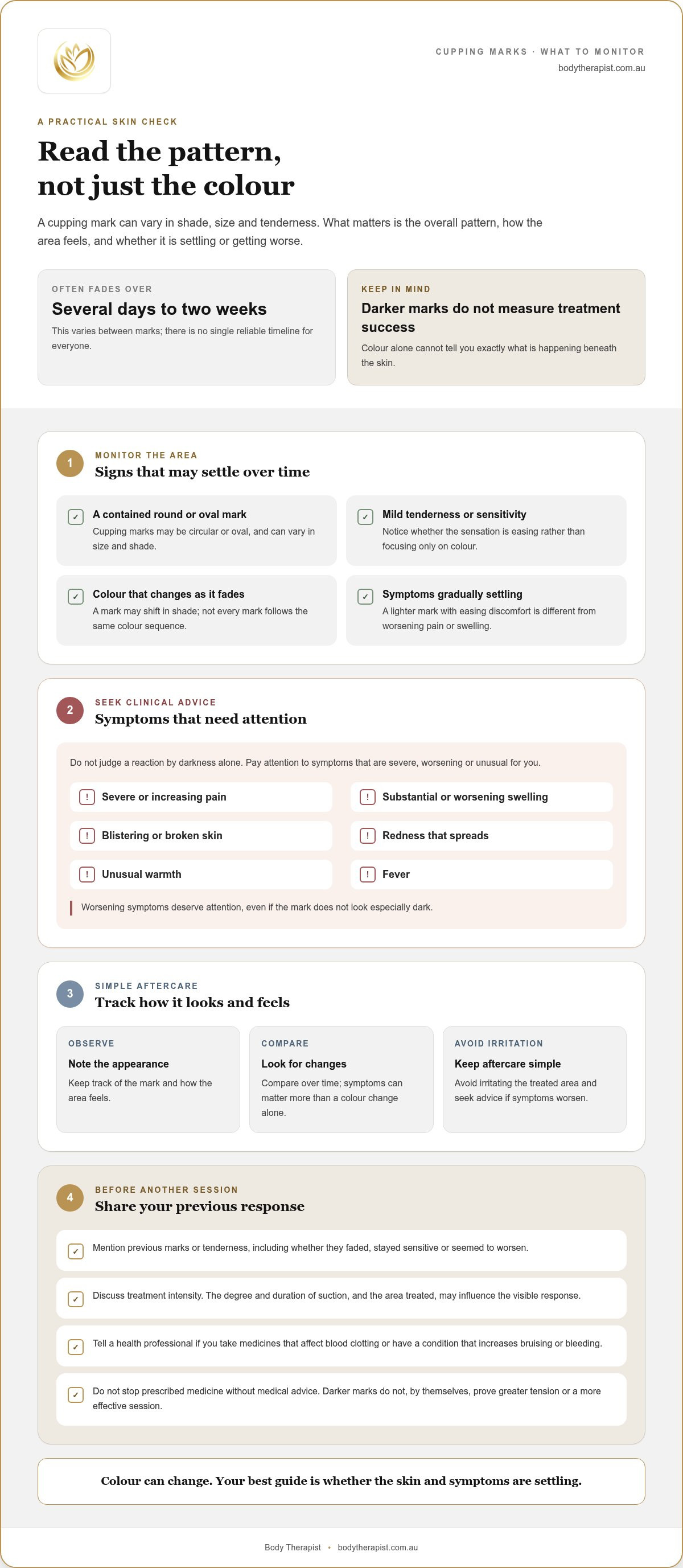
These marks develop when suction draws the skin and nearby small blood vessels upwards. They can resemble bruises, vary in colour and tenderness, and often fade over several days to two weeks. Look at the overall pattern, any accompanying symptoms and whether the area is improving, rather than treating the shade as a measure of tension or treatment success.
This guide explains what post-cupping marks may look and feel like, how they can change, and how to monitor the treated skin. It also covers symptoms such as increasing pain, blistering and signs of infection that warrant clinical advice, plus what to discuss about treatment intensity before another session.
Table of Contents
Bruising after cupping: what the marks can look and feel like
Circular marks after a first cupping session can be unsettling, especially if you weren’t expecting your skin to change colour. If you’re wondering about bruising after cupping, start with a cautious description rather than a diagnosis: a cupping mark is a local skin colour change associated with suction. Marks may be round or oval, and their shade, size and tenderness can vary between people, body areas and sessions.
Some marks look pink or red; others appear darker and may feel mildly tender or sensitive. Their appearance can change over time, but colour alone can’t identify exactly what has happened beneath the skin. The Cupping therapy overview discusses effects associated with the practice, but an online description can’t assess an individual skin change.
A visible cupping mark is evidence of a skin response to suction, not proof that the treatment was effective. Cupping is one therapeutic modality. The darkness of a mark isn’t a score of progress or treatment success.
Are cupping marks always bruises?
Not necessarily. Suction can affect small blood vessels close to the skin, and some may leak blood into nearby tissue. The precise response varies. Ecchymosis is the medical term for a flat area of discolouration caused by blood beneath the skin, commonly described as a bruise. Temporary redness can occur without the same visible pooling of blood. Appearance alone can’t reliably establish the cause or severity, so avoid diagnosing a mark by its colour or shape.
Why do marks look different from person to person?
The degree of suction, how long it’s applied and the area treated may all influence the visible response. Individual skin and blood-vessel characteristics can also make marks differ, even when treatment is similar. Medicines that affect blood clotting, or health conditions that increase bruising or bleeding, may be relevant. If either applies to you, discuss it with a health professional before treatment. Don’t stop prescribed medicine without medical advice.
Differences in colour don’t show that one person has had a better result. Darker marks don’t, by themselves, prove greater tension, a more effective session or a need for stronger suction. If a mark seems unusual for you or comes with symptoms that concern you, seek individual clinical advice rather than relying on appearance alone.
How cupping marks change and fade over time
A cupping mark may gradually become less noticeable, but its colour and tenderness won’t necessarily change in a neat, predictable sequence. As the body reabsorbs blood pigments beneath the skin, the visible area can shift in shade before fading. Not every mark passes through the same colour stages, and changes may be easier to notice in some lighting than others.
There’s no single reliable timeline for every cupping mark. How long a mark remains visible varies, so a fixed deadline isn’t a dependable way to judge whether your skin is healing normally. The National Center for Complementary and Integrative Health notes skin discolouration among cupping’s possible side effects. Its Cupping safety and side effects guidance provides broader context, but can’t predict how an individual mark will progress.
What changes might be expected as a mark fades?
If the area is mildly tender, monitor whether that sensation is easing rather than focusing only on colour. A mark becoming lighter while discomfort settles is different from increasing pain or swelling. Worsening symptoms deserve attention, even if the mark doesn’t look especially dark. A deeper shade doesn’t mean a stronger therapeutic effect or greater benefit.
For a clearer picture, note the mark’s appearance and how it feels, then compare it over time. A change in colour alone may be part of fading; a change in symptoms can be more significant. If you’re uncertain about what you’re seeing, an individual clinical assessment is more useful than trying to match the mark to a colour chart.
Which factors can affect how long marks remain visible?
Your individual skin response, the area treated and the amount and duration of suction may all influence visible changes. Health conditions or medicines that affect bleeding or bruising may also be relevant, though their effect on a particular cupping mark can’t be predicted here. Discuss any concerns with a health professional.
Repeated treatment over the same area may affect how the skin looks and feels. Before another session, mention previous marks or tenderness and explain whether they faded, stayed sensitive or seemed to worsen. This history can inform a considered discussion about your response and treatment intensity. Mark darkness isn’t a measure of success.
If you’re considering another session, you can discuss your experience in the context of myofascial silicone cupping and your individual response.
Expected cupping marks or a concerning reaction? How to tell the difference
It can be hard to judge a mark by sight alone. If you’re searching for “bruising after cupping what to expect”, consider how the area feels and whether symptoms are settling or worsening, not just how dark the mark appears. A dark mark isn’t automatically dangerous, and a mark doesn’t, by itself, prove that treatment was excessive. The comparison below can help you decide what to monitor, but it can’t diagnose a skin reaction.
Worsening symptoms, not colour alone, should guide whether you seek advice. A mark changing shade doesn’t tell you on its own whether there’s a problem. A changing pattern of pain, swelling or skin damage deserves more attention. If you’re unsure, or the area is changing rather than improving, seek an individual assessment from an appropriate health professional.
Which symptoms should prompt medical advice?
Arrange prompt clinical assessment if pain is severe or increasing, swelling is substantial, the skin blisters or breaks, or redness spreads and feels unusually warm. Fever alongside changes at the treated area also warrants prompt attention. These signs don’t confirm a particular cause, but they shouldn’t be dismissed as ordinary marks. People with a bleeding disorder or taking medicines that affect clotting should take extra care and seek personalised clinical advice about unexpected bruising or bleeding. Don’t change prescribed medicines without medical guidance.
When is urgent help more appropriate?
Rapidly worsening symptoms or significant bleeding need urgent medical assessment. If symptoms are life-threatening, call Triple Zero (000) in Australia. If you’re concerned but unsure how urgent the situation is, contact a GP or another appropriate health professional for advice. When symptoms are changing quickly, don’t rely on a photograph or colour comparison to decide that everything is fine.
What to do after cupping: practical skincare and monitoring
After cupping, keep care simple and pay attention to how the treated area changes. When considering bruising after cupping, focus less on a general fading estimate and more on whether discomfort and skin changes are settling. New or worsening symptoms take priority over any typical timeline.
Simple steps for caring for the treated area
Observe the area. Note when the mark appeared and check whether its appearance, tenderness or swelling is changing. A brief written note or dated photo can help you describe the progression if you seek clinical advice.
Handle the skin gently. Avoid rubbing, friction or applying additional suction over irritated or tender skin. Follow any specific aftercare instructions provided for your treatment.
Seek advice if symptoms worsen. Increasing pain, swelling, spreading redness, unusual warmth, blistering, broken skin or fever shouldn’t be managed by waiting for a mark to fade. Contact an appropriate health professional for individual advice.
There’s no need to try intensive home treatments to change the mark’s appearance. Don’t assume creams, heat, ice or supplements will speed up fading; use them only if advised for your situation by an appropriate health professional. If the area becomes more uncomfortable or shows new changes, respond to those symptoms rather than relying on a general estimate of how long marks may remain visible.
What to note before considering another session
A clear account of your response can make a later discussion more useful. Record where the marks appeared, when you first noticed them, whether the area was tender and whether symptoms improved or worsened. If relevant, mention medicines that affect clotting, a history of unusual bruising or bleeding, and any previous reactions to cupping. Don’t stop or change prescribed medicine without medical advice.
If the marks caused concern, discuss your experience and the suitability and intensity of further treatment before another session. Cupping is one therapeutic modality, not a treatment whose success should be judged by how dark a mark looks. Your response is useful context for an individual conversation.
To make that conversation specific to your experience, discuss myofascial silicone cupping and the skin changes you noticed before considering another session.
Myofascial cupping: discuss your response before your next session
Marks are not a scorecard. Cupping is one therapeutic modality, and darker discolouration doesn’t prove a session was more effective or that you need stronger treatment. If you’re searching “bruising after cupping what to expect”, your own response, including how the area felt and changed, is more useful context than colour alone when considering another session.
If a previous reaction was severe, is worsening or included broken skin, blistering or signs of infection, seek appropriate clinical advice before considering further treatment. A therapist can discuss your experience and take it into account, but changing or concerning symptoms may need assessment by a health professional.
How to discuss a previous reaction with your therapist
Give a clear account of when the marks appeared, where they were, whether they felt tender and how their appearance or discomfort changed. Mention any relevant health conditions, medicines that affect clotting, or history of unusual bruising or bleeding. These details help inform a conversation about your individual response and whether further treatment is appropriate.
What a considered cupping approach should prioritise
Comfort, consent and clear communication matter. You should be able to describe what you’re feeling and raise concerns during a session. Your circumstances and previous response can inform a discussion about a suitable approach. Mark darkness is neither the goal nor evidence of success.
Body Therapist offers myofascial silicone cupping as part of its therapeutic services. It’s a modality to discuss in the context of your needs and past response, without assuming a particular outcome or that everyone will respond in the same way.
If your concerns have been addressed and you’d like to learn more, explore Body Therapist’s myofascial silicone cupping service and book an appointment.
Make your next cupping decision with confidence
Understanding bruising after cupping starts with looking beyond colour. Marks can vary and fade differently, so their darkness alone doesn’t show whether treatment was effective or whether there’s a problem. Pay attention to how the area feels and changes, and seek clinical advice if pain or swelling worsens, skin blisters or breaks, or signs of infection develop.
Keep aftercare gentle, monitor the area and note when marks appeared and how they progressed. Before another session, share your experience and relevant health information so your response can inform a considered discussion about suitability and treatment intensity.
Body Therapist offers myofascial silicone cupping, with the practice led by qualified therapist Lee Carnegie. To learn more and book an appointment, explore myofascial silicone cupping.
With clear information and an open conversation, you can make a more informed choice about your care.
Frequently Asked Questions
Is bruising after cupping normal?
Local circular marks are a common response to cupping, but they don’t always indicate the same skin change or cause. Marks may vary in colour, size and tenderness. Mild sensitivity can occur, but appearance alone can’t diagnose a reaction. Monitor whether the area is settling, and seek clinical advice if pain, swelling or other symptoms worsen or concern you.
How long do cupping marks usually last?
Cupping marks often fade over several days, though some may remain visible for around two weeks. This is a general guide, not a deadline: duration varies with individual skin response, the treated area and the suction exposure. The colour may change as the mark fades, and not everyone follows the same progression. Pay attention to whether discomfort and other symptoms are improving rather than relying only on the calendar.
Can cupping cause bruising or broken blood vessels?
Yes. Suction can affect small blood vessels near the skin and leave local discolouration that resembles a bruise. The exact tissue response can vary, and a mark’s appearance can’t confirm precisely what has happened. Mild redness and a bruise-like mark aren’t necessarily the same thing. If the skin is broken, blistered or increasingly painful, or you’re concerned about the change, seek advice from an appropriate health professional.
What should I do if my cupping marks are painful?
Monitor mild tenderness and handle the area gently, avoiding rubbing or further suction over irritated skin. Pain that is severe, increasing or accompanied by substantial swelling, blistering, spreading redness, unusual warmth or fever needs prompt clinical assessment. If you seek advice, describe when the marks appeared and how the pain has changed. Don’t try intensive home treatments or change prescribed medicines without guidance from an appropriate health professional.
Are dark cupping marks a sign of toxins leaving the body?
No. Dark marks aren’t evidence that toxins are leaving your body, and their colour doesn’t prove greater tension or a more effective treatment. Cupping can produce local skin discolouration, but the shade alone can’t establish its cause or significance. Judge a treatment by relevant individual goals and your overall response, not by how dark a mark looks. If the area is worsening or unusually uncomfortable, seek clinical advice.
Can I have cupping again if I bruised after my last session?
Possibly, but a previous mark is useful context to discuss before another session, especially if it was unusually painful, extensive or slow to settle. Explain when it appeared, how it felt and how it changed. Mention relevant health conditions, medicines that affect clotting or a history of unusual bruising. A considered discussion can help address suitability and treatment intensity. Don’t have further suction applied over skin that remains irritated or damaged.
When should I seek medical help after cupping?
Seek prompt clinical advice for severe or worsening pain, substantial swelling, blistering, broken skin, spreading redness, unusual warmth or fever. Significant bleeding or rapidly worsening symptoms need urgent medical assessment. If symptoms are life-threatening, call Triple Zero (000) in Australia. For symptoms that concern you but don’t seem immediately life-threatening, contact an appropriate health professional. Don’t use a mark’s colour or an expected fading timeframe to dismiss worsening symptoms.


Comments