

What Is Complete Decongestive Therapy? A Clear Guide to CDT

What if lymphatic drainage massage is only one part of the care plan you’ve heard called CDT? If you’re wondering what is complete decongestive therapy, the key distinction is that it’s a coordinated approach to lymphoedema management, not a single hands-on treatment. Knowing which parts of a plan involve an appointment and which require ongoing care can make unfamiliar terms and routines easier to understand.
It’s understandable to want clarity before deciding what care may suit you. This guide explains how CDT’s components work together, how its intensive and maintenance phases differ, and what you can expect from informed lymphoedema care. You’ll also see how manual lymphatic drainage fits within the wider plan, so it’s easier to distinguish the technique from CDT as a whole.
We’ll outline the roles of compression, movement and skin care, and share practical questions to discuss with a qualified health professional. Body Therapist provides specialised manual lymphatic drainage massage and lymphoedema therapy, which can form part of broader lymphoedema management. Understanding the full picture can help you prepare for a conversation about your needs and suitable support.
Table of Contents
What is Complete Decongestive Therapy and its uses?
Complete decongestive therapy (CDT) is a coordinated approach to managing lymphoedema. It brings together different forms of care to help control persistent swelling and support comfort and everyday function. If you’re asking what is complete decongestive therapy, the key point is that it describes a treatment framework, not one massage technique or a single appointment. The plan is adapted to a person’s presentation and clinical needs.
Lymphoedema occurs when lymph fluid isn’t adequately cleared from the tissues, leading to ongoing swelling. Management focuses on reducing or controlling that swelling and helping a person manage the condition over time. CDT may be considered as part of this care, but it can’t be presented as a guaranteed cure. Its components are coordinated rather than used as unrelated treatments, and the approach may change as symptoms and needs change.
How lymphatic dysfunction can lead to lymphoedema
Lymph fluid moves through a network of small vessels that collect excess fluid from body tissues and carry it towards larger channels. Along the way, lymph nodes filter the fluid before it returns to the bloodstream. When vessels or nodes can’t move or process fluid effectively, fluid may accumulate in the tissues. Ongoing build-up can contribute to swelling and changes such as increased tissue firmness or skin changes.
Lymphatic dysfunction can occur in different contexts. Some people develop lymphoedema following damage to lymph vessels or nodes during cancer treatment, while other causes and risk factors may also be relevant. The circumstances, affected area and effects on daily activities differ between individuals. This is why a care plan needs to account for more than the appearance of swelling alone.
Who may be assessed for complete decongestive therapy?
A health professional may consider an assessment when a person has persistent swelling or other symptoms that could be consistent with lymphoedema. Swelling by itself doesn’t confirm the condition; its cause needs to be considered alongside medical history and other signs. An assessment may explore when symptoms began, whether they’ve changed, relevant health conditions or treatments, and how the affected area functions day to day.
Assessment also helps establish whether CDT or another management approach may be appropriate, and what support is needed. Don’t rely on self-directed massage or compression as a substitute for clinical advice, particularly when the cause of swelling hasn’t been assessed. For a closer look at the role of hands-on lymphatic care, see this guide to lymphoedema drainage massage.
A single manual lymphatic drainage session may be one part of lymphoedema care, but it isn’t the same as a complete CDT programme. The broader framework and its components are outlined in this overview of Complete Decongestive Therapy (CDT). Understanding the distinction can help you explain your needs and discuss suitable next steps with a qualified health professional.
How the Four Main Components of CDT Work Together
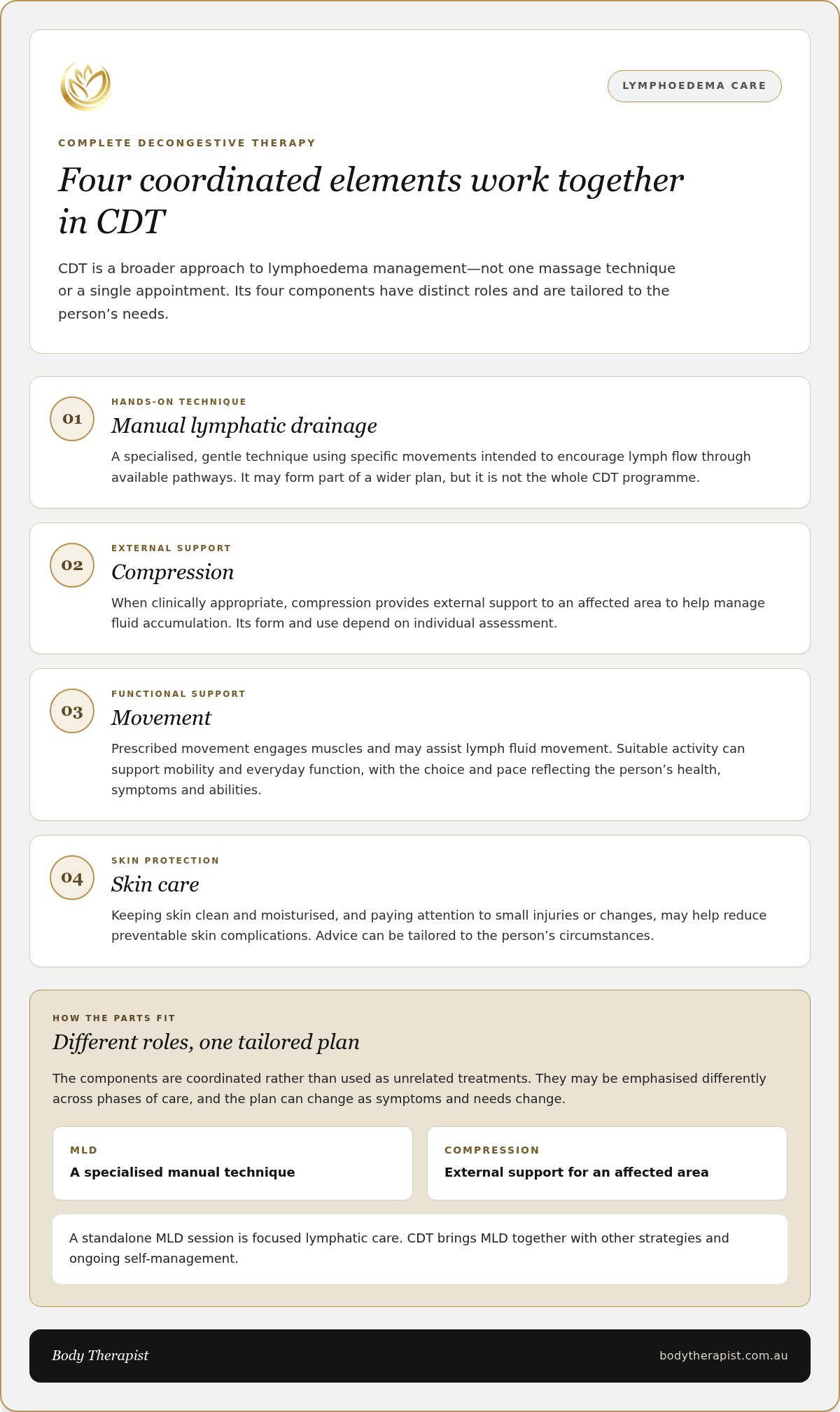
If you’re asking “what is complete decongestive therapy” in practical terms, think of four coordinated elements: manual lymphatic drainage, compression, movement and skin care. They’re not interchangeable treatments, and the plan isn’t identical for everyone. The National Cancer Institute’s definition of CDT also describes these elements as part of a broader approach to lymphoedema care.
Together, these components aim to manage fluid build-up, support movement and protect skin, with each element tailored to the person’s needs.
Manual lymphatic drainage and compression
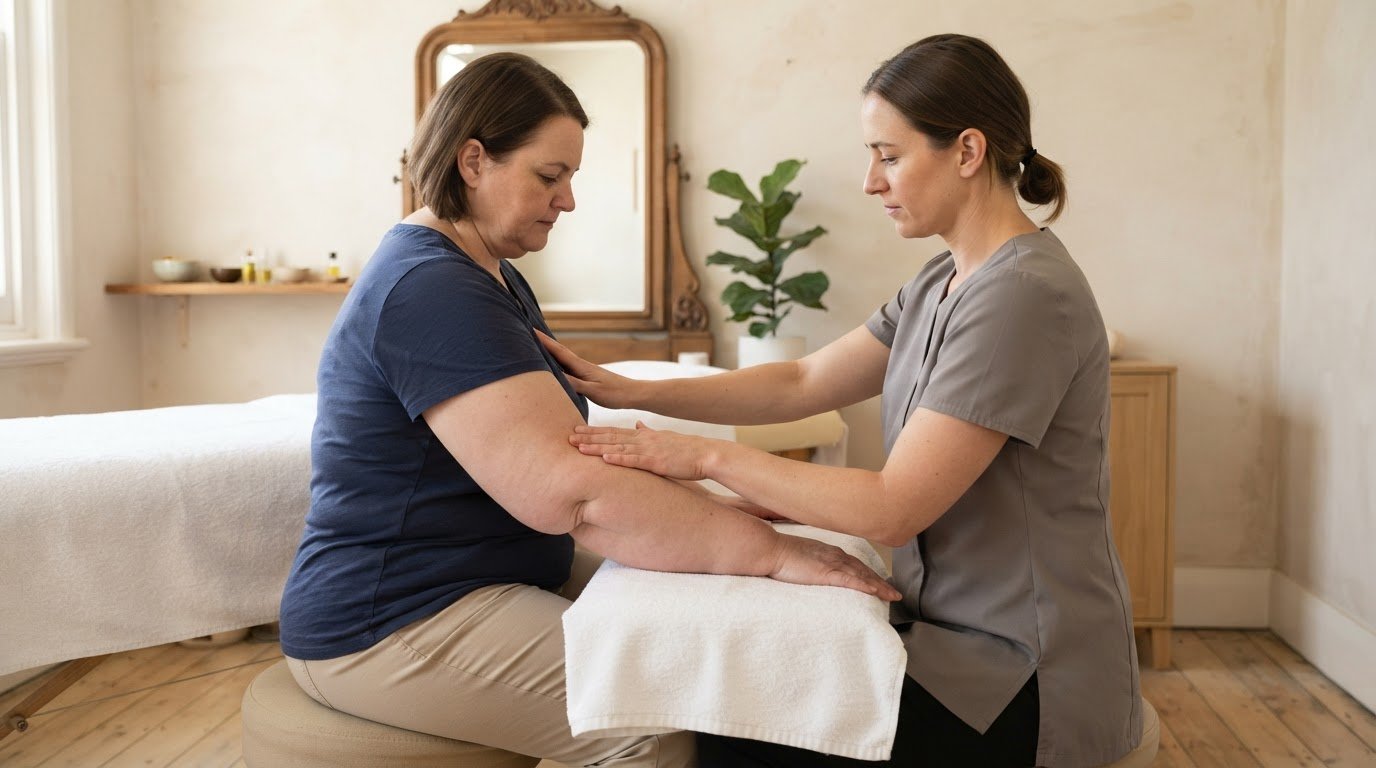
Manual lymphatic drainage (MLD) is a specialised, gentle hands-on technique. It uses specific movements intended to encourage lymph flow through available pathways. MLD can be included in a wider management plan, but it isn’t the whole CDT programme. A standalone MLD massage session provides focused lymphatic care, while CDT coordinates this technique with other strategies and ongoing self-management.
Compression, when clinically appropriate, applies external support to an affected area to help manage fluid accumulation. The form of compression and how it’s used depend on individual assessment, so bandaging or choosing a garment shouldn’t be based on general online instructions. MLD and compression have distinct roles: one is a manual technique, while the other provides external support. Their use together is considered as part of the person’s overall plan.
Movement and skin care within CDT
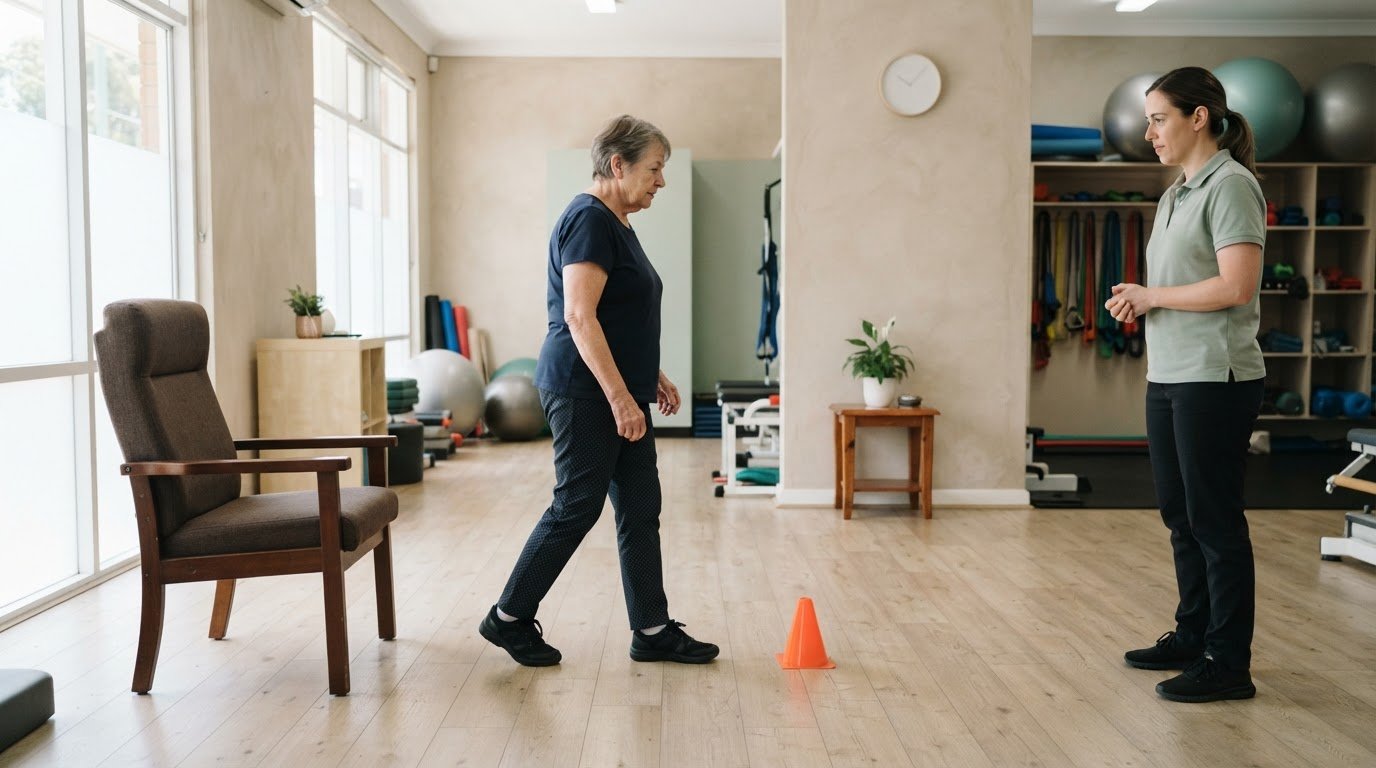
Prescribed movement can engage muscles and support everyday function. Muscle activity may assist lymph fluid movement, while suitable exercises can help a person maintain mobility and confidence with daily tasks. The choice and pace of activity should reflect the person’s health, symptoms and abilities. A plan might focus on comfortable, functional movement rather than assuming one exercise routine suits everyone.
Skin care supports the skin’s integrity in an area affected by swelling. Keeping skin clean and moisturised, and paying attention to small injuries or changes, may help reduce preventable skin complications. Specific advice should be tailored, especially if the skin is fragile or its condition is changing. A clinician can help clarify what to monitor and which steps suit the person’s circumstances.
The four elements may be emphasised differently across phases of care. In an intensive phase, a clinician may use a combination of treatments to address swelling and teach practical skills. During longer-term maintenance, the focus commonly shifts towards routines that can be managed day to day, such as prescribed movement, skin care and compression as advised. The components work as a coordinated framework, not a fixed sequence or one-size-fits-all checklist.
For specialised support with lymphatic care, explore manual lymphatic drainage massage and lymphoedema therapy at Body Therapist. This care can sit within broader lymphoedema management without representing every component of a CDT programme.
CDT Compared with MLD: What Research and Treatment Descriptions Actually Mean
Terms such as CDT, manual lymphatic drainage and massage can appear together in treatment information, but they don’t mean the same thing. If you’re asking “what is complete decongestive therapy” compared with MLD, the distinction is scope: MLD is a specialised manual technique, while CDT is a broader management approach that may combine several strategies.
The words used to describe care matter. A reference to “lymphatic massage” may describe a manual treatment, but it doesn’t automatically mean compression, movement, skin care or longer-term management are included. Equally, describing CDT doesn’t mean every person will receive an identical combination or schedule. Read treatment descriptions in context and consider whether they explain the scope of care.
Why MLD alone is not the same as CDT
MLD focuses on a specific hands-on technique. CDT refers to a wider framework in which manual treatment may be coordinated with other components, depending on clinical needs. One person may have a different balance of care from another, and the emphasis can change over time. For technique-specific information, see this clinical guide to manual lymphatic drainage massage.
When reviewing a treatment description, check whether it refers to one appointment or a broader plan, including what happens between sessions. This helps clarify the role of a manual therapy session without treating it as a substitute for every other aspect of lymphoedema management.
How to interpret CDT evidence without overgeneralising
Research findings need to be understood in relation to the people and treatment protocol studied. The 2022 research cited for this topic focuses on upper-limb lymphoedema following breast cancer surgery. That specific population and context can inform understanding of CDT, but the study description doesn’t provide results that can be applied to every person or every form of lymphoedema.
One study population cannot represent every lymphoedema presentation. The cause, affected area, symptoms, health history and functional needs can differ, so individual clinical assessment remains relevant alongside published evidence. A study’s treatment description also shouldn’t be mistaken for a universal prescription. Distinguish what a paper examined from what may be suitable for a particular person.
What Happens During CDT Phases and Ongoing Self-Management?
CDT is commonly described in two phases: an intensive phase focused on decongestion, followed by longer-term maintenance. The first phase establishes an approach to managing swelling; the second helps carry suitable care into everyday life. The distinction is useful, but it doesn’t mean everyone follows the same pathway. Treatment choices, appointment schedules and duration depend on clinical needs and how the person responds.
The intensive phase focuses on addressing current swelling; maintenance focuses on managing lymphoedema as part of ongoing daily care. Neither phase should be treated as a fixed timetable or a guarantee of a particular result. A clinician can explain the goals, review progress and adjust the plan as needed.
The intensive phase: establishing a management plan
During the intensive phase, a clinician may combine selected CDT components under professional guidance. The approach depends on the person’s presentation and can be adjusted as treatment progresses. Monitoring helps make decisions more individual, rather than relying only on whether swelling looks different at a glance.
Discussion may cover changes in swelling, comfort, skin condition and function, such as how the affected area feels during ordinary activities. Make appointments more useful by noting changes between visits, including what feels easier or more difficult. The clinician can use this information alongside their assessment to review goals and guide next steps.
The maintenance phase: keeping care practical
Once the care plan moves into maintenance, the emphasis is on routines that can be sustained over time. Depending on individual advice, these may include prescribed compression, movement and skin care. Home care is a clinician-guided continuation of management, not a substitute for assessment or a reason to change treatment independently.
Follow the instructions you’ve been given, and report changes in symptoms, skin or day-to-day function. If a routine becomes uncomfortable or difficult to fit into daily life, raise that with your clinician so they can discuss whether adjustments are appropriate. For related symptom information, explore signs your body may need clinical lymphatic support.
To prepare for ongoing care, keep a brief record of questions, changes you’ve noticed and practical barriers to following your plan. This can help focus a review on what is working and what may need attention. If you’re looking for specialised lymphoedema-related support, explore manual lymphatic drainage massage and lymphoedema therapy with Body Therapist.
How Specialised Lymphoedema Care Can Support Your Next Step
Understanding the difference between a technique and a broader plan can make it easier to prepare for a conversation about care. If you’ve been wondering “what is complete decongestive therapy” and how it relates to your needs, take your symptoms, relevant health history and day-to-day concerns to a qualified health professional. The aim is to discuss options in context, not to arrive with a treatment plan already decided.
Questions to bring to a lymphoedema care discussion
A short list can help you make the most of an appointment, especially if you’re managing several symptoms or have a complex medical history. Note when swelling or other changes began, whether they fluctuate, and how they affect movement, comfort, clothing or usual activities. Include relevant health conditions and treatments, such as cancer care or surgery, if applicable.
You may also want to ask:
Which parts of a lymphoedema management plan may suit my circumstances, and why?
How should care fit around my daily routines, comfort and current abilities?
What changes should I report, and how will we review progress?
What should I do if a recommended part of the plan feels uncomfortable or difficult to manage?
These questions can help clarify the purpose of each recommendation and how different elements relate to your priorities. Share any new or changing symptoms with the treating professional, rather than assuming they’re caused by lymphoedema or trying to manage them without assessment.
Where manual lymphatic care may fit
Body Therapist provides manual lymphatic drainage massage and lymphoedema therapy. This specialised manual care may form part of a broader discussion about lymphoedema management, depending on a person’s needs. Keep the scope clear: manual lymphatic care is not, by itself, a promise of a complete CDT programme or every component within one.
Lee Carnegie, who leads the practice, is a qualified remedial massage and dynamic movement therapist. That background informs the practice’s approach to hands-on care, while individual treatment decisions should remain guided by a person’s clinical circumstances and wider health advice. If you’re discussing care with a health professional, ask how manual lymphatic drainage might relate to other parts of your plan and what each element is intended to address.
You don’t need to have every answer before seeking information. Arriving with a clear account of what you’ve noticed, what matters to you and what you’d like clarified is a useful first step. For information about lymphoedema therapy and lymphatic care, explore Body Therapist’s services and consider how specialised manual care may fit into your broader care conversations.
Take Your Next Step with Greater Clarity
Knowing what is complete decongestive therapy can make conversations about lymphoedema care feel more manageable. You don’t need to decide on an entire care pathway at once. Start by identifying what you most want help understanding, such as the purpose of a recommended technique or how different parts of care fit together.
Use that priority to guide your next discussion. Ask for explanations in clear terms, and take time to consider how any suggested approach relates to your health history, comfort and daily life. Feeling informed means being able to weigh up your options with a clearer sense of what each step involves, rather than feeling pressured to have every answer straight away.
If you’d like to explore specialised support as part of your broader lymphoedema care conversations, explore Body Therapist’s lymphoedema care. Book an appointment to discuss manual lymphatic drainage massage and lymphoedema therapy as part of your broader care conversations.
Frequently Asked Questions
What is the difference between complete and complex decongestive therapy?
Complete and complex decongestive therapy are two names commonly used for CDT. Terminology can vary between information sources and clinical settings, so the label alone may not tell you exactly what a care plan includes. Ask the treating professional which components they mean, why they’re being considered for you, and whether you can have the plan written down. That makes it easier to refer back to the advice later.
How long does a course of complete decongestive therapy take?
There’s no single timetable for everyone. The length and frequency of care depend on your affected area, clinical presentation, goals and response over time. Some plans begin with more intensive appointments before moving into ongoing maintenance, while the timing of reviews is individual. Ask what signs will guide decisions about continuing or changing care, and when your progress will be reviewed, rather than relying on a standard duration found online.
Is complete decongestive therapy painful?
CDT should be discussed in relation to your comfort, symptoms and health history. Manual lymphatic drainage is generally described as gentle, though compression may feel unfamiliar and need adjustment. Tell the treating professional if you experience pain, skin irritation or worsening symptoms. Don’t persist with a component that concerns you without seeking guidance. It can help to describe what you feel, when it starts and whether it changes after treatment or activity.
Can I do complete decongestive therapy at home?
Some aspects of ongoing lymphoedema management may be done at home, but your routine should be explained and tailored by a qualified professional. Don’t attempt unfamiliar bandaging or alter prescribed compression based on generic online instructions. Ask for clear guidance on suitable movement, skin care and any other self-management steps, including what to do if they’re uncomfortable or difficult to fit into your day. Home care shouldn’t replace individual assessment.
Can CDT help with lymphoedema after cancer treatment?
CDT is used in lymphoedema management, including for some people whose condition is associated with cancer treatment. Suitability depends on your treatment history, current health and individual assessment. Research focused on upper-limb lymphoedema after breast cancer surgery relates to that particular group; it can’t establish the same outcome for everyone. Discuss your cancer treatment history and current symptoms with your treating health professional so they can consider your circumstances.
When should swelling be assessed urgently rather than managed with CDT?
Seek prompt medical assessment for new or rapidly worsening swelling, marked pain, spreading redness, fever or feeling acutely unwell. These symptoms may have causes that need timely attention, so don’t try to manage them with CDT or home treatment alone. Contact an appropriate health service for urgent advice. If symptoms are severe or life-threatening, call 000 in Australia. CDT is for lymphoedema management, not emergency treatment.
Comments