

Ultrasonic Fat Cavitation: Non-Surgical Belly Contouring

What if the most effective way to address exercise-resistant abdominal tissue isn't more intense cardio, but a precise application of sound frequency? You've likely felt the frustration of a "mummy tummy" or localised pockets of fat that refuse to shift despite your best efforts. It's a common struggle that often leads to anxiety about surgical risks or confusion over which technology actually delivers. Using fat cavitation for belly fat provides a sophisticated, non-invasive alternative that targets these stubborn areas by initiating a biological process known as lipid emulsification. This method allows for physical optimisation without the burden of downtime or scarring.
In this guide, you'll discover the science-backed mechanics of ultrasonic technology and how it helps achieve a visible reduction in waist circumference. We'll explain how the body's lymphatic system must be supported to effectively metabolise treated cells, ensuring you understand the "how" and "why" behind the results. From physiological impact to skin texture improvements, this overview provides the clinical clarity you need to make an informed decision about your body contouring journey.
Table of Contents
What is Ultrasonic Fat Cavitation for Belly Fat?
Ultrasonic fat cavitation for belly fat represents a significant advancement in non-invasive body contouring, moving beyond the limitations of traditional weight loss. While diet and exercise reduce the volume of lipid stores within adipocytes, they don't eliminate the cells themselves. Fat cavitation is a mechanical disruption of adipocytes via low-frequency sound waves. This process ensures that targeted fat cells are physically compromised, allowing the body to process and remove the released contents through natural metabolic pathways. It's a precise, results-oriented approach designed for those seeking to refine their physical silhouette without the risks associated with theatre-based surgery.
The abdomen is particularly responsive to this technology because it often serves as a primary storage site for subcutaneous adipose tissue. Many clients observe an immediate centimetre loss following their initial session, though it's vital to recognise this as the start of a biological clearing process rather than a final result. The treatment provides a focused solution for those struggling with localised deposits, such as the common "mummy tummy," that persist despite a healthy lifestyle. By targeting these specific areas, we can facilitate a smoother skin texture and a more contoured abdominal profile.
The Difference Between Subcutaneous and Visceral Fat
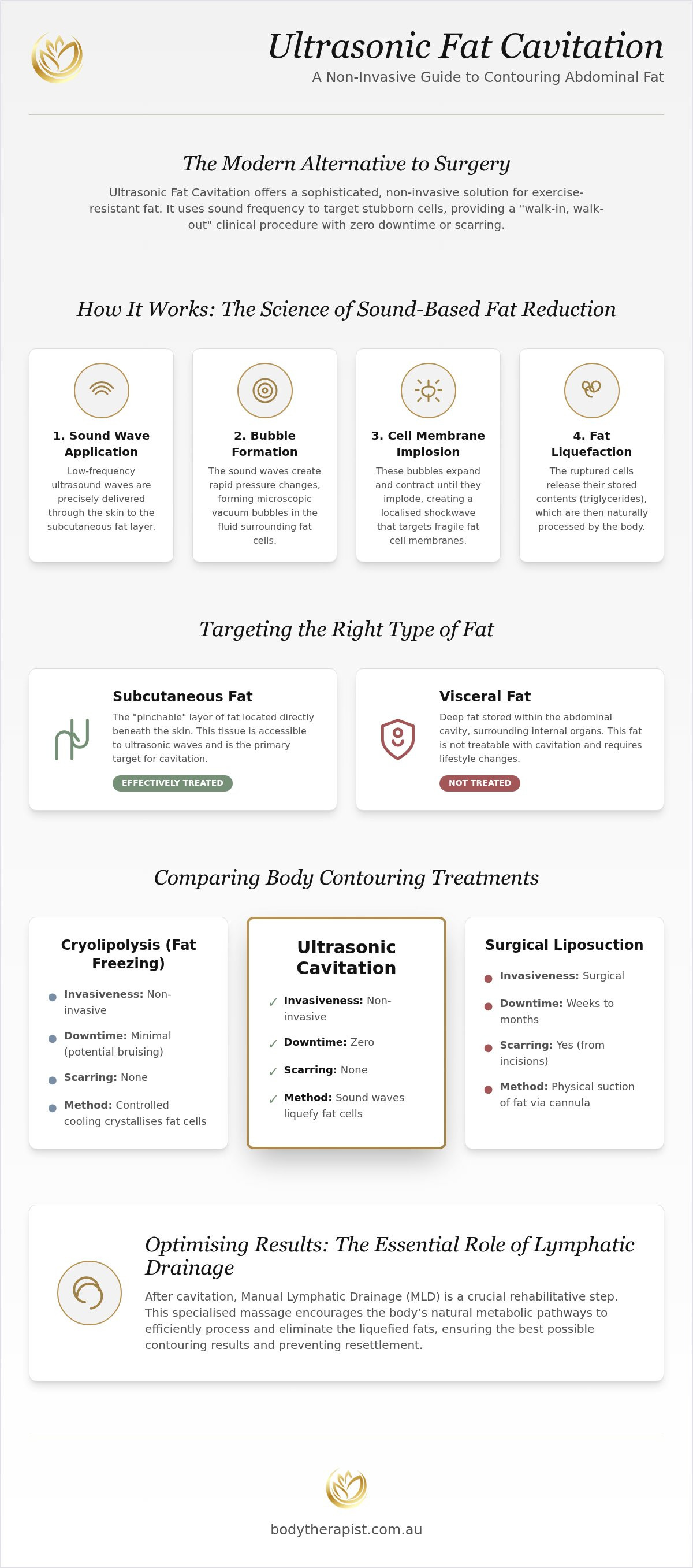
Effective body contouring requires an understanding of how fat is distributed within the abdominal cavity. Cavitation specifically targets subcutaneous fat, which is the "pinchable" layer located directly beneath the dermis. This superficial tissue is accessible to ultrasonic waves, making it ideal for structural refinement. Conversely, visceral fat resides deep within the abdominal wall, surrounding the internal organs. This deeper fat is metabolically active and requires systemic lifestyle interventions, such as nutritional adjustments and cardiovascular exercise, rather than external sound-wave therapy. Identifying candidates with a high ratio of subcutaneous fat ensures the highest probability of visible contour improvement.
Non-Surgical vs. Invasive Procedures
When compared to traditional Liposuction, ultrasonic cavitation offers a compelling profile for those prioritising safety and minimal disruption to their daily lives. Surgical interventions involve anaesthesia, incisions, and often lengthy recovery periods characterised by bruising and inflammation. In contrast, cavitation is a "walk-in, walk-out" clinical procedure that requires no sedative and leaves no scarring. It bridges the gap between basic aesthetic care and invasive surgery, providing a sophisticated option for physical optimisation. There's no downtime, allowing you to return to work or light activity immediately while your body begins the work of cellular clearance.
The Biological Mechanism: How Ultrasound Liquifies Fat
The science behind fat cavitation for belly fat rests on the principles of acoustic physics rather than thermal energy or invasive suction. When the transducer moves across the skin, it emits low-frequency ultrasound waves that create rapid pressure changes within the interstitial fluid. These fluctuations generate microscopic vacuum bubbles. As the pressure continues to shift, these bubbles expand and contract until they reach a point of instability and implode. This implosion generates a localised shockwave that specifically ruptures the fragile membranes of nearby adipocytes, effectively liquifying the stored fat.
This biological process is widely recognised as a non-surgical method of reducing cellulite and localized fat. Unlike traditional weight loss, which only shrinks the volume of fat cells, cavitation ensures the physical disruption of the cell wall. Once the membrane is breached, the stored triglycerides are released into the surrounding interstitial fluid as glycerol and free fatty acids. This transition from a solid to a liquid state is what allows the body to begin the work of permanent elimination.
From Adipocyte to Liquid: The Cellular Journey
The precision of this technology depends on the differing structural integrity of various tissues. Adipocytes have thin, fragile membranes that cannot withstand the mechanical stress of cavitation. In contrast, the surrounding nerves, blood vessels, and connective tissues are composed of much more resilient protein structures. This biological difference allows us to target abdominal fat deposits without compromising anatomical health. While some immediate changes are visible, the full cellular breakdown continues for several days post-treatment as the body begins the complex task of lipid transport.
Metabolic Disposal of Released Fats
Once the fat is liquified, the body's natural waste management systems take over. Glycerol is water-soluble and is typically absorbed by the circulatory system to be used as energy. The free fatty acids, however, are transported to the liver, which processes them as it would any dietary fat. To facilitate this movement, high levels of hydration are non-negotiable; water acts as the primary medium for transporting these lipids through the lymphatic system. If the liver is overburdened or the body is dehydrated, the efficiency of fat cavitation for belly fat diminishes. For those seeking to maximise these metabolic processes, integrating a professional Manual Lymphatic Drainage session can significantly enhance the clearing of released lipids from the abdominal area.
Fat Cavitation vs. Fat Freezing and Liposuction
When evaluating the most appropriate method for abdominal refinement, it's essential to distinguish between the various mechanical and thermal modalities available. While surgical liposuction remains the benchmark for significant volume removal, it involves invasive suction, anaesthesia, and a recovery period that often spans several weeks. In contrast, Ultrasonic or ultrasound cavitation offers a sophisticated, non-surgical alternative with zero downtime. This sound-based technology is safe for all skin tones and avoids the risks of scarring or post-operative infection that accompany theatre-based procedures.
The cost-benefit analysis also leans in favour of non-invasive methods for many clients. While a single surgery might provide a more dramatic immediate shift, the cumulative cost of theatre fees, specialist consultations, and time off work often exceeds the investment in a series of cavitation sessions. Using fat cavitation for belly fat allows for a progressive, natural-looking reduction that respects the body's anatomical limits. It is a methodical approach to physical optimisation that integrates seamlessly into a busy lifestyle without the need for compression garments or restricted movement.
Choosing Between Cavitation and Fat Freezing
The choice between sound-based cavitation and cryolipolysis (fat freezing) often depends on the texture of the adipose tissue and the surface area being treated. Fat freezing is highly effective for "hard," fibrous fat that can be easily drawn into a vacuum applicator. However, cavitation is frequently preferred for larger, softer surface areas like the belly, where it can provide a more uniform contour. To ensure the best aesthetic outcome, we often recommend combining the procedure with RF skin tightening. This synergy addresses both the fat volume and potential skin laxity, ensuring the abdominal area remains firm and smooth as the underlying cells are metabolised.
The Limitations of Non-Invasive Sculpting
Maintaining realistic expectations is a cornerstone of our clinical approach. Fat cavitation for belly fat is a specialised tool for body contouring and structural refinement; it is not a primary solution for obesity or significant weight loss. The most successful candidates are those with a stable BMI who are struggling with localised, exercise-resistant pockets. Because the process relies on the body's natural metabolic clearance, results are cumulative rather than instantaneous. A typical programme requires multiple sessions to achieve a significant shift in waist circumference, allowing the lymphatic system to process the released lipids without becoming overwhelmed.
Optimising Results: The Essential Role of Lymphatic Drainage
The success of fat cavitation for belly fat depends entirely on the efficiency of the body's waste management system. While the ultrasonic waves successfully liquify the adipose tissue, this liquid lipid remains in the interstitial space until it is physically moved into the lymphatic network. Think of the lymphatic system as the body's primary rubbish disposal; it is responsible for collecting, filtering, and transporting cellular waste to the liver for final processing. Without active intervention, there is a distinct risk of re-absorption, where the body simply re-stores the released fatty acids in adjacent adipocytes, leading to the "disappearing results" often reported by those who treat cavitation as a standalone miracle.
Integrating a professional manual lymphatic drainage massage is the most effective way to accelerate this metabolic clearance. Unlike passive vibration plates, which provide generalised stimulation, manual techniques follow specific anatomical pathways to direct fluid toward the major lymph nodes in the groin and armpits. This clinical approach ensures that the liquified fat is actually leaving the abdominal area rather than just shifting within the tissue. By prioritising this rehabilitative step, we can achieve a more significant and lasting reduction in waist circumference.
The Synergistic Effect of MLD and Cavitation
Manual techniques clear the path for lipid transport by reducing the viscosity of the interstitial fluid. This process also addresses post-treatment inflammation and minor swelling that can occur after the mechanical stress of cavitation. It's a vital component of the body-sculpting process because it ensures the metabolic pathways are unobstructed. Without lymphatic drainage, released fatty acids may simply be re-stored by the body, negating the centimetre loss achieved during the session.
Post-Treatment Protocols for Success
The 72-hour window following a session is critical for ensuring the fat is permanently eliminated. Light cardiovascular activity, such as a brisk walk, is mandatory during this time to elevate the heart rate and encourage lymphatic flow. Dietary choices also play a significant role; avoiding alcohol and heavy, saturated fats is essential because the liver must be free to prioritise the processing of the released lipids. To facilitate this, we recommend a "water flush" technique, ensuring you consume at least two litres of filtered water daily to prevent metabolic bottlenecks and support cellular hydration. For a personalised assessment of your suitability for this combined approach, contact our clinical team today.
The Body Therapist Approach: Clinical Contouring
Body Therapist operates with a foundational commitment to anatomical integrity, ensuring every aesthetic procedure is underpinned by clinical remedial knowledge. Lee Carnegie integrates advanced myotherapy and Manual Lymphatic Drainage (MLD) with fat cavitation technology to provide a holistic, results-oriented service. This multidisciplinary approach ensures that we aren't just disrupting adipocytes, but also supporting the physiological systems required to clear them. When applying fat cavitation for belly fat, we prioritise the long-term health of your connective tissue and the efficiency of your metabolic pathways.
Our initial consultation involves a comprehensive assessment of your abdominal wall, skin elasticity, and lymphatic health to determine the most effective frequency for your treatment. Generic protocols fail because they don't account for individual variations in tissue density or metabolic speed. We develop customised treatment plans that evolve based on your body's specific response to the technology. This methodical progression allows us to adjust the ultrasonic frequency and the intensity of the follow-up MLD to maximise your physical optimisation.
Professional Standards and Safety
We maintain medical-grade standards, utilising clinical-grade equipment that is rigorously sanitised and calibrated for precision. A qualified remedial therapist manages your tissue health throughout the session, monitoring for physiological responses that a general beauty technician might overlook. This level of clinical oversight is essential for maintaining safety while achieving significant structural shifts in the abdominal area. Our clinical approach to fat cavitation for belly fat ensures that every session is a step toward a more functional and refined silhouette.
Safety is our primary concern, which is why we conduct a thorough screening for contraindications during your first visit. Certain conditions make the procedure unsuitable, including pregnancy, cardiac pacemakers, or metal implants within the treatment area. Clients with severe hepatic dysfunction or active oncological conditions are also advised to avoid cavitation due to the increased metabolic load on the liver. We provide transparent, evidence-based advice to ensure your journey toward health is both safe and effective.
Booking Your Abdominal Sculpting Session
Success begins before you arrive at the clinic. It's essential to prepare for remedial massage and contouring appointments by hydrating well and avoiding inflammatory foods. We offer package options for those committed to long-term body goals, as the cumulative effect of multiple sessions provides the most stable reduction in waist circumference. Your next step is a personalised clinical assessment, where we'll map out a strategy tailored to your unique anatomical requirements and aesthetic objectives.
Refining Your Silhouette Through Clinical Precision
Achieving a more contoured abdominal profile is a methodical process that balances advanced technology with anatomical science. We've explored how low-frequency sound waves facilitate precise cellular disruption and why the subsequent clearing of lipids through the lymphatic system is vital for lasting results. Choosing fat cavitation for belly fat is a decision to prioritise safe, evidence-based contouring over invasive surgical risks. This clinical approach ensures you achieve visible shifts in waist circumference while maintaining the structural health of your surrounding tissues.
Led by qualified therapist Lee Carnegie, Body Therapist provides a results-oriented environment where aesthetic technology and Manual Lymphatic Drainage work in harmony. We're dedicated to guiding you through a specialised treatment plan that respects your body's unique physiology. Book your clinical fat cavitation assessment at Body Therapist to begin your personalised journey toward physical optimisation. You don't have to accept stubborn abdominal fat as a permanent fixture; with the right clinical support, a smoother, more refined silhouette is within reach.
Frequently Asked Questions
Is fat cavitation permanent for belly fat?
Results are permanent because the treatment physically destroys the fat cell membranes through acoustic pressure. Once these cells are disrupted, they cannot re-store lipid volume. However, maintaining a stable weight is essential; while the treated cells are gone, the remaining adipocytes in the abdominal area can still expand if a significant caloric surplus occurs. Consistency with post-treatment protocols ensures your refined silhouette remains stable over the long term.
How many sessions of fat cavitation are needed for the stomach?
Most individuals require between 6 and 12 sessions for noticeable and lasting results. Using fat cavitation for belly fat is a cumulative process that respects the body's natural metabolic pace. We typically schedule sessions at least one week apart to allow the lymphatic system sufficient time to clear the released lipids. Your specific programme will be determined during your initial clinical assessment based on tissue density and your aesthetic objectives.
Does fat cavitation hurt or cause bruising?
The procedure is non-invasive and generally painless, though you will experience a specific auditory sensation. Most clients describe a high-pitched ringing or buzzing sound during the application, which is a normal result of the ultrasound waves vibrating against the inner ear. While you may feel a gentle warmth in the abdominal tissue, there is no need for anaesthesia, and bruising is extremely rare compared to surgical alternatives.
Can I lose weight with fat cavitation alone?
Fat cavitation is a body contouring procedure rather than a weight-loss solution. It is designed to target localised, exercise-resistant deposits in individuals who are already at or near a stable weight. While you will likely see a reduction in waist circumference, the treatment does not address systemic body fat or visceral fat around the organs. Optimal outcomes are achieved when the procedure is used to refine an already healthy physique.
What happens to the fat after a cavitation session?
Once the ultrasound waves rupture the cell membranes, the stored fat is converted into liquid glycerol and free fatty acids. The glycerol is water-soluble and is typically absorbed into the bloodstream for energy use. The fatty acids are transported via the lymphatic system to the liver, where they are processed and eliminated as waste. This is why supporting your "rubbish disposal" system through hydration and MLD is so critical for success.
Are there any side effects of ultrasonic cavitation on the abdomen?
Side effects are typically minimal and transient, often limited to temporary skin redness or increased thirst. Some clients report a mild detoxifying sensation or slight nausea if the liver is processing a high volume of released lipids. These effects generally subside within 24 to 48 hours. Ensuring you follow the "water flush" protocol and avoid alcohol post-session will significantly reduce the likelihood of any metabolic discomfort or prolonged inflammation.
How soon will I see results from my belly fat treatment?
Many clients observe an immediate centimetre loss following their first session, though peak results typically appear after 72 hours. This delay occurs because the body requires time to transport and metabolise the liquified fat released during the treatment. Because the process is cumulative, the most dramatic shifts in abdominal contouring usually become apparent after the third or fourth session as the cellular clearance continues to accelerate through the lymphatic network.
Can I have fat cavitation if I have a copper IUD or metal implants?
Metal implants or a copper IUD within the treatment area are generally considered contraindications for fat cavitation for belly fat. The ultrasound waves can potentially interact with metallic objects, causing discomfort or unintended thermal effects in the surrounding tissue. During your clinical consultation, we conduct a thorough screening of your medical history to ensure the procedure is safe and appropriate for your specific anatomical circumstances before commencing therapy.


Comments