

Non-Surgical Facelift Sydney: The Clinical Guide to Facial Rejuvenation in 2026
- leecarnegie

- Jul 8
- 12 min read
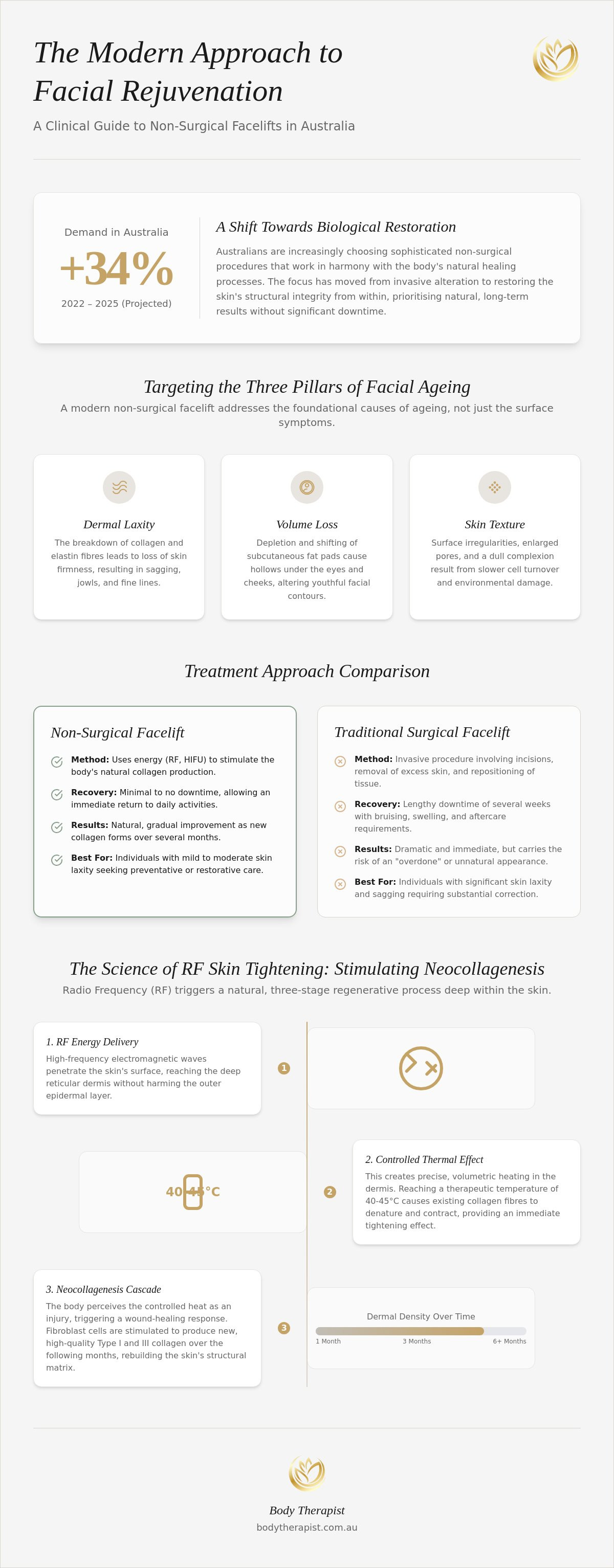
Did you know that the demand for non-surgical cosmetic procedures in Australia surged by more than 34% between 2022 and 2025? It is clear that more individuals are prioritising biological restoration over invasive alteration. You might be noticing the gradual descent of the jowls or a frustrating loss of skin density, yet the fear of a lengthy recovery or an unnatural, surgical appearance often keeps you from taking action. Finding a sophisticated non-surgical facelift shouldn't mean settling for superficial results that don't address the underlying anatomy.
In this clinical guide, you'll discover the precise science behind non-invasive lifting and how targeted thermal energy can restore structural integrity without a single incision. We'll explore the latest advancements in RF skin tightening and HIFU technology that work in harmony with your body's natural healing response. We will preview the specific protocols used to enhance facial contours and skin texture, ensuring you understand the "how" and "why" of achieving a rejuvenated, rested look while adhering to the latest 2026 Australian regulatory standards.
Key Takeaways
Understand how energy-based interventions address the three core pillars of facial ageing: laxity, volume loss, and skin texture.
Learn how RF technology facilitates a non-surgical facelift in Sydney by triggering neocollagenesis through precisely controlled thermal energy.
Discover why non-invasive lifting provides a natural, refreshed aesthetic while avoiding the risks and lengthy recovery associated with traditional surgery.
Identify the clinical protocols and nutritional factors, such as dermal hydration, that are vital for synthesising new collagen during your treatment journey.
Explore how integrating remedial expertise with advanced RF skin tightening ensures a treatment plan that respects the complex interplay of facial muscles and fascia.
Table of Contents
Understanding the Non-Surgical Facelift in Sydney: A Modern Clinical Approach
The concept of a non-surgical facelift in Sydney has evolved from a vague aesthetic promise into a precise, multi-modality clinical strategy. It's no longer about the superficial "quick fixes" found in a general beauty salon. Instead, modern practitioners focus on energy-based interventions that target the biological foundations of the face. By addressing the three pillars of facial ageing, which are dermal laxity, subcutaneous volume loss, and epidermal texture, clinicians can facilitate structural rejuvenation without the trauma of invasive surgery. This approach prioritises the restoration of the skin's internal architecture over merely pulling the surface tight.
Demand for these non-invasive modalities is dominating the Australian market in 2026. This shift is largely driven by a growing preference for natural results and the recent regulatory tightenings surrounding cosmetic surgery. With mandatory GP referrals and seven-day cooling-off periods now standard for invasive procedures, many individuals are seeking clinical-grade alternatives that offer a high safety profile. This focus on medical oversight is mirrored internationally, where board-certified practitioners like John Abroon M.D. provide rigorous clinical assessments. However, a clear distinction exists between a simple "beauty treatment" and a clinical structural protocol; genuine rejuvenation requires a deep understanding of human anatomy and the physiological response to controlled thermal stress.
The Anatomy of Facial Ageing
Facial ageing is a complex process involving the progressive degradation of collagen and elastin fibres within the extracellular matrix. This breakdown leads to visible dermal laxity and the eventual formation of static wrinkles. Simultaneously, the shifting and depletion of subcutaneous adipose tissue, the fat pads that provide youthful contour, result in hollows and sagging around the mid-face and jawline. Simply tightening the skin surface is insufficient. To restore a youthful silhouette, a practitioner must improve the structural density of the deeper dermal layers to provide a stable foundation for the epidermis.
Non-Surgical vs. Minimally Invasive
Selecting the right path among various Facial Rejuvenation Options requires a clear understanding of the technology involved. While topical serums provide hydration and injectables address specific volume deficits, energy-based devices offer a unique clinical advantage. Technologies like RF skin tightening use non-ionising radiation to deliver thermal energy deep into the tissue. This process triggers a biological wound-healing cascade that stimulates the production of high-quality Type I collagen. It's particularly effective for those experiencing mild to moderate laxity who wish to avoid the risks associated with general anaesthesia and surgical recovery.
The Science of RF Skin Tightening: Stimulating Neocollagenesis
Radio Frequency (RF) energy functions through the delivery of high-frequency electromagnetic waves into the reticular dermis. Unlike superficial treatments, RF creates volumetric heating, which induces a state of controlled thermal trauma at depths of up to 3mm. This precise elevation of tissue temperature, ideally maintained between 40 and 45 degrees Celsius, is the catalyst for a non-surgical facelift in Sydney. It's a biological "re-set" that forces the skin to prioritise structural repair over simple maintenance.
The biological response to this heat is immediate and profound. When the dermis reaches the therapeutic temperature threshold, the triple-helix structure of existing collagen fibres begins to denature and contract. This provides an initial visible lift. However, the true clinical value lies in the subsequent wound-healing cascade. The body perceives this thermal stress as a signal to initiate neocollagenesis, the production of fresh, high-quality Type I and Type III collagen. This process doesn't happen overnight; it follows a physiological timeline that matures over several months, resulting in increased dermal thickness.
Precision in temperature control is what separates a medical-grade RF skin tightening protocol from a standard beauty session. If the temperature is too low, the fibroblasts remain dormant. If it's too high, tissue damage occurs. Maintaining this "goldilocks zone" ensures that we stimulate the skin's regenerative capacity without compromising its integrity. For a deeper look at the clinical landscape, this Non-Surgical Facelift Explained provides context on how these energy-based devices fit into modern aesthetic medicine.
Thermal Energy and Fibroblast Activation
Fibroblasts are the primary cells responsible for synthesising the extracellular matrix and collagen. Under the influence of RF-induced thermal energy, these cells are "upregulated" via the release of heat-shock proteins. These proteins act as molecular chaperones, facilitating the remodelling of old, fragmented collagen into a more organised and dense lattice. This cellular activation ensures that the skin doesn't just look tighter; it actually becomes thicker and more resilient at a microscopic level over a 90-day cycle.
RF Technology Modalities
The efficacy of a treatment often depends on the delivery method. Monopolar RF penetrates deeply but can be uncomfortable, while multipolar systems use sophisticated algorithms to distribute energy more evenly across the treatment area. For jowl and neck rejuvenation, depth-specific targeting is essential to reach the fibroseptal network. Consistent energy delivery ensures that every square centimetre of the treatment zone receives the necessary thermal load to trigger a significant biological response without hot spots.
Non-Surgical Procedures vs. Traditional Surgical Facelifts
Deciding between a surgical intervention and a non-surgical facelift in Sydney involves more than just comparing price points; it requires a clinical evaluation of the risk-to-reward ratio. While a traditional rhytidectomy offers dramatic results for severe skin laxity, it necessitates general anaesthesia, surgical incisions, and a significant recovery period. Conversely, energy-based lifting focuses on biological restoration. It's a sophisticated alternative for those who aren't ready for the operating theatre but require a measurable improvement in facial contours.
Aesthetics play a critical role in this decision. Many patients now prioritise a "natural" look, specifically seeking to avoid the over-tightened or "wind-tunnel" appearance often associated with invasive procedures. Because non-surgical modalities rely on your own neocollagenesis, the results are harmonised with your existing facial structure. The change is gradual and restorative rather than sudden and artificial.
Downtime is often the deciding factor for busy professionals. Surgical recovery typically involves two to four weeks of bruising, swelling, and restricted activity. In contrast, clinical RF treatments allow for an immediate return to function. You can attend a social engagement or return to work the same day. While surgery is a one-off event with a high initial cost, non-surgical maintenance involves a series of cumulative sessions that build dermal resilience over time without the inherent risks of surgery.
Comparing Outcomes and Longevity
Surgical facelifts primarily address the SMAS (Superficial Musculoaponeurotic System) layer through excision and repositioning. This is highly effective for removing large amounts of redundant skin. However, research into the Non-surgical radiofrequency facelift suggests that for mild to moderate sagging, reinforcing the biological scaffold through thermal stimulation can be equally transformative. There comes a point, typically in cases of advanced elastosis or extreme tissue descent, where non-surgical paths may no longer provide the necessary structural lift. In these instances, a clinical consultation is vital to manage expectations.
The Role of Preventive Maintenance
Integrating a non-surgical facelift in Sydney into a long-term wellness plan is often seen as "pre-juvenation." Utilising RF skin tightening in your 30s and 40s acts as a preventive measure, slowing the visible signs of collagen depletion before they become severe. These treatments also serve a secondary purpose for those who have already undergone surgery. By maintaining dermal density through regular collagen-stimulating protocols, you can significantly extend the longevity of surgical results. It's a cumulative approach where consistent, low-trauma interventions build a more resilient dermal foundation over time.
Clinical Protocols: What to Expect During Your Treatment Journey
A successful non-surgical facelift in Sydney doesn't happen in isolation. It begins with a comprehensive clinical consultation and a detailed skin analysis. During this initial phase, we assess the specific vectors of descent in your facial structure and identify the degree of dermal thinning. This diagnostic step is vital to ensure the energy-based protocols are calibrated to your unique anatomical needs. We don't just look at the surface; we evaluate the underlying tissue health to determine if your skin is prepared for the regenerative stress of thermal therapy.
Dermal preparation is a frequently overlooked aspect of the treatment journey. To achieve optimal neocollagenesis, the skin must be adequately hydrated and supported by a baseline of essential nutrients. We often recommend increasing water intake and prioritising amino acids and Vitamin C in the weeks leading up to your session. These elements provide the biological raw materials necessary for synthesising new collagen strands. Without this preparation, the cellular response to the treatment may be diminished.
During the procedure, you'll experience a deep, buildable warmth as the device moves across the treatment area. This "controlled heat" is necessary to reach the therapeutic threshold in the dermis. While the sensation is intense, it's generally well-tolerated and often described as a hot stone massage for the face. Immediately following the session, you may observe mild erythema and transient swelling. These are positive clinical indicators that the biological wound-healing cascade has been successfully triggered. To manage this inflammatory response and expedite the removal of metabolic waste, optimising lymphatic drainage is a critical component of the recovery phase. This ensures that the treated tissues remain clear of congestion, allowing for a more defined and refined result.
If you're ready to begin your journey toward structural rejuvenation, you can book a clinical assessment at Body Therapist to discuss a tailored treatment plan.
The Ideal Treatment Schedule
Biological change takes time. While some patients notice an immediate contraction of collagen fibres, the most significant results appear after a series of treatments. We typically recommend a programme of 6 to 10 sessions, spaced to align with the natural 28-day cellular turnover cycle. This allows each session to build upon the last, creating a sustainable and dense collagen base. Once the initial lifting phase is complete, maintenance sessions every 3 to 6 months keep the regenerative processes active year-round.
Candidate Selection and Contraindications
The ideal candidate for a non-surgical facelift in Sydney is someone with mild to moderate skin laxity who is seeking a natural, refreshed aesthetic. However, clinical safety is our priority. Contraindications include active skin infections, certain autoimmune conditions, or the presence of metal implants and pacemakers in the treatment zone. It's also important to manage expectations. While RF technology is highly effective for skin tightening and contouring, it cannot replicate the dramatic tissue excision of a surgical facelift for patients with advanced skin redundancy.
Advanced Aesthetic Care at Body Therapist
Body Therapist approaches facial rejuvenation through the lens of rehabilitative medicine. We don't view the skin as an isolated surface; instead, we treat it as the superficial layer of a complex anatomical system. By integrating clinical remedial expertise with advanced RF skin tightening technology, we address the physiological architecture of the face. This Master Practitioner approach allows us to understand the delicate interplay between muscle tone, fascial integrity, and dermal density. When you seek a non-surgical facelift in Sydney at our clinic, you're receiving a treatment designed by specialists who understand human anatomy at a functional level.
Our holistic framework prioritises evidence-based outcomes over the transient allure of beauty trends. We recognise that for the skin to thrive and remodel effectively, the underlying environment must be healthy. This is why we often incorporate manual lymphatic drainage massage into our aesthetic protocols. Clearing metabolic waste and reducing interstitial congestion ensures that the thermal energy from RF treatments can trigger the most efficient regenerative response possible. It's about creating a biological environment where neocollagenesis can occur without the hindrance of cellular debris or fluid retention.
Our Clinical Philosophy
We've moved beyond the traditional "anti-ageing" narrative to focus on functional tissue optimisation. Every aesthetic session is conducted with technical oversight, ensuring that energy delivery is precise and purposeful. We don't believe in a one-size-fits-all methodology. Instead, we develop bespoke treatment plans that respect the unique bony landmarks and soft tissue distribution of each patient. Our goal is to restore the structural integrity of the face, providing a lift that feels as natural as it looks. This methodical problem-solving approach ensures that we manage the ageing process with clinical precision and empathetic care.
The Integration of Modalities
The synergy between RF technology and remedial techniques creates a superior lifting effect that energy-based devices alone cannot achieve. By addressing the "whole face," we look at how kinetic release in the neck and jaw muscles can alleviate the downward pull on facial features. This combination of structural support and cellular stimulation results in a more defined silhouette and improved skin "bounce." If you're ready to move beyond superficial treatments and invest in the long-term health of your skin, it's time to Organise a clinical consultation with our specialists. We will work with you to map out a journey toward sustainable, biological rejuvenation that aligns with your specific aesthetic goals.
Restoring Structural Integrity for a Rejuvenated Future
Rejuvenation in 2026 is defined by biological restoration rather than surgical trauma. We've explored how evidence-based RF technology triggers neocollagenesis to thicken the dermis and how a comprehensive clinical protocol ensures both safety and efficacy. Achieving a successful non-surgical facelift in Sydney requires a practitioner who respects the complex interplay of fascia, muscle, and skin. By prioritising tissue health and structural support, you can achieve a refreshed aesthetic that remains entirely natural and harmonised with your unique anatomy.
At Body Therapist, Qualified Master Practitioner Lee Carnegie integrates advanced technology with specialised knowledge in post-surgical and aesthetic recovery. This ensures your treatment journey is grounded in anatomical precision and methodical, evidence-based care. Whether you are seeking preventive maintenance or significant contour restoration, a tailored approach is essential for sustainable results. Book your clinical facial assessment at Body Therapist to begin your journey toward restored facial health. You deserve a rejuvenated appearance that reflects your internal vitality without the inherent risks of the operating theatre.
Frequently Asked Questions
Is a non-surgical facelift painful?
Most patients describe the sensation as a deep, buildable warmth rather than acute pain. During a typical session, the dermal tissue is heated to a therapeutic threshold between 40 and 45 degrees Celsius. While this heat is intense, it's often compared to the feeling of a hot stone massage. The practitioner monitors the skin temperature continuously to ensure the treatment remains within a comfortable and clinically safe range.
How long do the results of a non-surgical facelift last?
Results typically persist for 12 to 18 months, though this depends on your individual biological rate of collagen degradation. Because the procedure triggers neocollagenesis, the fresh collagen strands become a permanent part of your dermal architecture. However, the natural ageing process doesn't stop. Most clinical protocols suggest a maintenance session every 6 months to sustain the structural integrity and lifting effect over the long term.
Can I combine RF skin tightening with other cosmetic treatments?
Yes, combining different modalities is often the most effective clinical strategy for comprehensive facial rejuvenation. Integrating energy-based lifting with manual lymphatic drainage or remedial techniques can significantly enhance fluid clearance and structural support. This multi-layered approach addresses both dermal laxity and underlying muscle tension, providing a more refined outcome for a non-surgical facelift in Sydney than a single technology could offer alone.
How many sessions will I need before I see a visible lift?
Most individuals require a programme of 6 to 10 sessions to achieve a measurable and sustainable lift. While you might notice an immediate contraction of existing collagen fibres after the first appointment, the synthesis of high-quality Type I collagen follows a 90-day biological cycle. Significant and lasting structural changes usually become visible to the naked eye after the third or fourth treatment as the dermal layer thickens.
What is the recovery time for a non-surgical facelift?
There is virtually zero downtime, allowing you to return to your daily routine immediately after leaving the clinic. You may experience mild erythema or transient swelling for a few hours post-treatment, but these are positive clinical indicators of a successful thermal response. Unlike invasive surgery, there are no incisions, sutures, or bruises to manage, making it a convenient option for those with demanding professional or social schedules.
Is RF skin tightening safe for all skin tones and types?
RF technology is safe for all skin tones because it is "colour-blind" and does not target melanin in the epidermis. Unlike certain laser treatments that carry a risk of post-inflammatory hyperpigmentation in darker skin types, Radio Frequency energy bypasses the surface to target the deeper dermal layers directly. This makes it a highly inclusive and safe option for a diverse range of patients seeking structural skin improvement.
What happens if I stop having non-surgical treatments?
If you choose to stop treatments, your skin will simply resume its natural ageing process from its newly improved baseline. You won't experience a sudden "crash" or accelerated sagging. The high-quality collagen produced during your treatment journey remains in the tissue; however, it will eventually undergo the same natural breakdown as the rest of your skin's structural proteins over the following years.
How does the cost of non-surgical lifting compare to surgery?
Non-surgical options require a much lower initial investment but involve cumulative costs for maintenance sessions over time. A non-surgical facelift in Sydney is managed through a series of clinical appointments, which avoids the high one-off fees associated with hospital stays, anaesthetists, and surgical theatre costs. This allows for a more flexible and manageable financial commitment toward your long-term facial health and aesthetic goals.


Comments