

Non-Surgical Body Contouring: The 2026 Clinical Buying Guide
- leecarnegie

- 4 days ago
- 11 min read
With non-invasive devices now commanding over 43 per cent of the global body sculpting market in 2026, the sheer volume of options can feel more like a clinical maze than a path to confidence. You’ve likely spent hours researching body contouring without surgery, only to be met with technical jargon that leaves you wondering if these treatments actually deliver on their promises. It's common to feel hesitant about investing your resources when the fear of post-treatment swelling or underwhelming results persists. We recognise that achieving a contoured physique requires more than just high-end machinery; it requires a deep understanding of human anatomy and cellular processes.
This guide simplifies the selection process by showing you how to match sophisticated clinical technology with your specific biological needs. You'll learn how to choose the most effective non-invasive sculpting treatments to achieve visible fat reduction and firmer skin texture. We'll preview the latest 2026 technological benchmarks and explain why a holistic approach, which integrates manual lymphatic support with advanced modalities, is the essential key to a safe and efficient recovery path.
Table of Contents
Beyond the Scalpel: The Evolution of Non-Surgical Body Contouring
The Science of Transformation: How Technology Reshapes Your Silhouette
A Tactical Comparison: Matching Modalities to Your Aesthetic Goals
The Essential Buying Guide: Evaluating Clinical Standards and Safety
Optimising Your Silhouette: The Body Therapist Integrated Approach
Beyond the Scalpel: The Evolution of Non-Surgical Body Contouring
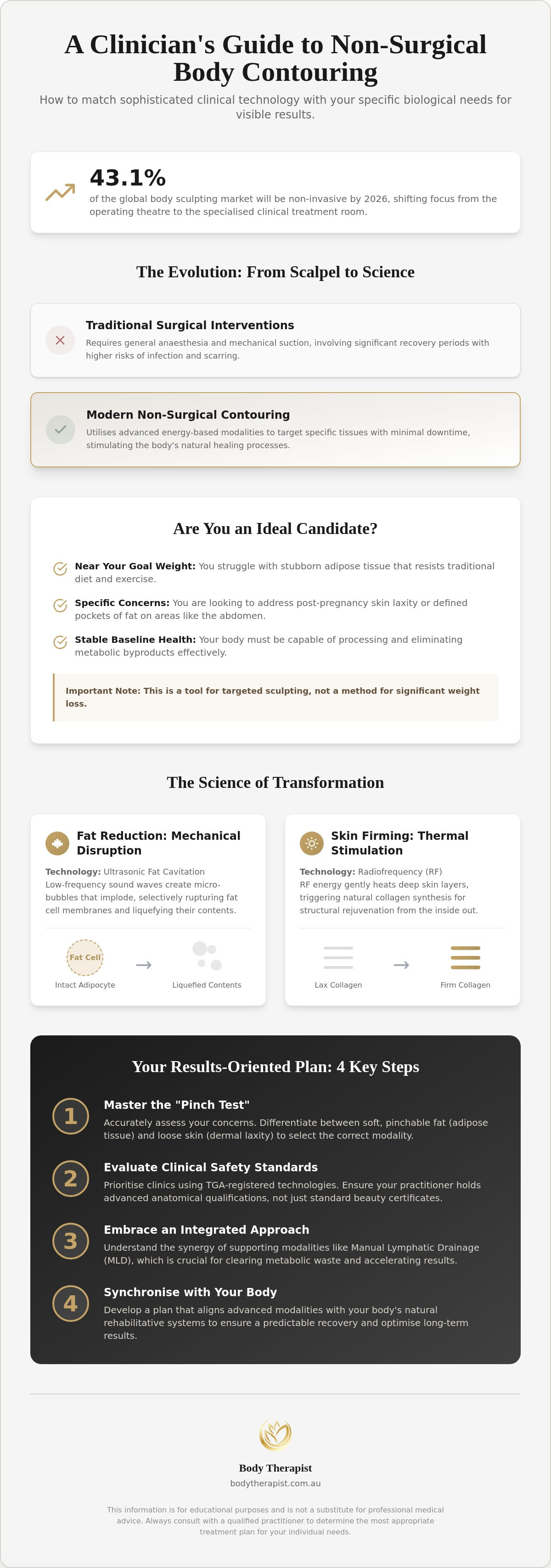
Non-surgical body contouring represents a sophisticated category of clinical procedures designed to reshape physical proportions without the trauma of invasive surgery. Unlike traditional liposuction, which requires mechanical suction and significant recovery periods, modern body contouring without surgery utilises energy-based modalities to target specific tissues. With non-invasive devices accounting for 43.1 per cent of the global market in 2026, we are seeing a significant evolution of fat removal procedures. This shift moves the focus from the operating theatre to the specialised clinical treatment room. The primary objectives are clear: disrupting localised adipose tissue, inducing dermal tightening, and smoothing the structural appearance of cellulite.
The current clinical environment is defined by medical-grade technology that bridges the gap between aesthetic care and rehabilitative science. We’ve moved past the era where these services were confined to general beauty salons. This transition ensures that treatments aren't just superficial applications but are instead targeted physiological interventions. By focusing on cellular disruption and structural release, practitioners can now achieve measurable results that were once only possible through surgical means.
The Biological Shift: Why Non-Invasive is the Modern Preference
The preference for non-invasive modalities stems from a drastically reduced risk profile. By eliminating the need for general anaesthesia and surgical incisions, we remove the associated complications of infection and prolonged healing. These treatments work by stimulating your body’s endogenous systems. For instance, Radiofrequency (RF) technology triggers collagen synthesis within the dermis, leading to structural rejuvenation from the inside out. Importantly, these protocols preserve functional mobility. Patients don't need to sacrifice their active lifestyles or professional commitments during the treatment cycle.
Identifying the Ideal Candidate for Clinical Contouring
It is vital to understand that body contouring without surgery is a tool for targeted sculpting rather than a solution for significant weight loss. The ideal candidate is someone near their goal weight who struggles with stubborn adipose tissue that resists traditional diet and exercise. We often see excellent results for individuals addressing post-pregnancy skin laxity or specific pockets of fat on the abdomen. A stable baseline of health is a prerequisite. Your body must be capable of processing and eliminating the metabolic byproducts released during fat disruption to achieve the visible, firmer results you desire.
The Science of Transformation: How Technology Reshapes Your Silhouette
Understanding the physiological pathways through which energy-based devices interact with human tissue is essential for anyone considering body contouring without surgery. Modern clinical technology operates via two primary mechanisms: mechanical disruption for fat reduction and thermal stimulation for dermal firming. While these outcomes are often sought simultaneously, the biological requirements for each are fundamentally different. It is vital to understand what to know about nonsurgical body sculpting before selecting a modality, as targeting stubborn adipose tissue requires a different energetic profile than addressing skin laxity. Once these tissues are successfully altered, your body relies on its natural metabolic and lymphatic systems to process and eliminate the cellular remnants.
Ultrasonic Fat Cavitation: Disrupting Stubborn Adipose Cells
Ultrasonic fat cavitation utilises low-frequency sound waves to target localised fat deposits. These waves create rapid pressure fluctuations within the interstitial fluid, leading to the formation of microscopic vacuum bubbles that surround the adipocytes. When these bubbles reach a critical volume, they implode, producing a localised shockwave that selectively ruptures the fat cell membranes. This process converts solid triglycerides into a liquid substance consisting of glycerol and free fatty acids. Cavitation is defined as a non-thermal mechanical disruption process that bypasses surrounding vascular and nervous tissue. Once the cells are liquefied, the glycerol is absorbed by the circulatory system, while the fatty acids are transported via the lymphatic system to the liver for filtration and energy conversion.
Radio Frequency (RF) Skin Tightening: Stimulating Dermal Collagen
Radio frequency technology focuses on the structural integrity of the skin matrix. By delivering controlled electrical energy into the deeper dermis, RF creates volumetric heating that causes the immediate contraction of existing collagen fibres. This thermal response acts as a biological catalyst for neocollagenesis, which is the production of new, high-quality collagen and elastin. Over the following weeks, this long-term remodelling leads to a denser, more resilient skin structure. This technology is particularly effective to rejuvenate skin after weight loss, providing the necessary lift where structural support has been compromised. If you are ready to see how these advanced modalities can be tailored to your unique biological needs, you can enquire about a clinical consultation with our master practitioners. This evidence-based approach ensures that your body contouring without surgery is both safe and physiologically optimised.
A Tactical Comparison: Matching Modalities to Your Aesthetic Goals
Achieving a refined silhouette requires a strategic selection of modalities tailored to your physiological profile. When considering body contouring without surgery, the first step is a clinical assessment using the 'pinch test'. This diagnostic tool differentiates between localised fat deposits and skin laxity. If you can grasp a significant fold of soft tissue, your protocol should prioritise fat disruption. However, if the tissue is thin but lacks elasticity, the focus must shift to structural tightening. For many, the abdomen is the primary area of concern, representing over 35 per cent of the global body sculpting market. Addressing this zone often requires a synergistic approach, as reducing fat volume without concurrently tightening the skin can lead to an undesirable 'deflated' appearance.
Superior results often emerge from a multi-modal strategy rather than relying on a single technology. By combining different energy-based treatments, we can address both the subcutaneous fat and the overlying dermal structure in a single treatment cycle. It's also important to manage expectations regarding the timeline for transformation. Visible results typically require 6 to 10 sessions spaced at specific intervals. This methodical progression allows your lymphatic system to efficiently clear the metabolic waste produced during each treatment, ensuring a safe and sustainable outcome.
Fat Reduction vs. Skin Firming: Which Should You Prioritise?
Ultrasonic fat cavitation is the gold standard for volume reduction in areas like the thighs or belly where stubborn adipose tissue persists. Once fat cells are disrupted, the overlying skin
The Essential Buying Guide: Evaluating Clinical Standards and Safety
Selecting a provider for body contouring without surgery requires a level of scrutiny that extends beyond aesthetic marketing. In Australia, clinical safety is governed by the Therapeutic Goods Administration (TGA). You should always verify that the devices utilised in your treatment plan are TGA-registered. Many budget-focused establishments use non-regulated equipment that fails to maintain the precise frequencies or thermal controls necessary for fat cell disruption. This isn't just a matter of efficacy; unregulated devices increase the risk of burns, nerve injury, and inconsistent results. If a service price seems unusually low, it often indicates a compromise in equipment grade or practitioner training.
Before committing to a treatment cycle, you should ask several critical questions during your initial consultation. Enquire about the specific technology being used and the practitioner's formal training in human anatomy. A qualified specialist will be able to explain the expected physiological response and any contraindications based on your medical history. You should avoid clinics that cannot provide evidence of their clinical qualifications or equipment registration. To ensure you are receiving care from experts who prioritise biological safety, you can organise a clinical consultation with our specialists to discuss your specific requirements.
Recognising Clinical Excellence in Australia
A practitioner with a background in myotherapy or remedial massage offers a distinct advantage over someone holding only a generic beauty certificate. This advanced anatomical knowledge allows for a more precise application of technology, particularly when navigating complex musculoskeletal structures. Medical-grade protocols, including rigorous hygiene standards and pre-treatment skin assessments, are non-negotiable for patient safety. You should look for personalised treatment plans rather than "one-size-fits-all" bundles. A reputable clinic will always adjust their approach based on your unique tissue density and metabolic health.
The Critical Role of the Lymphatic System in Results
The success of non-invasive sculpting depends heavily on your body’s ability to process cellular debris. Once fat cells are disrupted, they must be transported through the lymphatic system for filtration and eventual elimination. This is why manual lymphatic drainage (MLD) is often considered the "secret weapon" for achieving optimal results. Without efficient drainage, you may experience prolonged swelling or sluggish progress. It is wise to identify signs that your lymphatic system needs support, such as persistent fluid retention or heavy limbs, before commencing tech-based treatments. Integrating MLD ensures that metabolic waste is cleared promptly, allowing the results of your contouring sessions to become visible sooner.
Optimising Your Silhouette: The Body Therapist Integrated Approach
Sustainable results in body contouring without surgery are rarely achieved through technology alone. Our clinical philosophy centres on the synergy between advanced energy-based modalities and manual therapeutic expertise. While machines provide the stimulus for fat disruption and collagen synthesis, the human touch ensures these biological changes are integrated into a healthy, functional system. By combining Ultrasonic Fat Cavitation and RF Skin Tightening with specialised manual techniques, we address the body as a cohesive unit. This approach prevents the common pitfalls of stagnant results or post-treatment discomfort, ensuring that your physical transformation is supported by optimal internal health.
The first 48 hours following a contouring session are critical for metabolic clearance. During this window, your liver and lymphatic system are working at an increased capacity to process the liquefied adipose tissue. We provide a structured roadmap to support this transition:
Hydration protocol: Consuming at least two litres of water daily facilitates the transport of glycerol and fatty acids through the renal system.
Functional movement: Engaging in light activity, such as walking, stimulates the skeletal muscle pump to move interstitial fluid.
Metabolic support: Avoiding alcohol and excessive carbohydrates for two days reduces the workload on the liver, allowing it to prioritise fat filtration.
Why We Integrate Clinical Massage with Technology
Maintaining tissue health is essential when undergoing a series of energy-based treatments. We utilise remedial massage to ensure that the fascia and muscle layers remain supple, preventing the hardening that can sometimes occur during intensive fat reduction cycles. This manual intervention is particularly vital for managing pre-existing scar tissue or adhesions that might otherwise impede the even distribution of RF energy. Furthermore, the mechanical stimulation of the skin during massage enhances fluid health, contributing to a more radiant dermal appearance and improved structural resilience.
Your Personalised Path to Functional Rejuvenation
Your journey begins with a comprehensive anatomical assessment where we identify your specific tissue requirements and metabolic baseline. We don't believe in generic treatment bundles; instead, we design a step-by-step protocol that evolves alongside your results. This evidence-based path prioritises your safety and long-term well-being, moving from initial fat disruption to final dermal sculpting with methodical precision. Our goal is to provide a rehabilitative experience that leaves you feeling physically optimised and functionally renewed. To begin your transformation with a master practitioner, you can book your clinical body contouring assessment today and discover the difference of an integrated approach.
Advancing Your Path to Physiological Transformation
Choosing body contouring without surgery involves more than just selecting a device; it requires a strategic alignment of clinical technology with your unique anatomical requirements. We've explored how identifying the distinction between adipose volume and skin laxity ensures you receive the correct modality for your specific goals. By prioritising TGA-registered equipment and practitioners with deep expertise in human physiology, you protect your safety while ensuring measurable, long-term outcomes.
At Body Therapist, led by qualified specialist Lee Carnegie, we bridge the gap between medical science and aesthetic care. Our commitment to clinical-grade technologies is matched by our dedication to post-treatment biological recovery. We integrate Manual Lymphatic Drainage (MLD) into our protocols to facilitate superior waste processing, ensuring your body efficiently clears the metabolic byproducts of fat disruption. This methodical approach transforms a standard procedure into a comprehensive, results-oriented journey.
If you're ready to move beyond the confusion of competing technologies and towards an evidence-based plan, we're here to support your progress. Book Your Clinical Assessment with Body Therapist today. Your path to a firmer, more contoured silhouette is grounded in precision and expert care.
Clinical Frequently Asked Questions
Is body contouring without surgery permanent?
The results are permanent because the fat cells disrupted during the procedure are physically eliminated and cannot regrow. However, maintaining a stable weight is essential for long-term success. While the treated adipocytes are gone, the remaining fat cells in the surrounding tissue can still hypertrophy if a significant caloric surplus occurs, which may alter your sculpted silhouette.
How many sessions of fat cavitation are usually required?
Most individuals require a series of 6 to 10 sessions to achieve their desired aesthetic outcome. These appointments are typically scheduled at one-week intervals to synchronise with your body's natural metabolic clearance rate. Your specific treatment plan will depend on the thickness of the adipose layer and how efficiently your lymphatic system processes the released lipids.
Does non-surgical skin tightening actually work for loose skin?
Non-surgical skin tightening is highly effective for mild to moderate laxity by stimulating endogenous collagen production. By delivering controlled energy into the dermis, we trigger a structural remodelling process that firms the skin matrix over several months. It's a reliable method for refining texture after body contouring without surgery, though it isn't designed to resolve severe skin redundancy following massive weight loss.
What is the recovery time for non-invasive body sculpting?
There is no clinical downtime required; you can resume your professional and social activities immediately after the session. While you won't need bed rest, your internal systems undergo a metabolic recovery phase for approximately 48 to 72 hours. During this window, you may notice a sensation of internal warmth or mild localised tenderness as your body processes the disrupted cells.
Can I combine lymphatic drainage with my contouring sessions?
Integrating Manual Lymphatic Drainage (MLD) is highly recommended to enhance the speed and quality of your results. MLD facilitates the rapid transport of metabolic waste into the circulatory system for filtration. This synergy prevents fluid stagnation and reduces the minor swelling that can sometimes occur when the lymphatic pathways are managing a high volume of cellular debris.
Are there any side effects to radio frequency skin tightening?
Side effects are typically minimal and resolve within a few hours of the treatment. You might experience temporary erythema, which appears as a mild redness similar to a warm flush, or slight localised oedema. These are normal physiological responses to the thermal energy and indicate that the dermal heating has reached the threshold required to trigger collagen synthesis.
What happens to the fat after a cavitation treatment?
The disrupted fat is converted into glycerol and free fatty acids before being released into the interstitial fluid. Glycerol is water-soluble and is absorbed by the circulatory system for energy use. The fatty acids are transported via the lymphatic system to the liver, where they are metabolised and eventually excreted through the body’s natural waste pathways.
How do I know if a clinic uses TGA-registered devices?
You can verify the status of any medical device by searching the Australian Register of Therapeutic Goods (ARTG) database. A professional clinic should be transparent about their equipment and provide the TGA registration number upon your request. Ensuring your body contouring without surgery uses regulated technology is a non-negotiable standard for both your safety and the predictability of your results.


Comments