

Myotherapy for Flexibility and Easier Movement

Flexibility is more than how far a joint can stretch. Myotherapy for improving flexibility may help ease muscle tension and support a greater range of motion through hands-on treatment and stretching. It may also address movement restrictions that make everyday activities or exercise uncomfortable.
When stiffness limits your movement, temporary relief may not be enough. Myotherapy looks at how muscles and surrounding tissues may affect the way you move, then uses targeted techniques to address those areas.
This article explains how myotherapy may support flexibility and mobility, what benefits it may offer, and how trigger point therapy can fit into treatment. You’ll also learn what can influence progress and how an approach tailored to you may support easier movement over time.
Table of Contents
Does myotherapy help flexibility and mobility?
Myotherapy may support flexibility by addressing muscle tension and restricted movement. Techniques can combine hands-on treatment with stretching to target what limits a movement, such as a stiff shoulder.
Mobility, Range of Motion and Flexibility
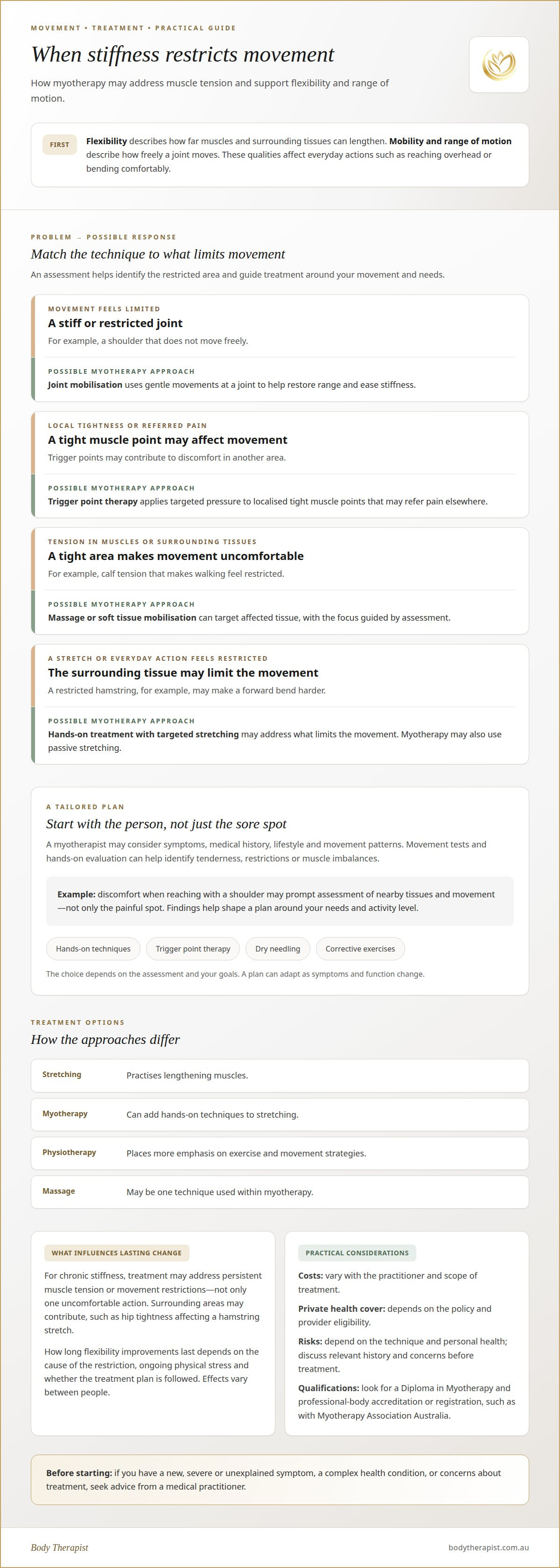
Flexibility describes how far muscles and surrounding tissues can lengthen, while mobility and range of motion describe how freely a joint moves. These qualities affect practical actions, from reaching overhead to bending comfortably. Better Health Channel notes that myotherapy may use massage and passive stretching. Addressing a restricted hamstring, for example, may help make a forward bend easier.
Techniques for Restricted Movement
Myotherapy can address restricted movement with hands-on treatment and targeted movement approaches. Joint mobilisation uses gentle movements at a joint to help restore range and ease stiffness, such as limited shoulder movement. Trigger point therapy applies targeted pressure to tight muscle points that may refer pain elsewhere. Massage and stretching can also address affected tissue and support easier movement.
Chronic Mobility Issues and Lasting Results
For chronic stiffness, treatment can address persistent muscle tension or movement restrictions rather than focusing only on one uncomfortable action. A therapist may consider how surrounding areas contribute, such as hip tightness affecting a hamstring stretch. How long flexibility improvements last depends on the cause of the restriction, ongoing physical stress and whether the treatment plan is followed; effects vary between people.
Comparing Flexibility Treatments and Practical Considerations
Stretching practises lengthening muscles, while myotherapy can add hands-on techniques. Physiotherapy places more emphasis on exercise and movement strategies, and massage may be one technique used within myotherapy. Treatment costs in Australia vary with the practitioner and scope of treatment; private health cover depends on the policy and provider eligibility. Risks depend on the technique and personal health, so discuss relevant history and concerns before treatment. To find a qualified myotherapist, look for a Diploma in Myotherapy and professional-body accreditation or registration, such as with Myotherapy Association Australia.
What are the benefits of myotherapy?
Myotherapy can assess, treat and rehabilitate musculoskeletal pain and dysfunction. Its value lies in matching treatment to the person, rather than applying the same techniques to every sore area.
An assessment considers symptoms, medical history, lifestyle and movement patterns. A myotherapist may use movement tests and hands-on evaluation to identify tenderness, restrictions or muscle imbalances. For example, discomfort when reaching with a shoulder may prompt assessment of nearby tissues and movement, not just the painful spot. These findings guide a plan suited to the person’s needs and activity level.
Treatment can combine hands-on techniques with approaches such as trigger point therapy, dry needling or corrective exercises. The choice depends on the assessment and the person’s goals. If a localised trigger point contributes to discomfort, targeted treatment may be considered; exercises may help strengthen an affected area. The plan can adapt as symptoms and function change, keeping each session relevant to recovery.
Myotherapy may be included in care for chronic pain and musculoskeletal concerns, including fibromyalgia, arthritis, sciatica, sports injuries, postural issues and repetitive strain. A tailored approach considers how the condition affects daily activities. For instance, persistent lower back pain may involve movement habits and muscle function, while a sports injury may call for rehabilitation focused on returning to activity.
People with a new, severe or unexplained symptom, a complex health condition, or concerns about treatment should seek advice from a medical practitioner before starting. Sharing relevant medical history and current care helps the myotherapist plan treatment appropriately. For a treatment option involving fine needles directed at muscle trigger points, explore dry needling treatment.
What is Myotherapy, and how does it relate to enhanced mobility?
Myotherapy assesses and treats musculoskeletal pain and dysfunction using hands-on techniques and movement-based approaches. Its focus on mobility means considering how muscles and surrounding tissues affect everyday actions.
Posture, Movement and Muscle Imbalances
A myotherapy assessment considers posture, movement patterns, muscle balance, and areas of tenderness or restriction. These details can help identify possible causes of discomfort, rather than focusing only on where it hurts. For example, a restricted shoulder reach may involve movement patterns or muscle tension around the shoulder. Movement tests and hands-on evaluation help connect those findings with the person’s physical function.
Soft Tissue Therapy and Muscle Tension
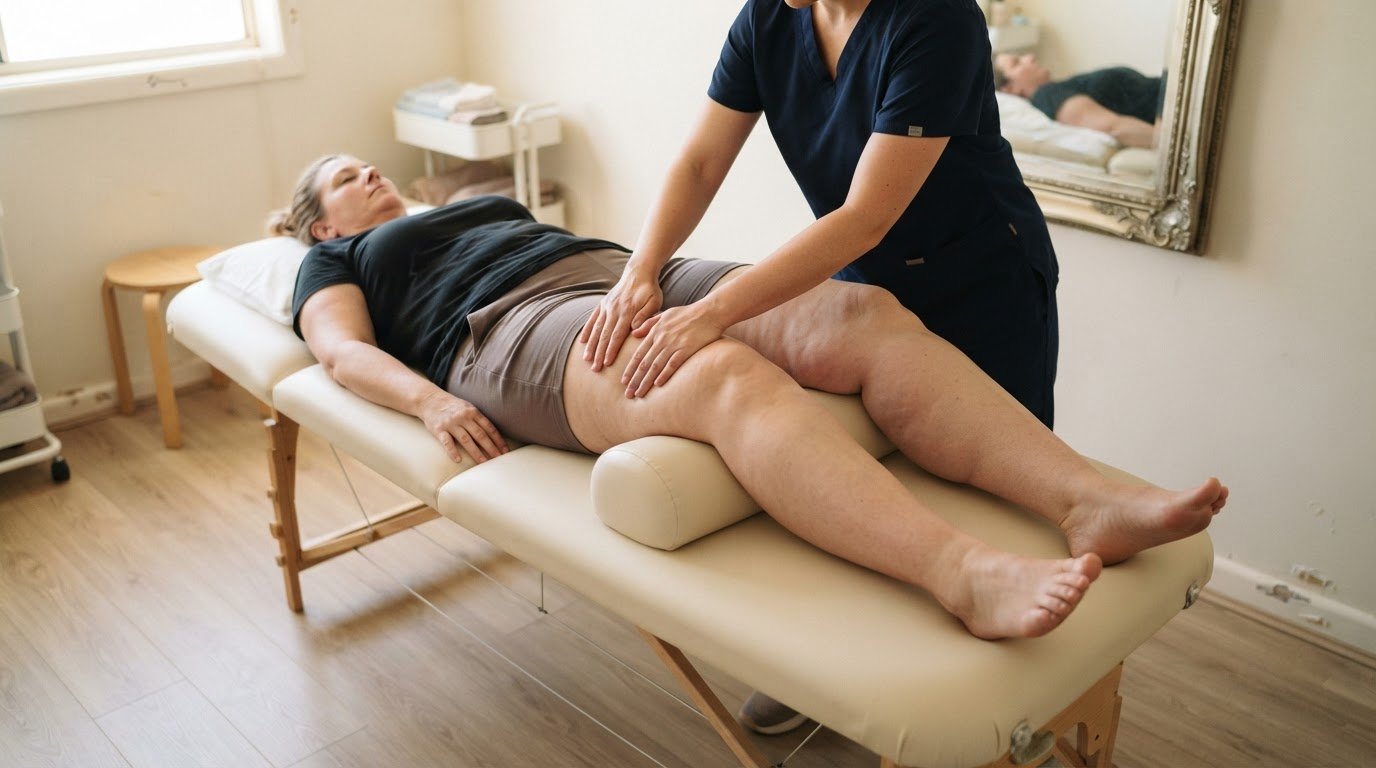
Soft tissue therapy uses hands-on techniques to address tension in muscles and surrounding tissues. Massage and soft tissue mobilisation can target a tight area, such as a calf where tension makes walking feel restricted. Easing local tension may make movement more comfortable, with the treatment focus guided by the assessment. The aim is to address contributing dysfunction, not simply relax tissue without considering its effect on movement.
Myofascial Pain, Stiffness and Tightness
Myofascial pain relates to muscles and connective tissue, including fascia surrounding muscle groups. Tightness or stiffness in these tissues can restrict comfortable movement, such as turning the neck or bending forward. Myofascial release focuses on tight fascia, while trigger point therapy targets localised muscle tightness that may refer pain elsewhere. These approaches address specific areas identified during assessment.
Movement and Muscle Function
Movement depends on muscles, joints and nerves working together as a functional unit. If one area is restricted or imbalanced, another may need to compensate during an action such as reaching overhead. Myotherapy combines manual techniques with rehabilitative exercises to address muscle tension, joint stiffness and movement dysfunction. This links hands-on therapy with physical tasks that matter, including walking, lifting or reaching.
How many myotherapy sessions are usually needed to improve flexibility
There’s no single session count that suits everyone. The time needed to improve mobility varies with individual factors and the severity of the condition. Someone with mild stiffness after prolonged sitting has different needs from someone managing a persistent movement restriction. The affected area, cause of tightness and impact on daily activities all influence how treatment progresses.
Some people notice improved mobility after a few sessions, while others need a longer treatment plan. Progress depends partly on whether the restriction is short-term or linked to an ongoing issue. For example, an isolated tight muscle and recurring stiffness associated with repeated physical demands call for different approaches. An assessment helps identify what is limiting movement and what the treatment plan needs to address.
Consistency matters. Attending sessions as planned and following the treatment approach can contribute to better results. This may include doing relevant stretches or exercises between appointments, where they form part of the plan. Progress can be assessed through practical changes, such as reaching more comfortably, bending with less restriction or moving through a familiar activity more easily. These examples connect treatment to everyday function.
If flexibility changes slowly, the plan can be reviewed in light of symptoms, movement and response to treatment. Persistent stiffness, ongoing pain or an activity that remains difficult can indicate where further attention is needed. Progress isn’t measured only by how far a muscle stretches; comfort and control during movement also matter. For support with your movement goals, arrange a therapy assessment.
Body Therapist
Body Therapist offers Remedial Massage to address specific muscle concerns when tension or discomfort makes everyday movement harder. Treatment can be guided by your symptoms, movement goals and the areas affecting your routine, such as a stiff back that makes bending uncomfortable. The focus is on choosing an appropriate therapeutic approach, not promising a particular flexibility result.
If swelling or lymphatic concerns also affect your comfort, Manual Lymphatic Drainage Massage and Lymphedema Therapy address needs distinct from muscle-related treatment. Sharing which movements feel restricted and how long the issue has affected you can help clarify the next step. Contact Body Therapist to discuss your movement concerns and treatment options.
Make movement your next measure
Choose a practical movement that matters to you, such as reaching overhead, turning comfortably or returning to a favourite activity. This connects flexibility goals with everyday function. Myotherapy for improving flexibility may form part of a broader approach to movement, with treatment choices guided by your needs and health history. The pace and extent of change depend on what contributes to the restriction and how your body responds.
If discomfort or stiffness is affecting your routine, a conversation can help clarify what support may suit your concern. Body Therapist can discuss your movement goals and relevant therapeutic options without assuming one approach fits everyone. Share which movements feel limited and what you’d like to do more comfortably. Contact Body Therapist to talk through your next step and move towards a more comfortable routine.
Frequently Asked Questions
How does myotherapy break down scar tissue and adhesions?
Myotherapy doesn’t mechanically break scar tissue apart; it uses hands-on techniques to address soft-tissue restriction and movement around an affected area. For example, after a healed injury, a therapist may assess how nearby tissues move and whether tenderness limits a shoulder reach. Treatment is guided by the person’s presentation, and scar-related pain or restricted movement may also need assessment by a health professional.
When is Myotherapy Needed?
Myotherapy may be considered when musculoskeletal pain, muscle tension or restricted movement affects everyday tasks or physical activity. A desk worker with persistent neck tightness or a runner managing a muscle strain might seek an assessment to understand what limits movement. The assessment helps determine whether hands-on treatment or another approach is appropriate. New or unexplained symptoms warrant medical advice before treatment.
Who are Myotherapists, and what techniques do they use?
Myotherapists are practitioners trained to assess and manage musculoskeletal pain and dysfunction; a Diploma in Myotherapy includes anatomy, pathology and hands-on treatment techniques. Depending on the assessment, treatment may involve massage, stretching, trigger point therapy, joint mobilisation or dry needling. For example, a practitioner may use gentle joint movements for stiffness and recommend exercises to support function between appointments.
What is myotherapy and how might it improve flexibility?
Myotherapy is a hands-on therapy for musculoskeletal pain and dysfunction, with techniques selected to address a person’s movement needs. For flexibility, treatment may focus on tight muscles or restricted tissues that make a particular action difficult, such as turning your head while driving. Myotherapy for improving flexibility can also include stretching or movement exercises, connecting treatment with functional activities.
What does research say about myotherapy for flexibility and range of motion?
Available clinical information describes myotherapy as a way to address muscle tension and support range of motion, but it doesn’t give a single quantified result that applies to everyone. Outcomes depend on the condition, techniques used and the person’s response. A practical way to assess change is to track a specific task, such as reaching overhead, alongside comfort and ease of movement.
Which myotherapy techniques are used to improve flexibility?
Techniques may include massage, passive stretching, soft-tissue mobilisation, joint mobilisation and trigger point therapy. A myotherapist selects methods according to the movement restriction and assessment findings, rather than automatically combining every technique. For instance, restricted joint movement may call for gentle mobilisation, while local muscle tightness may be addressed with targeted soft-tissue work and stretches suited to the affected area.


Comments