

Low Level Laser Therapy for Pain: A Clinical Guide to Photobiomodulation
- leecarnegie

- Jul 18
- 11 min read
What if you could switch off chronic pain at a cellular level without a single incision or a prescription bottle? You've likely already tried traditional remedial massage or manual therapies, yet that persistent joint stiffness or muscle ache remains a constant burden. It's frustrating to navigate the side effects of long-term medication while feeling your mobility decline, especially when you're anxious to avoid invasive surgical procedures. You aren't alone in seeking a more precise, evidence-based alternative to standard pain management.
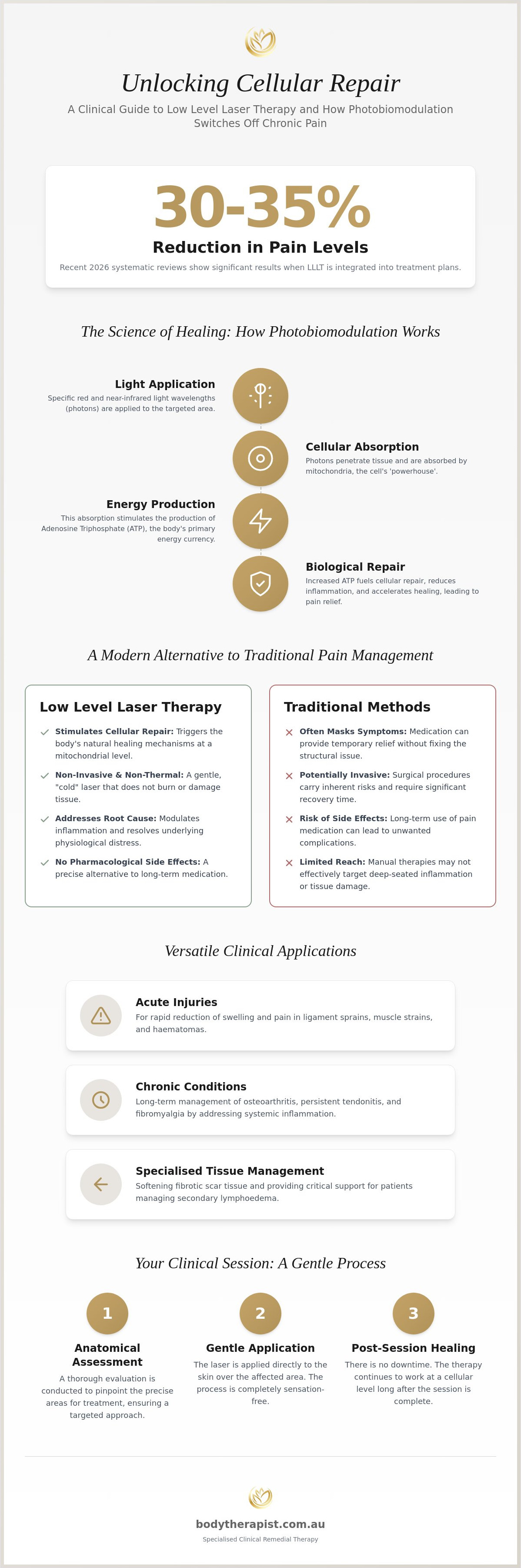
This clinical guide explores how low level laser therapy for pain, also known as photobiomodulation, utilises specific light wavelengths to recharge mitochondria and trigger biological repair. Recent 2026 systematic reviews indicate that integrating this technology into a treatment plan can result in a 30% to 35% reduction in pain levels. We'll examine how this non-invasive modality reduces localised inflammation and facilitates faster recovery from soft tissue injuries. You'll discover the scientific mechanisms behind the cold laser and learn how a methodical, anatomical approach can help you regain fluid movement without pharmacological intervention.
Table of Contents
What is Low Level Laser Therapy (LLLT) for Pain?
Low-level laser therapy (LLLT) is a sophisticated clinical modality that utilises specific wavelengths of light to interact with biological tissue. Often referred to as Cold Laser or Photobiomodulation (PBMT), this treatment operates on a non-thermal principle. Unlike high-intensity surgical lasers that cut or cauterise, LLLT aims to stimulate cellular function rather than destroy it. This distinction is vital for patients seeking low level laser therapy for pain, as it offers a rehabilitative pathway that bypasses the trauma of invasive procedures.
In Australian rehabilitative and sports medicine, Low-level laser therapy (LLLT) has a long-standing history of use for accelerating recovery in elite athletes and clinical populations alike. The primary objective is to modulate the inflammatory response and facilitate rapid cellular regeneration. By delivering precise photons to damaged areas, the therapy helps resolve the underlying physiological distress that signals pain to the brain. It's a methodical intervention that bridges the gap between manual therapy and advanced medical technology.
The Difference Between Cold Laser and Thermal Lasers
The term "cold" refers to the laser's inability to generate heat in the skin or underlying structures. High-intensity lasers used for hair removal or surgical incisions rely on thermal energy to achieve their results. Conversely, clinical-grade LLLT devices operate at power levels that carry no risk of burning or tissue damage. This high safety profile makes low level laser therapy for pain an ideal option for sensitive patients. It is particularly beneficial for those in oncology recovery, where maintaining the integrity of delicate tissue is a priority.
Common Conditions Treated with LLLT
This modality is versatile, addressing a broad spectrum of musculoskeletal and systemic issues. Clinical applications are generally categorised into three streams:
Acute Injuries: Rapid reduction of swelling and pain in ligament sprains, muscle strains, and haematomas.
Chronic Degenerative Conditions: Long-term management of osteoarthritis, persistent tendonitis, and fibromyalgia by addressing systemic inflammation.
Specialised Tissue Management: Softening fibrotic scar tissue and providing critical support for patients managing secondary lymphoedema.
Whether managing a recent sports injury or a decade-long chronic condition, the focus remains on restoring functional movement. By integrating LLLT with other rehabilitative techniques, practitioners can target deep-seated inflammation that manual massage alone might not reach. This integrated approach ensures that the recovery process is both biologically supported and structurally sound.
The Science of Healing: How Photobiomodulation Works
The therapeutic efficacy of photobiomodulation lies in its ability to initiate a cascade of metabolic events within compromised tissue. Rather than simply masking symptoms, low level laser therapy for pain acts as a catalyst for cellular recharging. This process begins when specific light particles, or photons, are absorbed by the cell's internal structures, effectively providing the energy required to jump-start the body's natural healing mechanisms. A comprehensive scientific review on LLLT for musculoskeletal pain demonstrates that these specific light frequencies successfully modulate oxidative stress and reduce the presence of pro-inflammatory cytokines.
Mitochondrial Activation and ATP Synthesis
The primary target of this light-based intervention is the mitochondria, often described as the powerhouse of the cell. Mitochondria contain specialised light-sensitive receptors that respond to red and near-infrared wavelengths. These specific frequencies penetrate the skin and subcutaneous layers to reach deep-seated muscle and joint structures. Unlike thermal lasers, the interaction here is a photo-chemical reaction, similar to photosynthesis in plants, where light energy is converted into chemical energy.
Adenosine Triphosphate (ATP) serves as the primary molecular energy currency that fuels the biological processes necessary for cellular repair and structural regeneration. When photons interact with the enzyme cytochrome c oxidase, the metabolic rate of the cell increases. This surge in ATP production allows damaged cells to repair themselves at an accelerated pace, moving from a state of survival to a state of active recovery.
Reducing Inflammation and Switching Off Pain
Beyond cellular repair, photobiomodulation significantly impacts the local environment of the injury. The therapy triggers the release of nitric oxide, a potent vasodilator that improves microcirculation and oxygen delivery to the affected area. This enhanced blood flow is critical for flushing out metabolic waste and reducing the swelling that often compresses nerve endings. By modulating the inflammatory response, low level laser therapy for pain helps "switch off" the biochemical signals that perpetuate chronic discomfort.
The treatment also influences nerve conduction. It slows the transmission of pain signals along the nerves, providing a natural analgesic effect that rivals pharmacological options without the systemic risks. This targeted biological response is most effective when integrated with Clinical Massage Therapy to address both the cellular distress and the mechanical restrictions in the tissue. Understanding your specific anatomical needs is the first step toward recovery, and a professional clinical assessment can help identify the optimal protocols for your condition.
LLLT vs. Traditional Pain Management: A Clinical Comparison
Traditional pain management often relies on pharmacological interventions like NSAIDs to suppress inflammation. While effective in the short term, these medications frequently lead to adverse gastrointestinal or cardiovascular side effects when used chronically. In contrast, low level laser therapy for pain offers a targeted, non-systemic approach that avoids pharmacological toxicity. Standard remedial massage is a cornerstone of musculoskeletal health, yet it relies on mechanical pressure that may be contraindicated in cases of acute, highly sensitive inflammation. LLLT provides a solution by reaching deep-seated inflammatory markers without the need for physical force. It is an essential tool for the initial stages of injury management where manual touch might be too provocative.
The speed of recovery remains a critical factor in sports medicine. Evidence suggests that early intervention with photobiomodulation can significantly shorten the downtime associated with haematomas and ligamentous strains. By providing an immediate cellular recharge, the therapy ensures that the inflammatory phase of healing is efficient rather than prolonged. This allows athletes and active individuals to return to their functional baseline sooner than with rest alone.
LLLT and Dry Needling: Complementary Modalities
Integrating LLLT with dry needling creates a powerful synergetic effect for neuromuscular rehabilitation. While dry needling provides a mechanical release of myofascial trigger points, the laser can be used beforehand to desensitise the region or afterwards to soothe the tissue. Both methods aim to resolve neuromuscular dysfunction, but they operate through different physiological channels. For patients who are needle-phobic or highly sensitive, low level laser therapy for pain serves as the primary modality for trigger point deactivation. It achieves rehabilitative outcomes through photochemical stimulation rather than mechanical penetration.
The Non-Invasive Advantage
A primary benefit of this technology is the complete absence of downtime. Steroid injections and surgical interventions often require periods of restricted movement or carry risks of local tissue degradation. LLLT is a safe, repeatable intervention that fits seamlessly into a results-oriented clinical programme. It supports long-term chronic pain management without the risk of drug dependency. Research published by the NIH confirms the efficacy of LLLT as a treatment for chronic pain, reinforcing its role as a sophisticated alternative to traditional pharmacological and surgical paths.
Specialised Applications: Oncology and Lymphoedema Support
In the specialised field of oncology care, low level laser therapy for pain serves as a vital, non-invasive tool for managing complex post-treatment side effects. Patients often face secondary lymphoedema or localised tissue changes following surgery or radiation. These conditions require a methodical, anatomical approach that respects the body's compromised state. Clinical-grade photobiomodulation is particularly effective at softening fibrotic, or hardened, tissue that often restricts movement and causes persistent discomfort. It's a gentle intervention that provides relief without the need for aggressive manual pressure.
Safety is a primary concern for those currently undergoing oncology treatment. Because LLLT is non-ionising and does not produce thermal energy, it's considered safe for managing various oncology-related symptoms when administered by a qualified professional. Practitioners like Lee Carnegie integrate this technology with a deep understanding of lymphatic pathways and kinetic release. This ensures that the therapy supports the patient's journey without interfering with their broader medical protocol. Choosing a master practitioner is essential for navigating these sensitive clinical requirements safely.
Managing Lymphoedema with Laser and MLD
There's a profound clinical synergy between LLLT and Manual Lymphatic Drainage (MLD). While MLD manually guides fluid towards healthy nodes, laser therapy stimulates the motoricity of the lymphatic vessels themselves. This dual-action approach accelerates the reduction of swelling and alleviates the distressing sensation of limb heaviness. It's a sophisticated way to manage fluid dynamics at a cellular level, providing a more comprehensive result than manual therapy alone. This combination is especially beneficial for those dealing with chronic swelling that hasn't responded to standard compression alone.
Scar Tissue and Post-Surgical Healing
Post-operative recovery often involves the formation of restrictive scar tissue. LLLT helps organise collagen fibres during the healing process, preventing the development of thick, painful adhesions. By accelerating wound closure and improving the quality of the new tissue, low level laser therapy for pain reduces the long-term impact of surgical scars on mobility. If you're noticing persistent swelling or restricted movement, it's worth reviewing the 5 signs your body needs clinical support to determine if your tissue health requires professional intervention.
Effective recovery from oncology-related conditions requires a specialist who understands the interplay between technology and human physiology. You can book a clinical consultation to discuss how an integrated laser and manual therapy plan can support your specific rehabilitative goals.
What to Expect During Your Clinical Laser Session
A clinical laser session is a methodical, results-oriented process that begins long before the device is activated. Unlike general wellness treatments, low level laser therapy for pain requires a rigorous anatomical assessment to identify the precise drivers of your discomfort. We don't simply treat the site of pain; we map the surrounding muscular and neural pathways to ensure the light energy is delivered where it will have the most significant biological impact. This diagnostic phase allows us to customise the dosage and frequency based on whether your condition is an acute sports injury or a long-standing chronic restriction.
The experience itself is entirely non-invasive and generally sensation-free. Because the laser operates at a low intensity, it doesn't generate heat or cause any discomfort. Some patients report a very slight, pleasant warmth in the area being treated, but most feel nothing at all while the photons work at a cellular level. Depending on the complexity of the condition, a single application usually lasts between 5 and 30 minutes. While some immediate relief is common due to the analgesic effect on nerve endings, a series of 10 to 12 sessions is typically required for chronic conditions to achieve lasting structural change.
The Step-by-Step Treatment Process
To ensure safety and clinical precision, every session follows a structured protocol designed to maximise the efficacy of the photobiomodulation:
Step 1: Clinical Assessment: We perform a functional movement screen and palpation to map the pain site and identify secondary compensations.
Step 2: Safety Protocols: The skin is prepared for optimal light penetration, and both the practitioner and patient are provided with specific safety eyewear to protect against direct laser exposure.
Step 3: Targeted Application: The laser is applied using specific clinical protocols, with the practitioner adjusting the device to target either superficial tissue or deeper muscle and joint structures.
Integrating LLLT into Your Remedial Plan
We view low level laser therapy for pain as a powerful adjunct to manual therapy rather than a standalone solution. By combining laser application with remedial massage, we can address both the cellular inflammation and the mechanical tension within the myofascial system. This integrated approach ensures that as the laser recharges your cells, the manual therapy restores functional length to the muscles, leading to improved mobility and long-term relief.
Post-session, we often provide corrective exercises to help reinforce the gains made during the treatment. This ensures that the biological "recharge" provided by the laser is supported by healthy movement patterns. If you're ready to move beyond temporary fixes and address the root cause of your discomfort, you can book a clinical assessment to determine your suitability and begin a customised recovery programme tailored to your unique anatomy.
Advancing Your Recovery with Photobiomodulation
Transitioning from persistent discomfort to functional optimisation requires more than just masking symptoms. By shifting the focus to cellular repair and mitochondrial health, low level laser therapy for pain provides a sophisticated, non-invasive pathway to long-term relief. This technology modulates inflammation and supports delicate tissue, offering a vital alternative for those navigating chronic conditions or specialised oncology care. It's a methodical intervention that bridges the gap between advanced biological science and traditional rehabilitative practice.
Effective recovery is built on a foundation of deep anatomical knowledge and evidence-based protocols. At Body Therapist, we combine qualified Myotherapy and Kinetic Release expertise to ensure your treatment is both precise and supportive of your unique journey. Whether you're managing a recent sports injury or seeking specialised oncology and pregnancy support, our integrated approach prioritises your physical well-being without pharmacological side effects. You can take the first step toward a more mobile, pain-free life today. Book a specialised clinical assessment at Body Therapist and discover how a master practitioner's approach can accelerate your healing. Your body possesses an incredible capacity for repair; it simply needs the right biological signal to begin.
Frequently Asked Questions
Does low level laser therapy actually work for chronic back pain?
Yes, clinical evidence supports the use of photobiomodulation for reducing chronic back pain by targeting deep-seated inflammation in the paraspinal muscles and spinal ligaments. Unlike medication that simply masks symptoms, the laser triggers a biological response that helps resolve the underlying tissue distress. It's a particularly effective tool for patients who haven't responded to traditional manual therapies or those who wish to avoid invasive spinal injections.
Are there any side effects or risks associated with cold laser therapy?
There are no known significant side effects associated with this modality when it's administered by a qualified professional using clinical-grade equipment. Because the laser is non-thermal and non-ionising, it doesn't carry the risk of skin burns or DNA damage. Some patients might experience a very mild, temporary increase in sensation as blood flow returns to a previously restricted area, but this is a normal part of the healing response.
How many LLLT sessions will I need before I feel a difference?
While some patients notice an immediate analgesic effect, most individuals require three to five sessions to feel a cumulative shift in their pain levels. For long-standing chronic conditions, a series of 10 to 12 treatments is generally recommended to ensure the cellular repair is sustained. Each session builds on the last, gradually reducing inflammation and restoring the tissue's functional capacity.
Is low level laser therapy safe to use during pregnancy?
Low level laser therapy is considered safe during pregnancy, provided the treatment isn't applied directly over the abdomen or the lower back. It's often used as a non-pharmacological alternative for managing pregnancy-related conditions like carpal tunnel syndrome or pelvic girdle pain. We always perform a thorough clinical screening to ensure the treatment plan is appropriate for both the mother and the baby's safety.
Can LLLT be used if I have metal implants or a pacemaker?
Yes, LLLT is safe for patients with metal implants because the light energy doesn't cause the metal to heat up or vibrate. It's also safe for those with pacemakers, though we strictly avoid the area immediately surrounding the device to prevent any potential electronic interference. This makes it a much safer alternative to deep-tissue heat treatments like ultrasound or certain electrical stimulations.
What is the difference between LLLT and an infrared sauna?
The primary difference is the delivery and the biological objective. An infrared sauna provides systemic heat that warms the whole body to promote relaxation and general circulation. In contrast, low level laser therapy for pain uses concentrated, non-thermal light to trigger a specific photochemical reaction in targeted cells. It's a clinical intervention designed for precise tissue repair and the resolution of localised inflammation rather than general wellness.
Will my health fund cover low level laser therapy in Australia?
Many Australian private health funds provide rebates for this treatment when it's integrated into a Remedial Massage or Myotherapy consultation. Because the laser is used as a clinical tool within these sessions, it's often covered under your "extras" policy. It's always best to check with your specific insurer to confirm your level of cover for these rehabilitative services before your first appointment.
Is cold laser therapy painful for sensitive inflammatory conditions?
No, the treatment is entirely painless and is often the preferred choice for patients in acute pain who cannot tolerate the pressure of a manual massage. You don't feel any cutting or heat; at most, you might notice a very slight, soothing warmth in the area. This makes it an ideal first step for managing highly sensitive conditions like acute bursitis or severe nerve pain where physical touch is too provocative.


Comments