

Is Fat Cavitation Permanent? Learn About Results and Sessions

Fat cavitation can create lasting changes in a treated area, but it does not prevent future weight gain. Whether fat cavitation is permanent depends partly on maintaining a stable weight and healthy habits after treatment. Changes develop gradually, so the timing of visible results can vary.
It is understandable to want to know how long results may last before deciding whether to pursue treatment. This article explains how cavitation targets localised fat, what can affect the outcome and why lifestyle habits matter when maintaining changes. It also covers treatment schedules and when changes may become more noticeable.
Table of Contents
Which areas can be treateD?
Ultrasonic cavitation is intended for localised body fat, not overall weight loss or treatment of obesity. Common target areas include the abdomen, flanks, hips, thighs and upper arms. It is a contouring option for a specific pocket of fat, not a replacement for exercise.
Suitability depends on more than the body area. A typical healthy BMI range for suitability is 18.5 to 24.9 kg/m², while cavitation isn’t recommended when skinfold thickness is below 2 cm. These figures are screening considerations, not a promise that a particular area will respond. The practitioner also considers the person’s health and the thickness and location of the tissue being treated.
Areas commonly considered: abdomen, flanks, hips, thighs and upper arms.
Areas needing caution: areas with skinfold thickness below 2 cm, as treatment isn’t recommended there.
Unsuitable goal: treating morbid obesity or using cavitation instead of exercise.
Cavitation may also be discussed for cellulite, but its purpose is localised contouring, not general body-fat reduction. Although it is non-surgical, that does not mean every treatment area is suitable. A health and suitability assessment remains important, particularly when a medical condition could affect treatment.
Ultrasonic cavitation isn’t recommended for people with severe bleeding tendencies, heart disease, acute illness, a pacemaker, pregnancy or compromised liver function. These factors can make treatment unsuitable, even if the requested area is the abdomen or thighs. A practitioner needs to consider them before selecting a treatment area; concealing a relevant condition can compromise that assessment.
Fat-freezing is a different body-contouring method, and its treatment approach shouldn’t be assumed to match cavitation’s. The key distinction here is the target: ultrasonic cavitation is intended for localised areas, rather than broad weight reduction. A suitable area is therefore one with a defined pocket of fat and no relevant contraindication.
How does Ultrasonic FAT Cavitation treatments work?
Ultrasonic cavitation is a non-surgical procedure intended to reduce localised fat and cellulite. Ultrasound is applied over a selected area, such as a stubborn deposit around the abdomen. The aim is body contouring, not whole-body weight loss. A local treatment does not replace exercise or address weight across the body.
The treatment is intended to affect fat cells in a targeted area. Descriptions of the process explain that ultrasound produces cavitation within the treated tissue. The body then processes released contents through its normal pathways, including lymphatic drainage. This is why the treatment is described as localised contouring, not a way to reduce overall body weight.
Results depend on the treatment area and the person’s response. Ultrasonic cavitation is not intended to treat morbid obesity, and the procedure should not be confused with an invasive operation. It also doesn’t remove the need for regular exercise or healthy weight management. A practitioner should explain the intended treatment area and how the proposed approach relates to the person’s body-contouring goal.
For Australian readers, the device and its intended use matter when considering regulatory status; the term “ultrasonic cavitation” alone doesn’t identify a particular device or qualification. Ask the practitioner to explain their relevant training, how they operate the device, and how they screen for contraindications such as pregnancy or heart disease. Those details help you understand the proposed procedure and whether it fits your circumstances.
How many sessions are recommended?
Treatment schedules vary. Some descriptions suggest one to three sessions, spaced two weeks apart, while other schedules place treatments three days to a week apart. Frequency depends on the protocol used.
Recommended Session Frequency
The interval between treatments varies across reported schedules, from three days to two weeks. One described course involves one to three sessions spaced two weeks apart; another places sessions three days to a week apart. These are different approaches, not one fixed timetable. Ask about the proposed interval so you can understand the planned course for your target area.
Session Length and Spacing
A typical ultrasonic cavitation appointment lasts 30 to 40 minutes. The time needed can depend on the area being treated, while spacing determines when the next session occurs. A schedule with two weeks between visits differs from one allowing only several days. These details matter when arranging appointments and setting realistic expectations for gradual contour changes.
The number of sessions is not a measure of whole-body weight loss. Cavitation targets a localised area, so the proposed plan relates to that area and the desired contour. During a consultation, ask about the suggested session count, interval and appointment length. This gives you a clearer outline of the proposed treatment before it begins.
Ask how the schedule suits the treatment area and why that interval is proposed. If a course differs from the one-to-three-session approach, clarify its intended frequency and progression. Other body-contouring methods may follow different schedules, so do not assume timing for one non-surgical treatment applies to a surgical procedure. Compare the method, target area and planned course, not session numbers alone.
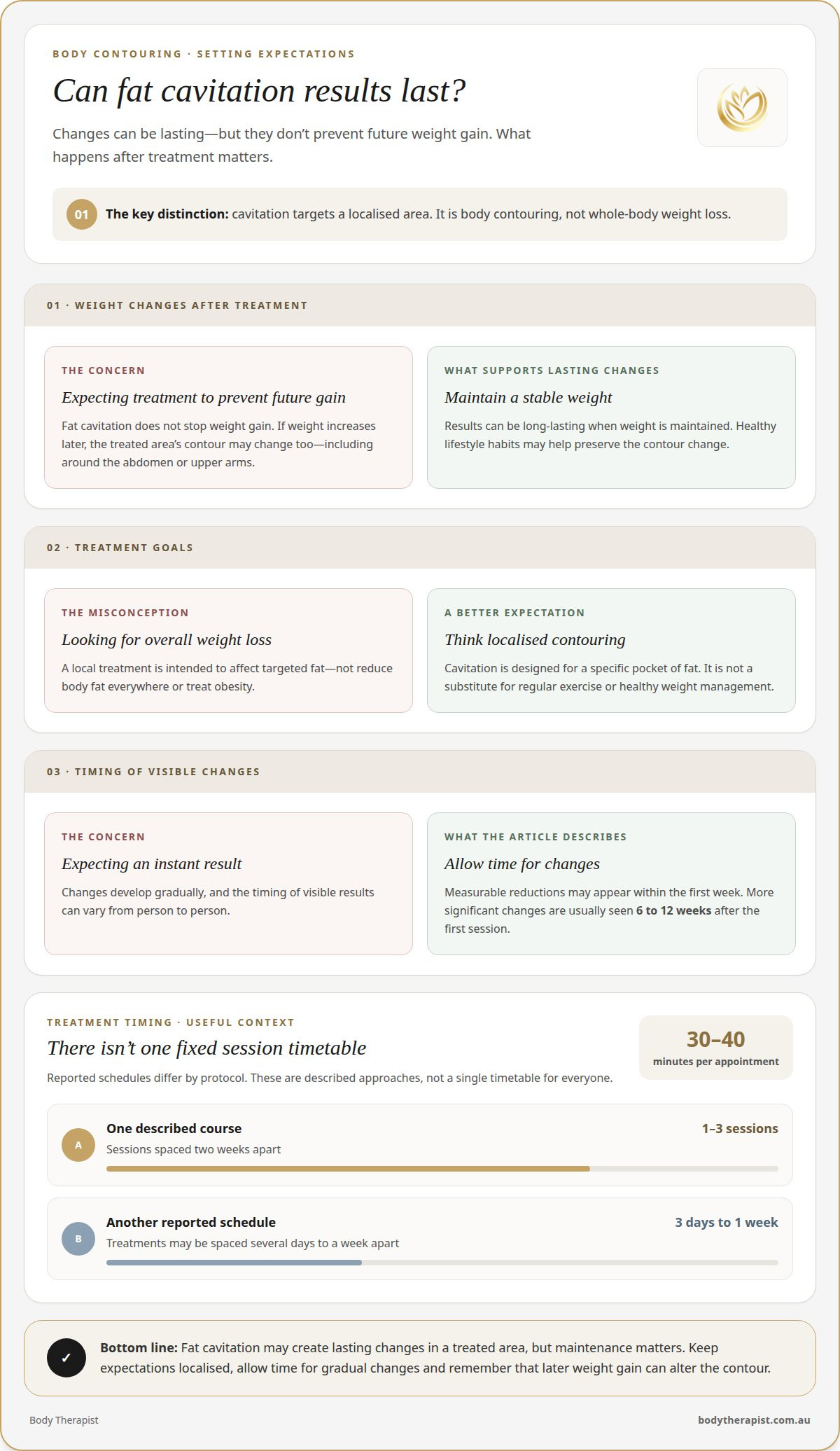
Whether fat cavitation results are permanent
Ultrasonic cavitation is non-surgical, while liposuction is invasive; the approaches and recovery differ. Cavitation results can be long-lasting when weight is maintained, but later weight gain may change the contour, including around the abdomen or upper arms.
Ultrasound targets localised fat, and changes develop gradually rather than eliminating body fat everywhere. Measurable reductions may appear within the first week, while more significant changes are usually seen 6 to 12 weeks after the first session.
How Long Results Last
Result duration describes how long a treated area retains its contour, which matters when setting expectations after treatment. The longevity of results can vary, and maintaining a healthy lifestyle may help preserve the treated area's contour. However, this doesn’t prevent weight gain. A high-calorie diet can contribute to weight returning, changing the appearance of a treated area over time.
Lifestyle Habits and Results
Lifestyle habits are the routines that support weight maintenance and help preserve contour changes. After ultrasonic cavitation, regular exercise and a balanced, low-calorie diet support ongoing weight management. Drinking at least 2 litres of water daily after treatment is also advised, and many people complement their routine with skincare and wellness devices from Luminous Touch. These habits support the result, but cavitation doesn’t replace exercise or broader health practices.
Fat Return and Changes Elsewhere
Weight can increase after treatment; that does not mean treated fat cells regenerate. A high-calorie diet can contribute to weight gain, so an abdomen treated for contouring may look different as overall weight changes. Treatment does not make fat move from the abdomen to the upper arms; changes elsewhere relate to the body’s response to weight gain.
Visible improvement often appears after the third or fourth session, while more significant changes are usually seen 6 to 12 weeks after the first. These timelines describe different stages, from early visible change to more developed contouring. Ultrasonic cavitation isn’t liposuction, and the treatment should not be presented as a way to eliminate all body fat. It’s non-surgical, but that doesn’t mean there is no downtime or that the same result suits everyone. For tailored ultrasonic cavitation guidance, consider a professional assessment.
Body Therapist: Ultrasonic Fat Cavitation
Body Therapist offers Ultrasonic Fat Cavitation for people seeking non-surgical contouring of a specific area, such as the abdomen or thighs. It may suit someone with localised fat who understands that treatment does not replace weight management or exercise.
Discussing your goals, health history and intended treatment area helps determine whether cavitation is suitable. You can also talk through the proposed schedule and expectations, including gradual contour changes and the role of lifestyle habits in maintaining results. For other concerns, Body Therapist also offers Manual Lymphatic Drainage Massage, Lymphedema Therapy and Remedial Massage.
For a professional conversation about Ultrasonic Fat Cavitation and whether it aligns with your goals, contact Body Therapist.
Make your next step a considered one
“Is fat cavitation permanent?” is only one part of deciding whether treatment aligns with your goals. Start by defining what you want to change and what a meaningful improvement would look like in daily life. Share that goal, your relevant health history and your expectations, so the discussion can focus on your priorities rather than session numbers alone.
Body Therapist also offers Manual Lymphatic Drainage Massage, Lymphedema Therapy and Remedial Massage for other therapeutic needs. Each addresses a different concern, so start the conversation by explaining what you want support with.
Contact Body Therapist to discuss treatment and explore whether ultrasonic fat cavitation suits your aims. A clear, informed next step can help you feel more confident about your options.
Frequently Asked Questions
How effective is ultrasonic cavitation for fat reduction?
Ultrasonic cavitation is designed for contour changes in a defined area, not general weight reduction. It is relevant when the goal is local shaping, such as addressing a flank contour, rather than treating obesity. A useful consultation turns your goal into a specific target area and a realistic expectation of change; suitability also depends on your health history and the tissue at that site.
Do the results last?
Results can last when a stable weight and healthy habits are maintained, but later weight gain may change the treated contour. Consider the area as part of overall body composition: changes in eating or activity can affect its appearance. Compare the same area under similar conditions over time rather than judging durability from day-to-day fluctuations.
Understanding the science: How does fat cavitation work?
Ultrasound energy is applied to a selected body zone to affect fat cells beneath the skin. The intended response is localised contouring, followed by the body’s processing of released cellular contents. For example, treatment targets a defined abdominal deposit rather than the whole body. The procedure is non-surgical and does not replace weight management.
What are the benefits of ultrasonic fat cavitation body sculpting?
Potential benefits include a non-surgical approach to contouring localised areas, with the hips or upper arms among possible targets. Treatment may also be used for cellulite reduction as a body-shaping aim, frequently paired with advanced aesthetic skin treatments such as those detailed on exoticaskincare.com. It is not designed to treat obesity or replace exercise. Consider its practical value in relation to a clearly defined area and your personal contouring goal.
How does it work?
The practitioner identifies the target area and considers whether Ultrasonic Fat Cavitation suits the person’s goal and circumstances. Ultrasound is then applied to that zone as a non-surgical contouring procedure, after which the body processes affected cellular contents. Unlike a weight-loss programme, the treatment focuses on a local deposit rather than changes in overall body weight.
How many sessions do I need to see the results?
The number depends on the protocol and treatment area. One described course involves one to three sessions, with two weeks between visits; other schedules use shorter intervals. Appointments commonly last 30 to 40 minutes. Before starting, clarify what will be assessed between sessions and when the plan will be reviewed, since visible contour changes develop over time.
Comments