

Fat Cavitation Recovery Time and When Results May Appear
The recovery time for fat cavitation is generally brief: ultrasonic cavitation requires no downtime, so you can usually continue your daily routine after a session. Early changes may appear within days, while results develop over the following weeks, with peak results appearing 6 to 12 weeks after the final session.
Even when no set recovery period is expected, you may have questions about how ultrasound affects the treated area, what skin reactions can occur and when changes may become noticeable.
This guide explains how ultrasound fat cavitation works and what to expect afterwards, including possible skin reactions, the timeline for results and whether you’ll need time to recover. It also explains why an early change may not reflect the final outcome.
Table of Contents
Post-treatment tenderness and skin reactions
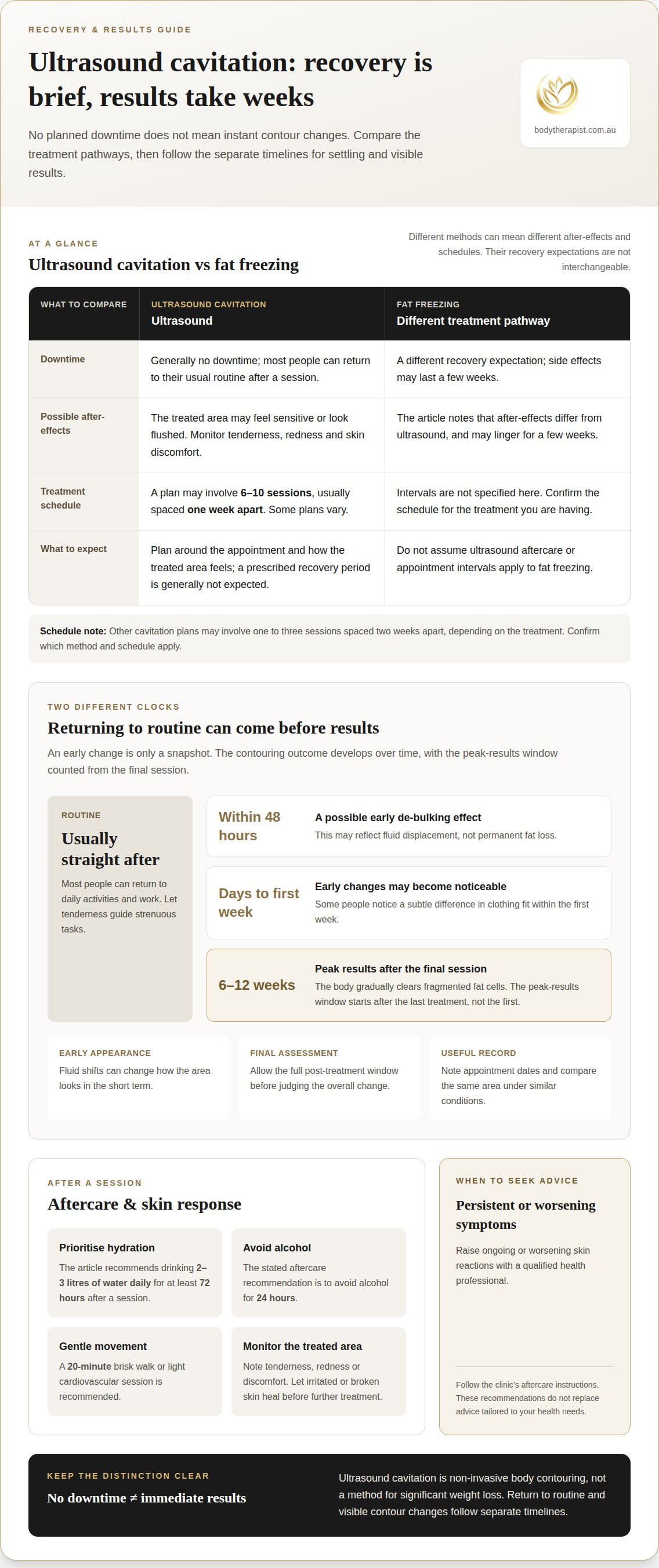
Recovery time for fat cavitation is generally short, but the treated area may feel sensitive or look flushed after ultrasound. These reactions differ from those associated with fat freezing, which may linger for a few weeks after a session. Because the treatments use different methods, their after-effects and schedules aren’t interchangeable.
Ultrasound cavitation sessions typically last 45 to 75 minutes. A treatment plan may involve 6 to 10 sessions, usually spaced one week apart. Your skin’s response matters between appointments: if an area becomes irritated or broken, allow it to heal before further treatment. Note changes after each session, including tenderness, redness or skin discomfort, and raise persistent or worsening symptoms with a qualified health professional.
After treatment, follow the clinic’s aftercare instructions and prioritise hydration. Drinking between two and three litres of water daily for at least 72 hours following a session. It also advises avoiding alcohol for 24 hours and taking a 20-minute brisk walk or light cardiovascular session. These are aftercare recommendations, not a substitute for advice tailored to your health needs.
Fat-freezing sessions follow a different treatment pathway, and their side effects may last a few weeks. That timeline differs from the expectation of no downtime after ultrasound cavitation. In Australia, regulatory obligations can depend on the device and treatment setting. A practical qualification check is whether the practitioner can explain their training with the specific ultrasound equipment, screening process, skin-response monitoring and aftercare.
Treatment schedules also vary by method. Ultrasound cavitation is commonly planned weekly across multiple sessions, while other cavitation plans may involve one to three sessions spaced two weeks apart, depending on the treatment. Confirm which approach applies rather than assuming fat-freezing intervals or aftercare suit ultrasound.
Time to see results
A temporary change can appear sooner than the lasting contouring effect. Some people notice a de-bulking effect within 48 hours after ultrasound cavitation, but this may reflect fluid displacement rather than permanent fat loss. Initial changes may also become evident days after the first session. Treat these early signs as a snapshot, not a reliable measure of the final outcome.
Results develop gradually over the following weeks as the body clears fragmented fat cells. Some people notice a subtle difference in clothing fit within the first week after treatment. A more complete outcome takes longer: peak results are placed between 6 and 12 weeks after the final session. This timing matters when comparing photographs or assessing how a garment fits.
Frequency and treatment-plan length affect when the final result can be assessed. Plans may involve two sessions a week across a one to two-month period, while other schedules space sessions one week apart. With repeated sessions, the 6-to-12-week peak-results window begins after the final treatment, not the first. Recording each appointment date helps you follow that timeline accurately.
Lifestyle can also influence how visible contour changes appear over time. Fat cavitation is non-invasive body contouring, not a method for significant weight loss. A de-bulking effect at 48 hours does not show that fat loss is permanent, and short-term fluid shifts can alter appearance. Compare the same area under similar conditions, such as wearing the same clothing, and allow the full post-treatment window before judging the overall change. The recovery time for fat cavitation and the results timeline are related, but they describe different things: returning to routine can happen before the contouring outcome has fully developed.
Do these procedures require long recovery periods and downtime?
Ultrasound cavitation is non-invasive and generally requires no downtime. Most people can continue their daily routine instead of setting aside recovery days. The appointment itself still needs to fit your schedule, and temporary tenderness or redness may affect how the treated area feels.
Unlike liposuction, ultrasound cavitation does not involve surgery or a surgical recovery process. Fat freezing is another distinct body-contouring treatment, with different after-effects and recovery expectations. These procedures aren’t interchangeable: the method used affects what you may feel afterwards and how soon you can return to normal activities.
In practical terms, you can generally return to your usual work after an ultrasound session. Someone with desk-based work, for example, can usually resume their normal day, while tenderness may be more noticeable in a physically demanding role. Let comfort in the treated area guide how strenuous tasks feel, rather than expecting a prescribed rest period.
Exercise is also compatible with the immediate post-treatment period. Light to moderate cardiovascular activity is encouraged immediately after fat cavitation; a brisk walk is one practical example. Follow the aftercare instructions you receive, and distinguish comfortable movement from pushing through pain or worsening skin irritation.
Downtime and results follow separate timelines. You may return to work and routine activities before noticing any contour change. The short recovery time for fat cavitation doesn’t mean the final appearance is immediate: ultrasound results develop over the following weeks. Plan around the appointment and your comfort, not an assumption that visible changes must appear before you resume normal activities.
How ultrasound fat cavitation works
Ultrasound fat cavitation directs sound-wave energy towards a local area of subcutaneous fat. Pressure changes can form and collapse microscopic bubbles in the targeted tissue. This process is intended to disrupt fat cells rather than remove tissue surgically. The treatment focuses on contouring a selected area, not overall weight loss.
After treatment, the body gradually clears fragmented fat cells over the following weeks. This helps explain why a visible change may develop over time rather than immediately. The lymphatic system moves fluid through the body, but cavitation shouldn’t be described as a guaranteed way to “flush out” fat. Staying hydrated and following the treatment aftercare guidance support the process.
The mechanism also explains why local contour changes and changes in body weight aren’t the same outcome. You may notice a difference in one treated area without a clear change on the scales. For example, a garment may fit differently around your abdomen while your overall weight remains similar. Fat cavitation is for body contouring, not a substitute for weight management.
Ultrasound cavitation differs from fat freezing, which uses cooling rather than ultrasound energy. It also differs from surgical liposuction, which removes fat through an invasive procedure. Because these approaches act on tissue differently, their treatment experiences and recovery expectations aren’t interchangeable. Assess ultrasound results as gradual, localised contour changes, not immediate weight loss.
To understand how a treatment plan relates to your goals and the targeted area, discuss your treatment options with Body Therapist.
Sessions let patients continue their daily routine without concern. Ideal candidates generally have a steady body mass index within the healthy range of 18.5 to 24.9 kg/m² and sufficient local tissue depth above 2 cm. Ultrasound cavitation offers a non-invasive alternative to more costly surgical procedures.
Body Therapist: Manual Lymphatic Drainage Massage
Body Therapist’s Manual Lymphatic Drainage Massage may suit you if you’re seeking hands-on support alongside your body-contouring plan. Some aftercare guidance recommends scheduling this massage within 48 hours of fat cavitation, while also noting it isn’t mandatory. It may be considered after a session as part of your broader care, not as a guaranteed way to improve contouring results or shorten recovery.
Discuss your treatment, skin response and health needs before arranging massage. Manual Lymphatic Drainage Massage is distinct from Lymphedema Therapy, which addresses lymphoedema, and Remedial Massage, which focuses on musculoskeletal concerns. The right option depends on the support you need.
For information about Manual Lymphatic Drainage Massage, contact Body Therapist or visit bodytherapist.com.au.
Choose your next step with your goals in mind
Use your next conversation to clarify your body-contouring goals, the changes you’re noticing and the support that would be useful. Recovery time for fat cavitation refers to returning to usual activities, not measuring treatment success. Keep those goals distinct when planning your care.
Body Therapist offers Manual Lymphatic Drainage Massage, Lymphedema Therapy and Remedial Massage. These are separate services for different purposes. Start by explaining why you’re seeking support rather than assuming one service will affect cavitation results. Your individual response and health needs matter when considering hands-on care.
If you’d like to discuss which support may suit your needs, contact Body Therapist. Take the next step at a pace that feels right for you.
Frequently Asked Questions
How Does it Work?
Ultrasound cavitation uses sound-wave energy to target fat beneath the skin, aiming to disrupt fat cells in a localised area. The body then clears the fragmented material over time. Treatment may focus on one area where you want contouring, rather than reducing weight across your whole body. This distinction helps set realistic expectations when assessing changes.
What is the recovery time after non-surgical fat cavitation?
Recovery time is generally minimal, and ultrasonic cavitation is described as requiring no downtime. You can usually plan around the appointment instead of taking time off to recover. However, returning to your normal schedule and seeing a contour change are separate milestones. Note any skin sensitivity after treatment to track how it changes.
Is there any downtime after ultrasonic cavitation treatment?
Ultrasonic cavitation generally doesn’t require downtime, so you can usually continue everyday activities after the session. Light to moderate cardiovascular exercise is encouraged immediately afterwards. If your work or exercise puts pressure or friction on the treated area, wear comfortable clothing and adjust your activity if the skin feels irritated. Follow the aftercare guidance for your session.
How long do redness, swelling, bruising, or tenderness last after fat cavitation?
Redness or tenderness may occur after treatment, but there’s no single timeframe for every skin response. Fat-freezing side effects may linger for a few weeks, but that timeline shouldn’t be applied to ultrasound cavitation. Note when a reaction starts and whether it improves. Seek medical assessment for severe, spreading or worsening symptoms, or if bruising or swelling concerns you.
How many fat cavitation sessions are usually needed, and how far apart are they?
A commonly recommended course is 6 to 10 fat cavitation treatments, with sessions usually one week apart. The treatment plan’s schedule matters: keep a record of appointment dates and note any skin response before the next session. A separate ultrasonic cavitation schedule may involve two sessions weekly across one to two months, so don’t combine different schedules without understanding which plan applies.
What aftercare is recommended after fat cavitation, including hydration and exercise?
Aftercare guidance recommends drinking between two and three litres of water daily for at least 72 hours following treatment. It also recommends a 20-minute brisk walk or light cardiovascular session after the session, and avoiding alcohol for 24 hours. Follow the specific aftercare instructions you’re given, and keep a simple note of hydration and activity to help you follow them consistently.