

The Clinical Guide to Manual Lymphatic Drainage Massage (MLD) in 2026

Updated: Jul 9
The most effective medical intervention for chronic swelling isn’t a powerful pharmaceutical; it is a rhythmic, precise sequence of skin-stretching movements known as manual lymphatic drainage massage. If you’ve been dealing with the stubborn oedema that often follows surgery or simply feeling heavy and sluggish due to poor circulation, you know that a standard relaxation rub-down won't provide the relief you need. You aren't looking for a spa day; you're looking for a functional solution that addresses the anatomical root cause of your discomfort.
In this guide, you’ll master the clinical science behind lymphatic drainage and learn how this precise intervention accelerates your recovery while optimising systemic health. We will break down the physiological mechanisms that clear metabolic waste and improve immune function. You will also gain a clear understanding of how clinical MLD differs from generic massage, ensuring you have the knowledge to choose the right path for your physical rehabilitation and long-term wellness journey.
Table of Contents
Understanding Manual Lymphatic Drainage: A Clinical Perspective
Manual lymphatic drainage is a highly specialised manual therapy that goes far beyond the superficial application of a standard wellness treatment. It is a precise, evidence-based anatomical intervention designed to stimulate the movement of interstitial fluid through the lymphatic system. Unlike the circulatory system, which relies on the heart to pump blood, the lymphatic system lacks a central pump. It depends on muscle contraction, respiratory pressure, and, when compromised, external manual stimulation to function effectively. When this system becomes sluggish or obstructed, metabolic waste accumulates, leading to chronic swelling and impaired immune responses.
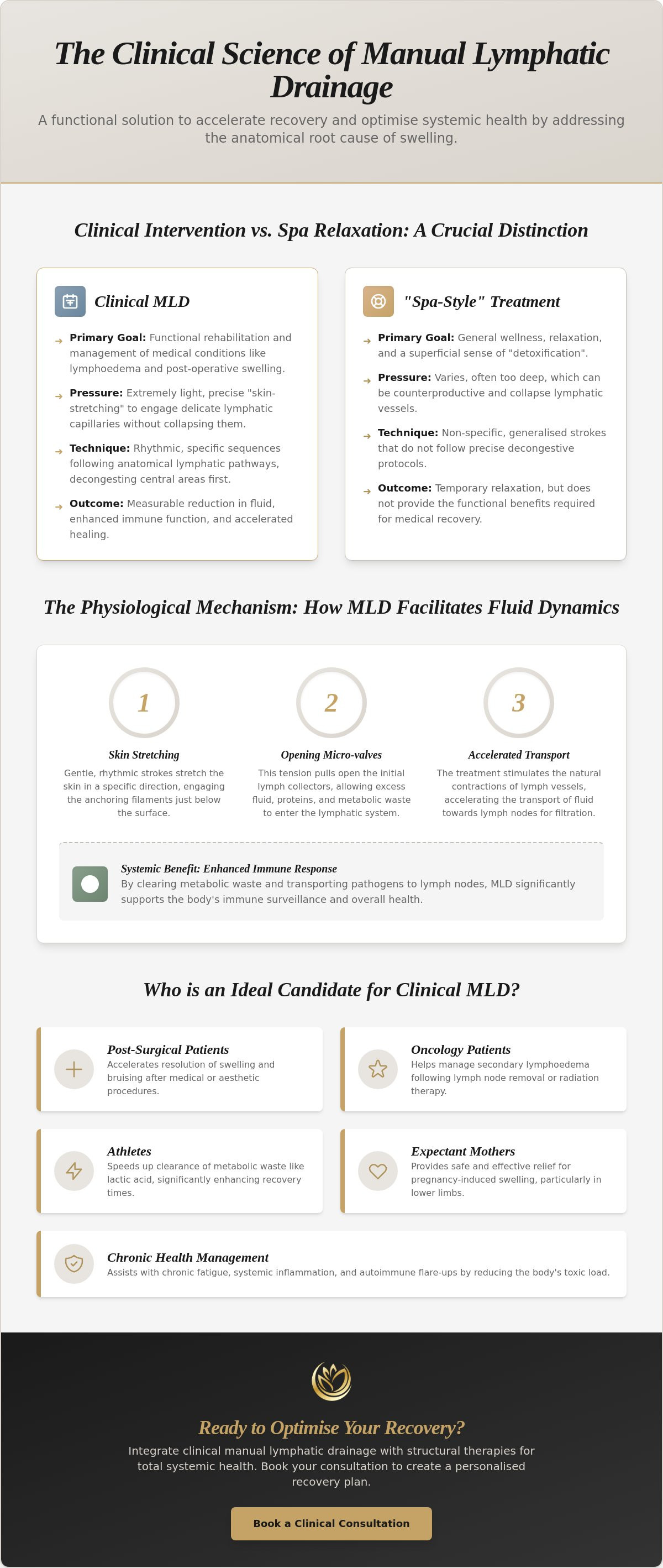
There is a significant distinction between clinical manual lymphatic drainage massage and the "spa-style" lymphatic treatments often marketed for general relaxation. While a spa treatment might offer a gentle touch, clinical MLD requires a deep understanding of lymphatic pathways and node locations. It serves as a critical "waste clearance" and immune highway, transporting pathogens and cellular debris to the lymph nodes for filtration and destruction. For patients recovering from surgery or managing chronic conditions, this clinical approach is a rehabilitative necessity rather than a luxury.
The Difference Between Remedial and Lymphatic Strokes
The technical application of MLD is fundamentally different from remedial massage. While remedial techniques often involve deep tissue pressure to release muscular tension, MLD uses a rhythmic, light-touch "skin-stretching" technique. Applying heavy pressure is counterproductive in lymphatic therapy because the initial lymph capillaries are delicate and sit just beneath the skin's surface; excessive force can actually collapse these vessels, preventing fluid entry. A clinical practitioner also follows a specific "decongestive" sequence, working from proximal areas (the trunk and neck) toward distal areas (the limbs). This ensures the central "drains" are clear before attempting to move fluid from the extremities.
Who is a Candidate for Clinical MLD?
Clinical MLD is essential for several patient profiles, particularly those navigating complex recovery journeys. While it is a gold standard for managing lymphoedema and lipoedema, its applications are broad:
Post-Surgical Patients: Accelerates the resolution of post-operative oedema and bruising after medical or aesthetic procedures.
Oncology Patients: Supports the management of secondary lymphoedema following lymph node removal or radiation.
Athletes: Speeds up the clearance of metabolic waste like lactic acid to enhance recovery times.
Expectant Mothers: Provides safe relief for pregnancy-induced swelling in the lower limbs.
Chronic Health Management: Assists those with chronic fatigue, systemic inflammation, or autoimmune flare-ups by reducing the body's toxic load.
Occupational Health: Provides relief for individuals in roles involving long hours of standing, such as those entering the industry through Acquired Awareness Traffic Management, to manage gravity-induced swelling.
By addressing the fluid dynamics of the body, MLD provides a structural foundation for healing that traditional massage cannot reach. It's about restoring the body's internal environment to a state of functional balance. For those seeking more ways to cultivate a healthy and inspired lifestyle, click here.
The Physiological Mechanism: How MLD Facilitates Fluid Dynamics
The efficacy of manual lymphatic drainage massage lies in its ability to manipulate the micro-valves of the lymphatic system through precise mechanical tension. Unlike traditional massage, which compresses tissue, MLD utilises a gentle skin-stretching technique to engage the anchoring filaments attached to initial lymph collectors. When the skin is stretched in a specific direction, these filaments pull the endothelial junctions open; this allows large molecules, proteins, and excess fluid to enter the lymphatic pathway. Once inside, the fluid is transported by the lymphangion, the functional unit of a lymph vessel. These units contain one-way valves and smooth muscle that contract rhythmically, typically 10 to 12 times per minute. Clinical intervention can increase this contraction frequency, significantly accelerating fluid clearance.
Deep lymphatic pathways are further stimulated through controlled diaphragmatic breathing. This creates a pressure gradient in the thoracic duct, the body's largest lymphatic vessel, effectively "vacuuming" fluid from the lower extremities toward the venous system. If you're recovering from surgery where lymph nodes were removed or damaged, a skilled practitioner can reroute fluid toward healthy node groups. This bypass technique ensures that stagnant fluid doesn't lead to tissue hardening. To see how this science is applied in a clinical setting, you can explore the specialised manual lymphatic drainage massage protocols used at Body Therapist.
The Four Pillars of the Vodder Technique
The Vodder method, the gold standard in clinical drainage, relies on four specific movements tailored to anatomical structures. Stationary circles are applied over lymph node groups to stimulate their processing capacity and "clear the way" for incoming fluid. The pump and scoop techniques involve a transition from palm to finger pressure, specifically designed to move fluid through the vessels of the limbs. For larger surface areas like the torso or back, the rotary technique uses a circular, elliptical motion to cover broad tissue planes, ensuring no area of stagnation remains unaddressed.
Cellular Homeostasis and Immune Response
MLD is a critical tool for maintaining cellular homeostasis and preventing the long-term complications of oedema. By reducing the protein load in the interstitial fluid, the treatment prevents the formation of excess connective tissue, a process known as fibrosis. Interstitial fluid is the plasma-derived solution surrounding tissue cells, representing the "lymphatic load" that must be evacuated to maintain stable capillary pressure. Beyond fluid management, MLD accelerates the transport of white blood cells to the lymph nodes. This enhances immune surveillance, allowing the body to identify and neutralise pathogens more rapidly, which is essential during post-operative recovery or periods of systemic illness.
Clinical Indications: When MLD is Essential for Recovery
Manual lymphatic drainage massage is not merely a supportive therapy; it is a primary clinical intervention for conditions where the lymphatic system is overwhelmed or structurally compromised. While many patients first encounter MLD following aesthetic procedures, its medical applications are extensive. It ranges from the management of congenital disorders to the relief of gestational swelling. By facilitating the movement of fluid through functional pathways, this therapy addresses the biological root of inflammation and physical discomfort.
Post-Surgical Healing and Scar Management
Post-operative recovery often involves the management of seromas, which are pockets of sterile fluid that can accumulate under the skin after tissue trauma. Left unaddressed, these fluid collections can lead to the formation of restrictive scar tissue or haematomas. Integrating Manual Lymphatic Drainage Massage into a structured 6-week recovery plan ensures that fluid is cleared promptly. This reduces the risk of skin adhesions and promotes a more supple, functional scar. This methodical approach is particularly critical after procedures like mastectomies, joint replacements, or abdominal surgeries where the natural drainage pathways have been disrupted by the surgeon's theatre work.
Managing Chronic Conditions: Lymphoedema and Lipedema
Managing chronic conditions requires a nuanced understanding of the system's structural integrity. Primary lymphoedema is typically a congenital condition resulting from malformed vessels, whereas secondary lymphoedema occurs due to external damage, such as surgery, radiation, or infection. For patients with lipoedema, a condition involving pathological fat distribution, MLD is vital for reducing the characteristic "heaviness" and hypersensitivity. Beyond symptomatic relief, maintaining fluid mobility is a vital preventative measure. Stagnant, protein-rich fluid is a known risk factor for cellulitis, a serious bacterial skin infection that can lead to systemic complications if the lymphatic load is not managed.
In oncology care, MLD is a cornerstone of secondary lymphoedema management, especially when lymph nodes have been cleared or irradiated. It provides a safe, non-invasive method to reroute fluid and maintain limb volume while the body adapts to its new anatomical reality. Similarly, during the third trimester of pregnancy, many women experience significant gestational oedema. MLD offers a gentle yet effective way to alleviate heavy legs and reduce systemic pressure without the use of pharmacological interventions. This clinical versatility makes it an indispensable tool in modern rehabilitative medicine.
Navigating Your Treatment: Preparation, Sensation, and Aftercare
A clinical manual lymphatic drainage massage session is a distinctive experience that often surprises patients accustomed to the high-pressure strokes of remedial bodywork. The sensation is profoundly soothing, characterised by a light, rhythmic touch that many find deeply relaxing. Because the technique prioritises the stimulation of the superficial lymphatic collectors located just beneath the dermis, it is entirely non-invasive and should never cause pain or bruising. This gentle approach is a calculated physiological requirement; excessive force would collapse the very vessels we intend to drain. During the treatment, you may feel a subtle shift in fluid pressure or a sense of lightness in the limbs as the stagnant load begins to move.
Hydration is the most critical factor in facilitating successful fluid transport. You should drink plenty of water both before and after your appointment to ensure the lymph remains thin enough to flow easily through the narrow vessels and nodes. Following a session, it is common to experience a "cleansing" effect. This often manifests as increased urination, as the kidneys process the newly mobilised fluid and metabolic waste. Some patients also report temporary fatigue or a deep sense of calm, which is a natural response to the parasympathetic nervous system being activated. To ensure your recovery stays on track, you can book a clinical consultation to discuss a tailored treatment plan.
Treatment frequency depends heavily on your specific clinical goals. For post-operative recovery, a series of 6 to 10 sessions is often recommended, sometimes daily or every second day in the acute phase, to manage the peak of inflammatory swelling. For chronic conditions like lymphoedema or general systemic health, a monthly maintenance schedule is usually sufficient to keep the system functioning at its peak.
Preparation and Contraindications
Before commencing therapy, a thorough clinical consultation with a qualified therapist like Lee Carnegie is essential to ensure the treatment is safe for your specific health profile. While MLD is exceptionally gentle, there are absolute contraindications. You should avoid this treatment if you are currently experiencing an acute infection, congestive heart failure, or have undiagnosed blood clots. These conditions require medical clearance as moving fluid could potentially strain the heart or mobilise pathogens. For your session, wear comfortable, loose-fitting clothing. Most clinical sessions involve direct skin contact to achieve the necessary "grip" for stretching the tissue, though your modesty and comfort are always prioritised through professional draping.
Maximising Results with Self-Care
The benefits of manual drainage can be significantly extended through diligent self-care. Compression garments are often a non-negotiable partner to MLD, providing the external pressure needed to prevent fluid from re-accumulating in the interstitial spaces. Simple movement, such as walking or gentle range-of-motion exercises, acts as a natural pump for the deeper lymph vessels. Elevation of the affected limbs also utilises gravity to assist the drainage process. Clinical MLD results are cumulative rather than instant because the lymphatic system requires consistent mechanical stimulation to remodel its drainage efficiency and reduce chronic tissue congestion.
Integrated Lymphatic Care at Body Therapist
Body Therapist adopts a multi-modality strategy that recognises the body as a complex, interconnected system. While many practitioners treat the lymphatic system as an isolated fluid network, our clinical framework integrates manual lymphatic drainage massage with myotherapy and functional mobility. This dual focus addresses both the "fluid" (lymphatic) and "structural" (musculo-skeletal) systems simultaneously. When myofascial tissues are restricted or muscles are hypertonic, they can physically compress the deeper lymphatic vessels, creating mechanical bottlenecks. By resolving these structural barriers, we ensure that the fluid mobilised during drainage has a clear, unobstructed path to the central venous system.
Our approach also incorporates advanced clinical tools such as Low Level Laser Therapy (LLLT). This non-invasive modality works synergistically with MLD to reduce acute inflammation and stimulate cellular repair at a mitochondrial level. Under the guidance of Lee Carnegie, a master practitioner with extensive experience in complex clinical cases, every treatment is tailored to the patient’s specific anatomical requirements. This level of integrated care is particularly effective for those navigating the difficult intersection of chronic pain and persistent oedema.
The Synergy of MLD and Myotherapy
The relationship between structural tension and lymphatic stagnation is often overlooked. Chronic swelling frequently leads to compensatory movement patterns; for instance, a patient with significant lower-limb oedema may alter their gait, leading to secondary hip or lower back pain. By incorporating Remedial Massage into the treatment plan, we can release these myofascial restrictions while simultaneously managing the fluid load. This ensures that as the swelling subsides, the underlying muscular framework is restored to optimal function. We don't just clear the fluid; we recalibrate the body’s ability to move without restriction.
Booking Your Clinical Consultation
Choosing the right environment for your recovery is a critical decision. While general beauty salons may offer "lymphatic massage," these services often lack the anatomical precision and medical-grade oversight required for post-surgical or chronic condition management. At Body Therapist, our commitment is to evidence-based, results-oriented therapy that prioritises your long-term systemic health. We provide a safe, clinical setting where your progress is monitored with methodical detail and empathetic care.
If you are ready to move beyond temporary relief and invest in a comprehensive rehabilitative strategy, we invite you to take the next step in your health journey. Book your clinical MLD session with Body Therapist today to experience the difference of a specialised, integrated approach.
Optimising Your Recovery Through Clinical Precision
Mastering your physical recovery requires more than just time; it demands a precise, anatomical intervention that respects the body's complex fluid dynamics. Clinical manual lymphatic drainage massage stands as a cornerstone of modern rehabilitative medicine, providing a targeted solution for chronic oedema, post-surgical inflammation, and systemic immune support. By moving beyond superficial relaxation and focusing on the physiological activation of the lymphangion, you can significantly accelerate your healing journey and restore cellular homeostasis. This methodical approach ensures that your body's "waste clearance" system operates at its peak capacity.
At Body Therapist, your recovery is managed by a qualified Myotherapist and Remedial Specialist who integrates MLD with advanced modalities like Kinetic Release and Low Level Laser Therapy (LLLT). This comprehensive approach is specifically designed to support those navigating post-surgical or oncology recovery, ensuring that both structural tension and fluid stagnation are addressed in unison. You don't have to manage the burden of persistent swelling or heavy limbs alone. Secure your clinical lymphatic consultation with Body Therapist and take a methodical step toward physical optimisation and long-term wellness today.
Frequently Asked Questions
How is manual lymphatic drainage different from a regular massage?
Regular massage focuses on musculoskeletal tension and uses deep pressure to manipulate muscle fibres. Clinical MLD uses an extremely light, rhythmic "skin-stretching" technique to engage the initial lymph collectors located just beneath the skin. It isn't designed to "work out" knots; its sole purpose is to stimulate the movement of interstitial fluid and metabolic waste through the lymphatic system.
Does lymphatic drainage massage actually help with weight loss?
MLD is not a weight loss treatment for fat reduction. It effectively reduces "water weight" and physical volume caused by stagnant fluid or chronic oedema. While you might notice a reduction in limb circumference or feel significantly lighter after a session, this is due to improved fluid dynamics and the clearance of excess interstitial load rather than a decrease in adipose tissue.
How soon after surgery can I start manual lymphatic drainage?
Most patients can begin manual lymphatic drainage massage within 24 to 48 hours following a procedure, provided they have medical clearance from their surgeon. Initiating treatment during this acute phase is critical for managing inflammatory swelling and preventing the formation of seromas or haematomas. Early intervention ensures the surgical site heals with minimal tension from fluid accumulation.
Will I feel sore after a lymphatic drainage treatment?
You shouldn't feel any muscle soreness after a clinical MLD session. Because the technique is exceptionally gentle and non-invasive, it doesn't cause the micro-tears in muscle tissue that often follow deep tissue or remedial work. The treatment is designed to be soothing; if you experience pain or bruising, the pressure applied was likely too high for a lymphatic-specific protocol.
How many sessions of MLD will I need to see results?
While a sense of lightness and reduced tension is often immediate, clinical results are cumulative. For post-operative recovery, a block of 6 to 10 sessions is typically recommended to manage the peak of inflammatory swelling. Patients with chronic conditions like lymphoedema or lipoedema often require ongoing monthly maintenance to prevent fluid re-accumulation and maintain tissue health.
Can I perform lymphatic drainage on myself at home?
Simple "clearing" movements can be taught for basic maintenance, but clinical redirection of fluid requires a professional’s anatomical knowledge. A therapist knows how to bypass damaged or removed lymph node groups by rerouting fluid to functional areas. Attempting to manage complex oedema without this training can be ineffective or potentially move fluid into areas that cannot process the load.
Why do I need to drink so much water after an MLD session?
Hydration is essential for thinning the lymph fluid and assisting your kidneys in filtering the mobilised waste products. When manual lymphatic drainage massage stimulates the system, the volume of fluid returning to your venous system increases significantly. Drinking water ensures this filtration process is efficient and helps prevent the temporary fatigue sometimes associated with the body’s "cleansing" response.
Is MLD safe during pregnancy or for oncology patients?
Yes, MLD is one of the safest and most effective manual therapies for these specific groups when performed by a specialist. For oncology patients, it is a gold-standard intervention for managing secondary lymphoedema after node removal. During pregnancy, it provides a non-pharmacological way to reduce gestational oedema and heavy legs, as it doesn't involve the deep pressure or prone positioning that can be problematic.


Comments