

Remedial Massage: A Clinical Guide to Soft Tissue Recovery and Functional Mobility
- leecarnegie

- 3 hours ago
- 11 min read
Why does that stubborn tension in your upper trapezius return only hours after a standard "deep tissue" session? Many Australians believe that a massage is successful if they leave the table feeling tranquil, yet they continue to battle restricted rotation and persistent musculoskeletal aches during daily activities. If you have ever felt confused by the distinction between a spa treatment and a clinical intervention, you are not alone. While relaxation has its place, it rarely addresses the biomechanical imbalances or soft tissue adhesions that drive chronic discomfort.
In this clinical guide, you will discover how remedial massage goes beyond the surface to identify, treat, and resolve the underlying causes of musculoskeletal dysfunction. We will examine the physiological mechanics of soft tissue recovery and the importance of structural alignment in physical optimisation. You will gain a clear understanding of why your body is hurting and how a diagnostic-led approach can deliver long-term pain reduction and improved functional mobility.
Table of Contents
What is Remedial Massage? Defining the Clinical Standard
Within the Australian healthcare sector, remedial massage stands out as a rigorous, diagnostic-led discipline. Unlike general Swedish or relaxation techniques that prioritise immediate sensory comfort, this modality is engineered to remedy specific musculoskeletal pathologies. It is a targeted physical intervention. When a practitioner applies these techniques, they aren't simply rubbing muscles; they're performing a systematic assessment of the body's soft tissue structures to identify the root cause of pain or restricted movement.
The Australian standard for this profession is exceptionally high. To practice clinically, therapists must hold a government-accredited Diploma of Remedial Massage, such as the HLT52015 or HLT52021 qualifications. This formal training ensures a deep understanding of anatomy and physiology, allowing the practitioner to distinguish between simple muscle fatigue and complex soft tissue dysfunction. While the broader history of massage therapy encompasses various cultural and therapeutic traditions, the remedial branch is defined by its clinical accountability and results-oriented framework.
The Scope of Practice for Remedial Therapists
A remedial session involves a sophisticated investigation into the interplay between muscles, tendons, ligaments, and the intricate web of connective tissue known as fascia. The therapist acts as a clinical investigator. They look beyond the site of pain to find the source of the tension. By addressing these structural imbalances, the goal is to restore homeostasis within the musculoskeletal system, ensuring that the body can move with fluidity and efficiency once more.
Who Benefits Most from Remedial Intervention?
While many seek treatment for acute injuries, the benefits of remedial massage extend across a broad spectrum of physical needs. It is particularly effective for:
Chronic Pain Sufferers: Individuals managing long-term conditions like fibromyalgia or persistent tension headaches.
Athletes and Active Individuals: People looking to optimise recovery times and prevent repetitive strain during high-intensity training.
Post-Surgical Patients: Those requiring assistance with scar tissue management and the restoration of functional mobility.
Desk-Bound Professionals: Workers experiencing postural strain, "tech neck," or repetitive stress from sedentary environments.
Tradies and Manual Labourers: Individuals in physically demanding roles often require regular remedial work to stay on the tools. To balance this with business growth, many trade owners use Cloud Tech Digital for specialised lead generation, allowing them to focus on their health while their business thrives.
Driving Enthusiasts: Individuals seeking to prevent postural fatigue and maintain focus during high-performance driving experiences, such as the luxury packages offered by Supercar Holidays.
Beyond local tissue repair, these interventions offer systemic advantages. Targeted manual pressure stimulates blood flow and enhances lymphatic drainage, which aids in the removal of metabolic waste. This comprehensive approach ensures that the recovery isn't just superficial but deeply integrated into the body's natural healing processes.
The Physiological Mechanism: How Remedial Techniques Facilitate Repair
The efficacy of a clinical remedial massage session is rooted in complex biological responses that transcend simple relaxation. When targeted manual pressure is applied to the body, it triggers local vasodilation; this physiological process increases peripheral blood circulation and enhances the delivery of oxygenated blood to ischemic tissues. This nutrient-rich environment is essential for cellular repair and the efficient removal of metabolic byproducts. Simultaneously, the therapy engages the gate control theory of pain. By stimulating non-painful sensory nerves, the treatment effectively "closes the gate" on pain signals travelling to the brain, providing immediate symptomatic relief while the practitioner addresses deeper structural issues.
For those recovering from injury or managing chronic strain, the manipulation of scar tissue is a critical component of recovery. Chronic adhesions often involve disorganised collagen cross-links that restrict movement and cause discomfort. Clinical techniques apply specific mechanical tension to these fibres, encouraging them to realign and soften through a process of tissue remodelling. Proprioception is the body’s innate ability to perceive its position and movement in space, serving as the sensory foundation for muscle memory and coordinated motor control. Remedial therapy helps recalibrate this sensory feedback loop, ensuring long-term functional stability.
Breaking the Pain-Spasm-Pain Cycle
Muscle guarding is a protective neurological response to injury, yet it often evolves into a self-perpetuating cycle of chronic tension. This hypertonicity restricts blood flow and creates further pain, which in turn signals the brain to maintain the contraction. A master practitioner uses remedial massage to send inhibitory signals to the central nervous system, deactivating hyperactive trigger points and allowing the muscle to return to its optimal resting length. If you are struggling with persistent guarding, consulting a specialised physical therapist can help disrupt this neurological feedback loop.
Fascial Release and Structural Alignment
Fascia is the body’s internal scaffolding, a continuous web of connective tissue that requires consistent hydration and movement to remain pliable. When fascia becomes restricted, it exerts significant pressure on underlying muscles and nerves, often leading to postural distortion and reduced mobility. Myofascial release techniques focus on restoring tissue elasticity through slow, sustained stretching. According to the guidelines for remedial massage treatment, these interventions are essential for managing conditions where restricted range of motion impacts daily function. By addressing the fascial system, we ensure that the body is not just temporarily relaxed but fundamentally reorganised for structural alignment.
Remedial vs. Deep Tissue: Why Assessment Changes Everything
One of the most pervasive misconceptions in physical therapy is the belief that "deep tissue" and "remedial" are simply different names for high-pressure massage. This is inaccurate. Deep tissue refers to a specific manual technique designed to reach deeper layers of muscle and connective tissue; conversely, remedial massage is a comprehensive clinical treatment framework. While a deep tissue session focuses on the experiential sensation of pressure, a remedial session is inherently diagnostic. It prioritises the identification of structural dysfunction over the intensity of the stroke.
Professional bodies like the American Massage Therapy Association emphasise that clinical efficacy relies on the practitioner's ability to adapt techniques to the patient's specific physiological needs. This highlights why "more pressure" is not a universal solution. Excessive force can actually trigger the protective guarding mechanisms discussed in previous sections, hindering tissue repair rather than facilitating it. A master practitioner understands that the goal is to communicate with the nervous system, not to overwhelm it.
The Importance of Clinical Assessment
A standard relaxation session often employs a "pick up and rub" approach, where the therapist follows a general routine. In contrast, remedial therapy always begins with a structured physical evaluation. The therapist acts as a clinical investigator, conducting range-of-motion testing and orthopaedic assessments to pinpoint the source of pain. Often, the site of the pain is merely a symptomatic expression of a dysfunction elsewhere in the kinetic chain. By investigating these relationships, the therapist ensures the treatment is precise and addresses the root cause of the tension.
Choosing the Right Path for Your Recovery
Selecting the appropriate modality depends on your specific goals. If you require long-term resolution of chronic tension or recovery from a sports injury, remedial massage is the necessary choice. This results-oriented approach often integrates myotherapy and kinetic release to address complex pathologies that a general relaxation session cannot resolve. Choosing clinical massage therapy ensures your treatment plan is built on a foundation of functional mobility and structural alignment, moving you beyond temporary relief toward sustained physical health.
What to Expect in a Clinical Remedial Session
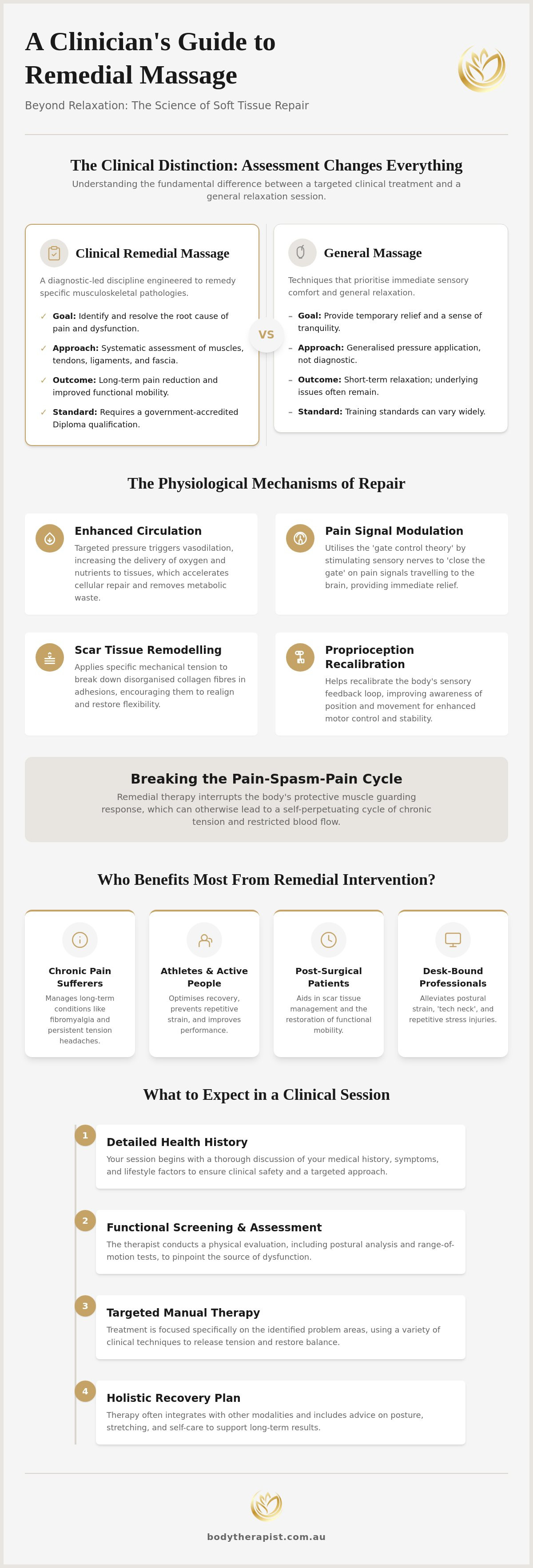
Entering a clinical environment for remedial massage is a distinct departure from the traditional spa experience. The journey begins with a comprehensive consultation rather than immediate manual work. This stage is a critical component of the therapeutic process. A detailed health history is non-negotiable for your safety. Your practitioner must screen for potential contraindications, such as cardiovascular conditions, recent surgeries, or specific medications like blood thinners, to ensure the physical intervention is appropriate for your current physiological state. Understanding how to prepare for remedial massage can significantly improve the efficiency of this initial exchange, allowing more time for the physical evaluation.
You’ll notice that these sessions are inherently "active" in nature. Unlike passive relaxation treatments where you might fall asleep, remedial therapy requires your engagement. Your therapist may direct your breathing to help manage the intensity of deep tissue release or ask you to perform controlled muscle contractions during the session. This collaborative approach helps reset neurological pathways and ensures the treatment remains within your body’s therapeutic tolerance. It’s a methodical process of communication between the therapist's hands and your nervous system.
The Functional Assessment Phase
Before the treatment begins, your therapist conducts a rigorous functional assessment to establish a clinical baseline. This phase often includes a postural analysis where the practitioner identifies structural imbalances, such as pelvic tilts or protracted shoulders, that may be contributing to your discomfort. Through precise palpation, the therapist locates specific myofascial adhesions and areas of hypertonicity. These objective findings allow the practitioner to move beyond surface-level symptoms and create a customised treatment plan that targets the precise biomechanical drivers of your pain.
Post-Treatment Protocols and Integration
It is common to experience mild "post-massage soreness" for 24 to 48 hours after a deep clinical session. This is a normal inflammatory response as your body re-adjusts to structural changes and processes metabolic waste released from the tissues. To support this transition, prioritising hydration and engaging in gentle movement is essential for flushing the system. Your therapist will typically provide "homework," such as specific corrective stretches or postural cues, to ensure the functional gains achieved on the table are maintained long-term. If you’re ready to move beyond temporary relief and address the root cause of your tension, you can book a clinical consultation with our specialist team to begin your recovery journey.
Integrating Remedial Therapy into a Holistic Recovery Plan
A clinical remedial massage session rarely exists in a vacuum. To achieve sustained physical optimisation, we position soft tissue manipulation as the essential foundation of a broader rehabilitative framework. By addressing the primary adhesions and hypertonicity within the muscle fibres, we create a physiological environment where more targeted clinical interventions can succeed. This integrated approach ensures that we aren't just chasing symptoms; instead, we are systematically rebuilding your body's structural integrity through a logical progression of care.
One of the most effective clinical pairings involves the use of manual therapy alongside dry needling near me to resolve deep-seated trigger points. While manual techniques are excellent for broad fascial release and circulatory enhancement, dry needling allows for the precise deactivation of neuromuscular junctions that are physically inaccessible to the hands. This synergy between surface-level manipulation and deep-tissue stimulation provides a multi-dimensional approach to pain management. It often results in faster recovery times and more profound functional gains for the patient.
Remedial Massage and Kinetic Release
True recovery requires an understanding of movement patterns, not just isolated muscles. By integrating myotherapy and kinetic release techniques, we move beyond the "site of pain" to evaluate the entire kinetic chain. This combined methodology is particularly effective for complex injury rehabilitation. It addresses the neurological compensations that cause imbalances elsewhere in the body. When we correct these movement patterns, we don't just resolve the current ache; we prevent future injury by ensuring the body moves with mechanical efficiency and fluid coordination.
Managing Chronic Conditions with Regular Maintenance
A results-oriented approach shifts the focus from "emergency" visits to proactive maintenance. For individuals managing long-term health challenges, regular clinical work is vital for maintaining quality of life. This is especially relevant for patients requiring specialised care, such as those exploring oncology massage benefits for cancer-related support or managing the complexities of lymphedema. In these contexts, the therapist acts as a master practitioner, carefully adapting techniques to support the body’s lymphatic and immune systems while providing relief from structural tension. Consistent, planned intervention allows us to monitor your progress and adjust the treatment plan as your body’s needs evolve, ensuring long-term physical health.
Restoring Your Structural Integrity and Functional Range
Transitioning from persistent discomfort to physical optimisation requires more than temporary relief; it demands a methodical, diagnostic approach to soft tissue health. You now understand that clinical remedial massage is defined by its rigorous assessment phase and its ability to modulate the nervous system for genuine physiological repair. By identifying the specific biomechanical drivers of your tension and integrating advanced modalities like kinetic release, we move beyond the surface to restore your body's natural homeostasis and structural alignment.
At Body Therapist, we are dedicated to a results-oriented therapeutic approach that prioritises your long-term mobility. Our practitioners are highly qualified in myotherapy and kinetic release, ensuring every session is specialised for clinical recovery and tailored to your unique anatomical needs. Don't let chronic muscle guarding or restricted range of motion dictate your daily activities. Book your clinical remedial assessment with Body Therapist today to begin a structured journey toward lasting relief. Your recovery is a collaborative process, and we're here to provide the master-level expertise your body deserves.
Frequently Asked Questions
Is remedial massage painful?
Remedial massage should never exceed your threshold for therapeutic discomfort. While deep tissue manipulation may feel intense as we address chronic adhesions, sharp or radiating pain is counterproductive as it triggers a protective guarding response. We maintain constant communication throughout the session to ensure the pressure remains within your body's tolerance for effective tissue release and repair.
How is remedial massage different from sports massage?
Remedial massage is a comprehensive diagnostic framework designed to treat specific pathologies, whereas sports massage is a subset focused on athletic performance and event-specific recovery. While sports sessions prioritise flushing metabolic waste and preparing muscles for activity, remedial treatments address the underlying structural dysfunction causing chronic pain or restricted mobility. Both modalities share techniques, but their clinical objectives differ.
Can I get a rebate for remedial massage from my private health fund?
Most Australian private health funds provide rebates for remedial massage under "extras" cover, provided your therapist holds a recognised Diploma and is registered with a professional association. We recommend checking your specific policy to confirm your eligibility and benefit limits before your appointment. We provide the necessary clinical receipts for you to process your claim directly with your insurer.
How many sessions will I need to see results?
The number of sessions required depends entirely on the chronicity and severity of your musculoskeletal condition. Acute injuries often show significant improvement within one to three treatments; however, long-standing postural issues may require a more structured plan over several weeks. During your initial clinical assessment, we'll outline a results-oriented timeline based on your specific functional goals and recovery progress.
What should I wear to a remedial massage appointment?
You should wear comfortable, loose-fitting clothing to your appointment to facilitate the initial functional assessment and range-of-motion testing. During the treatment, most clients undress to their underwear while remaining professionally draped with towels at all times. This allows the practitioner to perform precise palpation and manual techniques while ensuring your comfort and privacy are maintained throughout the clinical session.
Can I have a remedial massage if I am pregnant?
Yes, clinical massage is safe and highly beneficial during pregnancy when performed by a qualified specialist. We offer specialised pregnancy massage that focuses on relieving the unique postural strains and pelvic discomfort associated with gestation. Our practitioners use specific positioning and draping techniques to ensure both your safety and the safety of your baby throughout every stage of the treatment.
Is it normal to feel sore the day after a clinical massage?
It is entirely normal to experience mild "post-treatment soreness" for 24 to 48 hours following a session. This sensation is a physiological response to the mechanical manipulation of deep tissues and the subsequent release of metabolic waste. We recommend increasing your hydration and engaging in gentle movement to support the body’s natural recovery and integration process during this re-adjustment period.
How often should I book a remedial session for posture correction?
For effective posture correction, we typically recommend an intensive phase of weekly or fortnightly remedial massage sessions to facilitate structural change. Once the initial imbalances are addressed and your mobility improves, we transition to a maintenance schedule of one session every four to six weeks. This proactive approach ensures that your musculoskeletal system remains in alignment and prevents the return of chronic tension patterns.


Comments