

Choosing a Clinical Massage Therapist: The Essential Quality Checklist for 2026
- leecarnegie

- 1 day ago
- 11 min read
A standard relaxation massage will never solve a structural pathology, regardless of how often you book a session. When you search for massage therapy near me, it's easy to get lost in a sea of generic spa menus that prioritise ambience over genuine anatomical correction. You've likely experienced the frustration of leaving a clinic feeling temporarily relaxed but with the same nagging inflammatory pain or restricted mobility you had upon arrival. It's an exhausting cycle, particularly if you're managing complex health journeys like oncology recovery or post-surgical healing where clinical safety and precision are non-negotiable.
You deserve a therapeutic partnership that treats your body with the medical-grade seriousness it requires. This guide establishes a comprehensive framework to help you distinguish between a general wellness practitioner and a result-oriented clinical specialist. We'll examine the specific evidence-based benchmarks for 2026, including how to verify a therapist's mastery of functional anatomy and their ability to design a structured rehabilitation plan that targets cellular health and structural release.
Table of Contents
Clinical vs. Relaxation: Defining the Therapeutic Standard
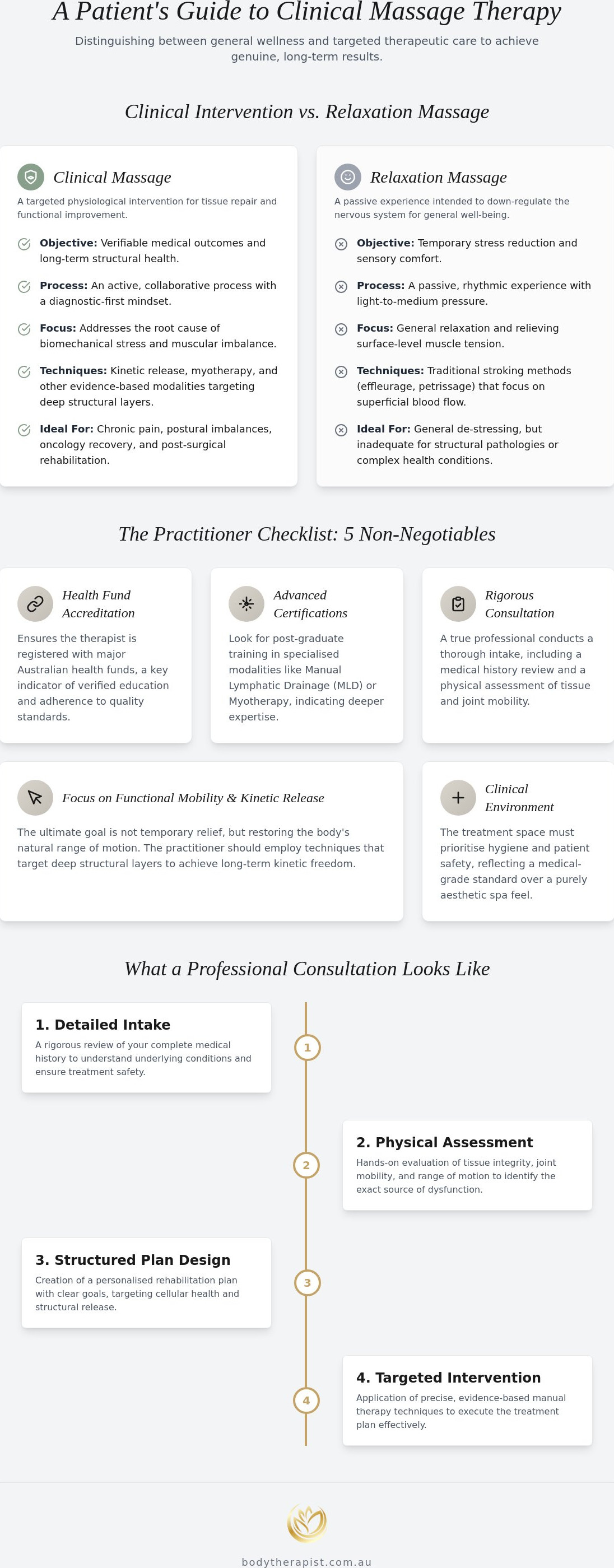
Distinguishing between a standard relaxation session and a clinical intervention is vital for anyone managing persistent physical limitations. While searching for massage therapy near me typically yields a list of local day spas, these environments often prioritise sensory comfort over structural correction. Clinical massage is a targeted physiological intervention designed specifically for tissue repair and functional improvement. It moves beyond the superficial to address the root cause of biomechanical stress and muscular imbalance.
The core difference lies in the objective. A relaxation massage is a passive experience intended to down-regulate the nervous system through rhythmic, light-to-medium pressure. In contrast, a rehabilitative session is an active, collaborative process. It requires a diagnostic-first mindset where the practitioner assesses your specific pathology before any manual work begins. This results-oriented approach, often categorised as Medical massage, focuses on verifiable medical outcomes rather than general well-being. By utilising clinical massage therapy, a practitioner can manage chronic pathology through anatomical precision, ensuring each technique facilitates long-term physical optimisation and cellular recovery.
The Problem with "General" Massage for Clinical Needs
General pressure often fails because it ignores the complexities of neuromuscular dysfunction. When a therapist applies non-specific pressure to a site of chronic inflammation, they risk aggravating the tissue rather than releasing it. For oncology patients or those in post-surgical recovery, non-specialised touch can be counterproductive or even dangerous. These sensitive health journeys require a master practitioner who understands the biological impact of every stroke. Without this level of expertise, a massage is simply a sequence of movements rather than a strategic medical response to a specific condition.
Focusing on Functional Mobility and Kinetic Release
Functional mobility is the ultimate goal of clinical work. It isn't just about feeling "loose" for an hour; it's about restoring the body's natural range of motion to support daily movement and athletic performance. Kinetic release techniques differ significantly from traditional stroking methods found in a general spa. While traditional techniques focus on blood flow near the skin's surface, kinetic release targets the deeper structural layers that dictate movement patterns. Kinetic release is a methodical approach to structural realignment through targeted tissue manipulation. By integrating these methods, a therapist can address the specific restrictions that prevent you from moving without pain.
The Practitioner Checklist: 5 Non-Negotiables for Quality Care
Searching for massage therapy near me often returns a confusing volume of results, ranging from high-street spas to private home studios. To ensure clinical safety and therapeutic efficacy, you must move beyond proximity and evaluate a practitioner based on rigorous professional benchmarks. A master practitioner doesn't just offer "firm pressure"; they provide a structured, evidence-based response to physiological dysfunction. Research into massage therapy for health conditions suggests that the success of an intervention is highly dependent on the therapist's specific training and their ability to adapt techniques to complex medical histories.
When vetting a clinic, prioritise these five non-negotiable quality markers:
Health Fund Accreditation: Ensure the therapist is registered with major Australian health funds, which serves as a proxy for rigorous quality control and verified education.
Advanced Clinical Certifications: Look for post-graduate training in specialised fields, such as manual lymphatic drainage massage, which requires a deep understanding of the lymphatic system.
Clinical Environment: The treatment space should be designed for hygiene and medical-grade therapy, prioritising patient safety over mere aesthetic appeal.
Evidence-Based Modalities: A quality practitioner remains committed to continuing education, integrating new scientific findings into their manual protocols.
Diagnostic Transparency: There should be a clear, documented process for assessment, goal setting, and treatment planning.
Accreditation and Health Fund Rebates
Registration with an Australian professional body, such as Massage & Myotherapy Australia, is essential. There is a significant difference between a basic "certificate" and a clinical Diploma of Remedial Massage (HLT52015 or HLT52021). A diploma-qualified therapist has completed extensive clinical hours and anatomical study, making them eligible for health fund provider numbers. This ensures you can claim rebates while receiving care that meets national healthcare standards. A methodical approach to care begins with a professional clinical consultation to establish these foundations.
The Specialised Training Requirement
Pathologies like oncology recovery or high-risk pregnancy require specific, high-level safety protocols that general therapists aren't equipped to provide. For instance, the technical complexity of lymphoedema drainage massage involves precise, light-touch sequences that redirect fluid around compromised nodes. Applying traditional heavy pressure in these cases can cause significant harm. Always ask a therapist about their specific experience with your condition and their history of working alongside other medical professionals.
Modality Matching: Choosing the Right Intervention for Your Condition
Selecting the correct modality is as critical as the practitioner's credentials. When you search for massage therapy near me, you're likely facing a specific physical challenge that a generic, one-size-fits-all approach cannot resolve. Understanding how to find a qualified massage therapist involves identifying which technical intervention aligns with your unique biological requirements. For instance, Remedial Massage remains the gold standard for correcting postural imbalances and musculoskeletal injuries through targeted soft tissue work. Conversely, Oncology Massage provides a highly modified, safe protocol for those navigating the complexities of cancer treatment, ensuring that the body is supported without being overwhelmed by aggressive pressure.
A clinical framework ensures that the treatment matches the pathology. Whether you're dealing with acute trauma or a chronic systemic condition, the choice of technique dictates the speed and quality of your recovery. A master practitioner will often synthesise multiple modalities, such as dry needling for neuromuscular pain and manual lymphatic drainage for fluid management, to create a comprehensive rehabilitation plan.
Addressing Fluid Retention and Lymphatic Health
Chronic swelling or post-operative oedema requires a delicate, specialised touch that traditional massage simply cannot provide. Recognising the signs your body needs clinical lymphatic support is the first step toward effective management. Unlike mechanical vibration tools, which can be too aggressive for compromised vessels, Manual Lymphatic Drainage (MLD) uses precise, skin-stretching techniques to stimulate the lymphatic system. It's a vital tool for managing chronic inflammatory conditions and accelerating recovery after surgery by facilitating the efficient removal of metabolic waste and reducing interstitial pressure.
Managing Neuromuscular Pain with Advanced Modalities
Stubborn trigger points often require more than manual pressure to achieve a full release. You might choose dry needling when deep-seated muscular knots don't respond to traditional palpation. This technique uses fine needles to elicit a local twitch response, effectively resetting the neuromuscular connection and reducing pain. For connective tissue revitalisation, myofascial silicone cupping provides a unique decompressive force that lifts the fascia and improves blood flow. When these methods are integrated with Low Level Laser Therapy, they create a synergistic effect that reduces inflammation and promotes accelerated cellular recovery at a mitochondrial level.
The Evaluation Framework: What a Professional Consultation Looks Like
A professional consultation serves as the diagnostic bridge between your current physical limitations and your desired functional outcomes. When you search for massage therapy near me, the rigour of the initial assessment is the most reliable indicator of a practitioner's clinical expertise. This process isn't a mere formality; it's a critical data-gathering phase where a master practitioner synthesises your medical history, lifestyle stressors, and specific anatomical complaints into a targeted therapeutic strategy. Collaborative goal setting is a hallmark of this professional care. During your consultation, we define exactly what success looks like for your specific case. Whether your objective is a measurable increase in joint abduction or a significant reduction in post-surgical inflammatory markers, these benchmarks keep the treatment focused and accountable.
The Importance of Clinical Assessment
A therapist should never begin "working" on your body without first conducting a physical evaluation of posture, range of motion, and tissue integrity. This diagnostic phase identifies the root causes of dysfunction rather than just treating the symptomatic site. Understanding proper preparation for remedial massage helps you arrive ready to discuss your medical history, which directly enhances the accuracy of our assessment. We also screen for contraindications, such as acute circulatory issues or recent surgical sites, to ensure that every manual technique used is biologically appropriate and safe for your specific condition. This methodical vetting process is what separates a clinical intervention from a generic spa service.
Building a Result-Oriented Treatment Plan
Meaningful recovery from chronic pathology or structural imbalance requires more than a "one-off" session. Success is achieved through a structured sequence of interventions that build upon one another. We often integrate aesthetic clinical care with rehabilitative needs, such as utilising manual lymphatic drainage to support the body's waste removal processes after ultrasonic fat cavitation. A clinical treatment plan functions as a roadmap for physiological change, tracking progress against specific functional benchmarks. This methodical approach allows us to adjust techniques as your mobility improves and inflammation subsides. We conclude each session with specific home-care exercises and postural guidance to ensure the structural releases achieved in the clinic translate into lasting results in your daily life. To ensure your treatment is backed by anatomical precision, schedule your initial clinical assessment with our specialised team today.
Body Therapist: Integrating Science and Empathetic Clinical Care
Body Therapist is not a sanctuary for superficial relaxation; it's a clinical practice dedicated to physical optimisation and structural integrity. When you search for massage therapy near me, you're often looking for a solution to a specific pathology or a path toward better mobility. Lee Carnegie, our master practitioner, approaches each client as a methodical problem-solver. He integrates myotherapy, kinetic release, and functional mobility to address the root causes of dysfunction rather than just masking the symptoms. This isn't about generic pressure. It's about a deep, technical understanding of human anatomy and the biological impact of targeted manual therapy. Our environment prioritises measurable results over marketing fluff, ensuring every session contributes to your long-term health journey.
A Multi-Modality Approach to Physical Optimisation
We don't rely on a single technique to resolve complex neuromuscular issues. By combining remedial techniques with advanced modalities like dry needling and low level laser therapy, we create a synergistic effect that accelerates the body's natural healing processes. The Body Therapist difference lies in treating the whole person rather than just an isolated symptom. We understand that a chronic hip restriction often involves fascial tension in the lumbar region or compensatory patterns in the lower limbs. You can book your clinical assessment today to begin a structured journey toward recovery and structural realignment.
Specialised Support for Complex Health Journeys
Our dedication to specialised niches ensures that even the most vulnerable patients receive safe, evidence-based care. We provide oncology massage tailored to the specific needs of patients at all stages of treatment, from diagnosis through to survivorship. Similarly, our clinical pregnancy massage offers prenatal relief by managing fluid retention and addressing the unique musculoskeletal stresses of pregnancy. These aren't standard services; they're specialised interventions that require advanced training and a commitment to patient safety. To take the first step toward a result-oriented recovery, enquire about a clinical treatment plan with Body Therapist.
Prioritising Your Structural Health in 2026
Elevating your choice of practitioner from a convenience search to a clinical decision is the first step toward genuine physical recovery. When you filter for massage therapy near me, look for a diagnostic-led approach that prioritises anatomical precision over generic pressure. A quality clinical framework ensures that every intervention, from remedial work to manual lymphatic drainage, is backed by measurable functional benchmarks and professional accreditation. You deserve a therapeutic partnership that treats your body's complexities with the medical-grade seriousness they require.
Body Therapist is led by Lee Carnegie, a qualified remedial and dynamic movement therapist dedicated to methodical problem-solving. We maintain a specialised clinical focus on MLD, oncology support, and rehabilitative care, all while ensuring our services are accredited for major Australian health fund rebates. This commitment to evidence-based modalities provides the safety and efficacy required for even the most complex health journeys. Book Your Clinical Assessment at Body Therapist to begin a structured, science-backed path toward physical optimisation. Your journey toward lasting relief and functional mobility starts with a single, informed decision.
Frequently Asked Questions
How do I know if I need remedial massage or myotherapy?
Remedial massage is specifically designed to address soft tissue dysfunction and facilitate injury recovery through targeted manipulation. Myotherapy is an extension of this discipline, incorporating a broader range of clinical assessments and advanced modalities like dry needling or joint mobilisation. If you're managing complex musculoskeletal pathologies that require a comprehensive rehabilitative framework, myotherapy is often the more appropriate clinical choice.
Are clinical massage sessions covered by Australian private health funds?
Yes, most Australian private health funds provide rebates for remedial massage and myotherapy when the treatment is performed by a qualified, accredited practitioner. You should always confirm that your therapist holds a valid provider number and that your specific "Extras" policy includes coverage for these services. This ensures your search for massage therapy near me results in a professional service supported by your insurance provider.
What is the difference between a relaxation massage and a remedial intervention?
Relaxation massage is a passive treatment focused on down-regulating the nervous system and reducing stress through rhythmic, superficial pressure. A remedial intervention is a diagnostic process aimed at correcting specific anatomical dysfunction. It involves a formal clinical assessment, targeted tissue manipulation, and a structured treatment plan designed to restore functional mobility and address the root cause of physical pain.
Can I receive a lymphatic drainage massage immediately after surgery?
Manual Lymphatic Drainage (MLD) is frequently recommended during the early post-operative phase to manage acute oedema and accelerate the removal of metabolic waste. However, the exact timing must be coordinated with your surgical team to ensure incision sites are stable. MLD utilises extremely light, precise movements that support the lymphatic system without placing undue stress on the deeper structural tissues currently in repair.
Is dry needling safe for everyone?
Dry needling is a safe and effective clinical tool for the majority of individuals, though specific contraindications exist for those with certain blood disorders, needle phobias, or compromised immune systems. A master practitioner will always conduct a thorough medical screening before beginning the procedure. It's exceptionally effective for releasing stubborn myofascial trigger points that have proven resistant to traditional manual palpation techniques.
How many sessions will I need to see results for chronic pain?
Most clients observe a measurable shift in tissue integrity and pain levels within three to five sessions. Chronic conditions rarely resolve in a single appointment because they involve long-standing neuromuscular patterns that require systematic retraining. Your therapist will establish a multi-session roadmap with specific functional benchmarks to track your progress toward physical optimisation and long-term relief.
What should I bring to my first clinical massage consultation?
You should bring any relevant medical reports, imaging summaries such as MRI or X-ray results, and a comprehensive list of current medications. This data allows your therapist to construct a detailed clinical picture and identify any potential contraindications. Providing this information when booking massage therapy near me ensures your treatment plan is biologically appropriate and tailored to your specific medical history.
Do I need a GP referral for oncology or lymphoedema therapy?
A formal GP referral isn't strictly mandatory for booking, but clinical best practice involves maintaining open communication with your medical specialists. For oncology or lymphoedema management, your therapist will often request a letter of clearance or specific surgical notes to ensure the manual therapy integrates safely with your broader medical care. This collaborative approach prioritises your safety and ensures the highest standard of rehabilitative support.


Comments