

How to Prepare for Remedial Massage: A Clinical Guide to Optimising Your Treatment
- leecarnegie

- 2 days ago
- 12 min read
Most people believe the therapeutic work begins only when they lie on the table, but the clinical efficacy of your treatment is often decided hours before you arrive at the clinic. It's natural to feel a sense of uncertainty or even mild anxiety when transitioning from a standard relaxation spa to a professional clinical environment. You may worry about the depth of the physical assessment, what attire is appropriate, or how to manage the potential post-treatment soreness that accompanies deep tissue work. Understanding how to prepare for remedial massage is not just a matter of logistics; it's a physiological necessity that ensures your soft tissue is primed for structural release and functional improvement.
We understand that a results-oriented treatment requires more than just showing up. By mastering the specific steps required to prime your body, you can significantly reduce discomfort and enhance the long-term benefits of your session. This guide provides a methodical overview of the physiological and logistical requirements needed to optimise your clinical experience. We'll cover everything from hydration and attire to mental preparation, ensuring you feel empowered to collaborate with your therapist in achieving reduced pain and restored mobility.
Table of Contents
Understanding the Clinical Nature of Remedial Massage and Treatment
Physiological Preparation: Optimising Your Body for Structural Release
Logistics and Attire: What to Wear and Bring to Your Session
The Consultation Process: Communicating Your Functional Mobility Goals
Post-Treatment Integration: Extending the Benefits of Your Clinical Session
Understanding the Clinical Nature of Remedial Massage and Treatment
Remedial massage is a sophisticated, rehabilitative discipline. It involves the systematic assessment and treatment of the muscles, tendons, ligaments, and connective tissues of the body to assist in rehabilitation, pain management, and injury recovery. Unlike a standard massage therapy session found in a day spa, a remedial treatment is a targeted intervention. It focuses on identifying and addressing the root cause of musculoskeletal dysfunction rather than providing temporary symptomatic relief. This methodical approach ensures that every stroke and technique is applied with a specific functional goal in mind.
The Difference Between Remedial and Relaxation Modalities
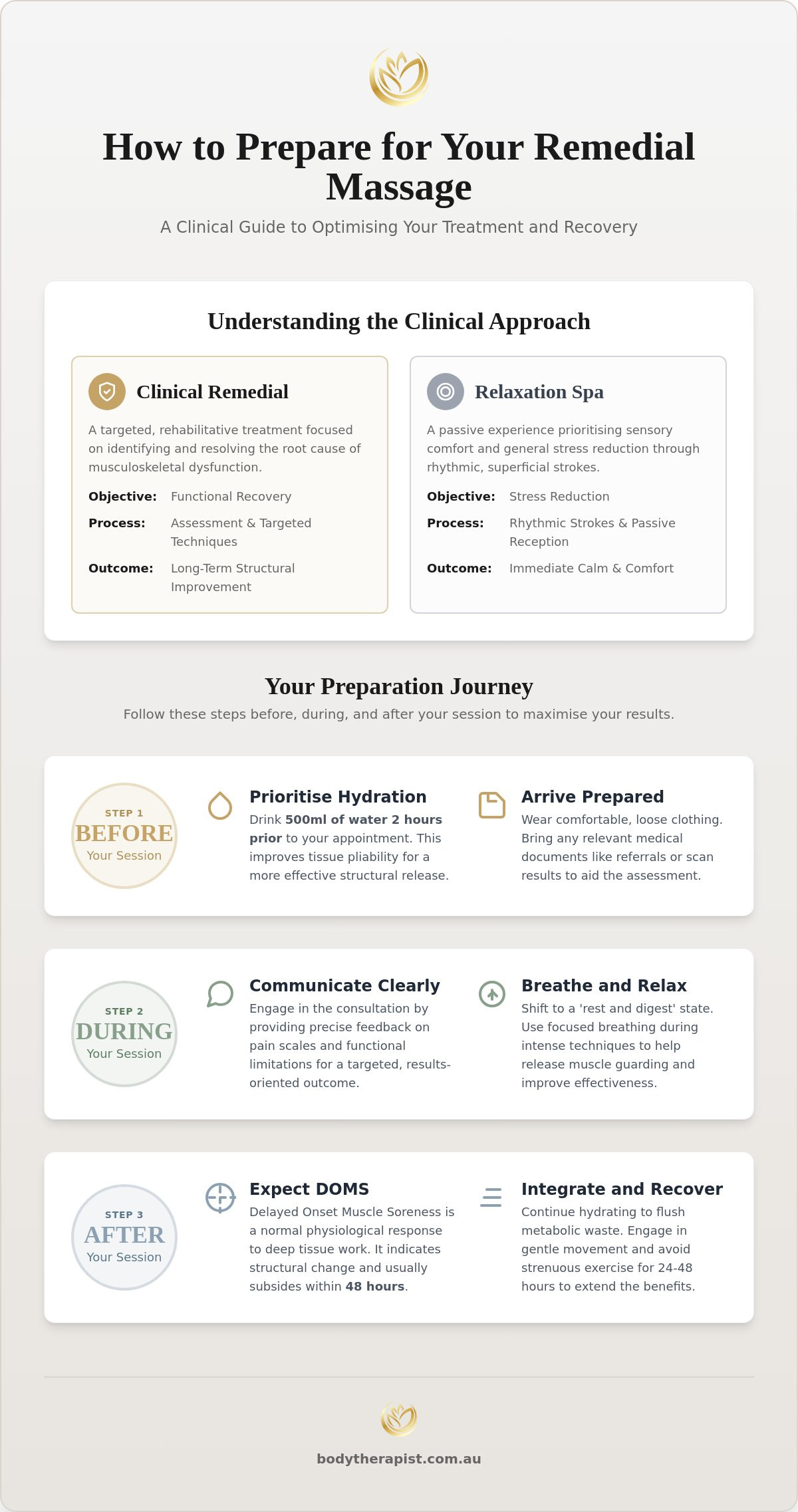
The primary distinction lies in the clinical objective. A relaxation session prioritises sensory comfort and general stress reduction through rhythmic, superficial strokes. In contrast, a remedial session operates within a clinical framework. It begins with a comprehensive assessment, often including postural analysis, functional movement screening, and range-of-motion testing, to pinpoint specific pathophysiology. While the "spa" experience is passive, clinical massage therapy requires a results-oriented mindset. You aren't just receiving a treatment; you're participating in a rehabilitative process designed to restore functional mobility and structural balance.
Why Preparation Influences Your Therapeutic Outcome
Your physiological state at the commencement of a session determines how efficiently your tissues respond to manual manipulation. When you understand how to prepare for remedial massage, you help shift your nervous system from a "fight or flight" response into a "rest and digest" state. This transition is vital. An anxious or unprepared body often exhibits "muscle guarding," which is a subconscious protective mechanism where the brain maintains high muscle tone. This resistance makes it difficult for the practitioner to access deeper layers of fascia or perform precise structural releases.
Learning how to prepare for remedial massage also involves mental readiness. Some techniques, such as trigger point therapy or myofascial release, involve a level of intensity that requires focused breathing and conscious relaxation. Approaching the session with a clear understanding of the therapeutic intent allows you to remain calm during these deeper applications. This active participation ensures the treatment is not only more comfortable but significantly more effective in achieving long-term structural health. By aligning your expectations with the clinical nature of the work, you facilitate a deeper level of healing.
Physiological Preparation: Optimising Your Body for Structural Release
The success of a clinical session depends heavily on your systemic readiness. While the therapist provides the manual expertise, your internal biochemistry dictates how readily your tissues respond to intervention. Understanding how to prepare for remedial massage involves more than just logistical planning; it requires a targeted approach to your physiological state. When the body is primed at a cellular level, the practitioner can achieve greater structural change with less resistance, leading to more profound and lasting results.
Fascial Hydration and Tissue Pliability
Hydrated fascia exhibits a semi-fluid consistency that allows for deep structural release without causing inflammatory trauma to the surrounding connective tissues. Water serves as a critical biological lubricant between individual muscle fibres. During techniques like cross-fibre friction, adequate hydration prevents excessive friction and heat, allowing the therapist to manipulate deep layers of tissue more effectively. To ensure systemic hydration, we recommend a specific protocol: consume approximately 500ml of water two hours prior to your appointment. This timeframe allows for proper cellular absorption without causing discomfort during the prone or supine positions required for Remedial massage.
Conversely, substances that alter your hydration or nervous system state should be managed carefully. Alcohol should be avoided for at least 24 hours prior to treatment. It acts as a potent systemic dehydrator and can increase sensitivity to pain, complicating the therapist's ability to gauge tissue response. Similarly, caffeine and other stimulants should be limited on the day of your session. These substances can elevate your resting muscle tone and trigger a sympathetic nervous system response, making it difficult to achieve the deep relaxation necessary for myofascial release.
Managing Your Nervous System Before the Session
Your mental state directly influences your physical muscle guarding. Arriving at the clinic at least ten minutes early allows your body to transition from a "rushed" or "stressed" state into a "receptive" state. This buffer period is essential for calming the nervous system. Once you are in the treatment room, focusing on diaphragmatic breathing—slow, deep breaths into the abdomen—can help lower the tone of your skeletal muscles before the therapist even begins work. This conscious downregulation of the nervous system makes your body more pliable and less likely to resist deep tissue techniques.
Nutrition and physical activity also play pivotal roles in your preparation. Aim for a light, balanced snack approximately 90 minutes before your session to maintain stable blood sugar levels; this prevents the lightheadedness that can sometimes occur during intense remedial work. However, avoid heavy meals that divert blood flow to the digestive system. Additionally, you should avoid intense exercise immediately before your appointment. High-intensity training can cause acute muscle inflammation and temporary soreness, which may mask the chronic underlying issues the therapist needs to identify. Ensuring your body is in an optimal, calm state allows for a more effective remedial treatment.
Logistics and Attire: What to Wear and Bring to Your Session
Logistical efficiency is a hallmark of a professional clinical environment. When considering how to prepare for remedial massage, completing your initial intake form in advance is a vital first step. This document provides the therapist with a baseline of your systemic health before you even enter the treatment room. It's typically sent via email or SMS, allowing you to detail your history without feeling rushed. Additionally, maintaining high standards of personal hygiene is essential. Showering after a workday or gym session ensures your skin is receptive to any topical treatments or myofascial techniques the practitioner might employ.
Choosing the Right Clothing for Assessment and Treatment
Your choice of attire directly impacts the therapist's ability to conduct an accurate postural analysis. We recommend wearing loose-fitting activewear or comfortable underwear that allows for unobstructed observation of your musculoskeletal alignment. Restrictive fabrics, particularly denim, can significantly impede range-of-motion testing and functional screening. These rigid materials mask subtle compensatory movements that are crucial for a correct diagnosis. Rest assured that professional draping protocols are always maintained. Your privacy and comfort are paramount; only the specific anatomical region being treated is ever exposed, using secure towel placement throughout the session.
Preparing Your Medical History and Functional Data
A results-oriented treatment relies on a comprehensive understanding of your physiological history. Please bring any relevant medical documentation, such as recent X-rays, MRI reports, or specialist letters, to your initial consultation. These reports provide objective data regarding structural pathology that manual palpation alone might not reveal. It's also helpful to prepare a concise list of current medications, previous surgical procedures, and injury timelines. For patients seeking post-surgical support, particularly after cosmetic or oncological procedures, please refer to our Clinical Guide to Manual Lymphatic Drainage Massage for specific preparation protocols.
Take note of your specific "pain triggers" before your appointment. Identifying which movements or postural habits exacerbate your discomfort allows the therapist to target the correct kinetic chain. This level of detail transforms a standard session into a bespoke clinical intervention. When you know how to prepare for remedial massage by gathering this functional data, you empower your therapist to solve complex pain patterns more efficiently. Being prepared with your medical history ensures that the session remains focused on therapeutic outcomes rather than administrative data collection.
The Consultation Process: Communicating Your Functional Mobility Goals
A clinical consultation is a collaborative dialogue between the practitioner and the patient. At Body Therapist, qualified practitioners like Lee Carnegie utilise a systematic assessment process to bridge the gap between your subjective symptoms and objective clinical findings. This phase is critical because it dictates the entire therapeutic strategy for the session. Understanding how to prepare for remedial massage involves learning how to communicate your physical experiences with precision. By providing a clear roadmap of your discomfort, you enable your therapist to move beyond general treatment and focus on the specific structural imbalances causing your pain.
Articulating Your Pain and Movement Restrictions
To provide the most effective treatment, we utilise a clinical framework known as OPQRST to evaluate your symptoms. This methodical approach ensures no detail of your musculoskeletal health is overlooked. When describing your condition, consider the following elements:
Onset: When and how did the discomfort begin?
Provocation: What specific movements or positions exacerbate the pain?
Quality: Is the sensation sharp, dull, aching, radiating, or localised?
Region: Where exactly is the pain, and does it travel to other areas?
Severity: On a scale of 1 to 10, how would you rate the intensity?
Timing: Does the pain fluctuate throughout the day or occur after specific activities?
Identifying your "primary complaint" allows the therapist to prioritise the kinetic chain most responsible for your dysfunction. It's common for a practitioner to work on a seemingly unrelated area; for example, treating the hip flexors to alleviate chronic lower back pain. This is because of "referred pain" and the interconnected nature of the myofascial system. Honest feedback regarding your pain levels on a 1 to 10 scale is essential, as it helps the therapist stay within your therapeutic window without triggering a defensive muscle guarding response.
Preparing for Specialised Techniques
Depending on your assessment, your session may integrate advanced modalities designed for deep neuromuscular release. If your therapist identifies significant myofascial trigger points, they might suggest dry needling near me to reset muscle spindles and improve local blood flow. Other specialised techniques, such as myofascial silicone cupping or kinetic release, involve distinct sensations that differ from traditional manual therapy. You should be mentally prepared for the possibility of a "healing crisis," which is a temporary increase in sensitivity as the body processes the structural changes made during the session.
For patients with complex medical histories, such as those undergoing cancer treatment, the consultation process is even more rigorous. We carefully screen for contraindications to ensure every technique is safe and supportive. You can read more about our specialised approach to medical support in our guide on oncology massage benefits. By being transparent about your health status and mobility goals, you ensure that your remedial treatment is both safe and profoundly effective.
Post-Treatment Integration: Extending the Benefits of Your Clinical Session
The therapeutic process doesn't conclude when you leave the clinic. While we've focused heavily on how to prepare for remedial massage, the 48 hours following your treatment are equally critical for structural stability and long-term recovery. This window is a period of physiological reorganisation. Your body is busy processing the metabolic by-products released during deep tissue work and adapting to the structural changes made to your fascia and musculature. Maintaining systemic hydration is essential during this phase. It facilitates the efficient removal of cellular waste and ensures your soft tissues remain resilient as they settle into their corrected alignment.
Managing Post-Treatment Soreness and Inflammation
It's common to experience "Delayed Onset Muscle Soreness" (DOMS) after a clinical session. This sensation is a normal physiological response to the micro-trauma and structural release involved in remedial work. You can distinguish "good" therapeutic soreness from "bad" injury pain by its quality; therapeutic soreness typically feels like a dull, muscular ache that improves with gentle movement. To support your recovery, we recommend Epsom salt baths or the application of heat packs to the treated areas. These tools promote local circulation and soothe the nervous system. Avoid high-intensity training for at least 24 hours. Your body needs "active rest" to reorganise its connective tissue without the added stress of inflammatory exercise.
Implementing Your Therapist’s Home-Care Programme
Corrective exercises are the bridge between a single successful session and permanent functional improvement. During your treatment, the therapist achieves structural release, but your daily habits dictate whether those changes last. Consistent home-care is a form of "neuromuscular re-education." It trains your brain to accept and maintain the new, healthier movement patterns established during your session. Without this follow-up work, your body may revert to its old compensatory patterns. For patients managing chronic swelling or fluid retention alongside their musculoskeletal needs, integrating lymphatic drainage protocols can further enhance the recovery process by reducing systemic inflammation.
Understanding how to prepare for remedial massage includes anticipating this vital recovery phase. By respecting the 24 to 48 hour integration window, you ensure that the clinical work translates into lasting reduced pain and improved mobility. Every stretch and every litre of water contributes to the cumulative success of your treatment plan. Your commitment to these post-treatment steps is what transforms a temporary relief into a permanent structural solution. Ready to begin your journey toward physical optimisation?
Book your clinical remedial session with Body Therapist today.
Maximising Your Path to Functional Recovery
Mastering how to prepare for remedial massage is the critical first step in a successful rehabilitative journey. Preparation dictates results. By prioritising systemic hydration and ensuring your nervous system is in a receptive state before you reach the table, you allow for deeper structural release and more efficient tissue manipulation. It's this level of foresight that transforms a standard appointment into a high-impact clinical intervention. Transitioning from a passive recipient to an active participant ensures that your treatment targets the root cause of your dysfunction rather than just the surface symptoms.
Body Therapist provides a results-driven clinical environment led by Lee Carnegie, a qualified Myotherapist and Kinetic Release Specialist. Our clinic specialises in complex cases, including oncology support, pregnancy care, and manual lymphatic drainage; this ensures that your specific health needs are met with deep anatomical expertise and empathetic care. Optimise your physical health—book a clinical remedial session with Lee Carnegie. We look forward to supporting your transition toward restored mobility and a sustainable, pain-free lifestyle.
Frequently Asked Questions
Should I shower before my remedial massage appointment?
Showering before your appointment is highly recommended to ensure your skin is clean and receptive to any topical treatments or manual techniques. Removing oils, sweat, and environmental pollutants from the skin surface allows for better grip and glide during the session. It also contributes to the professional clinical environment and ensures you feel comfortable during the physical assessment and subsequent manual therapy.
Can I eat a full meal before my clinical massage session?
You should avoid eating a heavy meal for at least two hours prior to your session to prevent digestive discomfort while lying prone. Digestion diverts significant blood flow away from the skeletal muscles to the gastrointestinal tract, which can interfere with the physiological goals of the treatment. A light, balanced snack 90 minutes before your appointment is ideal to maintain stable blood sugar levels without causing bloating.
What should I wear for a remedial massage assessment?
The best attire for a clinical assessment is loose-fitting activewear or comfortable underwear that allows the therapist to observe your postural alignment and joint mechanics. Understanding how to prepare for remedial massage involves choosing clothing that doesn't restrict your range of motion during functional testing. Rigid fabrics like denim should be avoided, as they mask subtle compensatory movements that are crucial for an accurate structural diagnosis.
Is it okay to exercise after a deep tissue remedial treatment?
High-intensity exercise should be avoided for 24 to 48 hours following a deep tissue treatment to allow your connective tissues to reorganise without added stress. Engaging in strenuous activity too soon can exacerbate post-treatment soreness and potentially lead to inflammatory trauma in the newly released tissues. Opt for "active rest" instead, such as gentle walking, to help integrate the structural changes made during your clinical session.
What happens if I fall asleep during a remedial massage?
Falling asleep is a common response to the downregulation of the nervous system and is perfectly acceptable within a clinical setting. While remedial work often involves intense techniques that require your feedback, a deep state of relaxation can actually reduce subconscious muscle guarding. If you do drift off, your therapist will continue the treatment safely, though they may wake you gently if they require a specific functional movement or pain scale rating.
How much water should I drink after my clinical session?
You should aim to drink at least 500ml to 1 litre of water in the hours immediately following your session, in addition to your standard daily intake. Hydration is critical for flushing the metabolic by-products released from the soft tissues during manual manipulation and structural release. Maintaining high levels of systemic hydration also ensures that your fascia remains pliable and less prone to the stiffness often associated with deep tissue work.
Should I take pain medication before my massage to handle the pressure?
Taking pain medication or muscle relaxants before a session is generally discouraged because it can mask your natural pain response and feedback mechanisms. Your therapist relies on your honest feedback using a 1 to 10 scale to ensure they stay within a safe therapeutic window. If your sensation is dulled by medication, there is a higher risk of the therapist applying excessive pressure that could lead to tissue bruising or post-treatment injury.
What if I have an old injury that I forgot to mention on the form?
Please inform your therapist about any forgotten injuries or surgeries as soon as you arrive for your consultation. Even an old ankle sprain or minor abdominal surgery can create compensatory patterns throughout your entire kinetic chain that affect your current symptoms. Knowing how to prepare for remedial massage means being ready to discuss your full physical history, as this data allows the therapist to solve complex pain patterns more accurately.


Comments