

Myofascial Cupping Therapy: A Clinical Guide to Fascial Decompression and Recovery
- leecarnegie

- 6 days ago
- 12 min read
Updated: 3 days ago
If you have ever spent an hour under a therapist's elbow only to find your shoulder knots return by the following morning, you might be focusing on the wrong direction of pressure. While traditional massage relies on compression, myofascial cupping therapy utilises negative pressure to lift and separate stuck tissues. It is a common frustration to feel restricted in your hips or shoulders despite regular stretching, especially when persistent tension seems resistant to standard manual therapy. You may even feel some anxiety regarding the temporary marks associated with the treatment, wondering if the clinical benefits truly outweigh the aesthetic trade-off.
You deserve a recovery strategy that addresses the structural root of your discomfort with scientific precision. This clinical guide explains the physiological science behind fascial decompression and how this targeted "pulling" action restores functional mobility while alleviating chronic pain. We will explore the evidence-based mechanisms of the treatment, debunk common myths about skin discolouration, and provide a clear plan for integrating silicone cupping into a comprehensive remedial recovery programme. By understanding the "how" and "why" of this modality, you can move toward a state of physical optimisation and lasting flexibility.
Table of Contents
What is Myofascial Cupping Therapy? Decompressing the Connective Tissue
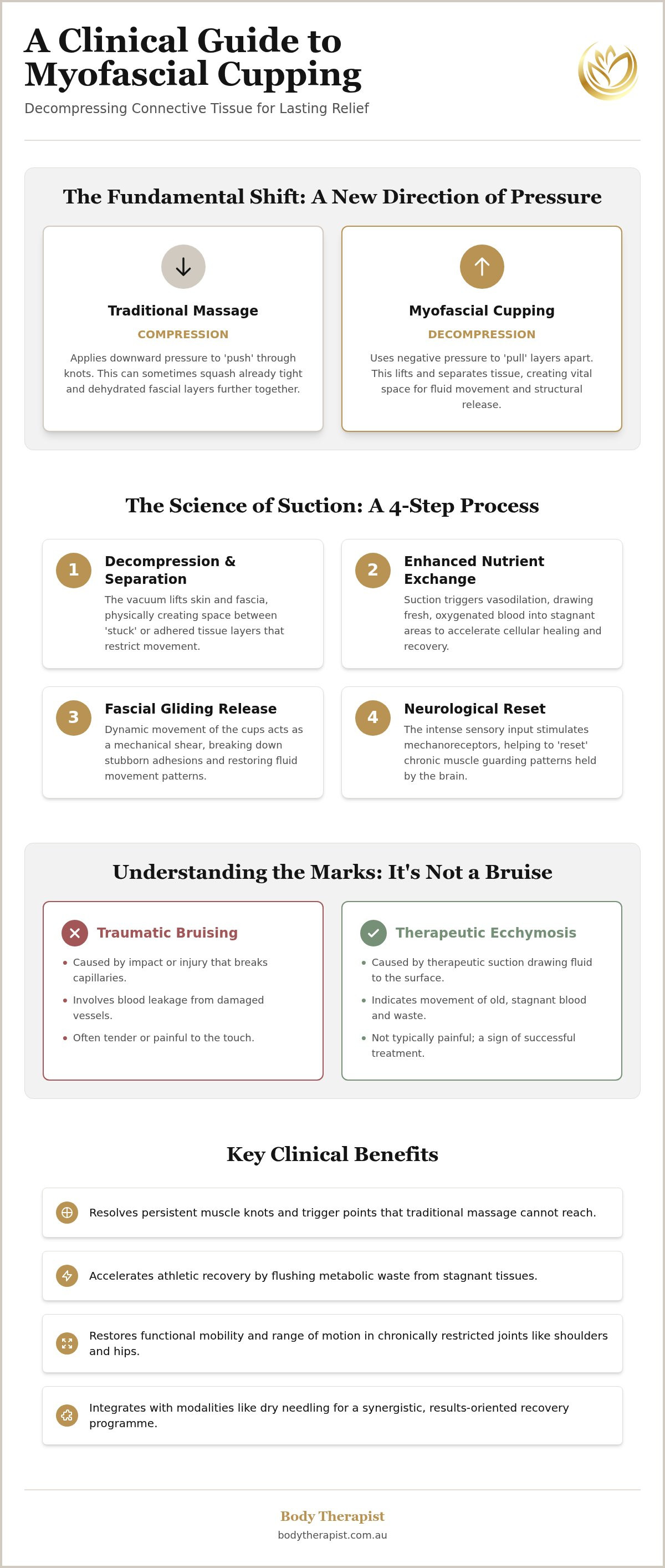
Myofascial cupping therapy represents a fundamental shift in how we approach soft tissue rehabilitation. While most manual therapies, such as remedial massage, rely on compression to release tension, this method employs negative pressure to achieve myofascial decompression. By using medical-grade suction, we can physically lift the skin and underlying fascial layers away from the muscle. This "inverse" approach allows for a structural release that is often impossible to achieve through downward pressure alone. When tissues are chronically tight, compression can sometimes squash layers further together; decompression, however, creates the essential space required for fluid movement and tissue health.
Cupping therapy has a long history across various cultures, but the modern clinical application focuses strictly on the physiological manipulation of the myofascial system. It isn't about general wellness or aesthetic relaxation. Instead, it's a targeted intervention designed to restore functional movement and resolve specific musculoskeletal restrictions. By understanding the mechanical pull of the vacuum, we can address deep-seated tension that has become resistant to traditional "pushing" techniques.
The Anatomy of Fascia: Why it Gets 'Stuck'
Fascia is a complex, fluid-dependent network of connective tissue that envelopes every muscle, bone, and organ in the body. In a healthy state, these layers are lubricated by hyaluronic acid, allowing them to slide and glide during movement. However, factors like chronic poor posture, repetitive overuse, or acute trauma can lead to dehydration of this tissue. When fascia loses its fluid quality, it develops adhesions. These are essentially "stuck" points that bond layers together, restricting range of motion and disrupting efficient muscle recruitment. This often leads to the brain "switching off" certain movement patterns to avoid pain, which creates a cycle of chronic discomfort and compensatory strain.
Clinical vs. Traditional Cupping
At Body Therapist, we utilise "dry" cupping techniques exclusively, prioritising musculoskeletal and rehabilitative outcomes over traditional holistic practices. This is distinct from "wet" cupping, an ancient practice involving controlled bloodletting, which we don't perform in our clinical setting. Our approach relies on medical-grade silicone cups because they offer superior control compared to rigid glass or plastic. These flexible tools allow the practitioner to perform "gliding" techniques, moving the cup across the skin while maintaining suction. This dynamic movement helps break down fascial restrictions over a larger surface area, facilitating a more comprehensive structural release and promoting a faster return to functional mobility.
The Science of Suction: How Negative Pressure Restores Functional Mobility
The mechanical efficacy of myofascial cupping therapy lies in the physical creation of space. While traditional manual therapy relies on compression to affect change, the vacuum within a medical-grade silicone cup pulls the integumentary and fascial layers upward. This separation is vital for resolving "stuck" tissues. By lifting these layers, we physically decompress the underlying structures, allowing for a profound release of tension that downward pressure simply cannot replicate. It's a structural reset that prioritises the decompression of tight, constricted areas.
This suction initiates a vital nutrient exchange at the cellular level. As the vacuum draws tissue into the cup, it triggers local vasodilation, pulling fresh, oxygenated blood and essential nutrients into areas that have become ischemic or stagnant. This influx of fluid facilitates the healing of micro-traumas within the muscle fibres. When we transition into "fascial gliding," we move the active cups along the kinetic chain. This dynamic movement acts as a mechanical shear, breaking down stubborn adhesions and cross-links in the fascia to restore fluid, pain-free movement patterns across the entire body.
Beyond the physical lift, there is a significant neurological shift. The suction stimulates mechanoreceptors in the skin and fascia, sending a flood of sensory information to the central nervous system. This input can "reset" muscle guarding, effectively telling the brain that it's safe to release the protective tension it has been holding around a joint or injury site. It's a sophisticated way to communicate with the nervous system to facilitate deeper physical release.
Decompression and Interstitial Fluid
The pressure differential created by the cup doesn't just affect blood; it has a significant impact on the interstitial fluid. By creating a low-pressure zone, suction encourages metabolic waste and inflammatory byproducts to move out of the tissue and into the lymphatic system for filtration. This process is essential for optimising lymphatic drainage, particularly in areas where chronic inflammation has caused fluid to become viscous and sluggish. Reducing this cellular-level congestion is a primary step in decreasing localised swelling and discomfort. Through this mechanism, we can address the physiological stagnation that often accompanies chronic pain.
Stimulating the Parasympathetic Nervous System
While the physical results are structural, the systemic response is deeply restorative. The rhythmic application of myofascial cupping therapy helps shift the body from a sympathetic "fight or flight" state into a parasympathetic mode, which can lower systemic cortisol levels. This integrates perfectly with clinical massage therapy to provide a multi-layered approach to recovery. We often utilise the "pain-gate" theory here; by providing a non-painful stimulus, the lift of the cup, we can distract the brain from chronic pain signals. This provides a window of relief that allows for more effective remedial work.
If you're struggling with persistent stiffness that hasn't responded to traditional methods, you might find that integrating decompression into your next session provides the breakthrough your recovery requires.
Clinical Benefits: Why Choose Cupping Over Traditional Massage?
Choosing myofascial cupping therapy over traditional remedial massage isn't merely a matter of preference; it's a decision based on the specific mechanical requirements of the tissue. While compression is effective for many muscular issues, it has limitations when dealing with "locked" tissues or chronic guarding. In cases where a muscle is hypersensitive, additional downward pressure can sometimes trigger a protective reflex, causing the patient to tense up further. Negative pressure bypasses this response by providing a lifting sensation that the nervous system often finds less threatening. This makes it a superior tool for resolving deep-seated trigger points in areas like the quadratus lumborum or the suboccipital muscles that contribute to persistent tension headaches.
For athletes and active individuals, the primary advantage is the rapid improvement in tissue elasticity. Traditional massage can improve blood flow, but cupping specifically targets the "glide" between muscle layers. By lifting the fascia, we ensure that muscle groups can move independently of one another without friction. This reduces the risk of strain and accelerates recovery by ensuring that metabolic byproducts are efficiently cleared. It's a proactive approach to maintaining postural alignment, as it releases the long-standing fascial restrictions that often pull the skeleton into suboptimal positions.
Myofascial Release for Post-Surgical Scar Tissue
Post-surgical recovery often involves the formation of fibrotic scar tissue, which can "tether" the skin to underlying muscles and even bone. This tethering restricts movement and can cause localized pain or pulling sensations. Myofascial cupping therapy is exceptionally effective at softening this fibrotic tissue. The suction gently pulls the scar upward, breaking the internal bonds that cause it to stick to deeper structures. This decompression is often used in conjunction with lymphedema drainage massage to manage post-operative swelling and ensure the surgical site heals with maximum mobility and minimal restriction.
Enhancing Range of Motion (ROM)
Restoring range of motion requires "unsticking" muscle groups that have become bonded through overuse or injury. When muscles are stuck together, they cannot contract or lengthen fully, which significantly impairs sports performance and increases injury risk. Our Master Practitioner approach involves a detailed assessment of your functional mobility before any treatment begins. By identifying exactly where the kinetic chain is disrupted, we can apply targeted suction to the specific fascial anchors holding you back. This results-oriented method ensures that every session moves you closer to fluid, unrestricted movement, whether you're a professional athlete or simply looking to move without pain in daily life.
Understanding the 'Cupping Marks': Ecchymosis vs. Bruising
One of the most common reservations about myofascial cupping therapy is the appearance of circular marks on the skin. It's vital to clarify that these are not traditional bruises. A bruise is the result of blunt force trauma that ruptures capillaries and causes internal bleeding into the surrounding tissue. In contrast, the discolouration from clinical cupping is a form of ecchymosis. This occurs because the vacuum draws stagnant, deoxygenated blood and metabolic waste from deep within the muscle tissue toward the surface. Once these fluids reach the superficial layers, the lymphatic system can more easily process and remove them. This is a therapeutic outcome rather than a sign of injury.
The intensity of the colour provides valuable clinical insight into the state of the underlying tissue. A light pink or red mark usually indicates healthy circulation and minimal stagnation. Conversely, deep purple or dark red marks suggest a higher concentration of cellular waste and restricted blood flow in that specific area. Regardless of the initial intensity, these marks typically fade within 3 to 7 days as the body's natural filtration systems clear the area. The speed at which they disappear is often an indicator of the client's overall circulatory efficiency and hydration levels.
Does Cupping Therapy Hurt?
Most clients find the sensation of myofascial cupping therapy to be surprisingly relaxing. Rather than the sharp or pinching feeling people often expect, it feels like a firm, steady pull or a "tight" stretching sensation. During the 'gliding' phase, where the therapist moves the cups across the skin, there may be a momentary intensity as the cup passes over a particularly restricted area. However, our practitioners maintain constant communication and can instantly adjust the suction levels to ensure the treatment remains within your comfort threshold. It's a collaborative process designed to achieve structural release without causing unnecessary distress.
Post-Treatment Aftercare and Hydration
Effective recovery continues well after you leave the clinic. Because the decompression process brings metabolic waste to the surface, staying hydrated is essential to help your lymphatic system flush these substances out of your body. We recommend increasing your water intake for at least 24 hours following a session. Additionally, you should avoid exposing the treated areas to extreme cold, such as cold showers or ice baths, immediately after your appointment. Cold causes the tissues to constrict, which can counteract the vasodilation and increased blood flow we've just worked to achieve. For more advice on getting the most out of your time with us, you can read our guide on how to prepare for remedial massage.
If you are ready to address chronic tension and restore your body's natural movement patterns, book your clinical session today to experience the benefits of fascial decompression.
Integrating Cupping into Your Recovery Plan
Myofascial cupping therapy is most effective when utilised as a sophisticated adjunct within a comprehensive remedial programme. It's rarely a standalone solution; instead, it serves as a powerful catalyst that prepares the body for deeper corrective work. For those searching for dry needling near me to resolve complex neuromuscular pain, integrating cupping can significantly enhance outcomes. While dry needling addresses specific trigger points at the motor point level, cupping manages the surrounding fascial environment. This dual approach ensures that both the muscular knot and the structural "sleeve" that contains it are treated simultaneously.
By decompressing the tissue first, we reduce the physical resistance of the skin and fascia, which allows for more precise and comfortable remedial work. The frequency of treatment depends on the nature of your condition. For acute injuries, a short, intensive burst of two to three sessions over a fortnight can often break the cycle of protective guarding and inflammation. For chronic postural adaptations, a structured recovery plan usually involves an initial corrective phase of four to six weeks, eventually transitioning into monthly maintenance to prevent the re-accumulation of fascial adhesions.
The Master Practitioner Approach to Functional Mobility
Our clinical process begins with a detailed assessment of your kinetic chain. We don't simply place cups on the site of discomfort; we investigate the biomechanical imbalances that created the tension in the first place. By integrating kinetic release techniques with fascial decompression, we address the body as a single, interconnected system. This results-oriented treatment plan ensures that we aren't just chasing symptoms but are actively restoring long-term functional health and movement efficiency through precise, evidence-based interventions.
Choosing a Qualified Clinical Therapist
Proper clinical training is essential when performing myofascial cupping therapy. An inexperienced practitioner may inadvertently cause skin irritation or nerve impingement by applying excessive suction or leaving cups static for too long. At Body Therapist, our sessions are conducted by qualified professionals who understand the delicate balance between therapeutic pressure and tissue safety. Because our treatments are clinical and remedial in nature, most major Australian health funds provide rebates for these sessions, provided you have the appropriate level of extras cover. It's a professional standard that ensures your recovery is both safe and effective.
If you're ready to move beyond temporary relief and invest in a structural solution for your chronic tension, Book a Clinical Myofascial Cupping Session today to begin your tailored recovery journey.
Restoring Your Body's Structural Integrity
Achieving long-term relief from chronic pain requires more than just temporary relaxation; it demands a clinical approach to structural release. We've explored how myofascial cupping therapy utilises negative pressure to decompress restricted tissues, restore fluid gliding between fascial layers, and accelerate the body's natural recovery processes. By moving beyond traditional compression, this modality addresses the root causes of restricted mobility in the shoulders, hips, and spine that standard massage often leaves untouched.
Our practitioners are highly qualified in clinical myofascial decompression and specialised in functional mobility and kinetic release. We don't just treat the site of pain; we analyse your entire kinetic chain to ensure every session moves you closer to physical optimisation. Because we prioritise medical-grade standards, health fund rebates are available for our remedial sessions, making professional recovery more accessible. If you're ready to resolve persistent muscle knots and reclaim your full range of motion, Book a Clinical Recovery Session at Body Therapist today. Your journey toward a more fluid, pain-free life starts with the right decompression strategy.
Frequently Asked Questions
Is myofascial cupping therapy painful during the session?
Myofascial cupping therapy is generally not painful and is most often described by clients as a firm, steady pulling sensation that is quite relaxing. While the gliding technique may feel slightly intense over areas of significant fascial restriction, the therapist constantly monitors your feedback to adjust suction levels. It is a non-invasive decompression method that aims to relieve physical tension without the sharp discomfort sometimes associated with traditional deep tissue massage.
What do the different colours of the cupping marks mean?
The colour and intensity of the circular marks provide a clinical indication of the degree of stagnation and cellular waste present in the underlying tissue. A light pink or red mark typically suggests healthy circulation and minimal debris; whereas dark red or deep purple discolouration indicates a higher concentration of deoxygenated blood and metabolic byproducts. These marks are a sign that the decompression process is successfully drawing toxins toward the superficial layers for lymphatic removal.
How long do the purple circles stay on your skin?
Cupping marks, known clinically as ecchymosis, typically fade within three to seven days depending on your individual circulation and hydration levels. Clients with highly efficient lymphatic systems may notice the discolouration disappearing sooner, while those with chronic stagnation might see marks linger for the full week. Drinking plenty of water after your session assists the body in processing the released metabolic waste and clearing the marks more rapidly.
Can I exercise immediately after a cupping treatment?
We recommend avoiding strenuous exercise for at least 24 hours following a session to allow the treated tissues to settle and recover. Your body is actively processing metabolic byproducts and inflammatory markers that have been drawn to the surface, and high-intensity activity can disrupt this natural filtration process. Light movement, such as gentle walking or basic mobility work, is encouraged to maintain your newfound range of motion without overtaxing the system.
Is cupping therapy covered by my private health insurance?
Most major Australian private health funds cover cupping when it is performed by a qualified professional as part of a remedial massage or myotherapy consultation. Because Body Therapist provides clinical, results-oriented sessions, you can typically claim a rebate on the spot via HICAPS, depending on your specific level of extras cover. We recommend checking with your insurance provider to confirm your eligibility for remedial treatment benefits before your appointment.
Can cupping help with chronic headaches or migraines?
Cupping is exceptionally effective for managing tension headaches and certain types of migraines by releasing the suboccipital and upper trapezius restrictions that often trigger them. By decompressing the fascia around the neck and shoulders, we reduce the mechanical pull on the skull and improve local blood flow. This structural release provides a significant window of relief that allows for more effective long-term postural correction and neuromuscular recovery.
Are there any contraindications for cupping therapy?
Myofascial cupping is safe for most people, but it is contraindicated for individuals with certain skin conditions, deep vein thrombosis, or those taking high doses of blood-thinning medication. It should also be avoided on areas of acute inflammation, open wounds, or during certain stages of pregnancy without medical clearance. A thorough clinical history is taken during your initial intake to ensure the treatment is safe and appropriate for your specific physiological profile.
How many sessions of cupping will I need to see results?
Many clients experience a noticeable reduction in physical tension and improved flexibility after just one session, though a series of three to six treatments is often required for chronic issues. Acute injuries may respond faster, whereas long-standing fascial adhesions require a more methodical approach to achieve lasting structural change. Your therapist will develop a tailored recovery plan during your first consultation to ensure your specific goals for mobility and pain relief are met.


Comments