

Low Level Laser Therapy Western Sydney: The Clinical Guide to Photobiomodulation
- leecarnegie

- 6 hours ago
- 12 min read
The most effective way to accelerate deep tissue healing isn't found in a pill bottle or under a surgeon's scalpel, but within the precise application of light. For many residents seeking low level laser therapy western sydney, the frustration of a recovery that's stalled despite weeks of rest is a familiar burden. It's exhausting to manage chronic inflammation that refuses to subside or to feel hesitant about the risks of invasive procedures. You deserve a recovery pathway that respects your body's biological limits while actively pushing the boundaries of what's possible for cellular repair.
We understand that navigating the aftermath of surgery or a persistent injury requires more than just patience; it demands a clinical, evidence-based intervention. This guide explores how photobiomodulation works as a cellular catalyst to reduce swelling and restore functional mobility without the need for heavy medication. You'll discover the specific biological mechanisms that drive tissue regeneration and learn how this non-invasive technology integrates with remedial care to get you moving again. We will examine the TGA-regulated science behind the treatment and provide a clear roadmap for your journey toward a pain-free life.
Table of Contents
Understanding Low Level Laser Therapy (LLLT) and Photobiomodulation
Low Level Laser Therapy (LLLT) is a non-invasive therapeutic modality that utilises specific coherent wavelengths of light to interact with biological tissue at a cellular level. It's now more accurately described by the clinical term photobiomodulation (PBM), a name that highlights the process of using light (photo) to modify (modulation) life (bio). This transition from the casual "cold laser" label to a more rigorous scientific nomenclature reflects decades of peer-reviewed research. For patients looking for low level laser therapy western sydney, this treatment represents a sophisticated bridge between traditional manual therapy and advanced biophysics. Understanding Low Level Laser Therapy (LLLT) requires an appreciation of its origins in the 1960s, eventually becoming a staple in elite sports medicine and clinical rehabilitation for its ability to shorten recovery timelines and manage complex pain profiles.
Non-Thermal vs. Surgical Lasers: Knowing the Difference
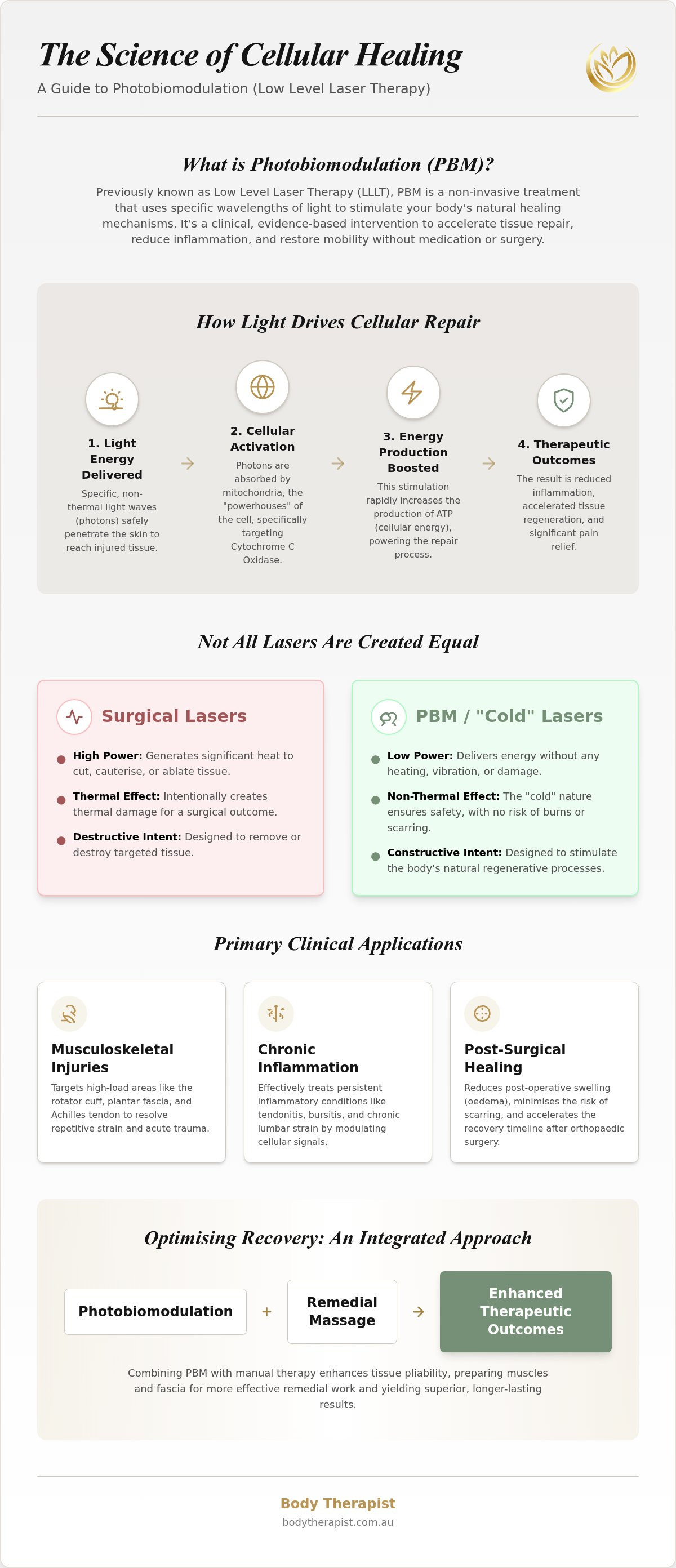
Surgical lasers are engineered to cut, cauterise, or ablate tissue by concentrating high-intensity beams that generate substantial thermal energy. LLLT operates on the opposite end of the power spectrum. It is a non-thermal application, which means it does not produce heat, vibration, or damage to the epidermal layers. This "cold" nature of the laser is its primary safety feature, allowing photons to penetrate deep into the dermis and underlying muscle without any risk of burning or scarring. While surgical lasers have a "destructive" intent for removal or correction, LLLT has a "constructive" intent. It aims to stimulate the body's natural regenerative processes, making it a safe and effective option for sensitive tissues or post-operative recovery.
The Clinical Evolution of Light Therapy
The clinical application of light has matured into a cornerstone of evidence-based health care across Australia. Modern practitioners no longer view it as an isolated service but as a vital component of a comprehensive, results-oriented recovery plan. By shifting toward precise, dose-dependent protocols, clinics can now target specific anatomical structures with remarkable accuracy. This evolution has been particularly beneficial for treating deeper musculoskeletal issues like hip bursitis or chronic lumbar strain. When you access low level laser therapy western sydney, you're engaging with a method that prioritises long-term functional mobility over temporary symptom masking. It's a methodical, problem-solving approach that integrates seamlessly with existing therapeutic traditions to provide a holistic path toward physical well-being.
Primary Clinical Applications for Laser Treatment
The clinical versatility of photobiomodulation allows it to address a broad spectrum of conditions, ranging from sudden athletic trauma to long-standing degenerative issues. In a professional setting, low level laser therapy western sydney is utilised to target tissue at specific depths, providing a non-pharmacological alternative for patients who've reached a plateau with traditional rest and ice protocols. By delivering precise energy dosages, the therapy initiates a cascade of biological responses that significantly shorten the inflammatory phase of healing and facilitate a more efficient return to movement.
Musculoskeletal Recovery and Chronic Pain Management
Clinical evidence supports the use of LLLT for high-load areas prone to repetitive strain, such as the rotator cuff, the subacromial bursa, and the plantar fascia. These structures often suffer from poor vascularity, which slows the natural delivery of repair cells. Photobiomodulation bypasses this limitation by enhancing local microcirculation and modulating cellular signals to suppress pro-inflammatory cytokines. This process effectively breaks the cycle of chronic pain by recalibrating the nervous system's response to injury. Many patients find they can reduce their reliance on non-steroidal anti-inflammatory drugs (NSAIDs) while experiencing improved joint mechanics. Research into How Light Drives Cellular Repair highlights that these outcomes are rooted in the stimulation of mitochondrial activity, ensuring that cells have the ATP required for structural restoration.
Post-Surgical Healing and Oedema Reduction
Recovery after orthopaedic or cosmetic surgery is often complicated by significant swelling and the risk of hypertrophic scarring. LLLT is an essential tool for managing post-operative oedema by stimulating the lymphatic system to clear excess interstitial fluid. This application is particularly effective when used in conjunction with optimising lymphatic drainage, as the laser can pre-treat areas of high congestion to facilitate faster fluid transport. Beyond swelling, the therapy accelerates wound closure and supports the integration of skin grafts by promoting collagen synthesis and angiogenesis. This methodical approach ensures that scar tissue remains pliable and functional rather than restrictive.
The therapy also shows profound results in managing neuropathic pain and nerve regeneration. By supporting the metabolic needs of damaged neurons and reducing the excitability of peripheral nociceptors, it provides relief for conditions like carpal tunnel syndrome or sciatica. If you're managing a complex recovery, a clinical assessment with a qualified therapist can determine the optimal laser dosage for your specific pathology. This ensures that every session contributes directly to your functional mobility and long-term physical resilience.
The Biological Mechanism: How Light Drives Cellular Repair
The efficacy of low level laser therapy western sydney relies on a process called photobiomodulation, where specific wavelengths of light interact with intracellular chromophores to trigger a cascade of regenerative events. Unlike chemical interventions that mask symptoms, light therapy addresses the root cause of tissue dysfunction by targeting the mitochondria, the energy-producing organelles within every cell. Within these mitochondria, a specific enzyme called Cytochrome c Oxidase acts as the primary receptor for the laser's photons. When this enzyme absorbs the light energy, it displaces inhibitory nitric oxide, allowing for a more efficient transfer of electrons and a significant surge in metabolic activity. How Light Drives Cellular Repair involves this precise bio-energetic shift, which is why the treatment is so effective for pathologies that have become stagnant or chronic.
Mitochondrial Function and ATP Synthesis
The immediate result of this mitochondrial stimulation is a rapid increase in the production of Adenosine Triphosphate (ATP). ATP is the fundamental energy currency of the cell; it's the fuel required for every biological process, from muscle contraction to the synthesis of new proteins. Research suggests that stimulated cells can experience an increase in ATP production by up to 150 per cent, providing a massive energy surplus for damaged tissue. This surplus is used to accelerate DNA and RNA synthesis, which leads to faster tissue replication and a more robust structural repair of tendons, ligaments, and muscle fibres. By providing this "metabolic boost", the therapy ensures that the body's repair mechanisms aren't limited by a lack of cellular energy.
Vasodilation and Improved Microcirculation
Beyond the direct energy synthesis, LLLT facilitates a profound change in the local circulatory environment. The displacement of Nitric Oxide from the mitochondria doesn't just improve ATP production; it also causes the Nitric Oxide to enter the bloodstream, where it acts as a potent vasodilator. This widening of the blood vessels significantly improves microcirculation in the treated area, ensuring that oxygen and vital nutrients are delivered directly to hypoxic or damaged tissue. This process is critical for resolving inflammation and clearing metabolic waste products. The stimulation also extends to the lymphatic system, where it enhances the transport of excess fluid and proteins back into the circulation. This dual action of improved nutrient delivery and efficient waste removal creates an ideal physiological environment for long-term functional recovery.
This biological recalibration also helps to modulate reactive oxygen species (ROS), which are often elevated in states of chronic inflammation. By reducing oxidative stress, the therapy prevents further cellular damage and helps to stabilise the tissue environment. For those managing complex injuries, this methodical cellular approach offers a level of precision that traditional manual therapies alone cannot reach.
Safety Standards and Clinical Considerations
Providing low level laser therapy western sydney requires a commitment to rigorous safety standards that ensure every session is as effective as it is secure. Photobiomodulation is a non-invasive and entirely painless procedure; patients typically feel nothing more than the light contact of the laser probe against the skin. Because the laser operates at a non-thermal intensity, there's no risk of burning or structural tissue damage. However, the coherent nature of the light beam necessitates the use of specialised protective eyewear for both the therapist and the patient to prevent accidental ocular exposure. This methodical approach to safety is a hallmark of a clinical environment that prioritises patient welfare alongside physiological results.
A thorough clinical assessment is mandatory before commencing any laser protocol. This initial consultation allows the practitioner to map out the specific anatomical targets and determine the precise energy density required for your condition. It also serves as a vital screening process to identify any contraindications that might affect the treatment's safety or efficacy. This diagnostic step is integral to any low level laser therapy western sydney consultation, ensuring that the technology is applied only when it's clinically appropriate for the patient's unique health profile.
Who Should Avoid LLLT?
While photobiomodulation is exceptionally safe, certain conditions require a cautious or exclusionary approach. Standard clinical protocols advise against the direct application of the laser over the thyroid gland or a pregnant uterus. Additionally, patients currently taking photosensitising medications, such as certain antibiotics or St John's Wort, must disclose this during their assessment as these substances can alter the skin's response to light. Understanding how to prepare for remedial massage and laser therapy can help you provide the necessary health history to ensure your session is optimised for safety. Active malignancies are generally considered a contraindication for direct local application, though exceptions exist within specialised palliative care frameworks.
The Oncology Perspective: A Specialised Approach
The role of LLLT in oncology is a nuanced area that requires advanced clinical training. Rather than treating a primary malignancy, laser therapy is frequently utilised to manage the debilitating side effects of cancer treatments, such as radiation dermatitis or secondary lymphoedema. In these instances, the therapy must be delivered by a practitioner trained in oncology massage protocols who understands the complexities of a compromised lymphatic system. We emphasise a collaborative approach, working in conjunction with your medical oncology team to ensure that light therapy supports your broader recovery plan without interference. If you are unsure whether this modality suits your current health profile, you can book a clinical consultation to discuss your specific needs and develop a safe, evidence-based recovery strategy.
Optimising Recovery: Integrating LLLT with Remedial Massage
While low level laser therapy western sydney is a powerful standalone intervention, its true clinical potential is realised when integrated into a multi-modal recovery plan. At Body Therapist, we don't view photobiomodulation as an isolated "gadget" or a secondary service. Instead, it serves as a physiological primer that enhances the efficacy of manual techniques. By addressing cellular dysfunction before or alongside physical manipulation, we create a synergistic environment that accelerates functional outcomes and reduces the overall timeline of rehabilitation. This integrated approach ensures that we aren't just treating symptoms, but are actively recalibrating the body's internal repair mechanisms.
This clinical synergy is particularly evident when managing complex fluid-based pathologies or post-surgical recovery. When LLLT is paired with Manual Lymphatic Drainage (MLD), the laser helps to stimulate lymphatic contractility and soften fibrotic tissue, which allows the manual drainage to be significantly more productive. It's a methodical, results-oriented strategy that positions our centre as a hub for sophisticated physical care, where evidence-based technology and high-level manual skill work in harmony to restore your health.
Synergy Between Laser and Manual Therapy
One of the primary advantages of this combination is the ability to "pre-treat" hypertonic muscles and restricted fascia. Applying the laser to active trigger points reduces their sensitivity and increases local tissue pliability before a single hand is laid on the area. This makes the subsequent remedial work far more comfortable for the patient and allows the therapist to reach deeper structural layers without causing unnecessary guarding or discomfort. Conversely, using the laser after a session of deep tissue or kinetic release helps to settle any post-treatment inflammation, ensuring that the body transitions quickly from the therapeutic stress of manual work into a state of active repair. For a broader context on these methodologies, you can refer to our clinical massage therapy guide.
Creating Your Personalised Treatment Protocol
Effective recovery is never a one-size-fits-all process; it requires a deep understanding of human anatomy and individual pathology. Every journey at our clinic begins with a comprehensive functional mobility assessment to identify the specific structural imbalances and cellular deficits you're facing. Based on these findings, we tailor the frequency and duration of your sessions to match your specific injury stage. Whether you're in the acute inflammatory phase or the chronic remodelling phase, your low level laser therapy western sydney protocol will be adjusted to provide the optimal energy dosage. We encourage you to take an active role in this rehabilitative journey, as understanding the biological processes behind your recovery is essential for maintaining long-term physical resilience and preventing future dysfunction.
Advancing Your Clinical Recovery Pathway
Mastering your recovery requires a shift from passive rest to active, evidence-based intervention. By harnessing the power of photobiomodulation, you're providing your cells with the metabolic energy needed to resolve chronic inflammation and repair damaged structures. Choosing low level laser therapy western sydney means accessing a non-invasive modality that respects the body's natural healing timeline while significantly accelerating functional outcomes. This technology is most effective when applied through a methodical, multi-modal plan that addresses both cellular health and structural alignment.
At Body Therapist, our approach is defined by qualified remedial and myotherapy expertise, ensuring that your treatment is grounded in a deep understanding of human anatomy. We provide specialised oncology and post-surgical support, utilising evidence-based, non-surgical recovery protocols to manage complex cases with precision and care. Whether you're navigating post-operative swelling or persistent musculoskeletal pain, we're dedicated to your physical optimisation. Organise your clinical consultation at Body Therapist today to begin your journey toward restored mobility. Your path to a resilient, pain-free life is supported by science and delivered with expert clinical care.
Frequently Asked Questions
Is Low Level Laser Therapy painful or will I feel heat?
Low level laser therapy western sydney is an entirely painless and non-thermal application, meaning it does not generate heat or damage the skin surface. You won't feel any vibration or stinging during the procedure. Most patients only perceive the light touch of the laser probe as it's moved across the targeted anatomical area, making it a comfortable option for those with high pain sensitivity.
How many sessions of LLLT are typically required to see results?
The number of sessions required depends on whether the pathology is acute or chronic. Acute injuries often show improvement within three to five sessions, while long-standing inflammatory conditions may require ten or more treatments for structural remodelling. Your therapist will design a specific dosage protocol based on your initial functional mobility assessment to ensure the treatment matches your body's repair rate.
Can I have laser therapy if I am currently undergoing cancer treatment?
Photobiomodulation can be used during cancer treatment, but only under the guidance of an oncology-trained therapist and in coordination with your medical team. It is never applied directly over a primary tumour. Instead, it is utilised to manage treatment side effects such as radiation dermatitis or secondary lymphoedema, helping to improve your physical comfort and functional capacity during recovery.
What is the difference between clinical LLLT and at-home LED devices?
Clinical LLLT uses coherent laser light that penetrates significantly deeper into musculoskeletal structures than the incoherent light produced by at-home LED devices. While LED pads provide superficial benefits, clinical-grade lasers deliver precise energy dosages to target mitochondria at the depths required for tendon and muscle repair. The TGA-regulated devices used in a clinical setting offer higher power densities for more reliable therapeutic outcomes.
Is LLLT effective for long-term chronic conditions like osteoarthritis?
LLLT is an effective non-surgical option for managing the symptoms of osteoarthritis by reducing intra-articular inflammation and alleviating joint pain. By stimulating cellular repair and increasing metabolic activity within the joint capsule, the therapy helps restore a better range of motion in the hips, knees, and hands. It provides a drug-free alternative for patients who cannot tolerate the side effects of long-term anti-inflammatory medication.
Can Low Level Laser Therapy help reduce post-surgical swelling and bruising?
Low level laser therapy western sydney significantly accelerates the resolution of post-surgical swelling and bruising by stimulating the lymphatic system and improving microcirculation. The light energy promotes the clearing of excess interstitial fluid and metabolic waste from the surgical site. This process reduces pressure on local pain receptors and supports faster wound closure, making it a vital component of post-operative recovery protocols.
Are there any side effects or "downtime" after a laser session?
There is no downtime required after a session, and you can return to your daily activities immediately. Some patients experience a mild, transient increase in sensation in the treated area as the inflammatory process is modulated, but this usually subsides within twenty-four hours. This physiological response is a sign that the body's regenerative processes have been successfully stimulated and the healing cycle has been initiated.
Does private health insurance cover Low Level Laser Therapy in Australia?
Most major Australian private health funds provide rebates for LLLT when it is delivered as part of a remedial massage or myotherapy consultation. You should check your specific policy for "Remedial Massage" or "Myotherapy" coverage to determine your eligibility for a rebate. We provide the necessary clinical documentation and receipts to ensure your claim is processed efficiently through your fund's provider portal.


Comments