

Safe Massage for Cancer Patients: What to Know in 2026

Could massage make cancer spread or interfere with treatment? It’s an understandable concern, but Cancer Council Australia reports no credible evidence that massage spreads cancer. That doesn’t mean every technique or pressure is appropriate for every person. Safe massage for cancer patients depends on individualised care that takes diagnosis, treatment and current health into account.
Massage is supportive care, not a treatment for cancer. Before considering a session, discuss it with your cancer care team and share relevant details with your therapist, such as recent surgery, treatment side effects, sensitive areas and medical devices. This context can inform a discussion about how care may need to be adapted.
This article explains what Cancer Council Australia says about massage and common safety concerns, what to discuss with your care team, and what an individualised oncology massage approach involves. At Body Therapist, Lee Carnegie is a qualified remedial massage therapist with oncology massage specialisation. Care is tailored to individual conditions, helping you consider supportive manual care alongside medical treatment.
Table of Contents
Safe massage for cancer patients: what the evidence says
Massage may be considered as supportive care alongside cancer treatment, but it doesn’t treat cancer or replace medical care. Cancer Council Australia reports no credible evidence that massage spreads cancer. This addresses one common fear, but it doesn’t establish that every massage technique is suitable for every person or at every point in treatment.
For safe massage for cancer patients, the distinction matters: whether massage spreads cancer is a separate question from whether a particular session suits someone’s health and circumstances.
Does massage spread cancer?
Metastasis is the process by which cancer cells spread from their original site to other parts of the body. It involves complex biological changes and interactions within the body. Massage should not be described as changing that process or controlling cancer progression.
Cancer Council Australia states there is no credible evidence that massage spreads cancer. This is a measured statement about the available evidence, not a guarantee about an individual’s cancer or a recommendation for a specific massage. The absence of evidence that massage spreads cancer does not mean every massage is appropriate for every person.
If the fear of spreading cancer has made you hesitant, raise it directly with your treating doctor. You don’t need to resolve the question alone or rely on claims that massage can influence the cancer itself.
What does supportive care mean?
A complementary therapy is an approach used alongside conventional medical care to support a person’s wellbeing. Massage may be considered in this context, but it isn’t a cancer treatment. It doesn’t replace surgery, chemotherapy, radiation therapy, medicines or advice from your oncology team. Keep your cancer care plan at the centre of decisions about treatment.
Supportive care is not a promise of a particular outcome. It describes massage as an additional form of care, rather than a way to treat the disease. If you’re considering it, explain what you hope a session will support, then discuss whether it fits your current care with your treating team.
For more context on the aims and potential role of this approach, the article on oncology massage benefits explores massage as supportive care, rather than as a means of treating cancer. The next step is to consider personal suitability, which depends on more than diagnosis alone.
How cancer treatment and personal circumstances shape massage
A cancer diagnosis alone can’t determine whether massage is suitable. Two people with the same cancer may have different treatment histories, medicines, tumour locations and current concerns. Those details can influence whether massage needs to be adapted, and which areas or approaches are appropriate to discuss. Cancer Council Australia identifies treatment, medication and tumour sites as factors that may guide adjustments.
Massage planning is individualised around the person, their clinical context and what they’re experiencing now. It isn’t a standard routine applied simply because someone has cancer.
Which details can inform an individualised discussion?
Start with the broad picture, not medical jargon. Tell your treating doctor and massage therapist what treatment you’re receiving now, what you’ve had previously, which medicines you take and where the tumour is or was located. If you’re unsure of a medicine’s name, describe it or bring a current medication list.
It also helps to explain what’s happening day to day. For example, mention discomfort in a particular area, fatigue or a recent change in treatment. These details give your care team useful context for discussing whether massage could be considered and what adjustments might be relevant. You don’t need to choose a technique or assess your own suitability before raising the topic.
What can massage support, and what can it not do?
Research and cancer-support guidance have considered massage as a possible way to support comfort and wellbeing, including in relation to symptoms such as pain, fatigue and nausea. That doesn’t mean everyone will experience a change, or that massage can control cancer. Any hoped-for benefit should be treated as a supportive goal, not a promised result.
This distinction can make the conversation clearer: explain what you hope massage might help you manage, while leaving cancer treatment decisions with your oncology team. If your needs or treatment change, revisit the discussion. A plan that suited you at one point may not reflect your circumstances later.
If lymphatic concerns are part of your situation, raise them specifically with your care team to clarify whether lymphatic care is relevant to your needs. Body Therapist provides individualised Oncology Massage, shaped around personal conditions and context.
Is deep or firm massage safe for cancer patients?
There isn’t one pressure level or massage style that suits every person with cancer. A firm technique that feels comfortable for one person may feel difficult or inappropriate for another, depending on treatment, health and personal preference. The question isn’t simply whether deep or firm massage is safe in general. It’s whether a particular approach suits an individual’s circumstances.
Cancer Council Australia notes that deep tissue massage may be physically and psychologically challenging for some people during cancer treatment. This is a qualified caution, not a universal ban, and it doesn’t mean every other massage approach is automatically suitable. For safe massage for cancer patients, technique needs to be considered in context.
Why pressure and technique are not one-size-fits-all
Massage is sometimes associated with firm pressure or working deeply into muscle. That expectation may not match what someone wants or needs during cancer care. Treatment and its effects can change how a person feels, while preferences can vary from session to session. Someone may also feel more comfortable with a different approach than they expected before discussing their circumstances.
Rather than assuming a particular style is required, describe your preferences and treatment context to your care team and therapist. Cancer Council Australia’s caution about deep tissue work is a reason to discuss the proposed approach, not a rule to apply without considering the person.
How to handle uncertainty without alarm
Uncertainty doesn’t have to mean either “massage is always safe” or “massage must always be avoided”. If you’re unsure about pressure or technique, ask your treating doctor whether there are factors in your current care that should guide the discussion. You can also tell the therapist what feels comfortable, what concerns you and what you’d prefer to avoid.
A useful conversation can be straightforward: “I’m considering massage for support, and I’m unsure about firm pressure. Is there anything about my treatment or health that should guide what I discuss with the therapist?” This gives your doctor a clear starting point without requiring you to know clinical terminology or decide on a technique yourself.
Your comfort and preferences matter. Ask questions before a session, explain if your needs have changed, and speak up if an approach doesn’t feel right. A careful discussion can help turn a general concern into a more specific conversation about your circumstances. The aim isn’t to remove every uncertainty in advance, but to make an informed decision with guidance from the people involved in your care.
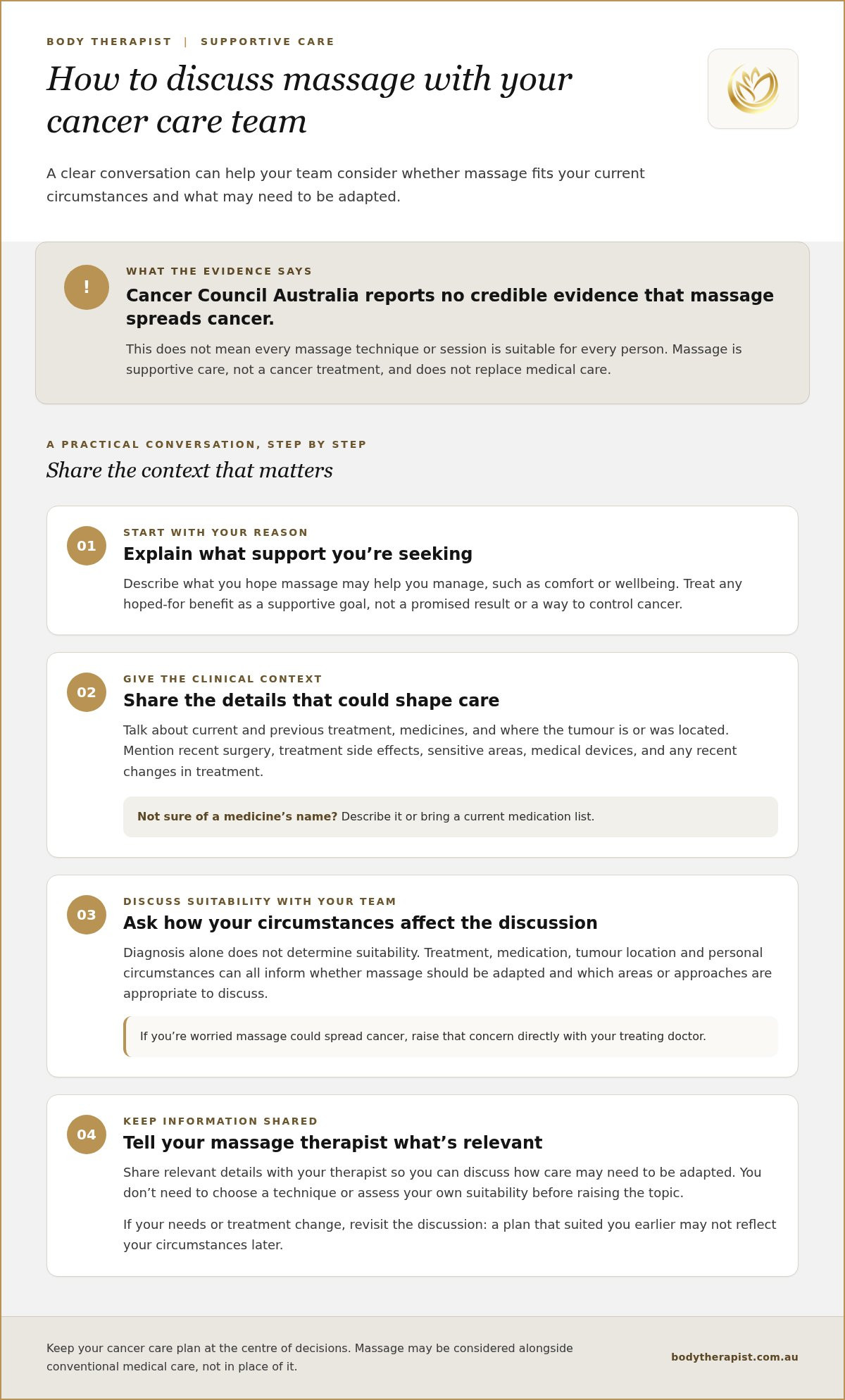
How to discuss massage with your cancer care team
A conversation with your treating doctor can help you consider complementary massage in light of your current care. You don’t need to prepare a medical case or know the right technical terms. Start with what you hope massage might support, then ask whether treatment-related details should inform the discussion with a therapist.
This is a patient-led conversation. Ask questions, explain what matters to you and follow the advice of your own cancer care team. Their guidance relates to your particular circumstances, so general information can’t replace it.
Questions to raise with the treating doctor
Be direct about what you’re considering and why. For example: “I’m thinking about massage for support. Is it appropriate to discuss in my current circumstances?” Then ask your doctor to identify any relevant context for the therapist.
“Are there aspects of my current treatment or health that should shape this discussion?”
“What information about my treatment, medicines or tumour location would be useful for a massage therapist to understand?”
“Is there anything you’d recommend I keep in mind when discussing the type of support I’m seeking?”
Write down questions beforehand if that helps you feel organised. If your care team advises against massage or suggests particular considerations, take that guidance into account before proceeding.
Information to share with the massage therapist
After speaking with your doctor, pass on any relevant guidance before discussing treatment. Explain your treatment context in everyday language, including current or previous care and medicines, and describe concerns that could affect your comfort. If you don’t know a clinical term, explain what you understand or ask your care team how best to describe it.
Describe the support you’re hoping to explore, without presenting massage as cancer treatment.
Share relevant treatment and medication information, as well as any guidance from your oncology team.
Explain your preferences, concerns and what helps you feel comfortable during hands-on care.
This exchange should be collaborative. Your therapist can use the information you share to inform an individualised discussion about massage, while your oncology team remains the source of guidance on your cancer care. If your treatment or circumstances change, update both sides so future conversations reflect your current situation.
For individualised supportive manual care, explore Oncology Massage at Body Therapist, with services tailored to individual conditions.
Oncology massage at Body Therapist: individualised supportive care
Considering massage during or after cancer care can bring up practical questions: what is the purpose of the session, what information should you share, and how will your individual circumstances be recognised? At Body Therapist, oncology massage is supportive manual care, not a treatment for cancer. It doesn’t replace your oncology team’s advice or cancer treatment, and no particular clinical result is promised.
Body Therapist offers Pre- and Post-Surgical Management (including Scar Tissue & Oncology Massage). This is a relevant option for people considering supportive massage alongside medical care. Whether you’re exploring massage during treatment or after surgery, your history, current circumstances and preferences remain important to the discussion.
What Body Therapist’s oncology massage service is
The service is tailored to individual conditions rather than presented as a standard routine for everyone with cancer. A diagnosis alone doesn’t describe a person’s treatment history, current concerns or what they feel comfortable with. Sharing relevant information can make a discussion about supportive care more specific to you.
Before considering a session, speak with your cancer care team about whether massage fits your circumstances, then share relevant guidance with your therapist. Describe your goals in everyday language, such as wanting to explore supportive manual care, and explain any preferences or concerns. The purpose is to inform an individualised discussion, not to replace medical advice or alter your cancer treatment plan.
For someone looking for safe massage for cancer patients, individualisation is central. It recognises that people’s needs differ and that supportive massage shouldn’t be confused with treatment intended to address cancer itself. Your care team remains the right source for advice about your medical care.
Practitioner background and next steps
Lee Carnegie is a qualified remedial massage therapist, Dynamic Movement Therapist Level 1 and personal trainer. Lee has Manual Lymphatic Drainage training and oncology massage specialisation. These qualifications and areas of specialisation provide context for Body Therapist’s oncology massage service, without implying a particular outcome or replacing guidance from your cancer care team.
If you’re considering this service, use the questions in the previous section to discuss massage with your doctor, then explain your circumstances and preferences to Lee. Keep the conversation focused on supportive care and any guidance from your oncology team. This gives you a clearer basis for deciding whether individualised massage is something you want to explore.
To learn more about Body Therapist’s oncology massage and its supportive-care approach, explore the service information on the website.
Take your next step at your own pace
Deciding whether to explore massage doesn’t need to happen all at once. Take time to consider what supportive care means for you, note any questions and discuss them with your cancer care team. Their advice can help you make a choice that reflects your current circumstances and preferences.
The central question isn’t simply whether massage is safe in general. It’s whether an individualised approach to safe massage for cancer patients feels appropriate for you, with your care team’s guidance informing the decision. You’re entitled to ask questions and take the time you need.
To explore Body Therapist’s Scar Tissue & Oncology Massage, view the oncology massage information.
Frequently Asked Questions
Can massage spread cancer?
This addresses a common fear, but it can’t determine whether a particular session suits your circumstances. If this concern is weighing on you, tell your treating doctor what you’ve heard and ask how it applies to your situation. Individual advice can help you consider massage without relying on alarming claims or blanket reassurance.
Is massage safe during cancer treatment?
Massage may be considered during cancer treatment, but suitability depends on your circumstances and should be discussed with your cancer care team. If your treatment plan or health changes, revisit the conversation rather than assuming earlier advice still applies. You might say, “My treatment has changed, and I’m considering massage. Is there anything I should discuss with the therapist?” This connects the decision to your current care.
Can cancer patients have deep tissue massage?
Deep tissue massage may be challenging for some people during cancer treatment, as Cancer Council Australia notes. Don’t assume it’s appropriate simply because you usually prefer firm pressure. This caution also doesn’t mean deep tissue massage is automatically unsuitable for everyone. Describe the style you have in mind to your treating doctor and discuss how your circumstances may affect that choice before making a plan.
What type of massage is suitable for someone with cancer?
There isn’t one massage style that can be recommended for everyone with cancer. An oncology massage approach considers the person’s circumstances and preferences, but the name alone doesn’t establish that a particular session is suitable. Tell the therapist what you’re hoping for, what feels comfortable and what your care team has advised. That gives you a practical starting point for discussing an individualised approach.
Should I ask my doctor before having a massage during cancer treatment?
Yes, raise complementary massage with your treating doctor before deciding on a session during treatment. Explain why you’re considering massage, describe your current treatment in everyday language and ask what information the therapist should know. If your doctor offers guidance, share the relevant points with the therapist so the discussion reflects your clinical team’s advice.
Can massage help with cancer treatment side effects?
Research has examined massage as supportive care for concerns such as pain, fatigue and nausea, but that doesn’t mean it will ease these symptoms for everyone. Massage isn’t a treatment for cancer or a substitute for medical assessment. If a symptom is affecting you, let your oncology team know rather than relying on massage alone. You can then ask whether complementary massage is reasonable to discuss as part of your broader support.
Comments